





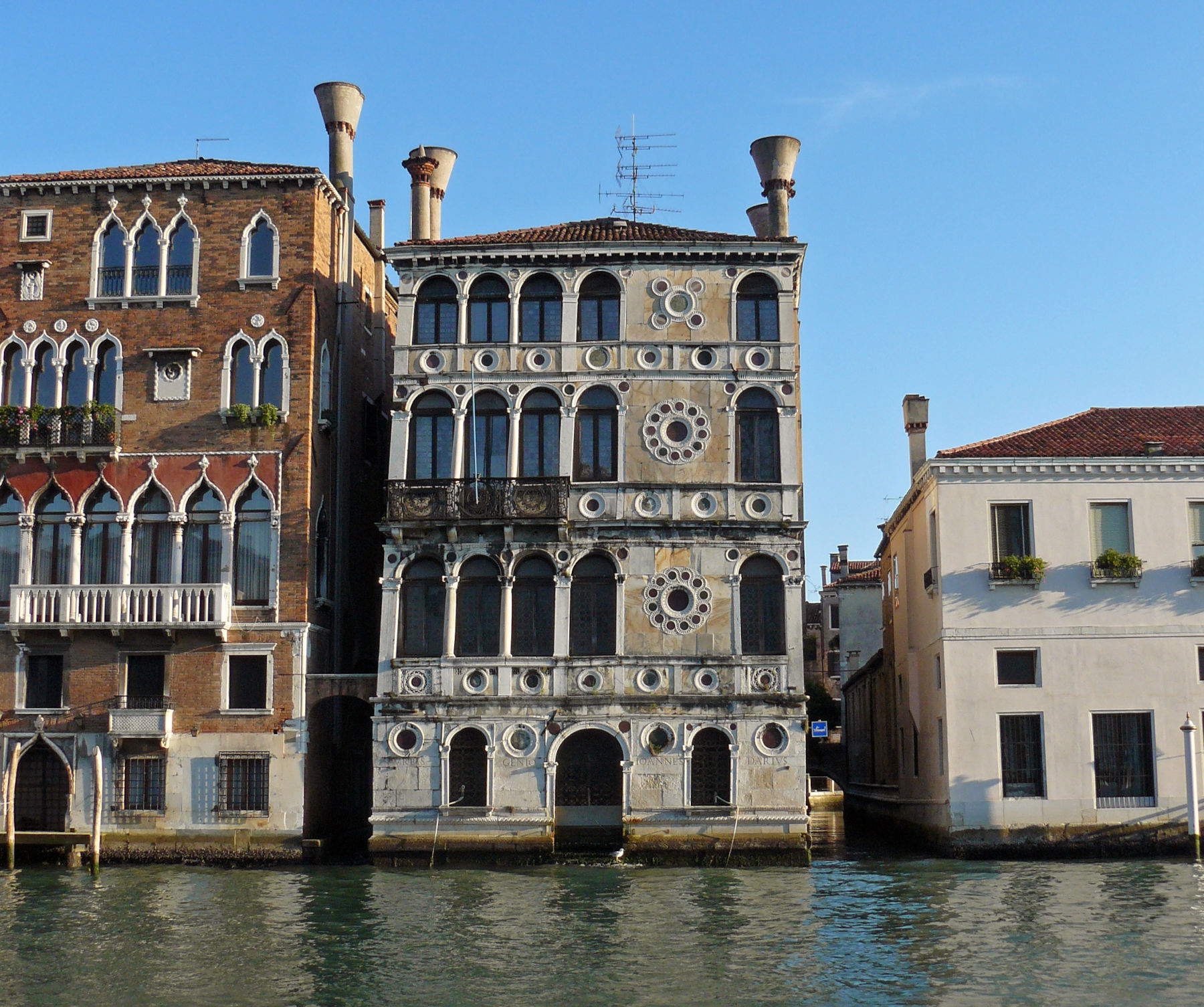
In the Dorsoduro sestiere, along one of the best-known stretches of the Grand Canal in Venice, Ca’ Dario, also known as Palazzo Dario, is now the subject of a proposed sale curated by Christie’s International Real Estate. The building overlooks one of the most representative stretches of the canal, between the Accademia Bridge and the Basilica della Salute, in an area that retains a strong residential vocation and is close to important cultural institutions such as the Peggy Guggenheim Collection and Punta della Dogana.
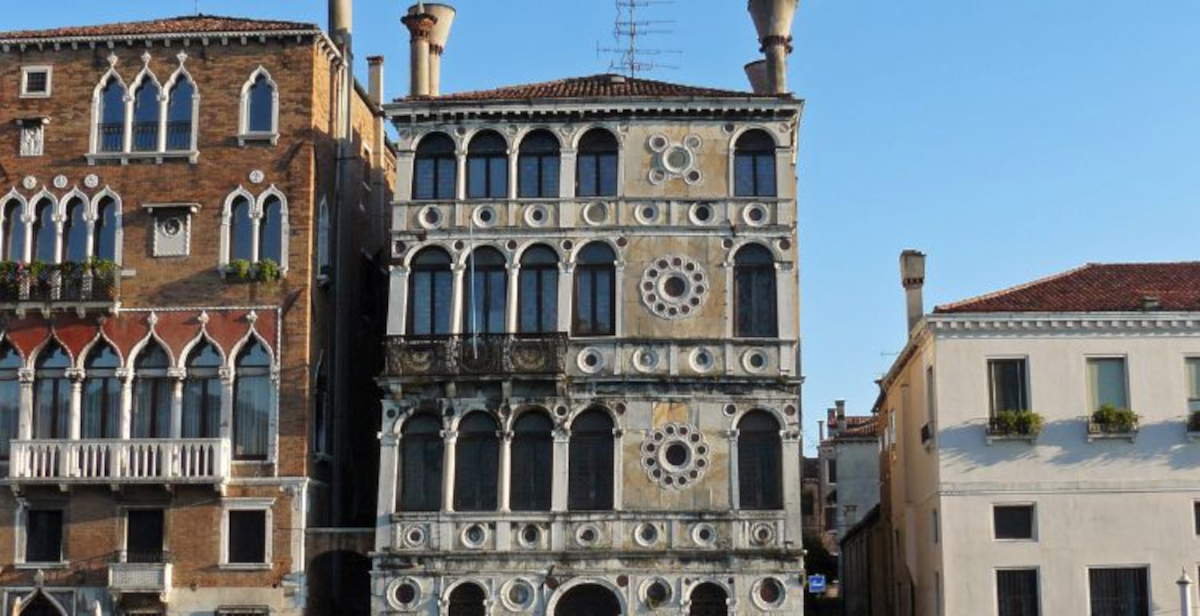
The palace was commissioned in 1479 by Giovanni Dario, secretary of the Senate of the Republic of Venice, a diplomat and merchant, from architect Pietro Lombardo. The work was grafted onto a pre-existing Gothic structure and was conceived as part of the dowry for the marriage of his daughter Marietta to Vincenzo Barbaro, a spice merchant. The main facade, made of Istrian stone, features polychrome marble inlays in a circular form, often read as reflecting the oriental influences accrued by Darius during his travels in Egypt and the Middle East. The rear facade on Campiello Barbaro is different, where Gothic elements such as trefoil arches, chimneys and a loggia remain.
The palace is on four levels, divided into a ground floor, two noble floors and a third intended for bedrooms. The ground floor, accessible both from the Grand Canal and from the internal road system, opens at the back towards the garden and houses a large hall with columns, a red marble well and a large fireplace; from here a marble staircase leads to the first piano nobile, where there is a Moorish fountain commissioned by Giovanni Dario. The second piano nobile houses rooms featuring Bevilacqua fabrics and antique Murano glass chandeliers. The third floor is reserved for the sleeping area, with rooms enriched by wood paneling and a loggia-terrace overlooking the garden.
When Giovanni Dario died, the building passed to his daughter Marietta, a moment from which a sequence of events began that, over the centuries, has fueled a widespread popular belief related to an alleged curse on the palace. As reported in the newspaper, Vincenzo Barbaro suffered a rapid financial collapse and was subsequently murdered; Marietta, on the other hand, took her own life shortly thereafter, while her son Vincenzo was found dead in Greece under violent circumstances. The palace then remained with the descendants of the Barbaro family until the early 19th century, when Alessandro Barbaro, a member of the last Council of Ten of the Venetian Republic, sold it to Armenian gem dealer Arbit Abdoll, who went into rapid financial ruin.
In 1896 the building was purchased by Countess Isabelle Gontran de la Baume-Pluvine, who initiated extensive renovations. During this period Ca’ Dario became a meeting place for intellectuals and writers, including the French poet Henri de Régnier, who stayed there until a serious illness forced him to leave Venice. An extensive restoration project also dates back to the late 19th century that completely renovated the interior in Renaissance style, without altering the facade, including the monumental staircase, exterior fireplaces, majolica stoves and wooden decorations in the dining room on the second piano nobile, as well as structural consolidation work. After World War II, the palace passed to American billionaire Charles Briggs, who left Venice soon after to move to Mexico, partly because of rumors related to his private life. Beginning in the 1970s, the building’s sinister reputation intensified. In 1970 Count Filippo Giordano delle Lanze bought Ca’ Dario and was murdered inside; the perpetrator, a Croatian sailor, was in turn killed during his escape.
Later the building became the property of Christopher Kit Lambert, manager of the musical group The Who. During the Venetian period, Lambert developed a severe drug addiction, which coincided with the end of his collaboration with the band, a drug arrest, and a serious financial breakdown. In 2002 the palace became indirectly linked back to the band when bassist John Entwistle, who had rented Ca’ Dario for a short vacation, died suddenly of a heart attack. Before his death, Lambert sold the property to Fabrizio Ferrari, who moved in with his sister Nicoletta, who later died in a car accident that was never fully clarified. Ferrari also suffered financial failure and an arrest on assault charges. Later Ca’ Dario passed to financier Raul Gardini, who was involved in the Tangentopoli scandal and died by suicide in 1993. After Gardini’s death, the sale of the palace proved particularly complex. Film director Woody Allen also considered buying it, later giving up. In 2006 the building was finally purchased by a buyer who remained anonymous, represented by an American company that still owns it today.
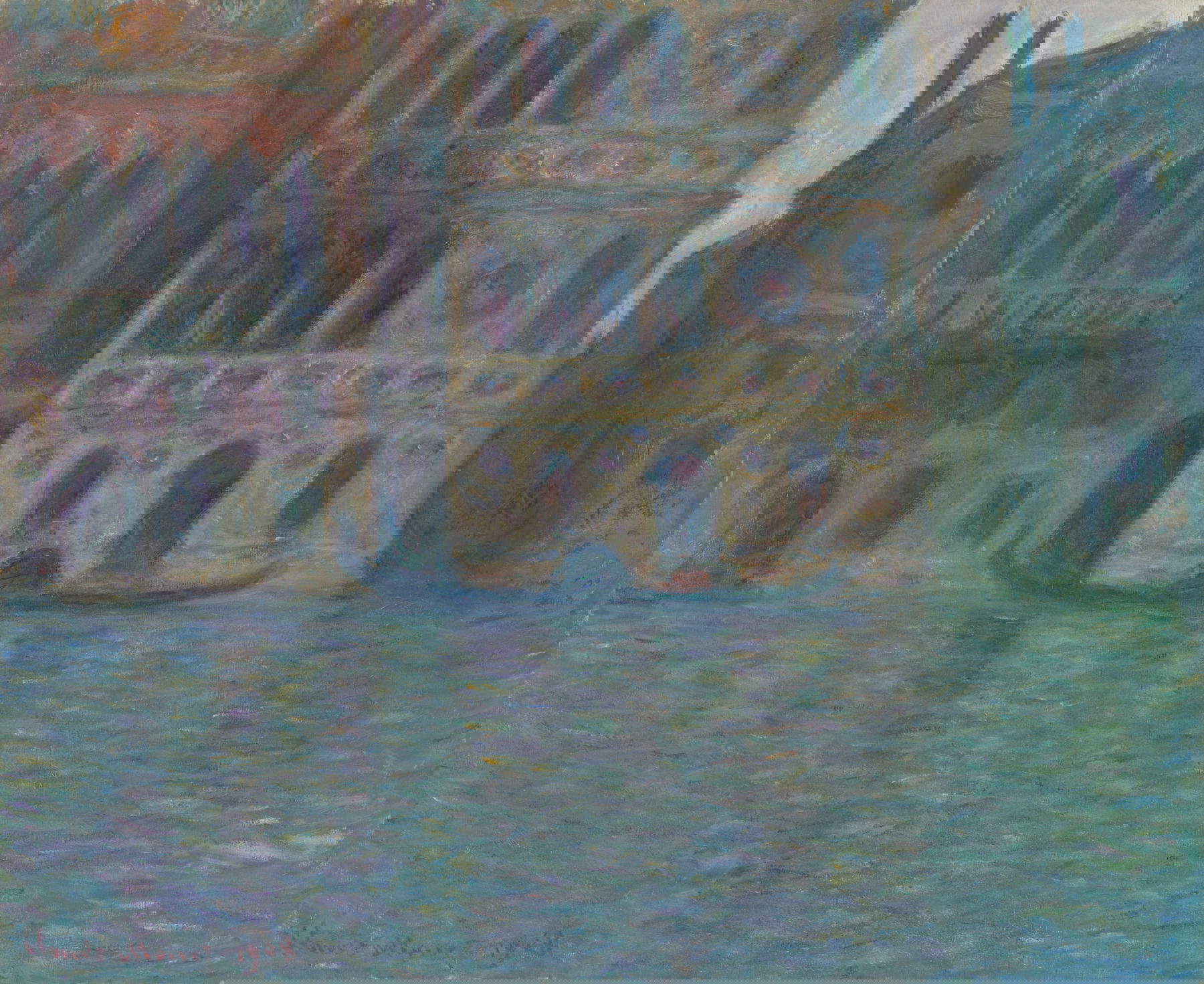
Parallel to its housing history, Ca’ Dario has attracted the attention of artists and art critics. John Ruskin, an art critic, praised its marble-encrusted Gothic oculi, while Claude Monet, initially reluctant to visit Venice because of the proliferation of images of the city on the art market, traveled to the lagoon city in 1908 and found inspiration in its colors and atmosphere. Although preoccupied with producing superficial “souvenir” images, Monet treated the view of the well-known Palazzo Dario with originality: he shot the marble buildings in the square as if they were dissolving in the Venetian mist, integrating them with the reflection of the water in a suspended composition suspicious of static.
In 2025 the building underwent a full appraisal and is offered on the market with a certificate of compliance. The current sale is thus part of an affair that blends architecture, urban history, the real estate market, and a layering of narratives that, while belonging to popular tradition, continue to influence the perception of one of the most talked-about palaces on the Grand Canal.
 |
| Christie's is putting up for sale Ca' Dario, the... cursed house in Venice painted by Monet |


The author of this article: Noemi Capoccia
Originaria di Lecce, classe 1995, ha conseguito la laurea presso l'Accademia di Belle Arti di Carrara nel 2021. Le sue passioni sono l'arte antica e l'archeologia. Dal 2024 lavora in Finestre sull'Arte.Warning: the translation into English of the original Italian article was created using automatic tools. We undertake to review all articles, but we do not guarantee the total absence of inaccuracies in the translation due to the program. You can find the original by clicking on the ITA button. If you find any mistake,please contact us.





















 IT
IT FR
FR DE
DE ES
ES CN
CN


