





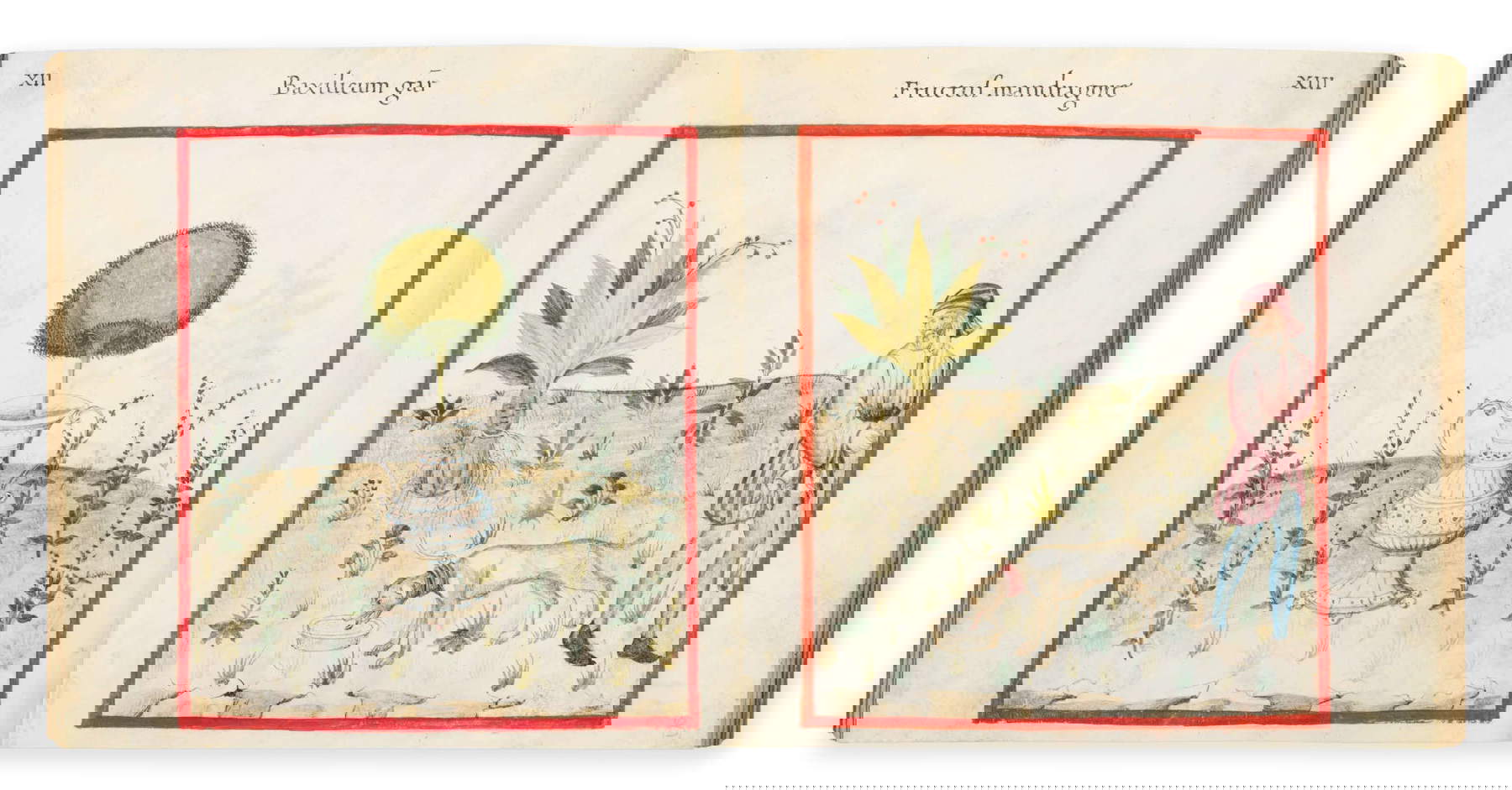
At TEFAF Maastricht, the German gallery Dr. Jörn Günther Rare Books sold, for a six-figure sum, the Liechtenstein Tacuinum Sanitatis, a rare illuminated manuscript, in Latin on parchment, that originated in Padua in about 1450. Purchased for 5 million Swiss francs, the manuscript consists of 68 folios and contains 130 full-page miniatures.
The images show men and women from different social classes performing daily activities: eating, cooking or selling food, visiting workshops, reaping in the fields, conversing by the fire, tasting various types of wine (sometimes with excess), playing musical instruments or mating. These scenes alternate with depictions of recognizable plants surrounded by lush or rocky landscapes, images of the seasons, beloved and pampered pets, or animals destined for slaughter.
This rare secular manuscript constitutes a particularly unique record of daily life in 15th-century Padua. Originally conceived as a medical manual or guide to a healthy lifestyle, today it retains only the miniatures, as the pages were trimmed in the 19th century, eliminating the accompanying text. Made by a scribe who worked almost exclusively for high-ranking patrons, and by four artists of considerable skill, the volume is notable for its beauty and rarity.

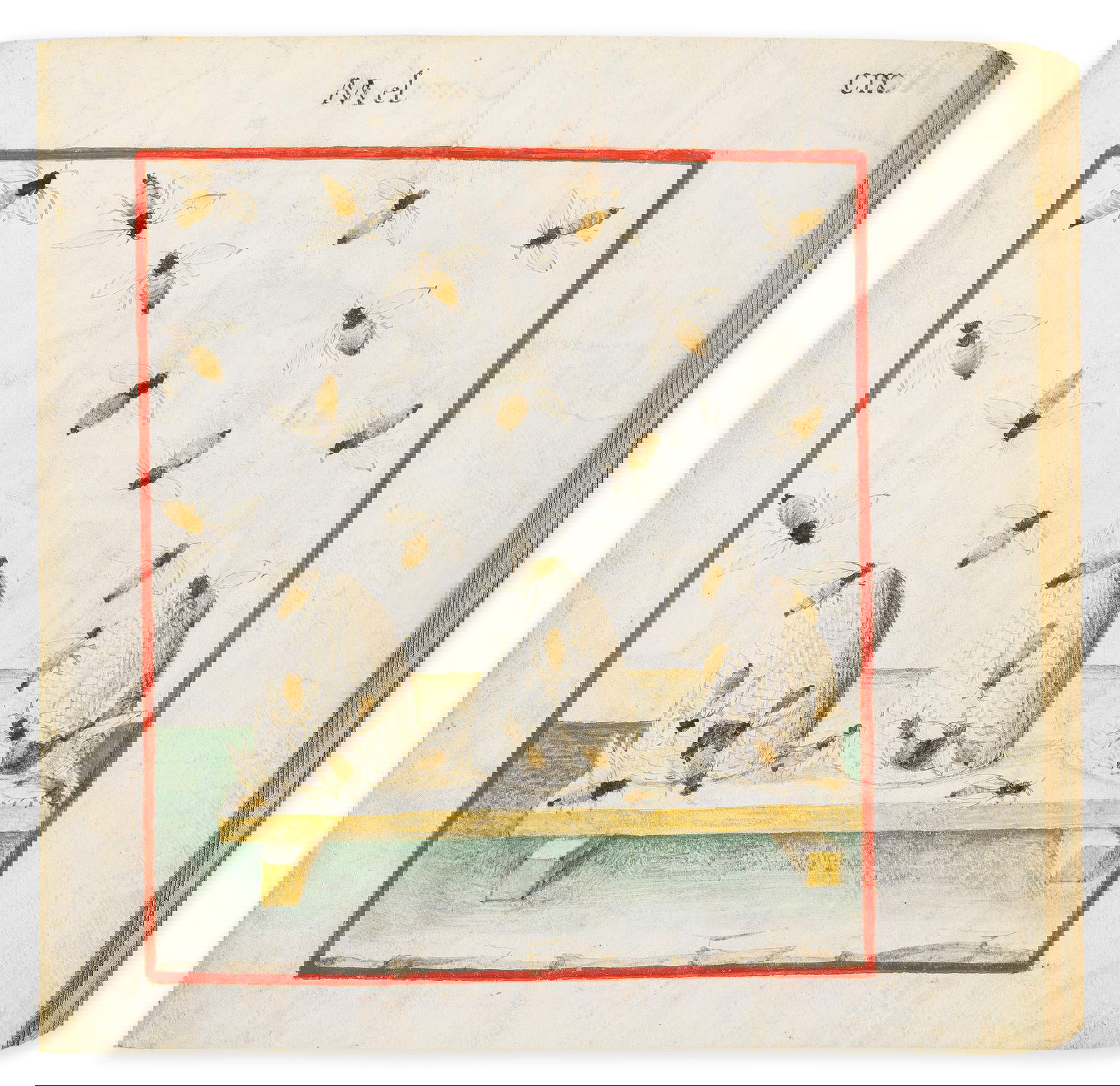


The manuscript also represents a mirror of life in 15th-century Italy. In a clearing a man, hidden among branches and foliage, catches turtledoves (f. 34r). In a kitchen two women are busy preparing spaghetti (f. 13v), while in another scene a cook has just finished a gelatin that a servant is about to bring to the table (f. 42r). In a merchant’s store a customer tastes a dried fig (f. 26v), while in another a distracted child has wandered away from his mother (f. 31v).
The miniatures also allow us to observe environments: from the summer rooms of the wealthy (f. 57r) to the kitchens and gardens where servants work (f. 46v), to the cultivated fields where peasants are busy harvesting (f. 14r). The domestic dimension of the middle class is also shown, for example in the scene where a woman prepares a chickpea soup (f. 17v). Alongside depictions of the seasons (ff. 24r-25v), winds (ff. 27r-28v), human emotions such as anger (f. 58v) and virtues such as modesty (f. 58r), the manuscript also depicts aspects of the human experience rarely found in medieval art: the ailments associated with insomnia (f. 62r), the benefits of sleep (f. 60v), the pleasure of music (ff. 62v, 63r), and the necessity of sexual relations (f. 61v).
Secular manuscripts from this period depicting daily life, with men, women and children of all social classes, domestic and farm animals, domestic scenes and moments of public life, are extremely rare. The Liechtenstein Tacuinum Sanitatis belongs to a small group of books that use the text of the Tacuinum sanitatis as a pretext for illustrating scenes of everyday life. All manuscripts of this type were richly illuminated and produced in northern Italy for patrons belonging to the courts. The specimen in question, which had over 200 miniatures at the time of its creation, represented the most elaborate of this genre.
 |
| Rare 15th-century illuminated manuscript from Padua sold at TEFAF Maastricht for 5 million Swiss francs |

Warning: the translation into English of the original Italian article was created using automatic tools. We undertake to review all articles, but we do not guarantee the total absence of inaccuracies in the translation due to the program. You can find the original by clicking on the ITA button. If you find any mistake,please contact us.























 IT
IT FR
FR DE
DE ES
ES CN
CN


