





The National Gallery in London has released the list of architectural firms that will compete for the design of the new wing envisioned by Project Tomorrow, the £750 million (about 858.8 million euros) transformation program that aims to redefine the institution’s role in the international cultural landscape. The project, when completed, will enable the museum to present itself as a place where the public can traverse the entire history of Western painting within a single complex.
The competitive process, open on a global scale, attracted sixty-five applications. On December 3, 2025, the National Gallery announced the six shortlisted firms, listed in alphabetical order: Farshid Moussavi Architecture with Piercy & Company, Foster + Partners, Kengo Kuma and Associates with BDP and MICA, Renzo Piano Building Workshop with William Matthews Associates and Adamson Associates, Selldorf Architects with Purcell, Studio Seilern Architects with Donald Insall Associates, Vista Building Safety Ltd, and Ralph Appelbaum Associates. The next phase of the competition will lead to the appointment of the winner and the technical design team by April 2026.
The projects are being evaluated by a panel of judges consisting of National Gallery board chairman John Booth, who also chairs the committee, artist Céline Condorelli, National Gallery director Gabriele Finaldi, architect Patty Hopkins, a former winner of the RIBA Gold Medal and a member of the institution’s board from 1998 to 2006; John Kingman, vice chair of the Board of Trustees; Dame Diana Lees, former head of the Imperial War Museum; and David Marks, chair of the National Gallery’s Masterplan Committee. The intervention represents the third phase of the master plan launched in 2018. The new wing will rise on the St. Vincent House site at 30 Orange Street, the last unredesigned segment of the National Gallery’s current campus. The building, acquired nearly 30 years ago with the goal of expanding exhibition space, now houses a complex for hotel and office functions. Its demolition will pave the way for a modern extension that will have to integrate with the museum’s historic pre-existence.
“Project Tomorrow is a £750 million campaign that will redefine the National Gallery for the next century,” says National Gallery Director Gabriele Finaldi. “Thanks to the significant support we have already received, we are building momentum toward our vision of creating new spaces to house an expanded collection, building an acquisition fund for modern paintings, while also ensuring the Gallery’s long-term financial sustainability through a strong endowment. The National Gallery was established to make great art accessible to all. With this new physical and artistic expansion, and with the invaluable help of our donors, we are reaffirming our commitment to the public. We want to expand our engagement with local, national and international visitors through advanced exhibitions, displays, research, public programs and educational initiatives. We now look forward to welcoming new donors and partners to help us realize this shared ambition.”
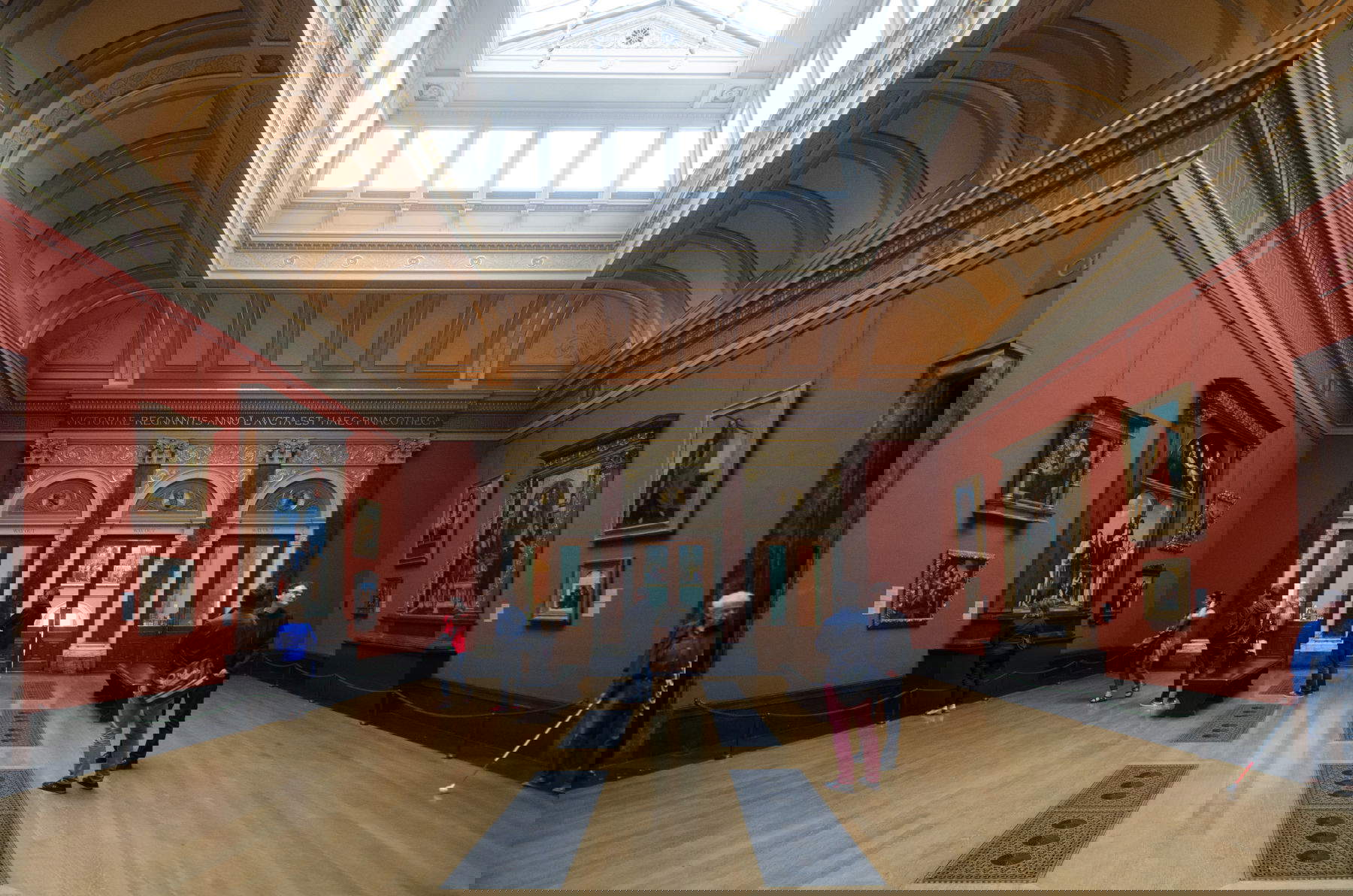
“The National Gallery’s renowned collection of great paintings,” says John Booth, “and our ambition to develop it further for the benefit of a broader and more diverse audience requires a space that not only preserves and exhibits the collection, but also elevates the visitor experience, enhancing the Gallery’s reputation as one of the world’s most visited and inspiring museums. We look forward to finding the right architectural partner to join us on this once-in-a-lifetime journey to create a landmark of local and international significance: creatively ambitious, technologically innovative and environmentally sensitive.”
Project Tomorrow also aims to renew the urban fabric between Leicester Square and Trafalgar Square, with the intention of restoring a more coherent and accessible configuration to this central area. The new building will make use of technical and construction developments that have matured in recent decades, with a focus on issues of sustainability and energy efficiency. The National Gallery defines the intervention as a future landmark both locally and internationally, intended to strengthen the museum’s positioning in the global cultural context and support the UK’s museum competitiveness.
The project benefits from unprecedented financial support for the institution. Two donations of 150 million pounds each form the economic basis of the deal. The first comes from Crankstart, a philanthropic foundation created by Sir Michael Moritz KBE and Harriet Heyman; the second comes from the Julia Rausing Trust. These are the two largest cash donations ever made public to a museum or art gallery worldwide. Added to these are the 75 million pounds offered by the National Gallery Trust, National Gallery board chairman John Booth himself, and other benefactors who prefer to remain anonymous. According to the institution, these contributions allow the project to enter the operational phase and ensure the support needed to proceed with the expansion program.
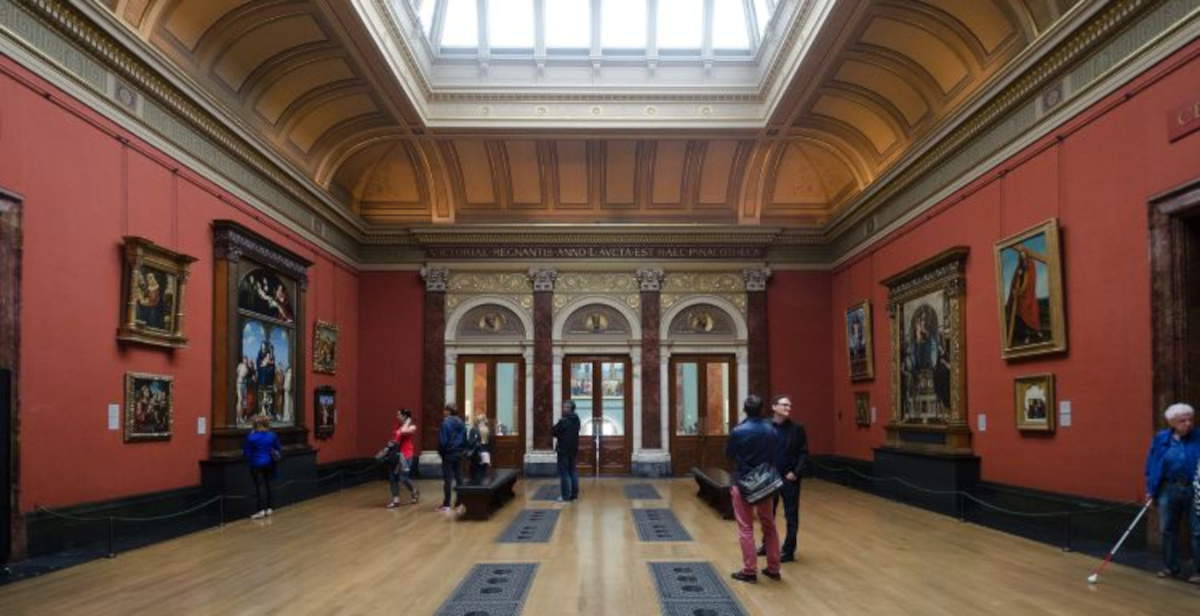 |
| Six studios in the running for the National Gallery's new 750 million wing |

Warning: the translation into English of the original Italian article was created using automatic tools. We undertake to review all articles, but we do not guarantee the total absence of inaccuracies in the translation due to the program. You can find the original by clicking on the ITA button. If you find any mistake,please contact us.




























 IT
IT FR
FR DE
DE ES
ES CN
CN


