





The Directorate General for Museums of the Ministry of Culture has announced the outcome of the international public selection process for the appointment as director of fourteen Italian museums and cultural institutes. This is a major step in the governance of the national museum system, involving some of the most significant entities of the country’s historical, artistic and archaeological heritage, some of which had been waiting more than a year for a new director.
The appointments involve the Historical Museum and Park of the Castle of Miramare - Regional Directorate National Museums Friuli-Venezia Giulia (went to Guido Comis), the Monumental Complex of the Pilotta (Denis Ton), the National Museums of Bologna - Regional Directorate National Museums Emilia Romagna (Luigi Gallo), the National Museums of Lucca (Maria Elena Motisi), the Pantheon and Castel Sant’Angelo - Directorate National Museums of the City of Rome (Luca Mercuri), the Archaeological Park of theAppia Antica (Luigi Scaroina), Villa Adriana and Villa d’Este (Alberto Samonà), the Monumental Villas of Tuscia (Alessandro Mascherucci), the Royal Palace of Naples (Alessandra Necci), the National Museums of the Vomero (Almerinda Padricelli), the Museums and Archaeological Parks of Capri (Luca Di Franco), the Archaeological Park of Herculaneum (Federica Colaiacomo), the Swabian Castle of Bari - Regional Directorate National Museums Puglia (Anita Guarnieri) and the National Museums of Matera - Regional Directorate National Museums Basilicata (Raffaella Bonaudo).
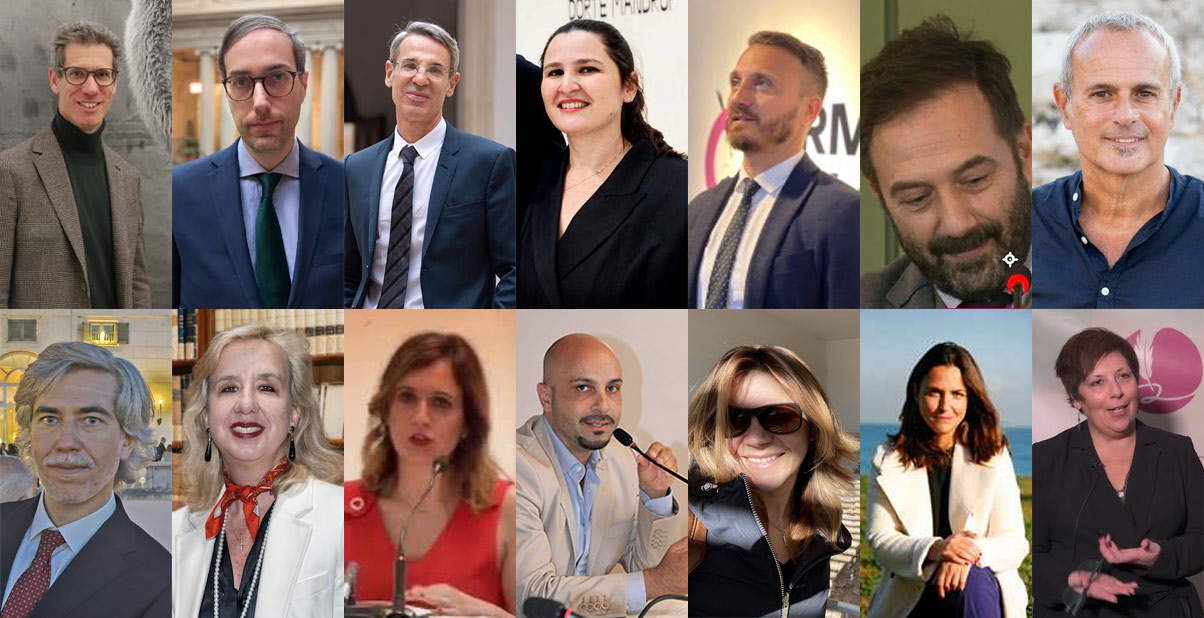
Guido Comis has been appointed to the Historical Museum and Park of Miramare Castle in Trieste. Born in Pordenone in 1971, after graduating in art history from Ca’ Foscari University in Venice he attended the School of Specialization at the State University of Milan, graduating in 2004. Since 2009 he has been curator of the Art Museum of Lugano; between 2015 and 2019 he served as curator of the Art Museum of Italian Switzerland. Since September 2019, he has been director of the Cataloguing, Promotion, Enhancement and Land Development Service.
At the Complesso monumentale della Pilotta in Parma comes Denis Ton, born in 1977. He specialized and received his doctorate from the University of Padua in 2005 and 2009, participating as a unit member in two PRINs between 2003 and 2005 and between 2008 and 2010. A recipient of a Haskell Fellowship, he was a Research Fellow at the Metropolitan Museum. Between 2004 and 2012 he collaborated with exhibition and publishing initiatives of the Giorgio Cini Foundation. From 2014 to 2020 he was conservator of the Civic Museums of Belluno, responsible for the art-historical collections of Palazzo Fulcis and the archaeological collections of Palazzo dei Giuristi. Since 2020 he has held the position of conservator at the Castello del Buonconsiglio in Trento. He directed the setting up of the new museum at Palazzo Fulcis. In 2012, he qualified for the position of university professor of the second rank in the concurrency sector 10/B1, History of Art.
At the National Museums of Bologna - Regional Directorate National Museums Emilia Romagna was appointed Luigi Gallo, a Roman, born in 1966, art historian and manager of the Ministry of Culture. Since September 2020 he has been director of the Galleria Nazionale delle Marche in Urbino and of the Direzione Regionale Musei Marche. During his career he has curated major exhibitions and worked at the Scuderie del Quirinale and Pompeii. He is also a lecturer at La Sapienza University.
The National Museums of Lucca will be led by Maria Elena Motisi, an architect and curator. She has been active as a curator at the MAXXI museum since 2014. Specializing in site-specific projects, video installations and international exhibitions, she has worked with MiBAC/PARC since 2006 and has been working at MAXXI since 2010, after specialized training that took place between Pisa and Bristol and a master’s degree in complex program development.
Luca Mercuri has been identified for the Pantheon and Castel Sant’Angelo - Rome’s National Museums Directorate. Born in Ancona in 1980, a classical archaeologist, he is a senior official in the Ministry of Culture with experience in museum direction and heritage enhancement. He has directed the Puglia Regional Museums Directorate and the Pantheon and Castel Sant’Angelo, also curating national and international exhibition projects.
The Appia Antica Archaeological Park will be entrusted to Luigi Scaroina, born in 1972, an archaeologist and official of the Ministry of Culture, specializing in archaeology, fine arts and landscape. He has experience in excavations and graphic documentation with tools such as AutoCAD and Photoshop, as well as studies on the urban history and settlements of pre-Roman Sannio and the Molise area. He has participated in studies on monuments in Cassino and the remains of the Basilica Ulpia. He is currently manager of Service IV of the General Secretariat of the MiC.
Appointed to Villa Adriana and Villa d’Este is Alberto Samonà, born in Palermo on May 2, 1972, a journalist and writer. He is a member of the board of directors of the Colosseum Archaeological Park and the Scientific Committee of the Appia Antica Archaeological Park. From May 2020 to October 2022, he held the post of councillor of Cultural Heritage and Sicilian Identity of the Sicilian Region.
The Monumental Villas of Tuscia will be directed by Alessandro Mascherucci, who trained in architecture at the Sapienza University of Rome. After graduating, he went into freelance practice, specializing in architectural restoration. In parallel, at the Department of History of Architecture of the same university, he deepened his studies on the late Roman Baroque under the guidance of Professor Augusto Roca De Amicis. He received his doctorate in 2016 with a thesis entitled The Architectural Work of Carlo De Dominicis. Winner of a competition as an official of the Ministry of Cultural Heritage, since 2018 he has served at the Special Superintendence of Rome as a designer and director of works in complex restoration projects. Among the most relevant sites he has conducted are those in the Roman basilicas of Sant’Agostino in Campo Marzio, Santa Maria del Popolo, Santi Celso e Giuliano, and Palazzo Mattei di Giove. He has served as work supervisor in the restoration of the Piranesian enclosure on the Aventine Hill. He is the author of studies on the conservation of architectural heritage and the history of architecture, focusing on the Baroque age and the first half of the 20th century. He is currently head of the history of restoration course at the Department of Church Cultural Heritage at the Pontifical Gregorian University.
Coming to the Royal Palace of Naples is Alessandra Necci, born in Rome on July 17, 1969, an Italian lawyer, historian, writer and academic. She is known for her historical biographies and for her collaboration with Il Messaggero and Rai Storia. She has been director of the Estensi Galleries since December 2023 and teaches history of economics and business at LUISS Guido Carli.
The National Museums of the Vomero will be led by Almerinda Padricelli, born in Naples in 1979, an architect official in functional area III F1 with expertise in the Protection and Territory sector. She is currently employed at the San Carlo Theater. She has gained significant experience within the Ministry of Cultural Heritage and Activities, particularly as head of public works monitoring and with assignments at the Crisis Unit for Campania.
Appointed to the Museums and Archaeological Parks of Capri is Luca Di Franco, born in 1986, an archaeologist and archaeological officer at the ABAP Superintendency of the Naples Metropolitan Area. His background includes studies and publications devoted to marble materials and ancient art.
The Herculaneum Archaeological Park will be directed by Federica Colaiacomo, an archaeologist with a doctorate from the University of Rome La Sapienza in 2011. She is currently director of the Archaeological Museum and Archaeological Park in Segni, Rome. She specializes in postclassical archaeology and has expertise in topography, architecture, management of archaeological areas and enhancement of historical contexts.
Anita Guarnieri, born in Bari in 1972, an architect and official of the Ministry of Culture, specializing in conservation of architectural heritage, was appointed to the Castello Svevo di Bari - Regional Directorate National Museums Puglia. Holding a Ph.D., she has extensive experience in landscape planning, with particular reference to the Apulia PPTR, and cultural heritage protection. Among the roles he has held is that of contact person for the Regional Strategic Plan for Taranto.
Finally, at the National Museums of Matera - Regional Directorate National Museums Basilicata was designated Raffaella Bonaudo, born in Vallo della Lucania in 1974, PhD in Archaeology-Etruscology. Since Nov. 15, 2021, she has been a manager at the Soprintendenza Archeologia, Belle Arti e Paesaggio for the provinces of Salerno and Avellino. An expert in archaeological heritage management, she has directed numerous excavations and archaeological areas between Campania and Irpinia, with specific experience in the protection and enhancement of Roman sites.
|
| State museums, 14 new directors appointed: here's who will lead Italy's hubs |

Warning: the translation into English of the original Italian article was created using automatic tools. We undertake to review all articles, but we do not guarantee the total absence of inaccuracies in the translation due to the program. You can find the original by clicking on the ITA button. If you find any mistake,please contact us.


























 IT
IT FR
FR DE
DE ES
ES CN
CN


