





The current difficulties of Italian art are of three kinds: in part they are inscribed in the general difficulties of contemporary art, marked by a reduction of interest at the global level; in part they are connected to problems that the Italian system has been dragging on for years; and finally they are determined by the world geopolitical situation.
As for the difficulties of art in general, I would say that they can be summed up in the exponential increase of tools dedicated to creativity, especially of a digital nature, and the consequent weakening of the authority of the classical producer. What is increasingly in crisis is the figure of the artist himself, whose role is gradually being absorbed by a creative multitude from which the character of the influencer emerges. Not to mention, then, the greatest current challenge, that of artificial intelligence, which threatens to overwhelm any human ability, including creative ones.
The second difficulties, those specifically Italian, are of a different origin and nature. The amount of historical legacy present in Italy ends up orienting everyone toward the past. If you say “art” in Poland, Switzerland or Sweden, you think of Urs Fischer, Pawel Althamer or Andreas Eriksson; when you say “art” in Italy, people still think only of Raphael or Michelangelo. For the contemporary, there is little room, mentally and economically. In fact, Italy has only recently introduced a system of support for contemporary art, the Italian Council, which came into being thanks in part to the efforts of the Italian Contemporary Art Forum, which has been discussing, studying and advocating this cause. It is certainly a useful tool, as it at least gives artists the opportunity to produce projects of a certain commitment, but it has always lacked the “second leg.” There is little point in supporting the costs of production abroad if it is then left to individual artists or young Italian curators to find the institutions where to exhibit on their own. What is actually missing is a body that fosters relationship building-the only one that can really help Italian art travel. That is, a structure would be needed that would not only distribute funds, but build a network of international curators and institutions, inviting directors and curators to meet Italian artists. It would be enough to fund travel and visits to Italy by curators of major museums or those newly appointed to head biennials and major exhibitions to get more concrete results right away.
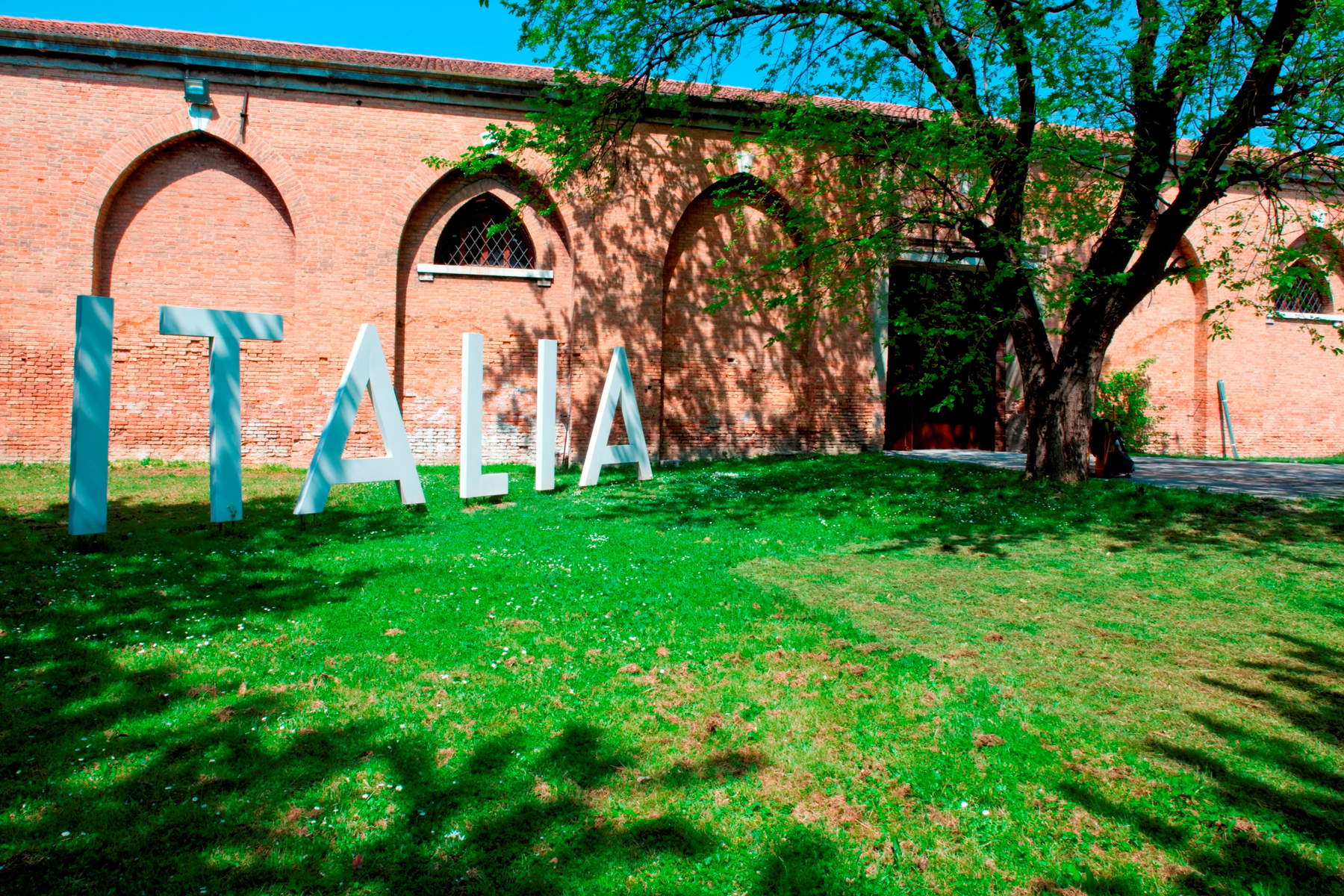
Another problem that has always characterized the management of Italian culture is the historical lack of vision and fragmentation of the Italian Cultural Institutes abroad, which depend on the often subjective choices of their directors.
Then there is also, if you will, a more general problem of behavior in the Italian art world, the lack of a real cohesion of the system, the inability to make a body. And it is well known that moving in a disjointed way yields fewer results.
Finally, there is the third set of difficulties, those related to the general geopolitical situation. Italy counts less and less internationally and is less and less attractive culturally, at least in terms of contemporary production. In a world so fraught with tensions, socio-political issues become much more relevant than aesthetic aspects per se. Just think of the increased attention the world has paid to Ukrainian art since the outbreak of war. And on this there is little that can be done to reverse course. In essence, apart from a few adjustments that might mitigate the effects, there does not seem to be much that can really cure the disease.
There is, however, another element that undermines Italian art and makes it irrelevant. And this, while it cannot be changed from above, could change from below and affect its grip and recognition. About fifteen years ago, in the pages of “Flash Art,” I wrote a very critical article in which I accused Italian art of not being born from a “deep feeling.” The artists, for the most part, seemed to deal with occasional, specious themes. There is no art if there is no deep reason that generates it, a malaise or enthusiasm. Otherwise, art becomes decoration.
Not much has changed in these 15 years. On the contrary, the pre-eminence of the market and the translation of everything into economics have gradually turned art into just another product. And many of the last generation now seem to be addicted to this condition, with no impetus for change. A small, dim hope comes from those young people who, in schools and in the squares, have been protesting for Palestine. In Italy more than anywhere else. Who knows, maybe they will turn out to be a generation capable of rediscovering the need for rebellion, understanding that in a world flattened-both by weapons and by technology-where dissent seems to have disappeared, vitality is extinguished. Here then is where art could once again become a key tool for raising doubts, asking questions, paving the way for a non-standardized future in which authentically human processing is still possible. But to do this, it is really up to artists to roll up their sleeves.
This contribution was originally published in No. 28 of our print magazine Finestre sull’Arte on paper, erroneously in an abridged form. Click here to subscribe.

Warning: the translation into English of the original Italian article was created using automatic tools. We undertake to review all articles, but we do not guarantee the total absence of inaccuracies in the translation due to the program. You can find the original by clicking on the ITA button. If you find any mistake,please contact us.






















 IT
IT FR
FR DE
DE ES
ES CN
CN


