




by
Federico Giannini  @federicogiannini1
11/01/2026
@federicogiannini1
11/01/2026



Categories: News Focus / Disclaimer
Two months ago, the FSC allocations for the Ministry of Culture (2021-2027 cycle) were approved: these are key resources for the MiC's strategic planning. Compared to the previous cycle, the MiC got 90 percent fewer resources. But it is essential money for leading investments: such as Pompeii, Reggia di Caserta, Vasari Corridor. Federico Giannini's article.


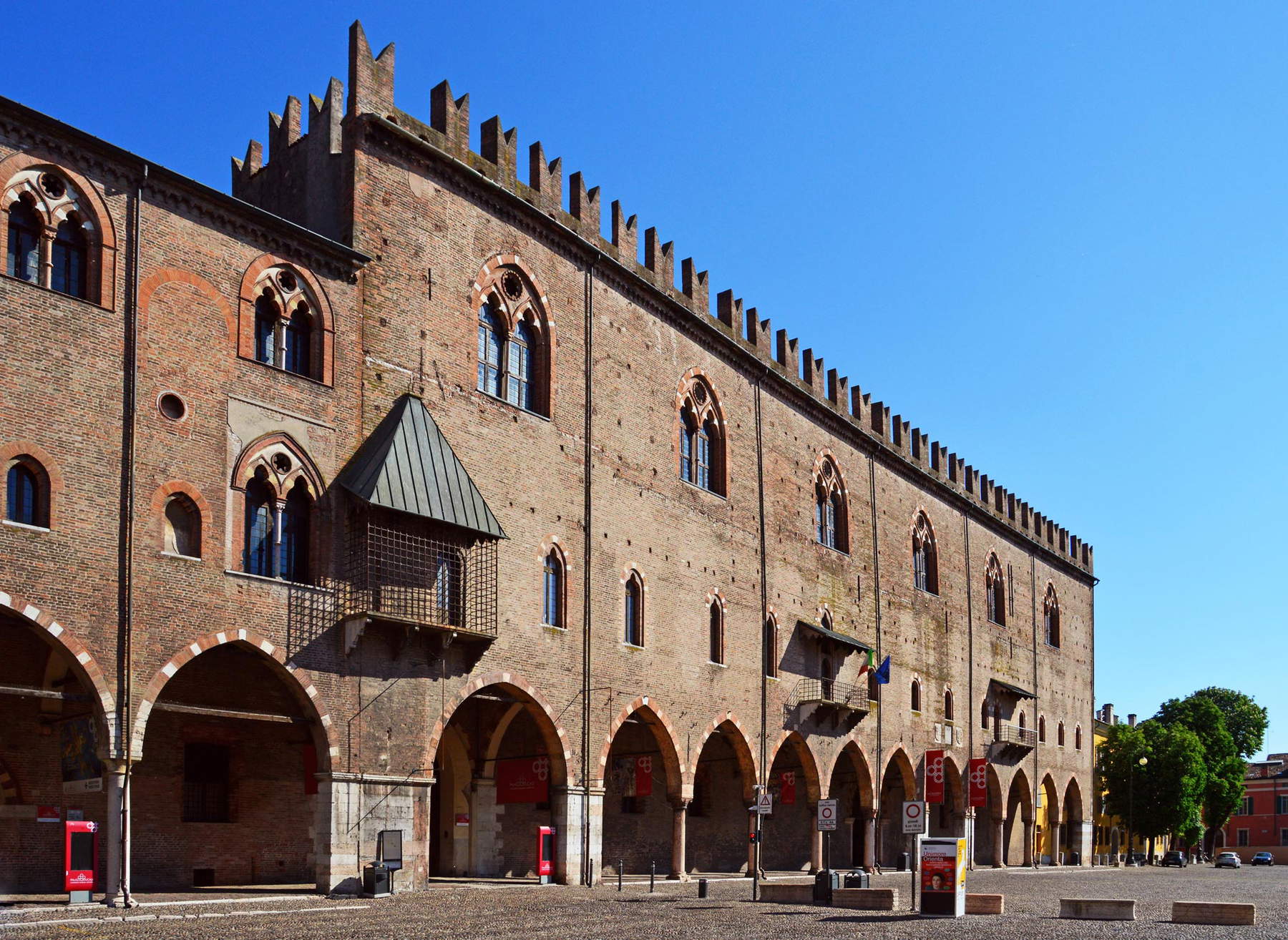
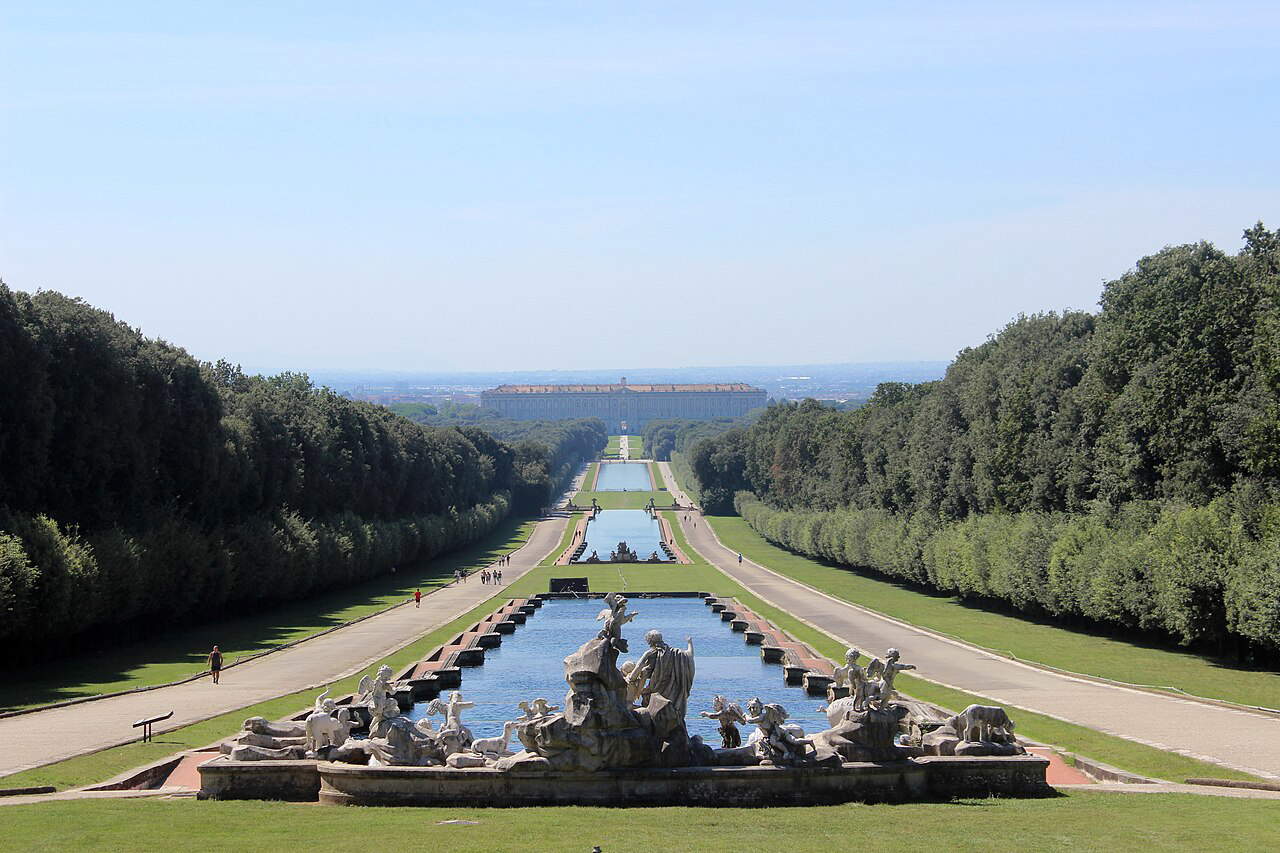
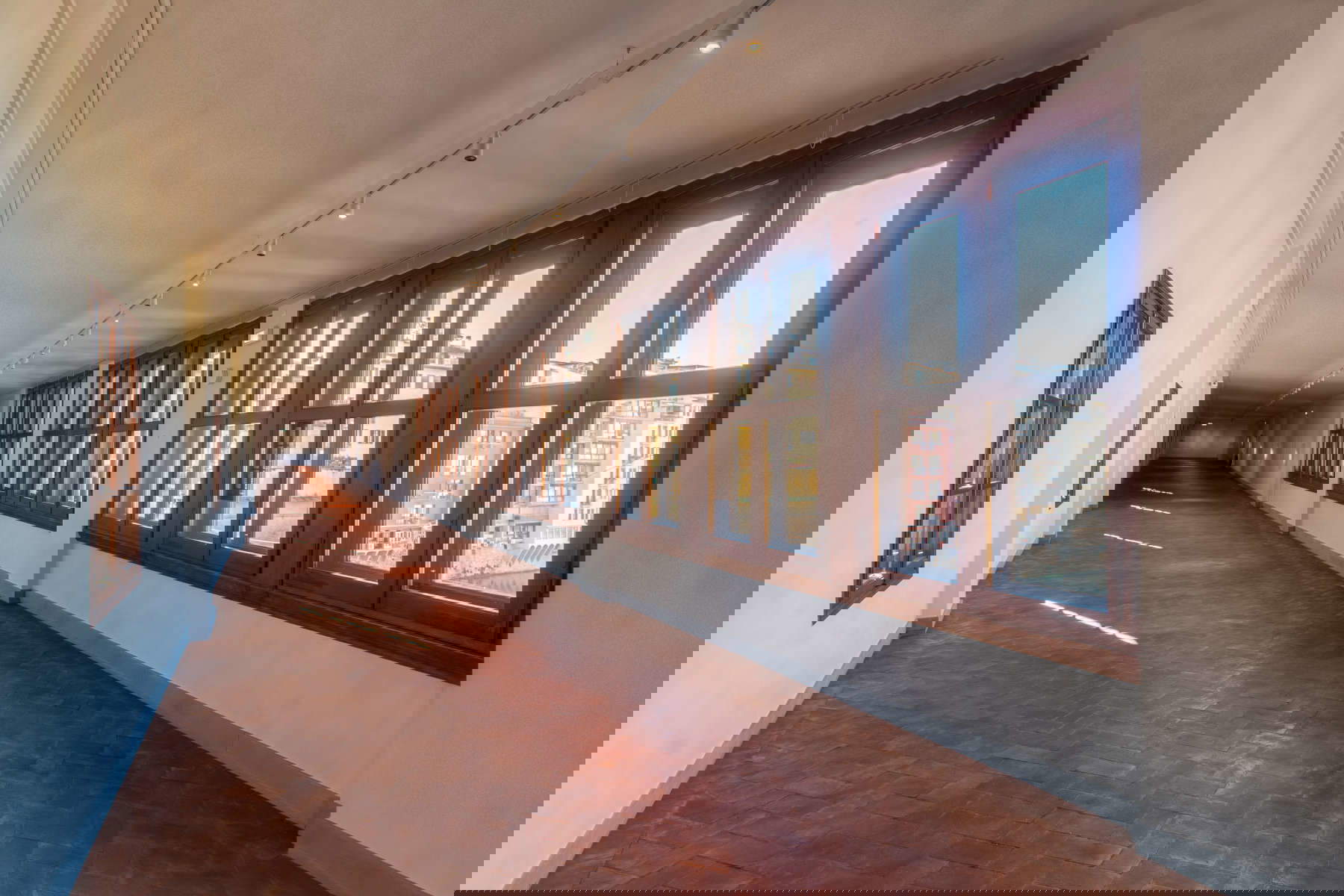
Crumbs for culture: a 90 percent cut, or 182 million euros instead of more than 1.7 billion, on the largest part of the Ministry of Culture’s strategic programming, namely the resources of the Fund for Development and Cohesion (FSC): allocations that, over the past decade, have enabled such important works as the refurbishment of the National Archaeological Museum in Naples, the restorations of the Reggia di Caserta, some of the plans for Greater Pompeii, the restoration of the Santa Maria della Scala Complex in Siena, the transformation and opening of the Vasari Corridor, the conservation programs of the Ducal Palace in Mantua and its museographic enhancement, and much more. The news is rather recent: we are talking about the allocation of the FSC assigned to the Ministry of Culture, which, following the Agreement for Cohesion signed last October 31 between Prime Minister Giorgia Meloni and Culture Minister Alessandro Giuli(text here), received an allocation of just 182 million euros, between FSC and co-financing: of these 182 million, moreover, 104.5 pertain to the completion of already programmed interventions, while about 60 were earmarked for an action line called “Redevelopment of a cultural and social nature of difficult urban contexts” (in essence, they will go to the suburbs). Another 6.8 million will be used for technical assistance to entities involved in programming. And these 182 million represent only 10 percent of the allocation that the Ministry had obtained from the same fund in the previous cycle. This is, as will be seen below, a sum that was not established during the agreement, but the substance does not change.


In the meantime, a quick digression to frame the matter under discussion. The Fund for Development and Cohesion is, together with the European Structural Funds, as stated on the website for the Agency for Territorial Cohesion, the “main financial instrument through which policies for the development of economic, social and territorial cohesion and the removal of economic and social imbalances are implemented in implementation of Article 119, paragraph 5, of the Italian Constitution and Article 174 of the Treaty on the Functioning of the European Union.” The fifth paragraph of Article 119 of the Constitution stipulates that the state shall allocate additional resources in favor of municipalities, provinces, metropolitan cities and regions when it is necessary to remove economic and social imbalances, while Article 174 of the Treaty states that the Union aims to reduce the gap between the levels of development of the various regions of Europe and the backwardness of the least favored regions. It follows that the Fund is essential for the development of the South of Italy, so much so that the bulk of the interventions that the Ministry of Culture has initiated in recent years with the FSC allocation have concerned sites in southern regions (the law, after all, stipulates that 80 percent of the funds go to areas in the South, and the rest to the Center-North). The FSC is multi-year in nature and its programming is divided into seven-year cycles: the current one is the 2021-2027 cycle and had an initial allocation of 50 billion euros (later refinanced with the 2022 budget law and increased by 23.5 billion euros), while the previous one, 2014-2020, was provided with an initial allocation of 54.8 billion euros. It should be mentioned at the outset that the resources are not all spent within the seven years: the current cycle, for example, initially provided for spending 4 billion for 2021, 5 billion per year for all years from 2022 to 2029, and 6 billion for 2030 (later increased by 3 billion for each of the years from 2022 to 2028 and 2.5 billion for 2029). At this point it is useful to anticipate that, compared to the 182 million allocated to MiC under the current FSC, in the previous cycle the Roman College had managed to get about 1 billion 740 million euros, which was then slightly reduced when tourism was unbundled from cultural heritage, and thus the resources earmarked for tourism interventions were reallocated to the new ministry. We can therefore brutally reiterate that the MiC received, for this cycle, the crumbs of what it had gotten for the 2014-2020 FSC.


The subject matter is quite meaty, but in order to understand what has happened to the Ministry of Culture, it is possible to make some simplifications, taking into account that the instruments for allocating the resources provided by the FSC have undergone several changes over the past few years. The Conte I government, with Decree-Law 34 of April 30, 2019 (Article 44), established the establishment of the Development and Cohesion Plans (PSCs), which is the resource planning tool created to systematize and give order and unity to the allocations that were previously allocated through resolutions of the CIPE (Interministerial Committee for Economic Planning, later to become in 2021 CIPESS, or Interministerial Committee for Economic Planning and Sustainable Development: is a body that depends on the presidency of the council of ministers and is composed of the president of the council, who chairs it, and the ministers of Economy, Foreign Affairs, Economic Development, Agriculture, Infrastructure, Labor and Environment) against submission of individual plans (for individual interventions, or groups of interventions) of the various central and local governments: PSCs served to simplify programs and streamline procedures, and above all, they served to bring back to a single plan for each administration the many plans and programming tools that until that year were used to allocate FSC resources. Each PSC had to be approved by the CIPESS by resolution. In 2021, the CIPESS approved the Ministry of Culture’s Development and Cohesion Plan, by resolution number 7 of that year: the plan submitted by the MiC reclassified all the programming tools that had been used up to that time for the use of FSC resources, for a total amount of 1 billion 737.41 million euros, a sum approved by the CIPESS. That amount was then slightly adjusted downward: by CIPESS Resolution No. 59 of 2021, 46 million euros were transferred to the Ministry of Tourism, and an additional 100 million euros were again shifted to tourism in 2022, by CIPESS Resolution No. 45, with the result that in the end the Ministry of Culture was left with a total allocation of 1,590.57 million euros, or almost 1.6 billion. With this money it was possible to finance the interventions mentioned in the opening: those who want to see them all can find the complete list on the Ministry’s Strategic Planning website.


For the 2021-2027 cycle, the matter has changed: the Meloni government, with Decree-Law no. 124 of 2023, replaced the CSPs with Cohesion Agreements, i.e., agreements defined between administrations receiving resources and the Minister for European Affairs, the South, Cohesion Policies and the PNRR, and setting out development objectives, specification of interventions and possible lines of action, procedural timetable, financial plan and so on, all then always approved by resolution of the CIPESS. The agreement introduced a substantial change in procedure, i.e., the government, with the new arrangement, made a “reduction in the spaces of administrative action in the hands of central and regional administrations” forcing ministries and regions “to come to terms with a decidedly strengthened level of central coordination” (so reads the essay La sfida dell’integrazione tra approccio PNRR e governance dei fondi strutturali by Anna Teselli). The agreements with the ministries were then signed by Prime Minister Giorgia Meloni last October.
A comparison of the breakdowns of the two cycles is useful at this point. The best-understood tables for the 2014-2020 cycle can be found on the website of the Agency for Territorial Cohesion, while more user-friendly ones for the 2021-2027 cycle can be found on the website of the Chamber of Deputies. Comparing the tables, an important difference immediately emerges (for convenience we will take into account only the funds allocated to regions and central administrations, thus excluding metropolitan cities): if in the previous cycle the FSC gave about 30 billion euros to central administrations and about 15 to regions, the current cycle has almost literally reversed the allocations, with about 30 billion to regions and 15 to central administrations (it follows, therefore, that many cultural interventions will be, at least it is assumed, in the hands of regional administrations). This reversal is mainly due to the fact that the bulk of PNRR funds are handled by central administrations. The problem is that, in the general decrease in FSC resources that has affected almost all ministries, the Ministry of Culture is the one that has come out most massacred by the allocation proposals submitted to the CIPESS and the agreements signed with the president of the council. Only three ministries got increases: Sports, which went from 250 million in the previous cycle to 400 million in the current one; Tourism (from 46.84 to 121.1); and Education, which was given 360 million as opposed to 60 million in the 2014-2020 cycle (although, in reality, this is basically a decrease, since for the previous cycle Education could count on an additional 425 million from the 2007-2013 cycle, the only case along with MiC, which had 1.614 billion from the 2014-2020 cycle and an additional 76 million from the 2007-2013 cycle). As for the others, no department suffered a 90 percent reduction (89.35 to be precise) like the one that affected MiC. The average reduction, minus MiC, was 65 percent. The ministry that fared best was Infrastructure, which saw a halving of allocations: from 16.9 billion to 7.9. It is followed by Health (from 200 million to 90), Environment (from 3.5 billion to 1.1), Economic Development (from 7.1 billion to 2.2), Miur (from 1 billion to 306 million), and Agriculture (from 542 million to 113). And between Agriculture and MiC there is still a 10 percentage point gap on the reduction. If MiC had been given a reduction averaged with the others, Minister Giuli would have gotten almost 600 million instead of the current 180: we are still talking about one-third of the resources of the previous cycle, but it certainly would not be the bumps that MiC got either. To offer a term of comparison, the strategic plan “Great Cultural Heritage Projects,” launched in 2014, had in its first ten years of life resources of 828 million euros that were used to finance 171 interventions.
It was said that this is not a figure established during the agreement: the distribution of resources to be allocated to central administrations was decided by CIPESS resolution no. 77 of 2024, based on a proposal by the Minister for European Affairs, the South, Cohesion Policies and the PNRR (at the time Raffaele Fitto) approved by the same CIPESS (for the previous cycle, on the other hand, the proposal was made by the Undersecretary to the Presidency of the Council, who was the political authority for cohesion at the time). Minister Fitto’s proposal, the resolution reads, was made taking into account administrations traditionally recipients of FSC resources, resources already allocated in the PNRR, the National Complementary Plan and European programs, and “specific strategic priorities such as, for example, investments in favor of improving the quality of life of people with disabilities, for the strengthening of surveillance and public security systems and the digitization of archives, for civil protection policies, for interventions aimed at the creation of sports facilities in degraded areas, including at oratories, with the aim of combating youth dispersion, and for the strengthening of the initiative of the Ministry of Foreign Affairs and International Cooperation called ’Tourism of Roots’.” In short, it seems clear, even from this resolution, that culture is not among the top priorities of the Meloni government’s agenda: we are in a totally different situation from that of past seasons, when the different priorities of past governments, and the political authority of Dario Franceschini, at the head of the Collegio Romano with four different governments, allowed the Ministry of Culture to have a weight hitherto unheard of in recent history.
One might think at this point that there are mitigating factors, called PNRR and European programs, i.e.: maybe the MiC received so little because it had received so much previously. In reality, if you compare with other ministries that have received large sums from the PNRR, you do not find the same linearity. A side-by-side comparison of Culture, Health, and Enterprise (formerly Economic Development) shows that the three ministries manage PNRR shares of 4.2 billion, 15.63 billion, and 28.842 billion, respectively, against FSC reductions weighing89.35 percent, 55 percent, and 68.41 percent (Health received FSC funds of 90 million euros, compared with 200 in the previous cycle, while Mimit 2.250 billion euros compared with 7.124 in the 2014-2020 cycle), and in comparison with budgets of about 3, 2.5 (to which, however, must be added the substantial national health fund, which is, however, divided among local governments: is about 140 billion) and 15 billion. As for ERDF funds, the MiC was granted just under 200 million more in 2022 on the 2021-2027 cycle than in the previous one (totaling 648.33 million euros): with these resources the MiC supports the National Culture Plan. In short, it seems quite clear from the picture that the reasons for the 182 million in FSC resources to the Ministry of Culture are purely political.
To give an idea of the magnitudes, a few examples will suffice: for the completion of the restoration of Palazzo Barberini, the Development and Cohesion Plan made available 8.7 million euros, another 19.7 were used to fix the Park of Paestum and Velia, and the works at the Reggia di Caserta alone were financed with 39.5 million euros. And with the PSC it was possible to support about 120 interventions. Of course, not all of them with the amounts guaranteed to the Reggia di Caserta (but there were, on the other hand, also much larger allocations: the prison of Santo Stefano in Ventotene was given 70 million euros, and 90 instead were allocated to the historic center of Naples), but nevertheless even with smaller individual plans it was possible to get very important construction sites started. With the 180 million euros resulting from the agreement between Giuli and Meloni, on the other hand, nothing will be able to be done. And “nothing” is to be understood in a literal sense, because if 100 million will be used to complete the works of the previous cycle and the rest will go to the suburbs, for the interventions on monuments, historical centers, archaeological sites, museums and cultural heritage in general there will be no FSC resources to draw on.
The amounts granted to MiC are not immutable: they can be supplemented, reshaped, refinanced through CIPESS resolutions and various supplementary acts, as indeed has been done in the past. The problem is that it is difficult to imagine major deviations and renegotiations, because the FSC 2021-2027 is already heavily committed and apparently has different political priorities than culture. Any additions will depend, essentially, on the remaining availability of the FSC. And they will depend, above all, on purely political factors. The problem is that if culture (at least if it is understood as an element of national cohesion, given the nature of these funds) does not become one of the priorities of the Meloni government, there will be little to be done. A 90 percent cut from an average of 65 percent is probably a pretty clear indication: it will be necessary at that point to hope for the negotiating ability of the minister, who will be called upon to demonstrate that his action is based on a strategic vision (it should be recalled that the nearly 2 billion from the previous cycle arrived at the same time as the season of the Franceschini reforms, epochal since they radically changed the face of the ministry, regardless of the degree of’appreciation they may have aroused), politically defend its sector and the importance of investment in its sites, and finally demonstrate that every penny of the resources allocated to the Ministry of Culture is a penny well spent, if culture is to be hoped to snatch a few more million euros.
Warning: the translation into English of the original Italian article was created using automatic tools. We undertake to review all articles, but we do not guarantee the total absence of inaccuracies in the translation due to the program. You can find the original by clicking on the ITA button. If you find any mistake,please contact us.