




by Redazione 17/03/2026



Categories: News / Disclaimer
Inaugurated the new layout and redevelopment of the archaeological area of the southern ambulatories of the Colosseum. After archaeological excavations and restoration of ancient surfaces, the area was opened to the public with a new layout designed by Stefano Boeri Interiors.

The Colosseum Archaeological Park has inaugurated the new layout and redevelopment of the archaeological area of the southern ambulatories of the Colosseum. This is a space that for a long time had remained in the late 19th-century arrangement, which did not allow a complete reading of the monument because it covered the original walking surface and the few remaining traces of the ancient pavement. After archaeological excavation and restoration of the ancient surfaces, the area was opened to the public with a new layout designed by Stefano Boeri Interiors. The work was coordinated by the Colosseum Archaeological Park, which provided the technical and scientific direction, with the support of technical sponsorship from Mapei.

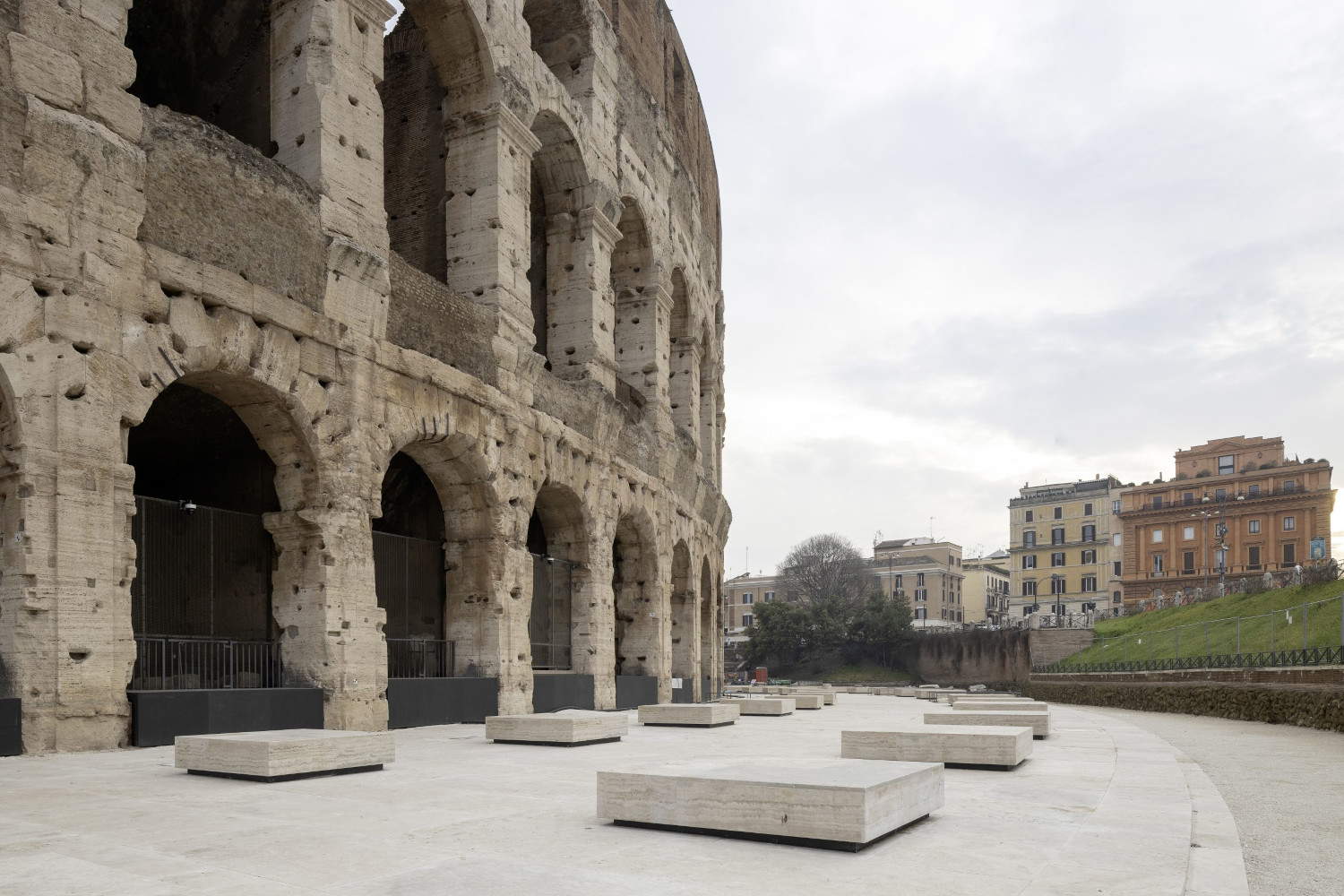
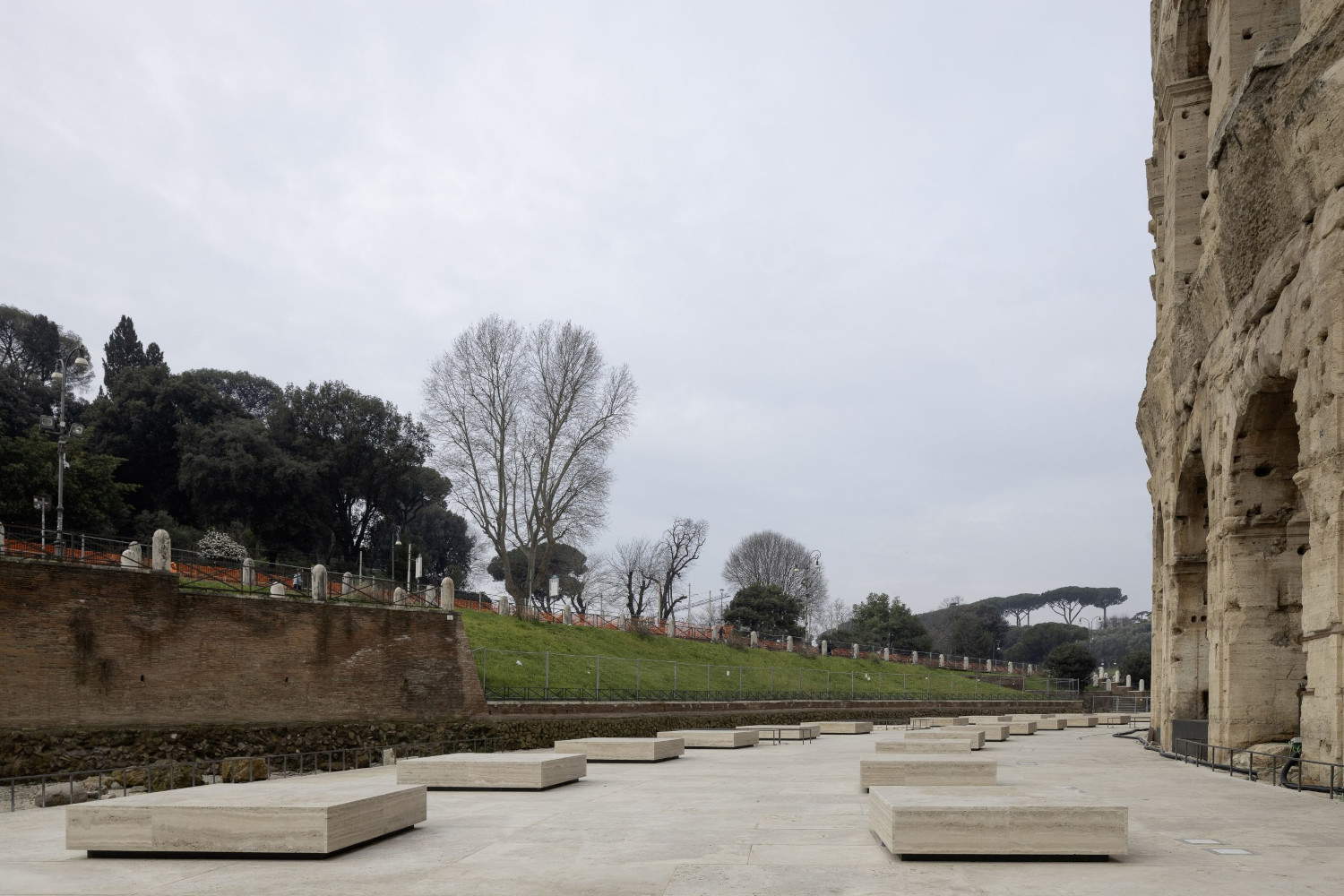
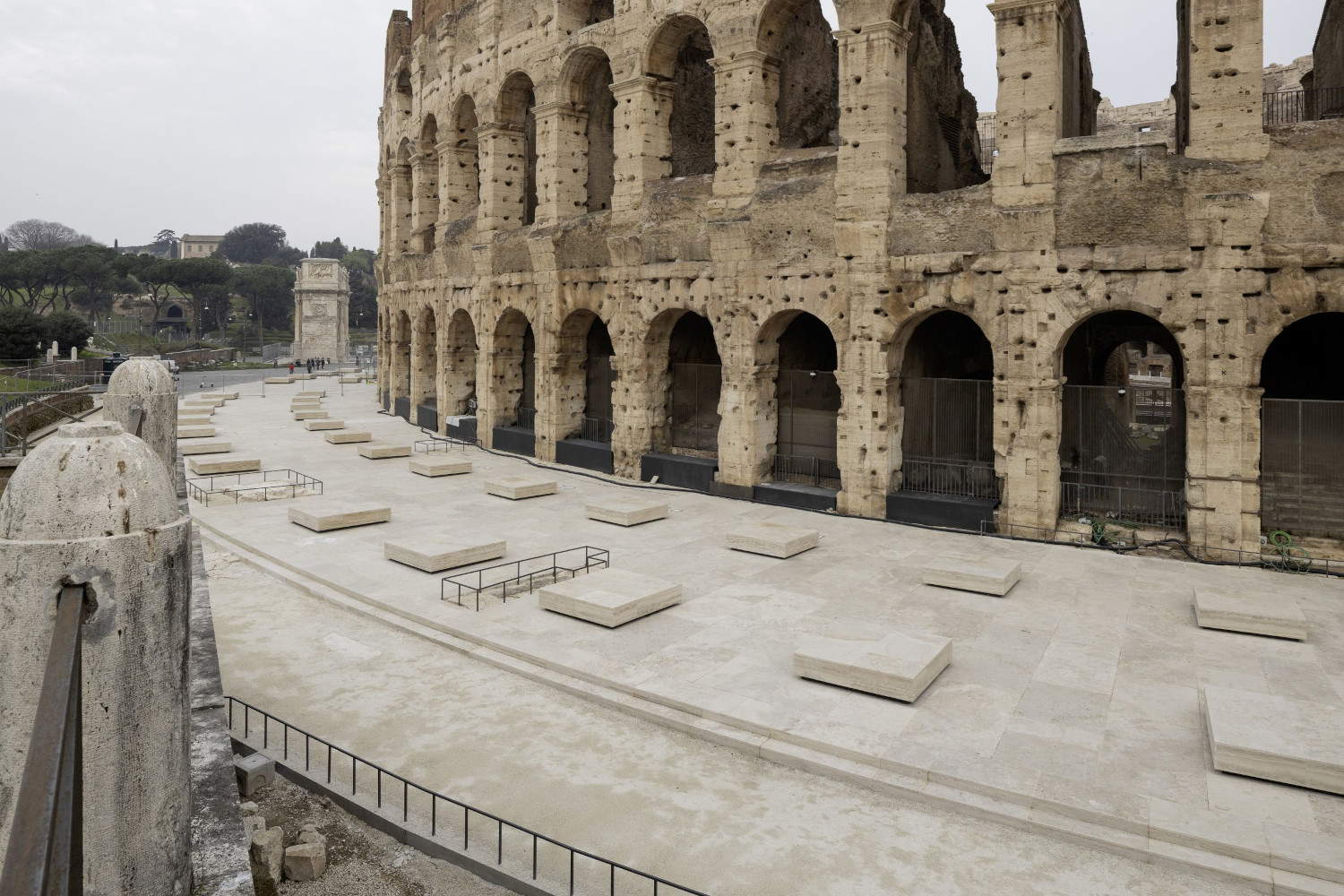
The economic resources for the intervention come from CIPE Resolution No. 67 of 2019, which allocated to the Colosseum Archaeological Park compensatory funds related to the construction of the Rome Metro C. The work included archaeological excavation and travertine paving, laid at the same original elevation as the Amphitheater in Flavian times. This intervention now makes it possible to clearly distinguish the profile of the Colosseum, with its crepidine, from the modern square paved in sampietrini. The new paving, made of the same material as the original one, visually returns to visitors the perimeter of the two missing ambulatories that once occupied the southern side of the amphitheater.


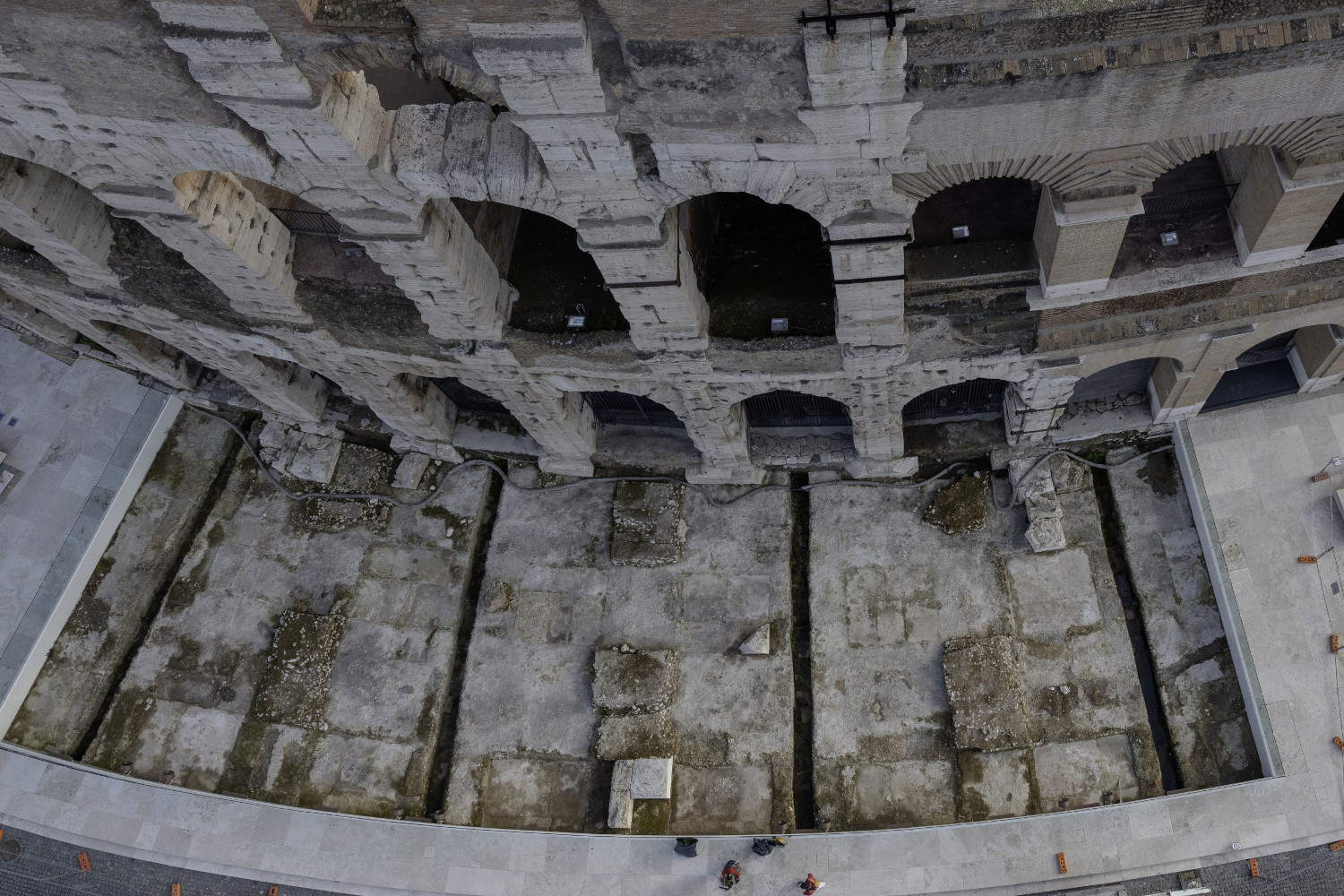
Starting between the 6th and 7th centuries AD, in fact, this part of the monument, from which the emperor originally entered, suffered partial collapse due to the instability of the alluvial soil on which it was built, which was more fragile than the northern side. The sector between the present Stern and Valadier spurs was progressively damaged by earthquakes, reuses and spoliation. Originally, however, this side of the building, with pillars and vaults, also reached a height of about fifty meters, as did the opposite side.
These transformations determined a kind of “second life” for the area. The blocks of the original flooring of the two ambulatories, consisting of juxtaposed blocks each 90 centimeters thick, were in fact removed and reused elsewhere. The remaining floorless spaces were then used as shelters, stables or enclosures, often made from salvaged materials. Later, during major 19th-century restorations, the area was leveled and settled. All these historical phases, stratified between the 7th and 20th centuries and distributed over about 3,000 square meters with a thickness varying between 20 centimeters and one meter, were analyzed and documented by the Colosseum Archaeological Park between 2021 and 2024.
The final elevation reached by the excavations corresponds to the original foundation level of the amphitheater, which is about 23 meters above sea level, recognizable by the remains of the preserved ancient pavement. Only a few travertine blocks have survived from the impressive original floor, which were identified precisely during the excavations. These elements have been preserved and protected through special delineations.
To protect the original pavement preparation plan, a new travertine surface was laid along the ancient walkway between 2024 and 2026. The stone used came from quarries in Tivoli, close to those exploited in Roman times for the construction of the monument. The arrangement of the modern slabs was designed taking as reference the original pattern, reconstructed thanks to the imprints left by the ancient blocks after their removal and the sections of paving still preserved. At the points where the two rows of pillars that supported the vaults of the ambulatories once stood, travertine elements were inserted in the same position and size, but with a simplified shape. These elements, slightly raised above the floor, visually suggest the volume of the lost structures.
Between the fornices numbered LXIV and LXXI, on the other hand, the foundation and the surface of the preparation on which the floor blocks rested was left visible, creating a small archaeological area that shows the construction techniques of the Colosseum. It was precisely thanks to these investigations that it was possible to completely understand the building’s hydraulic system and confirm the dating to the time of Vespasian, as shown by the brick stamps of the sewer channels.
All the interventions carried out were reversible and employed innovative materials developed specifically by Mapei for the Colosseum as part of a technical sponsorship with the PArCo. A new lime-based screed and adhesive were used, free of cement and harmful salts, chemically-physically and mechanically compatible with the original materials but complying with current regulations.
The project and the construction site, developed by the Colosseum Archaeological Park during the direction of Alfonsina Russo, saw Federica Rinaldi as the single project manager and Barbara Nazzaro as director of works. The intervention was completed in February 2026.
The restoration of the ancient surfaces and the original travertine blocks, together with the new arrangement of the southern ambulatories, now allows citizens and visitors to access a part of the Colosseum hitherto not perceived as such, returning a completely renovated area to the community. The recovery of the original elevations, the correct design of the crepidine and the footprint of the collapsed ambulacra now allows a more correct and philologically accurate reading of the monument.
The new pavement, in addition to improving accessibility through dedicated ramps for visitors with mobility difficulties, reconstructs the original perimeter of the amphitheater. Starting from the blocks still present in other sectors of the monument, a travertine slab surface has been created in the southern sector that re-proposes the ancient extension and delimits the original fragments remaining in situ. At the points where the great pillars that supported the building up to about fifty meters in height once stood, stylized travertine elements have been placed that suggest the sequence of radial and annular ambulatories.ì, while on the ground the numbers of the fornixes corresponding to the arches of the facade, which in Roman times guided spectators to find their sector, have been engraved.
Another significant intervention concerns the restoration of the steps of the crepidine, the outer edge of the monument that marked the boundary between the amphitheater and the surrounding area, helping to highlight the monument’s grandeur in the valley between the Caelian, Palatine, Velia and Colle Oppio.
The restoration of the materials that emerged during the excavations was coordinated by Angelica Pujia and involved an area of about 1,300 square meters. The intervention involved several elements of the structure, including the bedding mortars of the floor blocks, the foundations in opus caementicium, the platforms in pozzolanic mortar, the plinths and blocks in travertine, the drainage channels, as well as movable finds such as coins, jewelry and a bust of Jupiter Hegiacus in Pentelic marble. The restoration, based on criteria of compatibility and sustainability, focused particularly on the ancient mortars, which were not originally intended to be exposed to the elements. The intervention also allowed the testing of a new consolidating material developed thanks to the collaboration between the Colosseum Archaeological Park and the University of L’Aquila. This is NanolaQ, a patented product composed of nanoparticles of lime dispersed in water, which combines traditional materials and technological innovation in a sustainable way.
Statements
“At the end of four years of construction work,” said Alfonsina Russo, Head of the Department of Cultural Enhancement, former Director of the Colosseum Archaeological Park, “the Colosseum regains the perception of its original geometry, the result of an initiative of knowledge, investigation, restoration and restitution that has given rise to multiple collaborations with scientific institutions, universities and leading productive realities on the national scene. The archaeological excavations have brought to light a sector of the monument that had been forgotten for fifteen centuries, the one from which in ancient times the Emperor entered the Amphitheater with his retinue, allowing us to delve into several aspects of the Colosseum’s construction and operation that had hitherto only been hypothesized, starting with its efficient hydraulic system. The new arrangement, which leaves part of the archaeological area visible to the public, finally returns this space to the city, which from today will be able to experience a part of the Colosseum of which it was hitherto unaware.”
“From today visitors and Romans will have a new vision of the Colosseum thanks to the arrangement of the archaeological area of the southern ambulatories, a space renewed in its appearance that will be able to welcome the public by narrating the monument in a particular sector: already inside the amphitheater or rather its original profile, but outside. An area that over the centuries has undergone numerous transformations and reuses and that today finally regains its essence, recalling its vestiges also through the skillful re-proposition of its fundamental elements: travertine pavement, crepidines and pillars,” said Simone Quilici, Director of the Colosseum Archaeological Park.
“Designing the space facing the south facade of the Colosseum was an extraordinary experience, lived in close contact with the management and technicians of the Archaeological Park. After the collaboration experienced in the project for the new entrance to the Domus Aurea, the reform of the southern forecourt of the Flavian Amphitheater has finally restored the perception of the original size of the monument and its walking level, while at the same time offering the public the possibility of approaching its walls and imagining the rhythm and sequence of the ambulatories and fornixes now lost. A respectful and at the same time useful project that complements the research carried out with intelligence and care by the archaeologists of the Colosseum Archaeological Park,” commented architect Stefano Boeri.
“We are proud to have contributed to the recovery and enhancement of an area of the Colosseum, one of the most significant monuments in history. Intervening on assets of this value means making our expertise available to culture, combining innovation and tradition with solutions designed to respect the original materials, the historical context and meet the specific needs of each intervention. A commitment that stems from a passion for art and culture and the awareness that it is our responsibility to preserve the artistic-cultural heritage for future generations,” said Marco Squinzi, CEO Mapei.
|
| Colosseum, inaugurated the new layout of the southern ambulatories |
Warning: the translation into English of the original Italian article was created using automatic tools. We undertake to review all articles, but we do not guarantee the total absence of inaccuracies in the translation due to the program. You can find the original by clicking on the ITA button. If you find any mistake,please contact us.