




by Redazione 12/12/2025



Categories: News / Disclaimer
The Holy See's Dicastery for Culture and Education concludes the 2025 program of Conciliation 5 with a project dedicated to the themes of solidarity and social engagement. Brazilian artist Jonathas de Andrade presents a new installation and video work in dialogue with the history of Latin American communities.


From Dec. 11, 2025, to Feb. 22, 2026, the contemporary art project conceived by the Holy See ’s Dicastery for Culture and Education on the occasion of Jubilee 2025 is scheduled to take place in the spaces of Conciliazione 5 in Rome, the fourth and final event in the annual program. The protagonist is Brazilian artist Jonathas de Andrade (Maceió, 1982), considered one of the most relevant figures in his country’s contemporary art scene. The initiative, curated by Cristiana Perrella, concludes a year dedicated to reflecting on social issues that the Dicastery wanted to put in dialogue with the challenges raised by the Jubilee, addressing the tensions and fragilities that cross contemporary societies.


The exhibition project of Conciliazione 5, inaugurated a few steps from St. Peter’s Basilica and conceived as a space open to the city, built over the course of 2025 an articulated itinerary involving artists of different backgrounds and sensibilities. The layout of the program, conceived as a “window gallery” visible twenty-four hours a day, has extended each time to a different city location, creating a dialogue between the work and a context that expands its meaning and symbolic scope. The first appointment of the year had seen Yan Pei-Ming working on the prison condition together with the community of the Regina Coeli jail. Later Adrian Paci had focused his research on travel as a transformative process, while Vivian Suter had explored the relationship between humans and the environment, tracing the vulnerability of ecosystems and their connection to the communities that inhabit them.


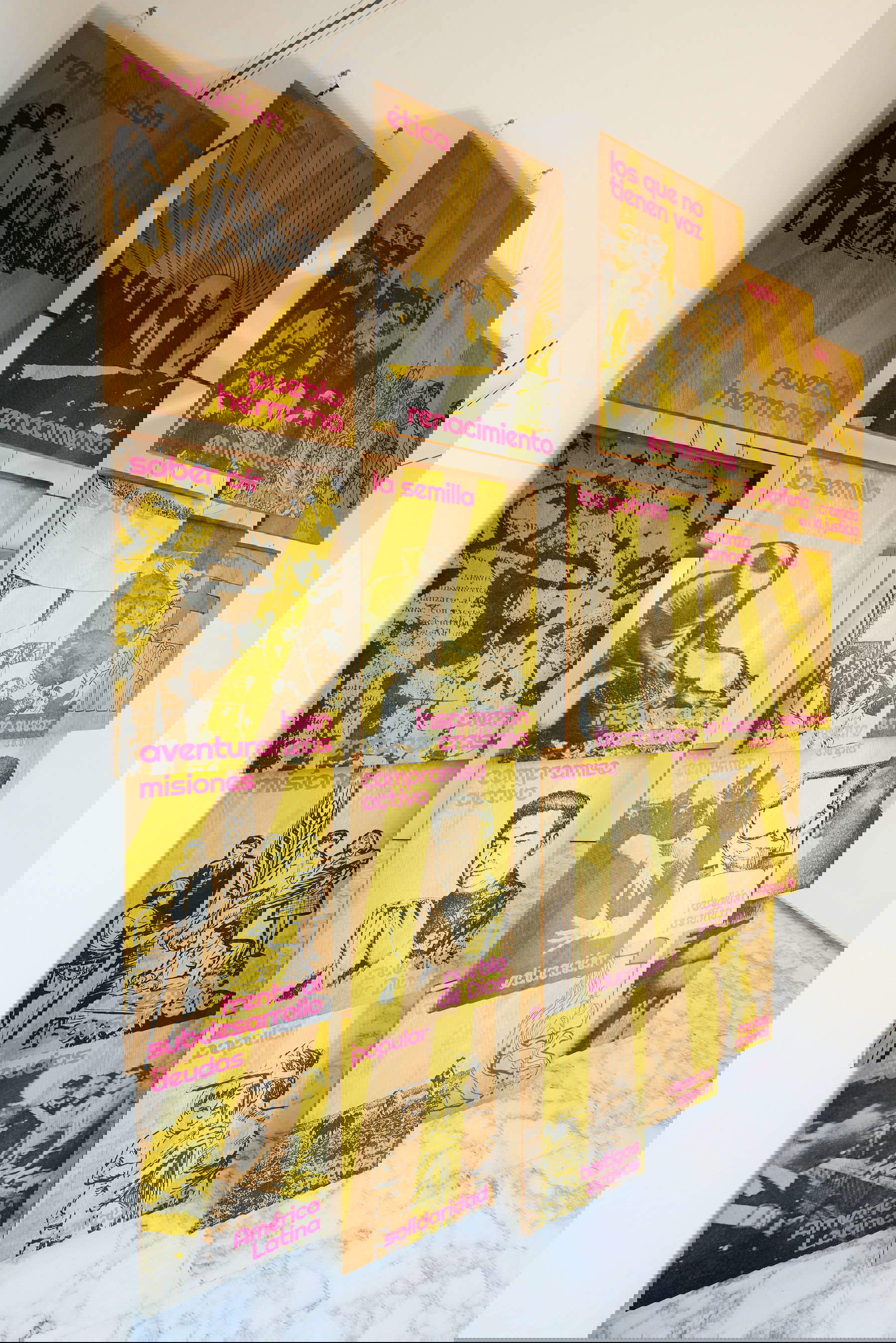
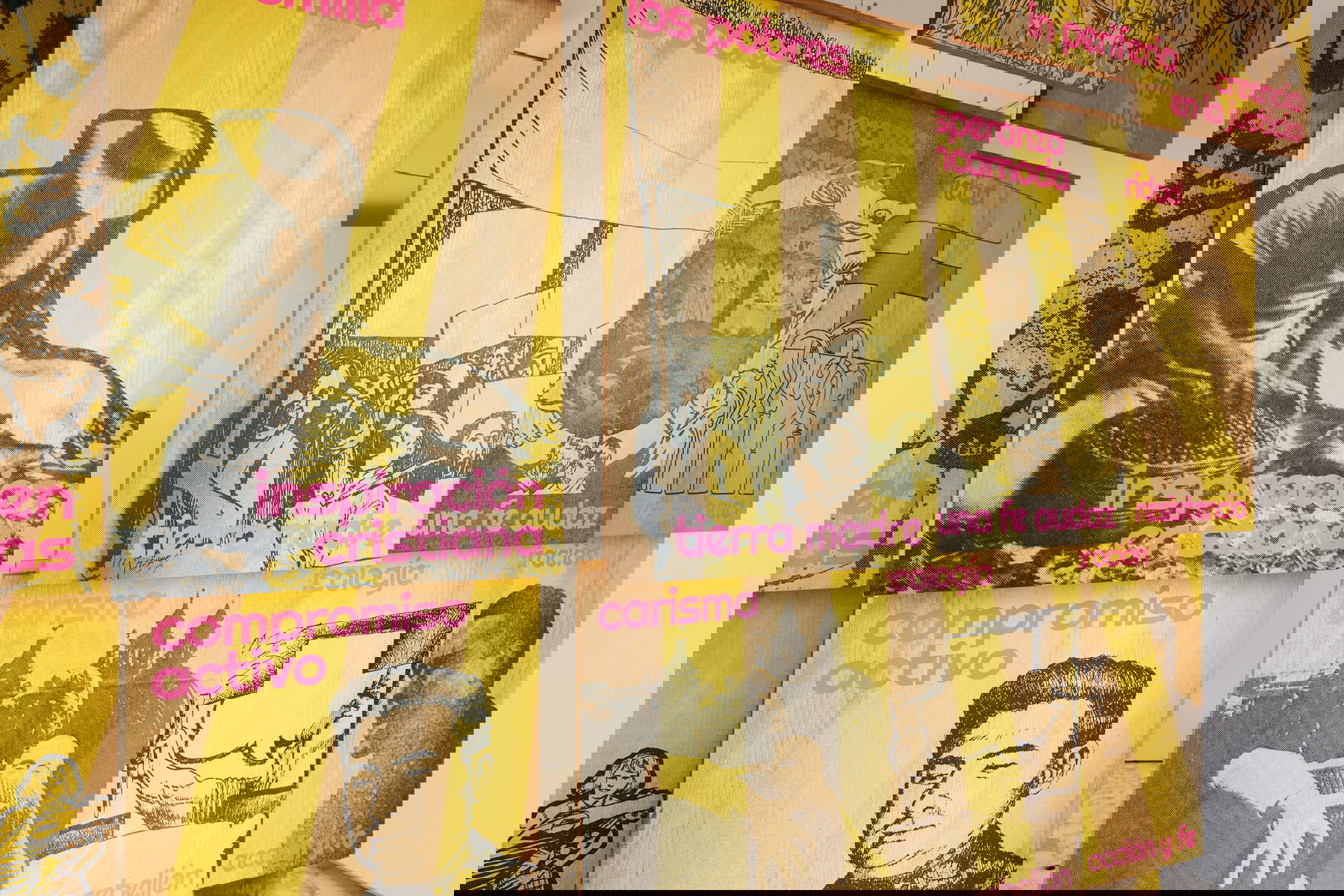
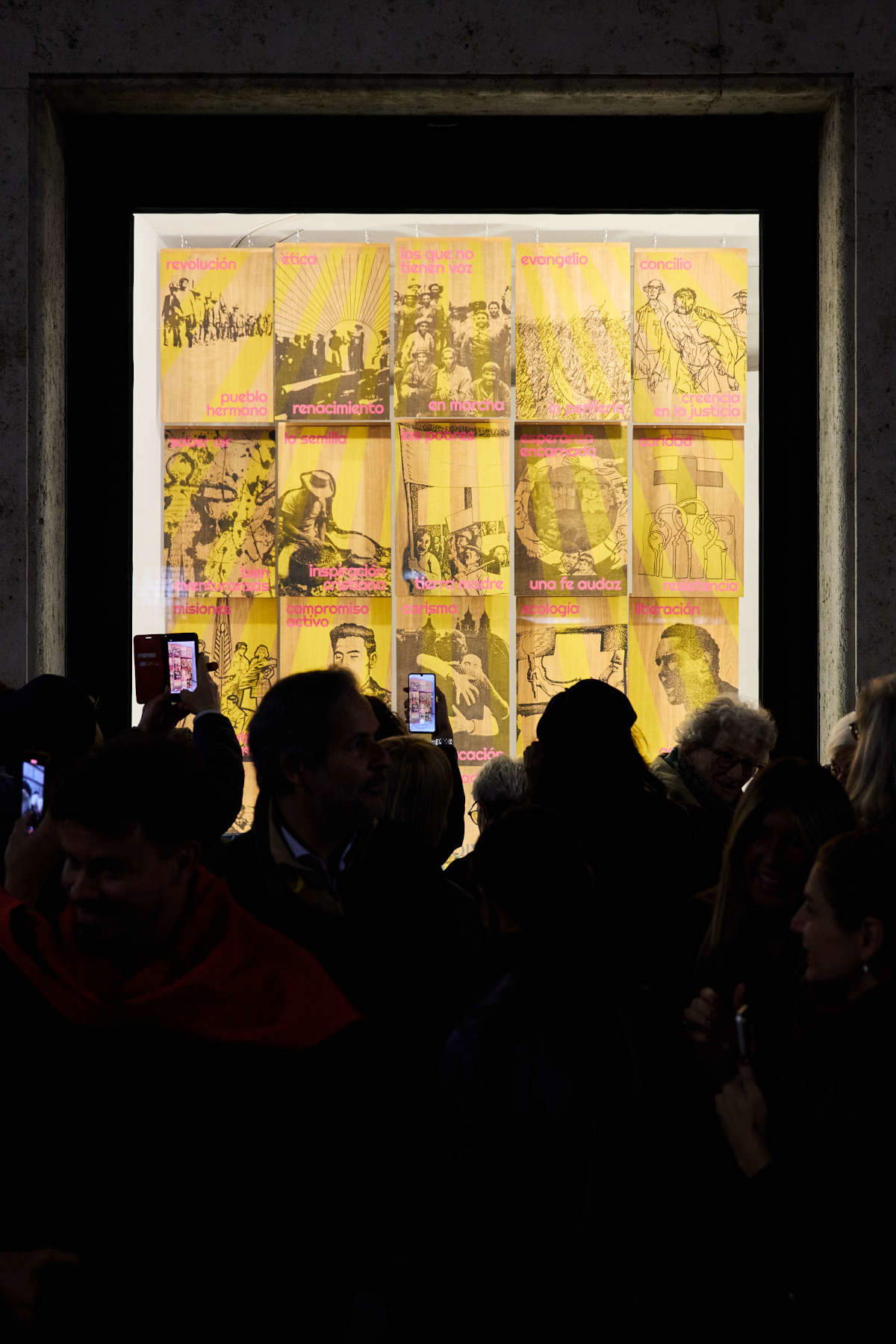
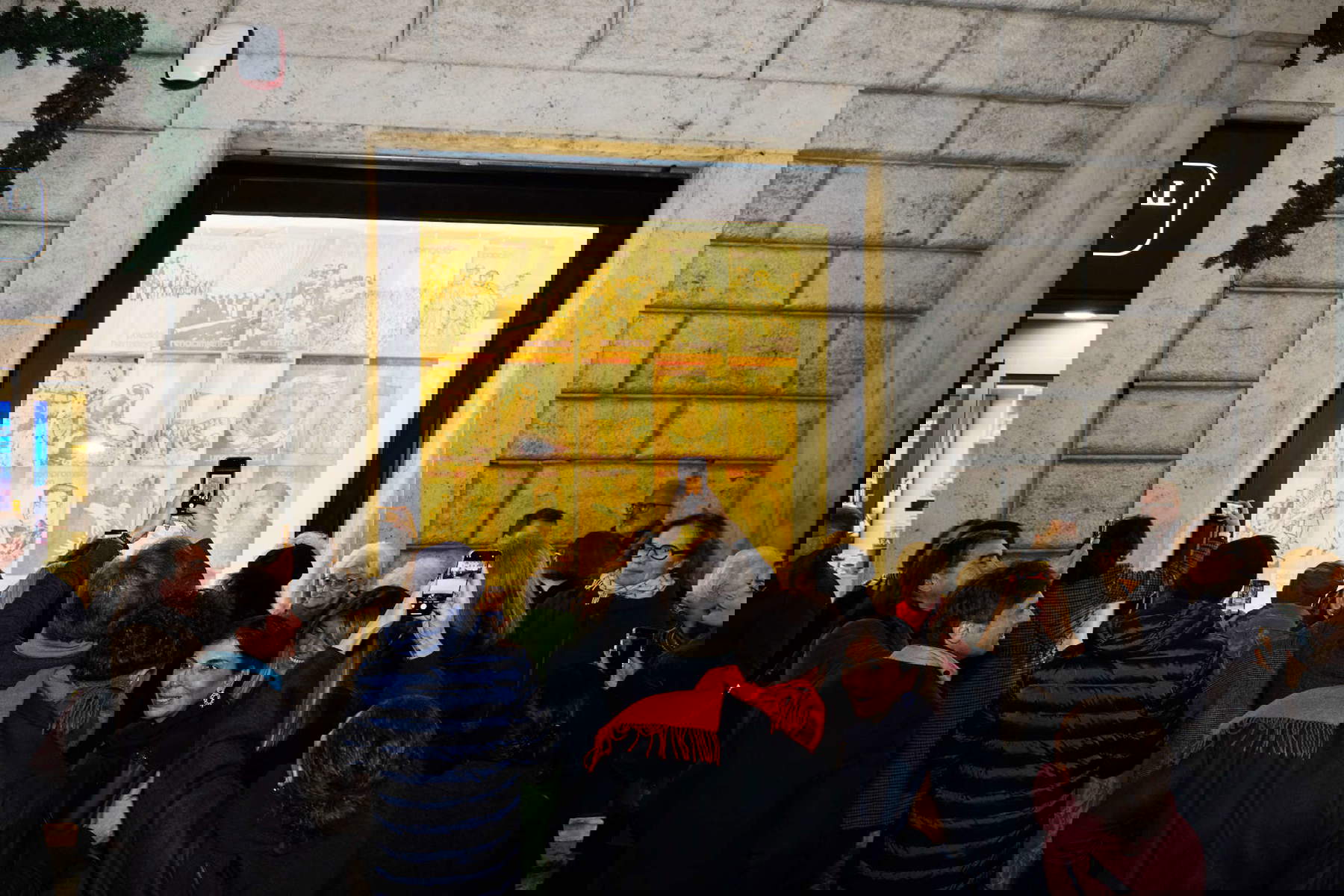
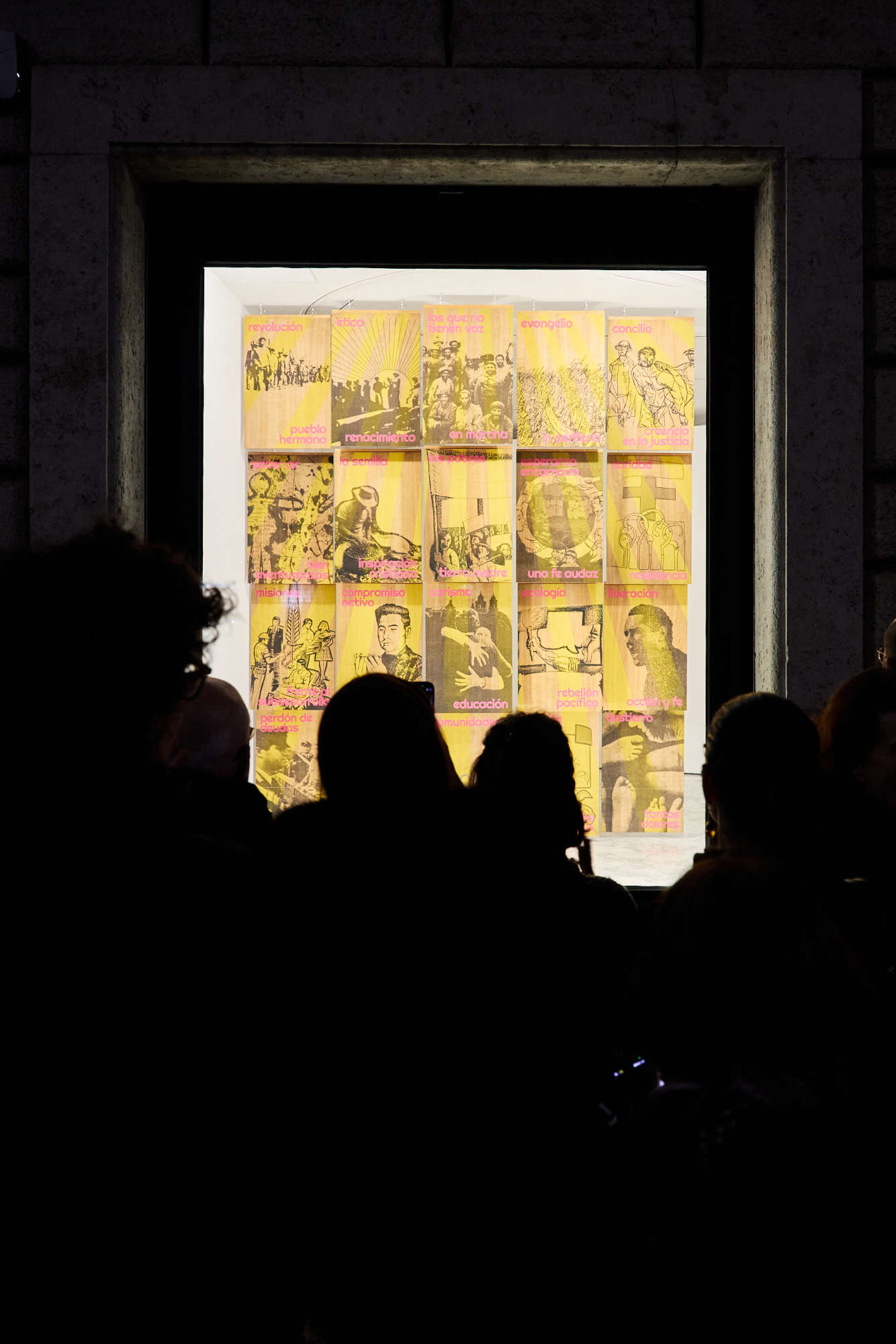
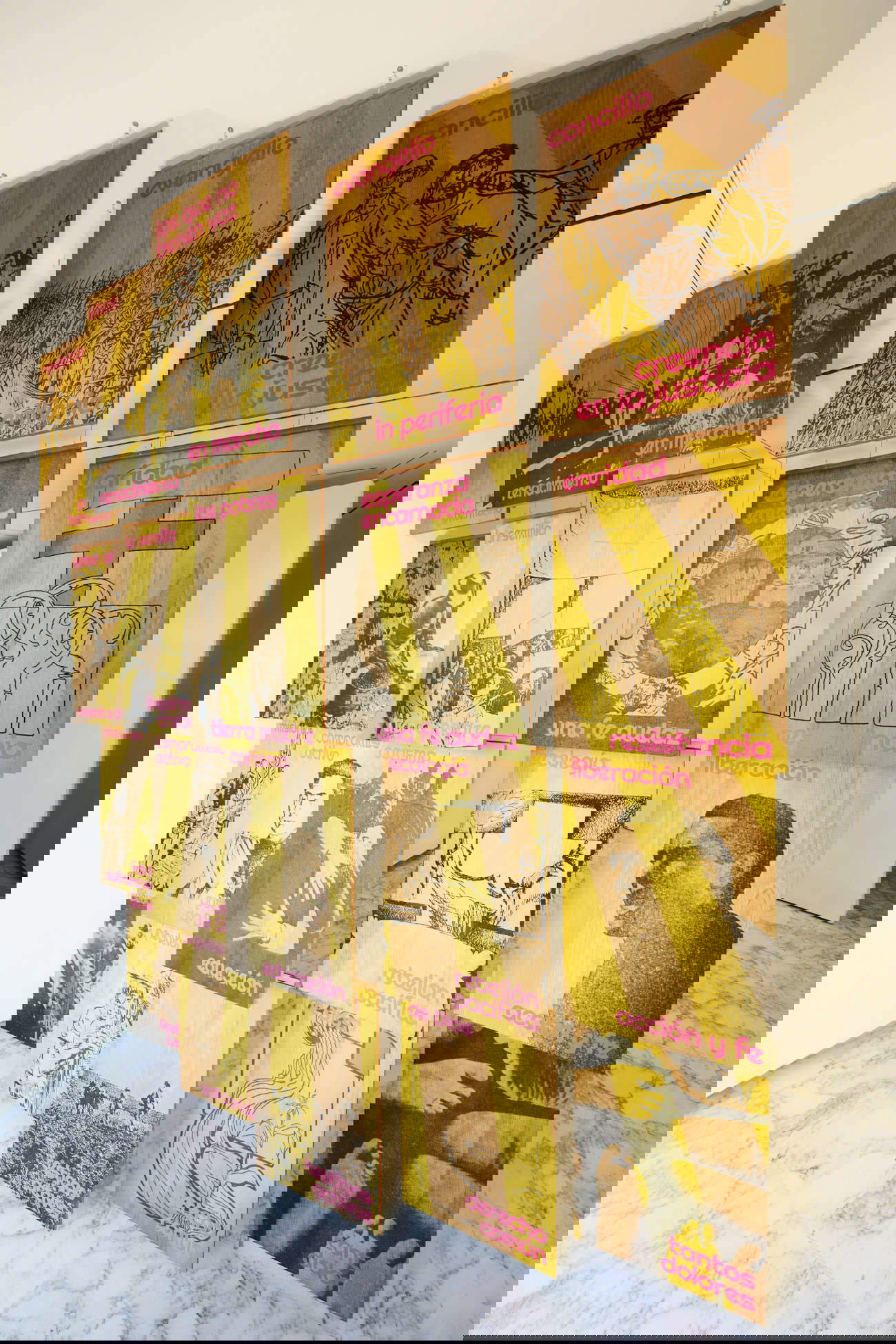
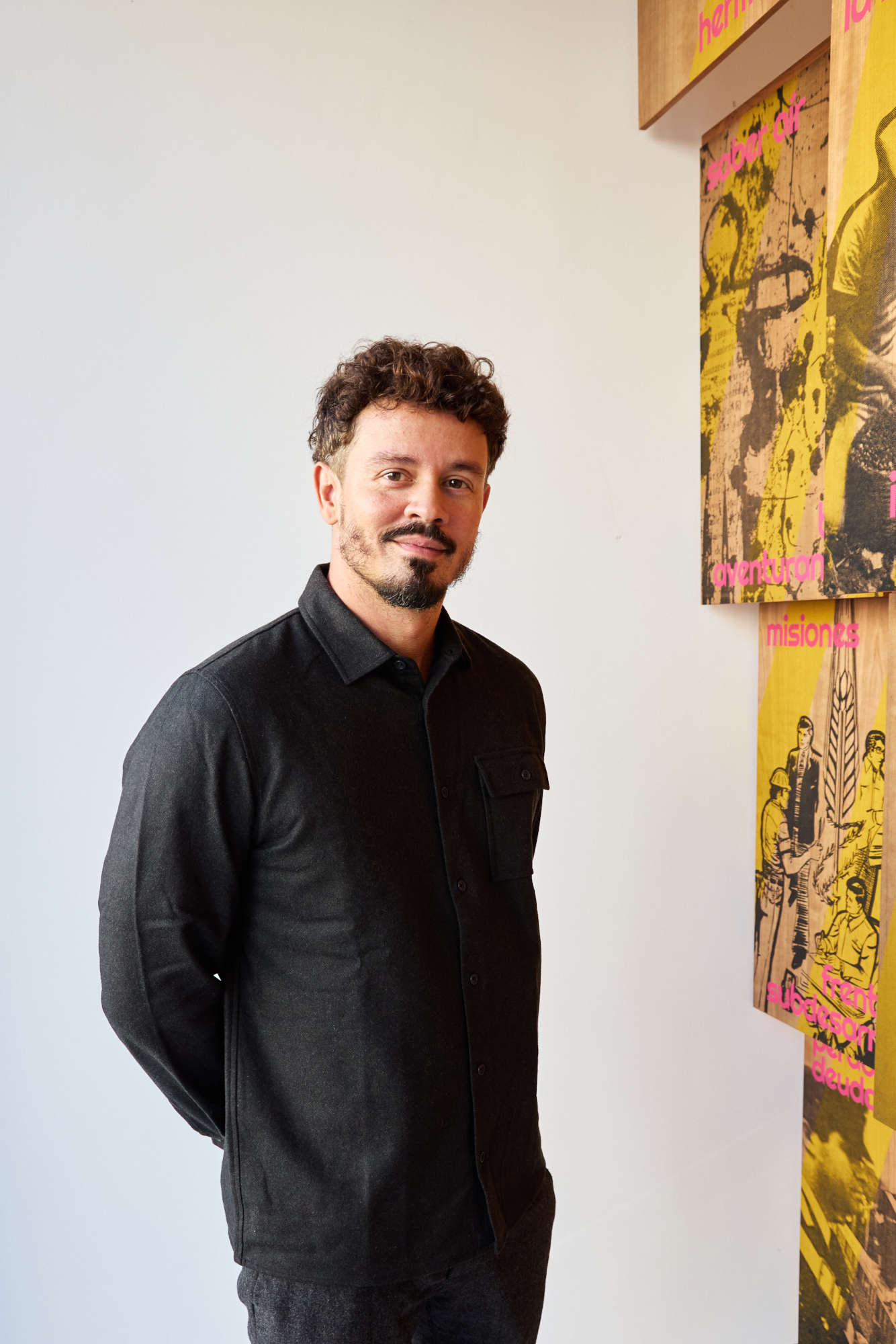
With Jonathas de Andrade, the program closes by addressing the theme of solidarity and social action, questioning the forms through which communities have built paths of mutual support, resistance and sharing. Indeed, the Brazilian artist’s work is connoted by his constant attention to the fractures present in society, thehistorical legacy of popular cultures and the transformations produced by inequalities. His research often interweaves documentation and fiction, collaborations with local groups, performances and narratives that investigate collective memory. In this case, de Andrade creates a project that relates the history of the Latin American movements of the 1960s and 1970s to the city of Rome, a place where religious, political and cultural events relevant to understanding the development of a Christian social thought committed to the causes of the oppressed were intertwined.


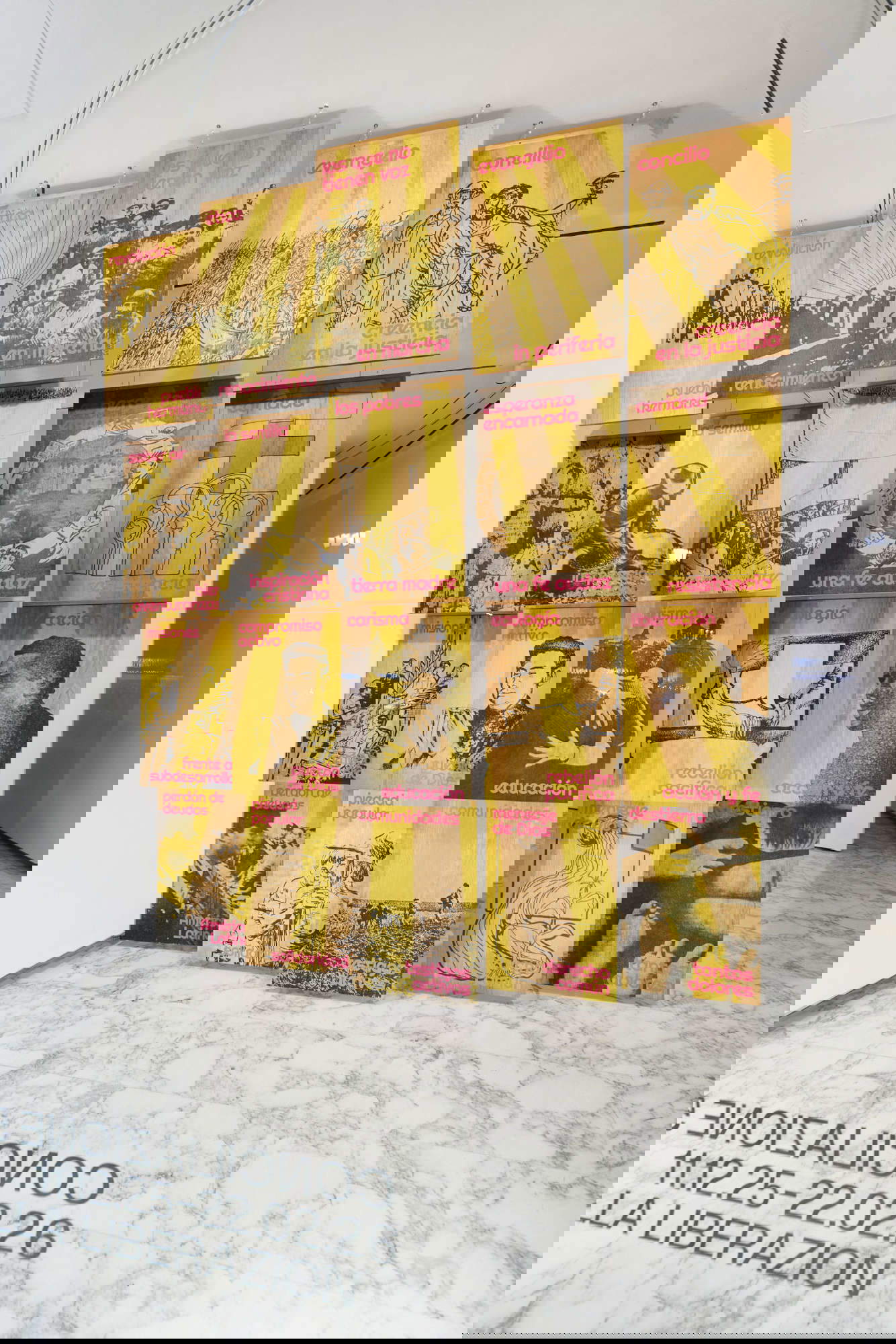
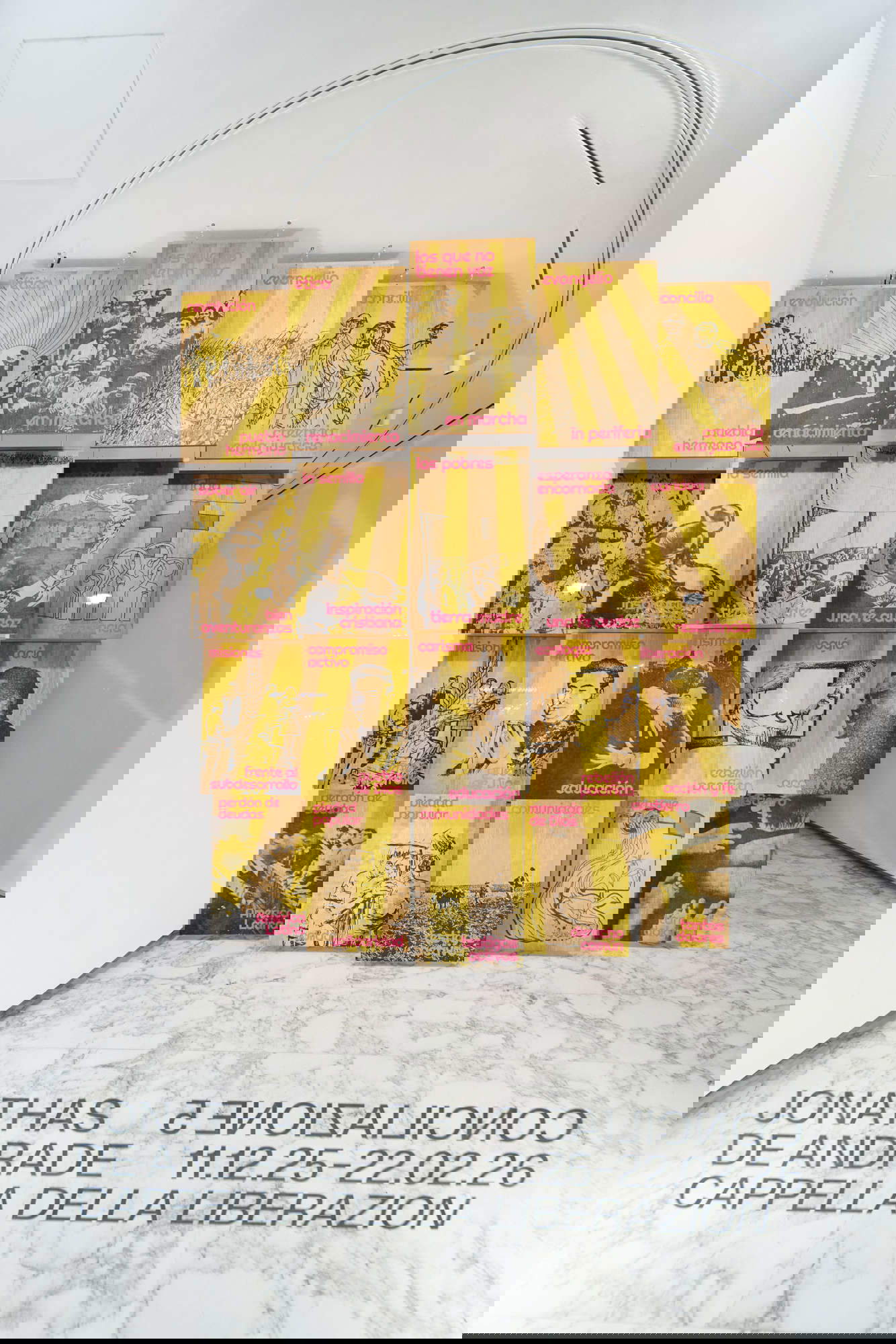
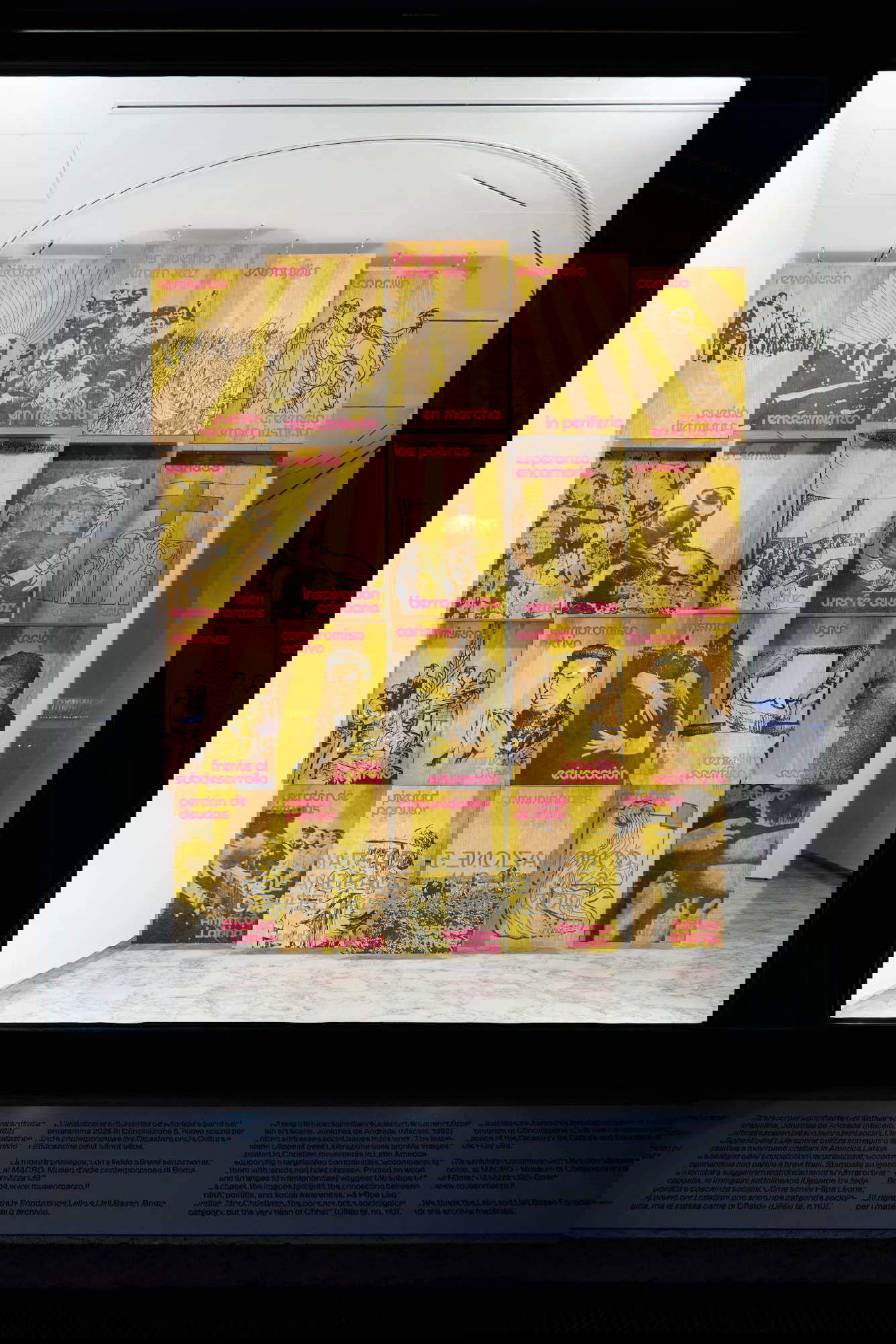
The installation conceived for Conciliazione 5 is presented as a form of visual pedagogy that explores the relationship between art, spirituality and collective engagement. The path of the installation evokes the spirit of Latin American movements that have supported marginalized segments of society, highlighting practices of solidarity born in contexts marked by political violence, poverty and radical economic transformations. The work is interwoven with the Roman history of theologians, activists and political refugees who, over the decades, have found in the capital a place for reflection and confrontation. Central to this look is the archive of the Lelio and Lisli Basso Foundation, established in 1973 and the custodian of documents that are fundamental to understanding the intertwining of faith, politics and social consciousness. The installation does not merely evoke a past, but seeks continuity with the words of Pope Leo XIV’s magisterium contained in the Apostolic Exhortation Dilexi te, which states that the poor do not represent an abstract sociological category, but the “very flesh of Christ,” and that they occupy “the very center of the Church.” These quotations serve as a guide and conceptual framework for the entire project.
In connection with the intervention made at Conciliazione 5, de Andrade presents at MACRO the video Sisters Without a Name, produced by the In Between Art Film Foundation. The work draws inspiration from the story of a community of nuns active in Brazil in the 1960s, which knew how to combine spirituality, political commitment and social action in a period marked by the tensions that preceded the establishment of the military dictatorship. The group of women religious, threatened by the regime, chose to leave the country and move to Rome, where they continued their work on behalf of oppressed people, adopting practices based on anonymity and a careful reading of the Gospel. Their journey bears witness to a way of living the faith based on responsibility toward the least and the ability to combine devotion and concrete action.
The video places this affair in the broader context of the political, economic and social changes that swept through Latin America between the 1960s and 1970s, restoring the ferment of an era marked by demands for justice, attempts at reform and profound contradictions. De Andrade interweaves the experiences of the women religious with the collective action movements of the period and with the pedagogical thought of Paulo Freire, whose theories on liberation and education as a practice of emancipation influenced entire generations. The work also features the figure of Linda Bimbi, a native of Lucca who emigrated to Brazil and then returned to Italy, who collaborated with Lelio Basso in the creation of the Russell II Tribunal on crimes committed in Latin America. Her presence constitutes a bridge between experiences that are geographically distant but united by a similar quest for justice.
Through the combined use of archival materials and direct testimony, de Andrade reconstructs a narrative that restores the poetic and political power of a community of women whose history unfolds between Belo Horizonte and Rome. Their experience becomes a key to interrogating the links between spirituality and social engagement, showing how religious practice can intertwine with the defense of rights and support for the most vulnerable communities. The work invites reflection on the continuity of these forms of resistance and their relevance in a world still racked by conflict, inequality and migration.
|
| Rome, at Conciliazione 5 space Jonathas de Andrade's installation on solidarity |
Warning: the translation into English of the original Italian article was created using automatic tools. We undertake to review all articles, but we do not guarantee the total absence of inaccuracies in the translation due to the program. You can find the original by clicking on the ITA button. If you find any mistake,please contact us.