





One can challenge anything to this Venice Biennale, except the success of Pietrangelo Buttafuoco’s masterpiece of unintentional strategy, repaid by the most fragrant numbers the president could hope for: 10 thousand visitors during the first opening day alone, ten percent more than two years ago, 3.733 journalists of which 70 percent of the international press (they make, therefore, about 900 professionals of the domestic press: on where it is that they winter the rest of the biennium, it will be convenient to talk again, if anything), to which must be added the other 24 thousand accredited in various capacities (it is well known that for a long time the status of VIP is no longer denied to anyone), who jumped on the rides of the Biennale amusement park on the days when the operators of the sector should work. Were it not for the controversies, protests, marches, visits by inspectors, inter-ministerial disputes, letters of reprimand, threats, clashes, meetings, retreats, pavilions that are a little closed a little open a little moved, the lions, the actions, the resignations, the petitions, the demonstrations, the banners, the appeals and the appeals, the early days of the 2026 Biennale would slip away like the steamboats plying the waters of St. Mark’s Basin: a stuff you hear the noise of only if you get on it, but don’t even notice if you walk along the banks. Italians, Berselli said, are in the mood for chatter, and so they immediately jumped into the queue on the first day of opening, allowing the event to come out already this morning with communiqués headlined “public on the rise.”
The regional news and local newspapers that woke up for the opening did not hesitate to intercept the spokesmen of that “growing public”: the Corriere del Veneto, for example, offers an excellent sampling. There are those who repeat that “art should not be politicized.” Those who say that art should be like sports (we hoped he meant athletic, muscular, performing, while instead, much more romantically, one would like it to be free). Those who are incredulous because Russia’s pavilion will be closed for the duration of the Biennale in compliance with European sanctions targeting the federation (public don’t worry, we had a chance to see the pavilion in the days of the press preview and the result was what insiders call, in technical jargon, a crapshoot: a festival that alternated between folk bands engaged in balalaika sessions and unknown DJs playing techno music, with a few faceless people zoning out in front of the mixer: there was more of a queue on the upper floor, set up as an open bar where gin and tonics were served in ufo, will that be enough of a sympathy operation?). On the Veneto TG Rai, a bystander plated by the microphone tries to say, “I’d rather have the people in the industry give the fairest opinion.” A twentieth-century position, a vintage position, a position that for some will also be unimpeachable, of course, but the fact is that it is not clear what the sector is: about the Venice Biennale, these days, in the generalist media everyone has been talking about it except people from the art sector. Take Gramellini’s program on La7: almost an hour-long broadcast on the Biennale, with speeches by Rosi Bindi, Giovanna Botteri, Carlo Calenda, Maurizio De Giovanni and Alessandra Sardoni, i.e., roughly the same people who talk about the crisis in the Strait of Hormuz the week before and the week after about the level of perceived safety in Italian cities (at the limit, the opposition politician or bestselling writer may change, but the substance remains the same). The only insider Gramellini a in the house, namely Jacopo Veneziani, has been relegated, as tradition dictates, to the role of the host of the interlude, the tinsel, the moment of lightening, which is after all the fate of art on television: a parenthesis, a kind of recreation, five minutes and then that’s it because the adults have to get back into the room to talk about serious things.

Of art at the Biennale, in short, it is hard to hear about, unless one lingers over the shenanigans of the Austrian Pavilion with its laggard actionism that, compared to the actionism of sixty years ago, now merely entertains (or, at most, to provide material for the audience’s cameras), or the Japan Pavilion which, however, is certainly the most honest of the entire event in that it is well aligned with the politics and advertising that treat the audience as if it were composed exclusively of five-year-olds (and here, however, the intent is uncovered: the artist hands visitors a baby doll that they must pretend to care for from start to finish). Of everything else, of Koyo Kouoh’s exhibition, of the collaterals, of the barely more interesting pavilions, no one says, no one knows; art not so much as a critical object, for that would be too much grace, but also trivially as an object of which to sketch out an albeit superficial description, is confined to the trade publications.
Not that this is news: outside the outlines, the Venice Biennale struggles to exist. Yet it is an event that has an international audience, it is the world’s leading art exhibition, it feeds an endless circle of concurrent, adjacent, parallel exhibitions (on the fact that the most interesting things there are now in Venice are almost all outside the Biennale circuit, it will be worth talking about again), it moves hundreds of thousands of people. The 2024 Biennale had closed with over 700,000 visitors: that’s a lot, of course, if taken as a stand-alone number, a number that no other exhibition can reach. They are few if one tries instead to scratch the surface just a little: they are meager if one considers that the audience is largely international, they are paltry if one thinks that an event of such a large scale should attract at least the entire “proximity” audience (as those who do tourism marketing call it), they are nothing if compared, for example, to the half million of the Van Gogh exhibition in Rome four years ago (and let’s leave aside the Salone del Mobile or Lucca Comics that call three hundred thousand people in a week: we do not have the means to understand what would happen if they were spread out over six months like the Biennale).
There is a certain distrust of contemporary art, of course (the count of the damage done by Alberto Sordi is still going on). There is a perception that contemporary art is something that does not concern the public of pensioners, administrative employees, couples with strollers, middle school teachers on free day, artisans with the day off, in other words, all that public that also allows our survival and toward whom anyone working in various capacities in art should show a minimum union of gratitude. There is, of course, an obviously unattractive event, devoid of big names (those who are now in Venice are all outside the Biennale: from Marina Abramovic to Anish Kapoor, from Jan Fabre to Jenny Saville, from Jordan Roth to David Salle), fragmented in time, which by its very nature speaks mostly to other artists, to curators, to collectors, to academics, to enthusiasts, to other insiders. There is the fact that the visual arts have for decades lost their dominant art role, surpassed by great momentum by design, fashion, film, music, and as a result there is also a world that is economically irrelevant compared to, design, fashion, film, music, a way lacking the giant advertising ecosystem that fuels the coverage of other art forms. There is a sector that in Italy, compared to other countries, is drowning amidst ambasms of which every insider is perfectly aware.
Ever since Biennale is Biennale, the Biennale has always been avuncular, distant, reluctant, enclosed, snooty, distracted, international, polyglot. And that is to say, everything that our media habitually struggle to chew. If this year’s Biennale has been talked about a little more than in other years, it is because Buttafuoco has turned it into a noisy, fierce, discordant, chatty, separatist, potable, extravagant, attentive Biennale (and s’add then that the resigning pasionaries of the jury and the splitting artists put their own spin on it, and treated it like any other porchetta festival).

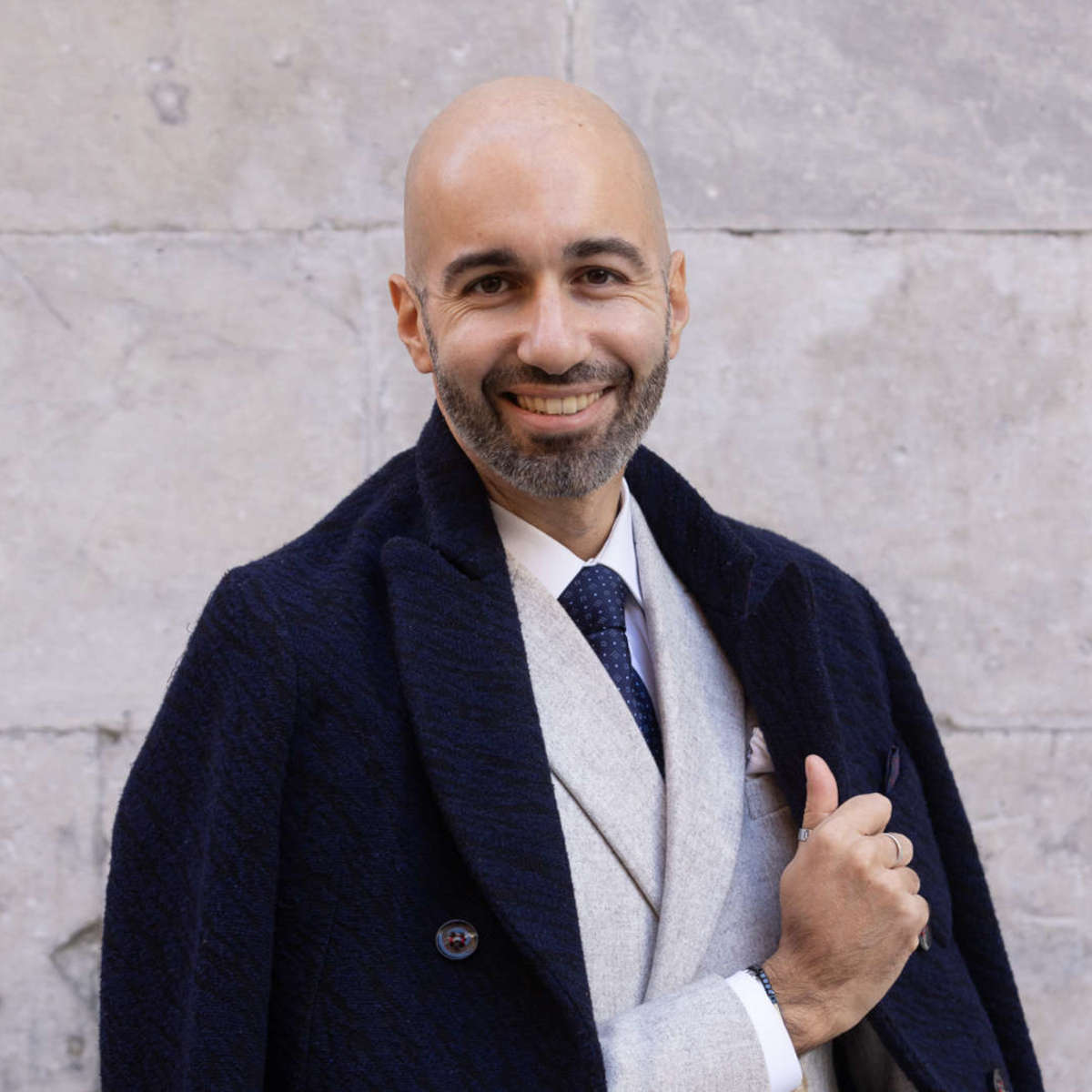
The author of this article: Federico Giannini
Nato a Massa nel 1986, si è laureato nel 2010 in Informatica Umanistica all’Università di Pisa. Nel 2009 ha iniziato a lavorare nel settore della comunicazione su web, con particolare riferimento alla comunicazione per i beni culturali. Nel 2017 ha fondato con Ilaria Baratta la rivista Finestre sull’Arte. Dalla fondazione è direttore responsabile della rivista. Nel 2025 ha scritto il libro Vero, Falso, Fake. Credenze, errori e falsità nel mondo dell'arte (Giunti editore). Collabora e ha collaborato con diverse riviste, tra cui Art e Dossier e Left, e per la televisione è stato autore del documentario Le mani dell’arte (Rai 5) ed è stato tra i presentatori del programma Dorian – L’arte non invecchia (Rai 5). Al suo attivo anche docenze in materia di giornalismo culturale all'Università di Genova e all'Ordine dei Giornalisti, inoltre partecipa regolarmente come relatore e moderatore su temi di arte e cultura a numerosi convegni (tra gli altri: Lu.Bec. Lucca Beni Culturali, Ro.Me Exhibition, Con-Vivere Festival, TTG Travel Experience).
Warning: the translation into English of the original Italian article was created using automatic tools. We undertake to review all articles, but we do not guarantee the total absence of inaccuracies in the translation due to the program. You can find the original by clicking on the ITA button. If you find any mistake,please contact us.

















 IT
IT FR
FR DE
DE ES
ES CN
CN


