





At the Ursuline Monastery Museum in Calvi dell’Umbria (Terni), one of the most significant art collections preserved in a small Italian town is preparing to reopen to the public. Starting in March 2026, the museum will once again house the Chiomenti Vassalli Collection, a heritage of more than 150 works spanning five centuries of European art history, from the 15th to the 19th century, with paintings, sculptures and decorative works of important historical and artistic value. The exhibition project, curated by Claudio Crescentini and Federica Zalabra, aims to return to the public an itinerary capable of relating the artistic heritage to the architectural and landscape context that hosts it.
The selection of works on display offers a look at Italian and European painting and sculpture between the 15th and 19th centuries, with a special focus on the genre of the historical portrait, one of the most fascinating nuclei of the collection. Among the most significant presences are the papal portraits, evidence of the central role of ecclesiastical patronage in the construction of the image of power. Standing out in this sphere are the two portraits of Pope Clement IX Rospigliosi, both dated 1669 and made respectively by Carlo Maratta and Giovan Battista Gaulli, known as Baciccio, flanked by the Portrait of Pope Gregory XIV, painted between 1590 and 1591 by Jacopino del Conte.
Of particular intensity is the Portrait of Cardinal Scipione Borghese, executed by Lavinia Fontana between 1610 and 1611. The work takes on added value today in light of the renewed critical interest in the figure of Fontana, recognized as one of the greatest painters of her time and the protagonist of a path of rediscovery that is part of the broader debate on gender balance in art history. Alongside these masterpieces, Jacob Ferdinand Voet’s Portrait of Queen Christina of Sweden, dated 1670, is striking for its refined iconographic construction that depicts the sovereign in the guise of a young Minerva, blending political celebration and mythological allusion.
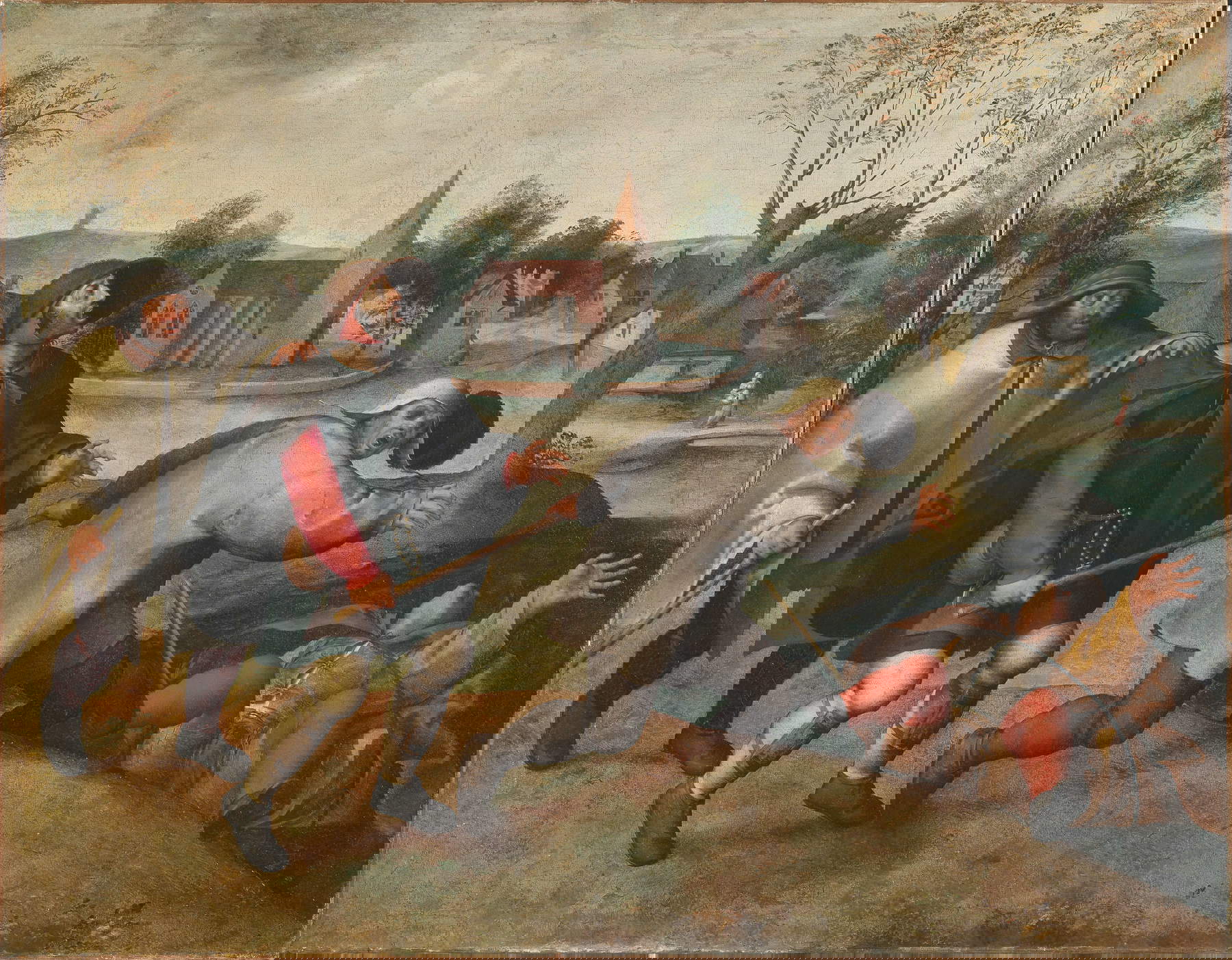
The symbolic and narrative heart of the collection finds space in the Hall of Masterpieces, where some of the most representative works of the entire exhibition are concentrated. Among them, Pompeo Batoni’s The Escape of Aeneas from Troy , painted in 1755, dialogues with Pieter Brueghel the Younger’s The Parable of the Blind, painted in 1610. In the latter work, the artist reinterprets the famous Gospel episode in a contemporary key, placing it in the climate of religious tensions between Catholics and Protestants that marked early 17th-century Europe. Alongside these paintings is Gaspar van Wittel’s View of the Vaccine Field, a precious tempera on parchment dating from the first decade of the 18th century, recently restored by technicians from the Central Institute for Restoration, which restores a rigorous and poetic look at ancient and modern Rome.
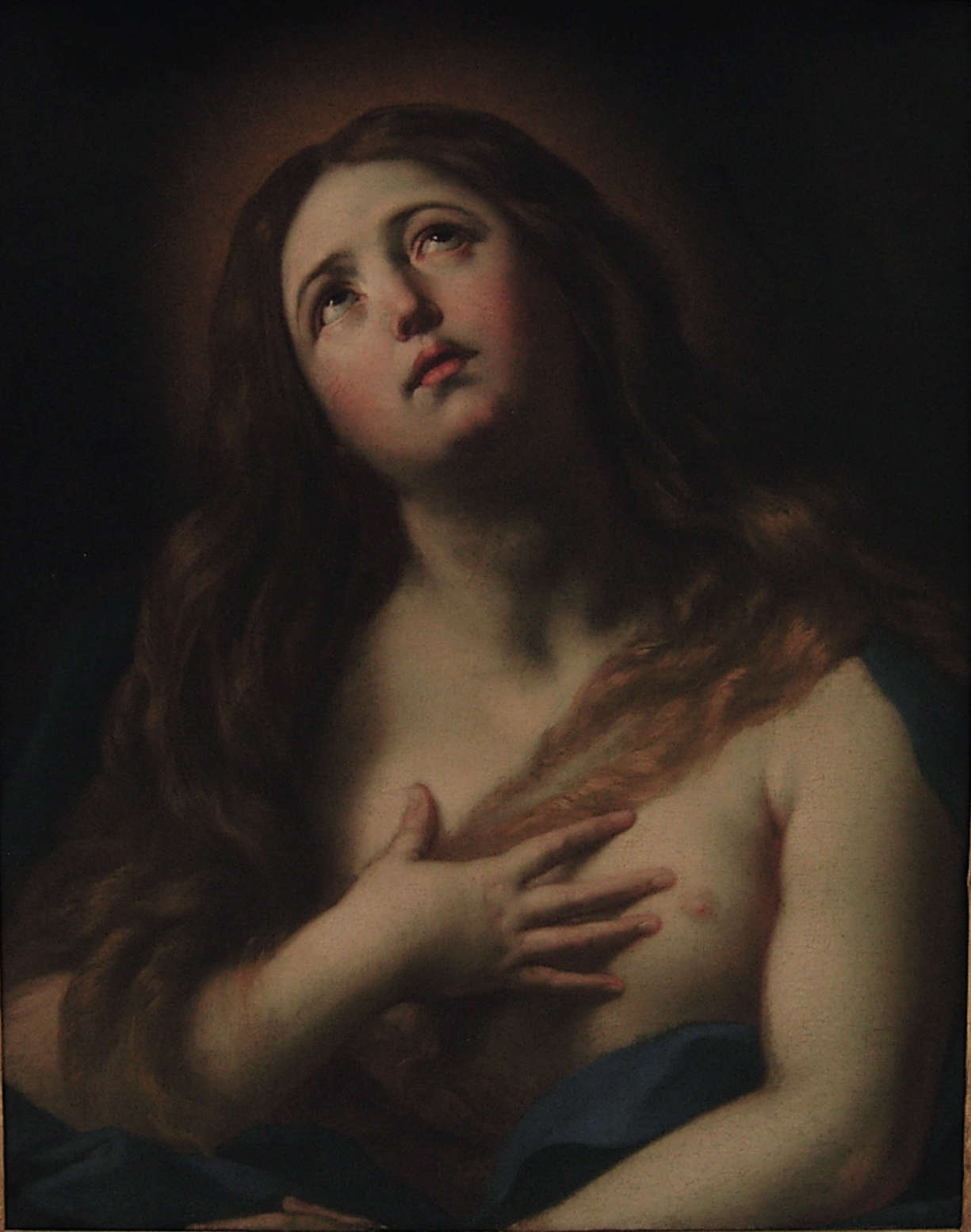
The room also houses The Calling of St. Peter and St. Andrew by Pietro da Cortona, dated 1630, and a Penitent Magdalene by Guido Reni, painted between 1634 and 1635. Another section is the Hall of Landscapes, where the layout is designed to relate views painted between the seventeenth and eighteenth centuries to the actual panorama beyond the museum’s windows. Works by artists such as Pompeo Batoni, Giacomo Guardi, Pietro Mantanini and Marco Ricci dialogue with the Umbrian valley that stretches before the visitor’s gaze, creating a direct confrontation between artistic representation and natural landscape, between history and the present.
The Chiomenti Vassalli Collection is also distinguished by the nucleus dedicated to sculpture and decorative arts. Among the most refined works is a triptych of bronze plaquettes by Galeazzo Mondella known as “il Moderno,” depicting theAdorationof the Magi, theAdoration of the Shepherds andEcce Homo, testimony to the mastery of bronze workmanship and chiseling between the 15th and 16th centuries. Also of great historical and artistic value is the series of busts and bas-reliefs, including those dedicated to Pope Clement VIII Aldobrandini, made in 1593 by Bastiano Torrigiani, and Pope Innocent XI Odescalchi, sculpted in 1680 by Lorenzo Ottoni, an artist trained in the Bernini school of Ercole Ferrata.
Housing the collection is the Museum of the Ursuline Monastery, located inside the 17th-century Palazzo Ferrini, an architectural complex enlarged in the 18th century by Ferdinando Fuga, an interpreter of Borromini Baroque. The building, originally intended for the Ursuline nuns, has a four-wing layout on two levels, organized around a large inner courtyard, with cells arranged on three sides and a connecting corridor on the fourth. The architectural layering of the complex helps create a continuous dialogue between the works on display and the space that houses them.
The museum will officially reopen on March 1, 2026. Until May, and then from October, it will be open to visitors on Saturdays from 3 to 6 p.m. and Sundays from 11 a.m. to 1 p.m. and 3 to 6 p.m., while from June to September the hours will be Saturdays from 4 to 7 p.m. and Sundays from 11 a.m. to 1 p.m. and 4 to 7 p.m. The museum will be closed from Jan. 7 to Feb. 28, Dec. 25 and the morning of Jan. 1. Access by reservation is available outside opening hours, with reservations required for groups and schools.
The admission ticket allows not only a visit to the collection, but also access to the 16th-century painted terracotta Monumental Crib, the ancient kitchens designed by Ferdinando Fuga, the washhouse, the apothecary’s shop and the wood store. Complementing the cultural offerings are in-depth videos that can be viewed online, which take visitors on a tour of the collection’s environments, landscapes and portraits.
|
| Calvi dell'Umbria, Chiomenti Vassalli Collection once again open to visitors |

Warning: the translation into English of the original Italian article was created using automatic tools. We undertake to review all articles, but we do not guarantee the total absence of inaccuracies in the translation due to the program. You can find the original by clicking on the ITA button. If you find any mistake,please contact us.






















 IT
IT FR
FR DE
DE ES
ES CN
CN


