



by Noemi Capoccia 07/05/2026



Categories: Ancient art / Disclaimer
The Egyptian Museum launches ME-Scripta, an international research center dedicated to papyri and ostraca, between restoration and digitization of Ancient Egyptian written sources, with an investment of about 3 million euros from the CRT Foundation.
ME-Scripta, a new research center of the Egyptian Museum dedicated to the study, restoration and digitization of Ancient Egyptian written sources, is born in Turin. The initiative is part of a long-term scientific program that aims to integrate philological research, materials conservation and advanced digital technologies for the management and dissemination of the Egyptian textual heritage. The project is made possible by an investment of about 3 million euros from the Fondazione CRT, the initiative’s main supporter. The Foundation, a founding partner of the Fondazione Museo delle Antichità Egizie di Torino (Museum of Egyptian Antiquities Foundation of Turin), has been supporting the development of the Turin institution for more than 20 years, contributing continuously to its transformation and enhancement.
ME-Scripta was established as an internal structure of the Egyptian Museum, endowed with its own scientific and operational organization. The center is directed by Susanne Töpfer, curator in charge of the museum’s papyrological collection, and includes a staff of two curators, three collaborators, an apprentice, and a data manager. The goal is to build a stable platform for interdisciplinary research that can work continuously on one of the world’s most relevant documentary cores for the study of ancient Egypt.


The Egyptian Museum, internationally recognized as one of the leading institutions in the field of Egyptology, strengthens its scientific vocation with ME-Scripta. The new center focuses in particular on a collection of about 1,000 manuscripts, including intact documents and reassembled materials, and more than 30,000 fragments. The documentary complex covers a chronological span of more than 3,000 years and includes texts in seven writing systems and eight languages, shaping up as one of the largest and most articulate papyrological collections in the world.
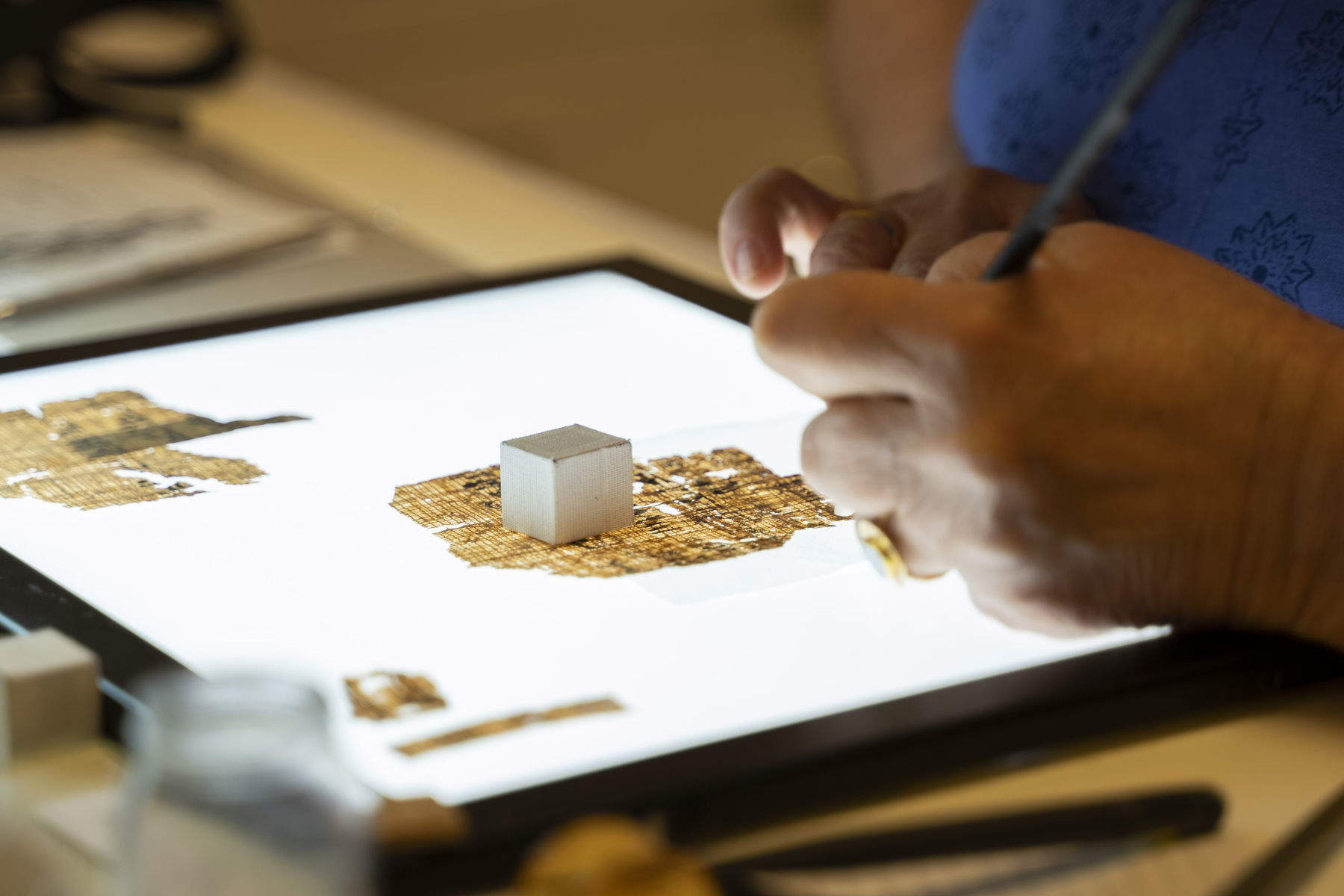
The center’s stated goal is to make these sources increasingly accessible to the international scientific community and the public through an active and structured research program. The project is based on the integration of humanistic and scientific disciplines, combining papyrology, philology, applied computing and advanced imaging techniques. The interdisciplinary approach allows materials to be addressed through multispectral analysis and digital tools for the preservation and reconstruction of the original media.
ME-Scripta’s scientific program is divided into three main macro-projects, developed in collaboration with national and international academic institutions, including theUniversity of Turin and theInstitut Français d’Archéologie Orientale in Cairo.
The first strand concerns papyri and philology. Activities include the reassembly and study of the Assiut cartonnage and the analysis of fiscal, economic and literary texts dated between the 3rd and 2nd centuries B.C.E., which are fundamental for understanding the administrative systems of Ptolemaic Egypt. The project also involves the critical edition of some 25 unpublished demotic manuscripts from Gebelein, documenting aspects of temple life, land tenure and priestly archives.
Within the same strand falls a study devoted to the role of women in the Book of the Dead, based on the systematic analysis of women’s funerary scrolls with attention to the relationship between iconography and religious function. A further intervention concerns the famous Book of the Dead of Kha, dating back to the 15th century B.C., which will undergo advanced restoration, multispectral imaging and a new critical edition. Completing the picture is the ECHiMaP project, dedicated to the development of methodologies for the removal of non-conservative supports and adhesives applied in historical papyrus restoration interventions.
The second macro-project is devoted to ostraca, scriptural supports consisting of limestone or ceramic fragments. The study of demotic ostraca from Pathyris, in the Gebelein area, provides insight into the dynamics of social mobility and tax systems of the 2nd century BCE. In parallel, the project covers 560 hieratic fragments from Deir el-Medina, the craftsmen’s village of the royal tombs in the Valley of the Kings. The material will be restored and published in a systematic edition. The work also includes a collaboration with the IFAO in Cairo to analyze fragmentary finds preserved between Turin and the Egyptian capital.
The third area of research, called RE-BIND, is devoted to the study and restoration of seventeen Coptic bindings belonging to the museum’s collections. These are complex artifacts, composed of layers of leather, papyrus and cartonnage, dating between the 7th and 8th centuries. The analysis makes use of advanced techniques such as FT-IR spectroscopy, X-ray microtomography, 3D imaging, and the RTI technique, tools that allow the virtual reconstruction of the original volumes and their framing in the monastic context of origin. A further development of the project concerns the digital dimension. By 2034, an integrated platform is planned to extend the current TPOP system, dedicated to papyri, to ostraca, parchments, and bindings. The new digital infrastructure will be based on IIIF-format images, digital transcriptions and links to international databases, shaping up as the first systematic archive dedicated to Egyptian writing over 3,000 years.
ME-Scripta also envisions direct spillovers to the Piedmont region. The project will involve post-doc researchers, restorers and computer scientists, with the activation of specialized training paths. Over a nine-year period, it is estimated to involve more than 150 professionals through international summer schools, internships and workshops dedicated to techniques such as multispectral imaging, TEI-XML and advanced restoration.
Alongside research, the center develops an educational and outreach dimension. There are bilingual educational activities, in Italian and English, aimed at schools and universities, as well as specific programs for Piedmontese schools. Laboratories, study days and workshops will help integrate the center into the cultural fabric of the area. Dissemination of results will also take place through physical and digital exhibitions, while the ME-Scripta platform will be accessible as an international educational resource for students, teachers and general audiences interested in Ancient Egyptian writing.
Statements
“Two hundred years after its founding,” said Egyptian Museum President Evelina Christillin, “the museum is increasingly focusing on research. In the nineteenth century, the arrival of the collections marked the beginning of our institution and made Turin an international point of reference for the study of ancient Egypt. The twentieth century brought the start of the great season of excavations, and today, thanks to the generosity and foresight of the CRT Foundation, a 10-year project that places the study of papyri and ostraka at the center of its focus is underway. The goal is to publish the material, develop critical editions and continue in the education of new generations. Our ambition is to become an international center of reference for the study of hieratic writing.”
“Today we mark a significant step for the city and for the country: the birth of the ME-Scripta center that combines history, culture, technology and research,” says CRT Foundation President Anna Maria Poggi. “A center of excellence in scientific research and the study of an invaluable heritage, made possible by a well-established public-private partnership between the Egyptian Museum and Fondazione CRT. This is a project with a multi-year vision, which is part of the strategic lines identified by Fondazione CRT in the 2026-2028 Multi-year Planning Document, and on which significant resources will be invested. A strategic investment that aims not only to preserve, enhance, and make accessible to the scientific community and the community an extraordinary heritage of the history of Ancient Egypt, which is also part of our history, but also to strengthen Turin’s role as an international reference point for cultural innovation and research, areas to which we have always been strongly committed.”
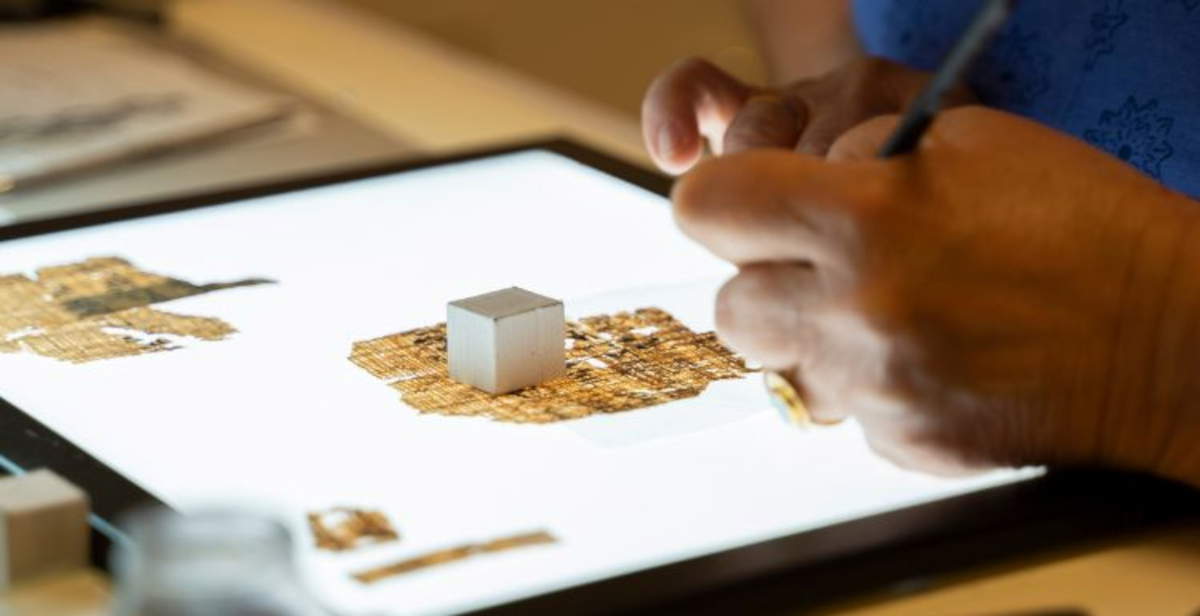 |
| From papyrus to digital: a research center on written sources is born at Turin's Egyptian Museum |
Warning: the translation into English of the original Italian article was created using automatic tools. We undertake to review all articles, but we do not guarantee the total absence of inaccuracies in the translation due to the program. You can find the original by clicking on the ITA button. If you find any mistake,please contact us.