





One of the seminal paintings in the catalog of Giacomo Francesco Cipper (Feldkirch, 1664 - Milan, 1736), Still Life with Plate of Olives, Plate of Figs, Cheese, Celery a Bottle and Chalice, signed and dated 1700, was sold by the Matteo Salamon Gallery during the 2026 edition of TEFAF to a major northern European collector. The work, most likely destined for a museum future, will initially be loaned to an institution, in a path that could stabilize over time with a more permanent stay within a public collection.
The painting is a small oil on canvas, 49.5 by 67.5 centimeters, signed and dated at lower right with the words “Giacomo Francesco Cipper Todesco 1700.” Coming from a private collection in Como, it represents a key piece in the reconstruction of the artist’s catalog, because it is the earliest signed and dated work by the artist that is known today, and this circumstance adds significant elements for understanding his activity in the field of still life. Moreover, unlike the numerous still life pieces included within his best-known compositions, or the canvases attributed to him on stylistic grounds, this painting stands out as the only one of its kind signed.
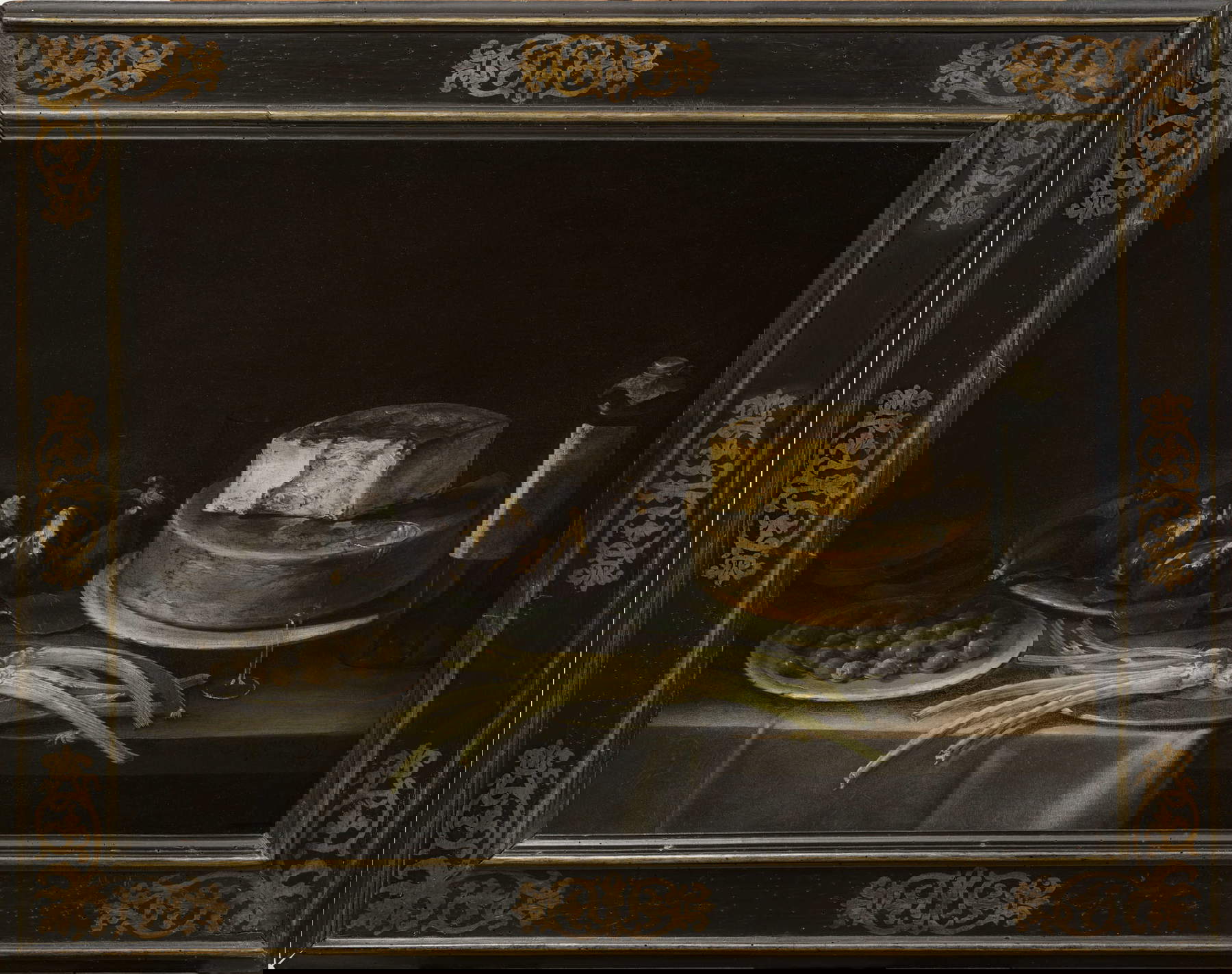
The presence of the signature, which the master generally affixes to more articulate and later compositions, suggests that the artist tackled the still life genre at an early stage of his activity, perhaps as an independent specialist, and then integrated this expertise into his more complex works. In this sense, the painting represents not just an isolated episode, but a direct testimony to a formative and experimental phase of his production.
Stylistically, the canvas reveals a remarkable material richness, with a brushstroke still linked to the Baroque tradition, but at the same time characterized by a compositional synthesis of great rigor. The layout of the image is reminiscent in some respects of seventeenth-century Spanish still life, while rooted in an older Lombard tradition, traceable to models such as those of Fede Galizia and Panfilo Nuvolone.
Critical analysis has revealed additional references. Scholar Giovanni Anzani has identified chromatic and structural affinities in the painting with the research of Evaristo Baschenis, emphasizing the presence of a suspended, almost metaphysical dimension, constructed through the calibrated use of light and compositional elements. The scene is organized around a simple wooden table covered by a white tablecloth, whose folds are rendered with great care.
Above the table top are arranged objects: a plate of olives, one of figs, cheese, celery, a bottle and a goblet. The celery emerges from the plate with an effect of spatial continuity toward the viewer, while the light, coming frontally from the left, illuminates the foreground elements while leaving the olives and the bottle on the right partially in shadow. The figs, placed in an intermediate zone, are immersed in a penumbra that accentuates their material presence.
The signature and date, discreetly placed in the lower part of the table, allow the work to be placed in the 1700s, a few years after the artist’s first documentary attestation in Milan, which took place on the occasion of his marriage to Giulia Francesca Galdone, a notary’s daughter. This chronological reference reinforces the hypothesis that still life played a significant role in the early stages of his activity.
The composition is characterized by its construction executed with great technical skill. The rendering of the cheese, the figs “almost hollowed out of the shadows” and the other elements highlights the artist’s virtuosity, but at the same time contributes to the suspended atmosphere, accentuated by the dark seventeenth-century backdrop. This choice has been interpreted as a sign of a return to a more essential compositional order after the excesses of the late Baroque still life, combining Nordic-style lighting effects with a sober arrangement of elements.
The painting is also distinguished by its autonomous character. Indeed, it does not seem to derive from a recurring motif reused in other, larger compositions, as is the case in several of Cipper’s works, where still life elements are assembled in different narrative contexts. Instead, in this case, the invention appears to be conceived as an independent unit, a sign of specific and purposeful engagement.
On the level of interpretation, even in the absence of certain data about the patron, it is possible to identify some elements that suggest a symbolic or at least narrative reading. The foods depicted are simple and refer to a modest domestic context. The bottle, rustically closed with paper and string, the already consumed cheese wheel, the empty glass, and the open box help evoke a barely removed human presence, suggesting an everyday, concrete dimension.
This combination of realism and suspension gives the work a particular intensity, making it a significant document not only for knowledge of Cipper, but also for understanding still life between the seventeenth and eighteenth centuries in the Po Valley area.
The sale at TEFAF 2026 and the prospect of a future museum placement thus represent an important step for the enhancement of the painting, which can be made accessible to the public and included in a broader context of study: the work had been the protagonist of the major exhibition on Cipper organized last year at the Castello del Buonconsiglio in Trento, but in the future it can thus be seen in a more lasting way. In this sense, the acquisition by the collector who bought this key work, coupled with the decision to allocate it to the exhibition, helps to strengthen the role of the international market in the rediscovery and dissemination of significant works of Italian painting.
|
| TEFAF 2026, key still life by Giacomo Cipper sold: it is the only one signed |

Warning: the translation into English of the original Italian article was created using automatic tools. We undertake to review all articles, but we do not guarantee the total absence of inaccuracies in the translation due to the program. You can find the original by clicking on the ITA button. If you find any mistake,please contact us.

















 IT
IT FR
FR DE
DE ES
ES CN
CN