





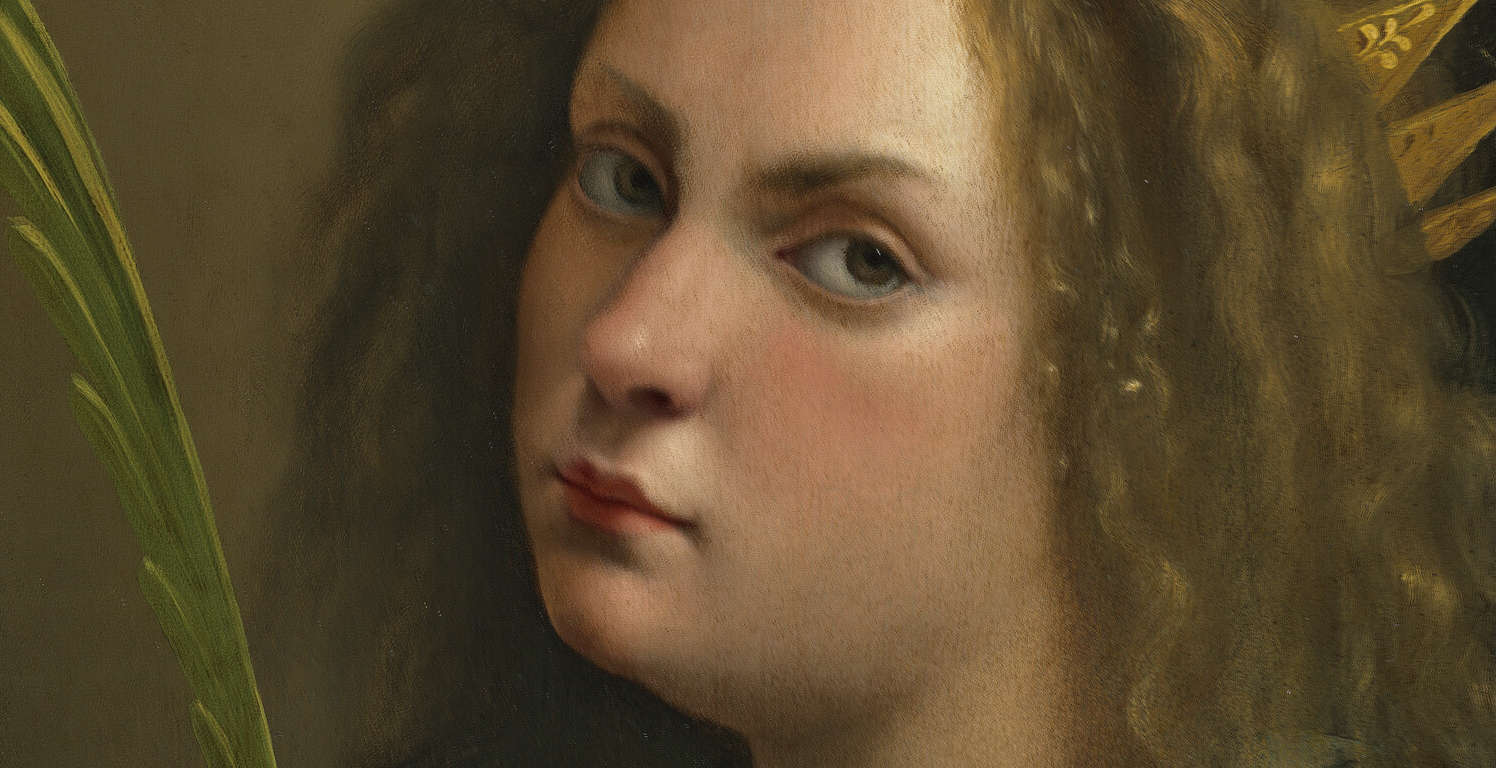
New world record for Artemisia Gentileschi. At Christie’ s auction on Feb. 4, theSelf-Portrait as St. Catherine of Alexandria fetched a price of $5,687,000 (4.8 million euros), more than doubling the minimum estimate and marking the highest result ever achieved in public sale by a work by the artist. The figure confirms the growing international interest in the painter and, more generally, in the Italian Baroque, the protagonist of an auction round that saw intense participation by collectors from all over the world.
Commenting on the outcome of the sale was Jennifer Wright, head of the Old Masters department at Christie’s New York: “The sale,” she said, “had fantastic energy. We had competitive bids from all over the world, especially for the first five lots. We were thrilled to set a new world record for Artemisia Gentileschi, in an auction that saw robust bidding for Italian Baroque works like we haven’t seen in a long time.”
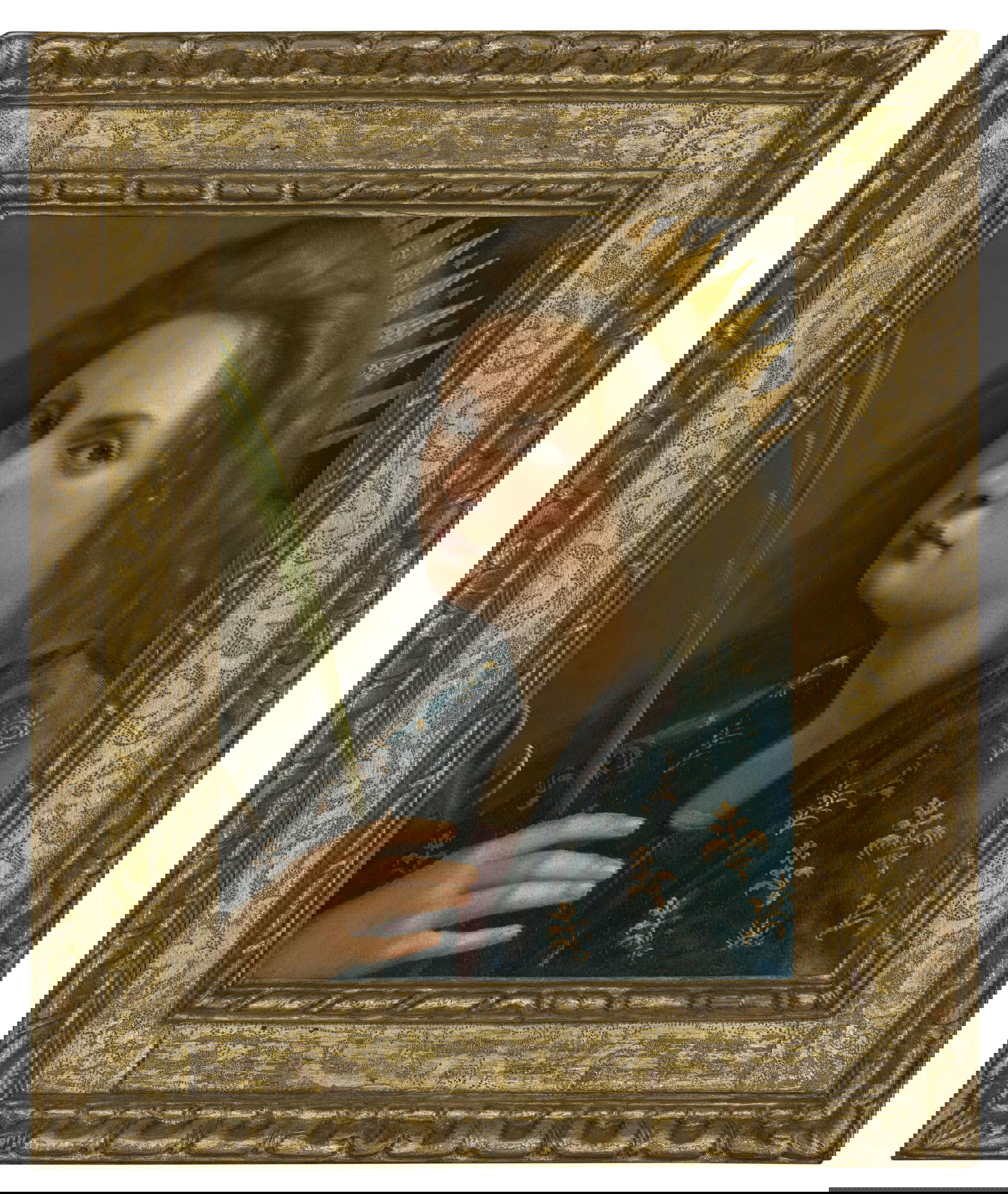
The adjudicated painting is one of only five known self-portraits by Artemisia Gentileschi, three of which are preserved in museum collections, and is probably the oldest of those that have come down to us. The work dates from the years of the artist’s Florentine sojourn, between 1613 and 1620, a crucial phase of her life and career, often referred to by scholars as the time of her full artistic and personal affirmation. It was during this period that Artemisia elaborated her own autonomous identity, emancipating herself from the cumbersome father figure and establishing herself as an independent professional painter.
Notably, the painting most likely dates from Artemisia’s Florentine sojourn, which represented a decisive turning point in her career. Away from her father Orazio for the first time, Artemisia gained greater personal and professional freedom, learned to read and write, and launched an independent career. Her first studio was set up in the house of her father-in-law Vincenzo Stiattesi, near the basilica of San Lorenzo, and then moved, from 1616, to Borgo Ognissanti, in a strategic location near Palazzo Pitti, the residence of the Medici, from whom she obtained important commissions.
During these years Artemisia came into contact with leading figures in Florentine culture, including Galileo Galilei and Michelangelo Buonarroti the Younger. It was the latter who commissioned from her in 1615 theAllegory of the Inclination for Casa Buonarroti, a work that, while not overtly a self-portrait, shows physiognomic traits traceable to the artist herself. In 1616 Artemisia was admitted to the Accademia delle Arti del Disegno (Academy of the Arts of Drawing), a landmark event that further expanded her possibilities for affirmation in an environment still heavily dominated by men.
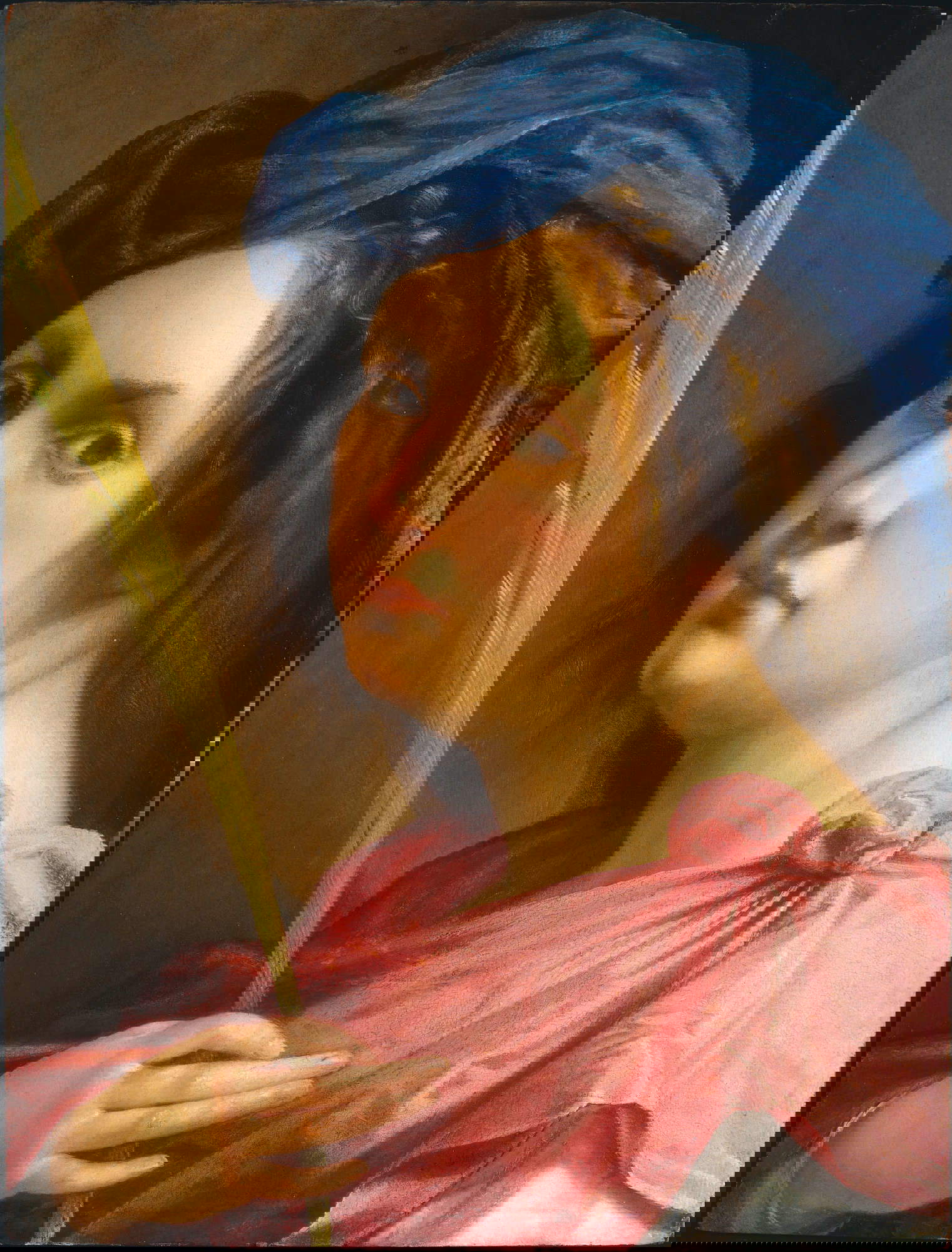
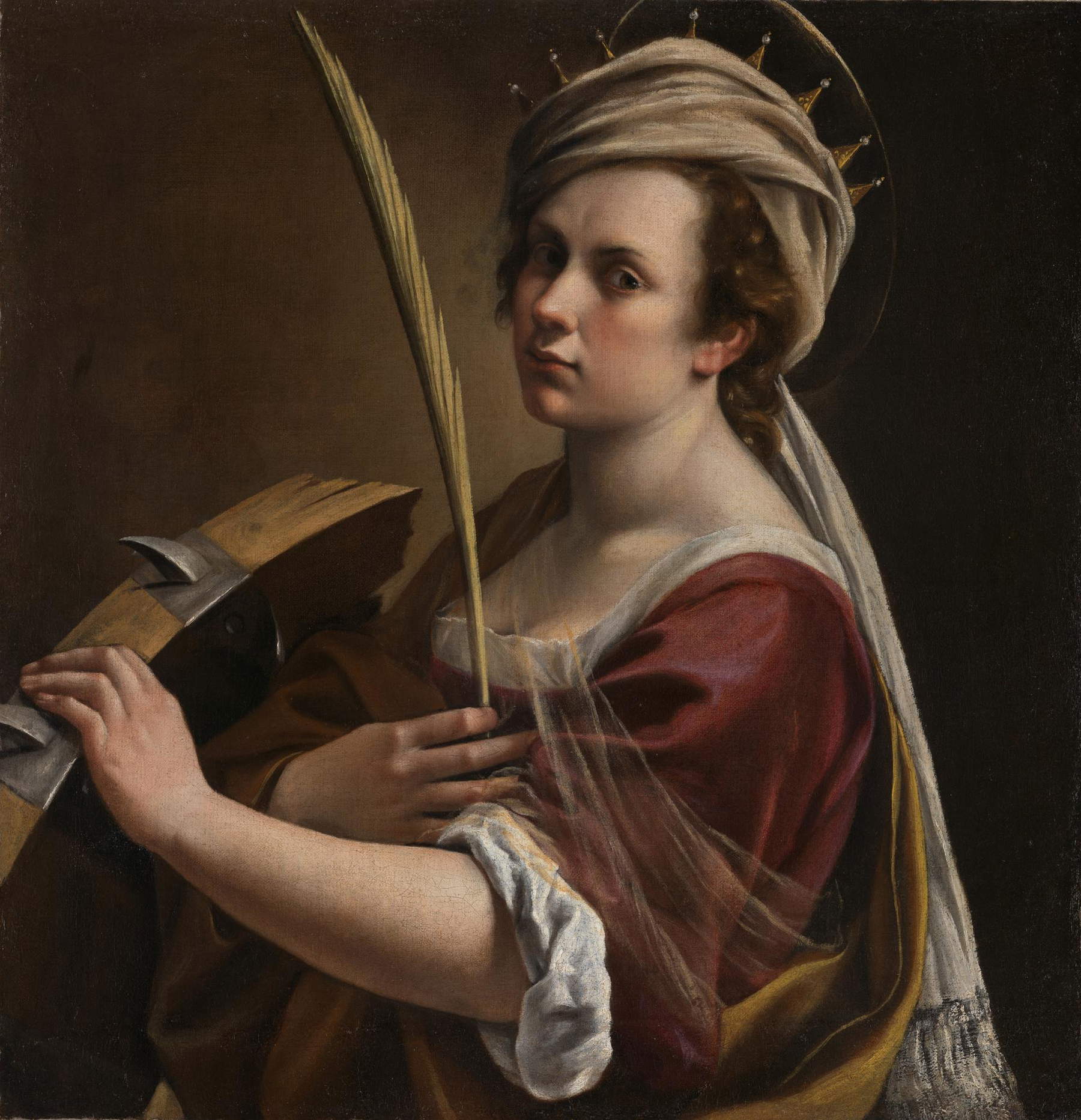
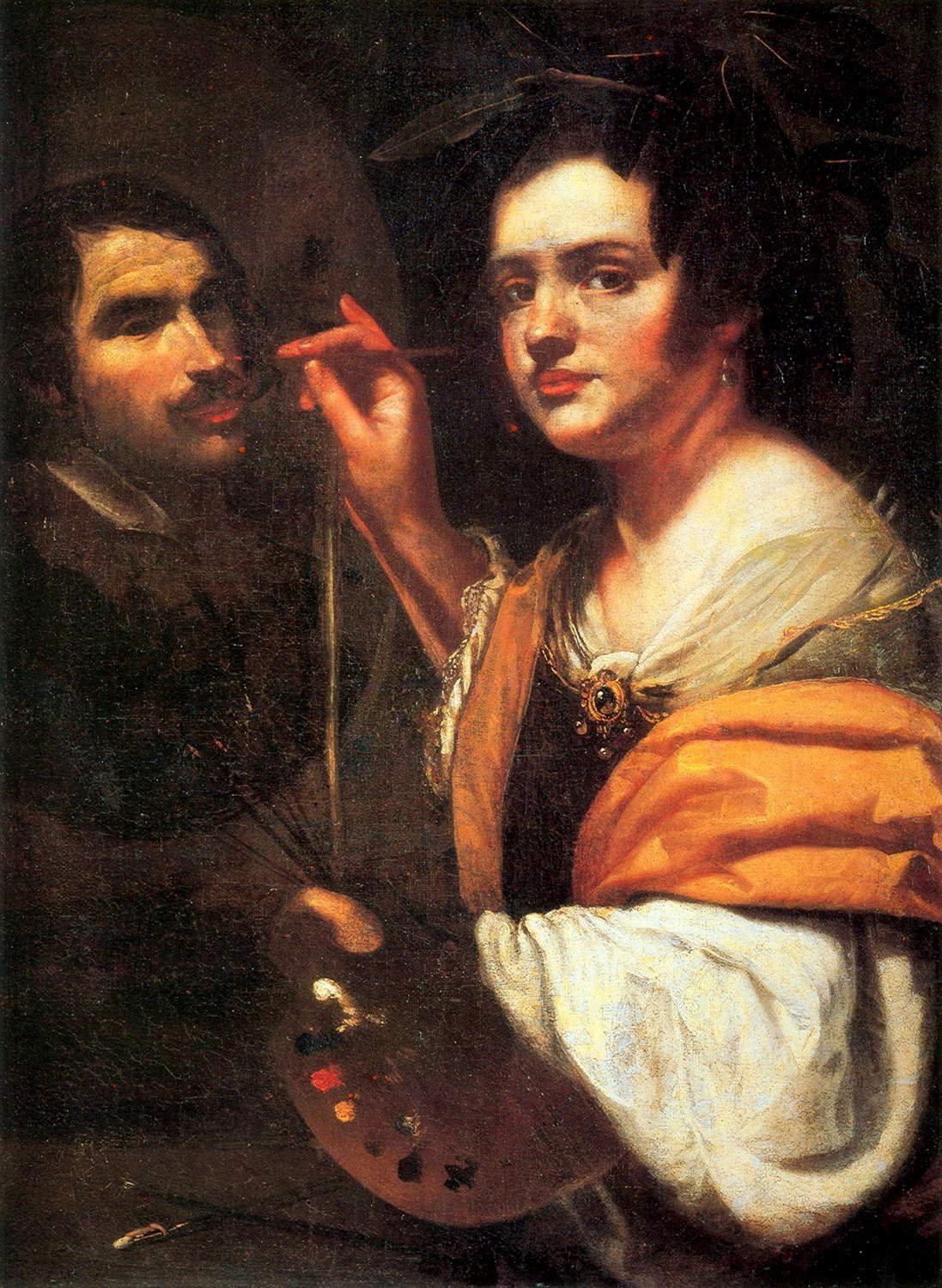
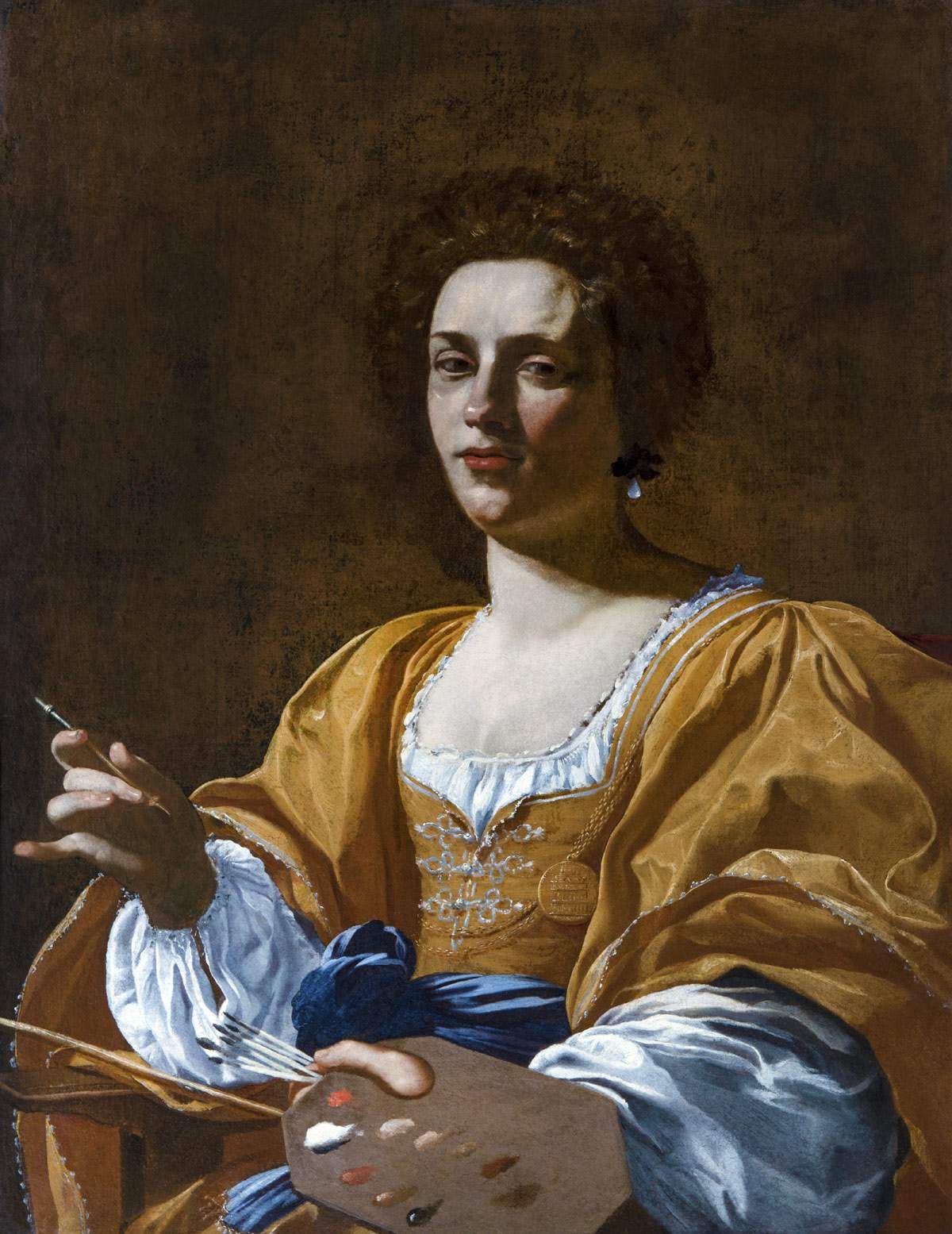
TheSelf-Portrait as Saint Catherine of Alexandria, the star of the auction record, is located within this phase of intense experimentation and self-assertion. In the work, Artemisia depicts herself as the fourth-century martyr saint, recognizable by her palm of martyrdom, crown, and broken wheel with metal spikes. The artist’s face occupies most of the pictorial space, creating a direct and close relationship with the viewer. The tight framing and resolute expression help to render an image of strong psychological intensity.
The work is closely related to another coeval self-portrait,Self-Portrait as a Martyr preserved in a private collection. Both paintings are done on panel, an unusual medium for Artemisia, which she seems to have used only at this early stage of her career. Archival documents attest to the purchase of small wooden boards precisely in her Florentine years, confirming the use of this medium for small-format works.
Technical analyses conducted during the work’s recent loan to the Nasjonalmuseet in Oslo revealed important changes made during the course of the work. The painting was originally conceived as a simple secular self-portrait, later transformed into a sacred image through the addition of St. Catherine’s attributes. The hair and clothing were also reworked, suggesting a dynamic creative process adaptable to the needs of patrons.
This practice of reusing and reworking a basic image enabled Artemisia to respond quickly to market demands while exploiting the added value of her own image. The self-portrait thus became an instrument of personal promotion, a conscious strategy that helped build her fame in a city where artistic competition was particularly intense.
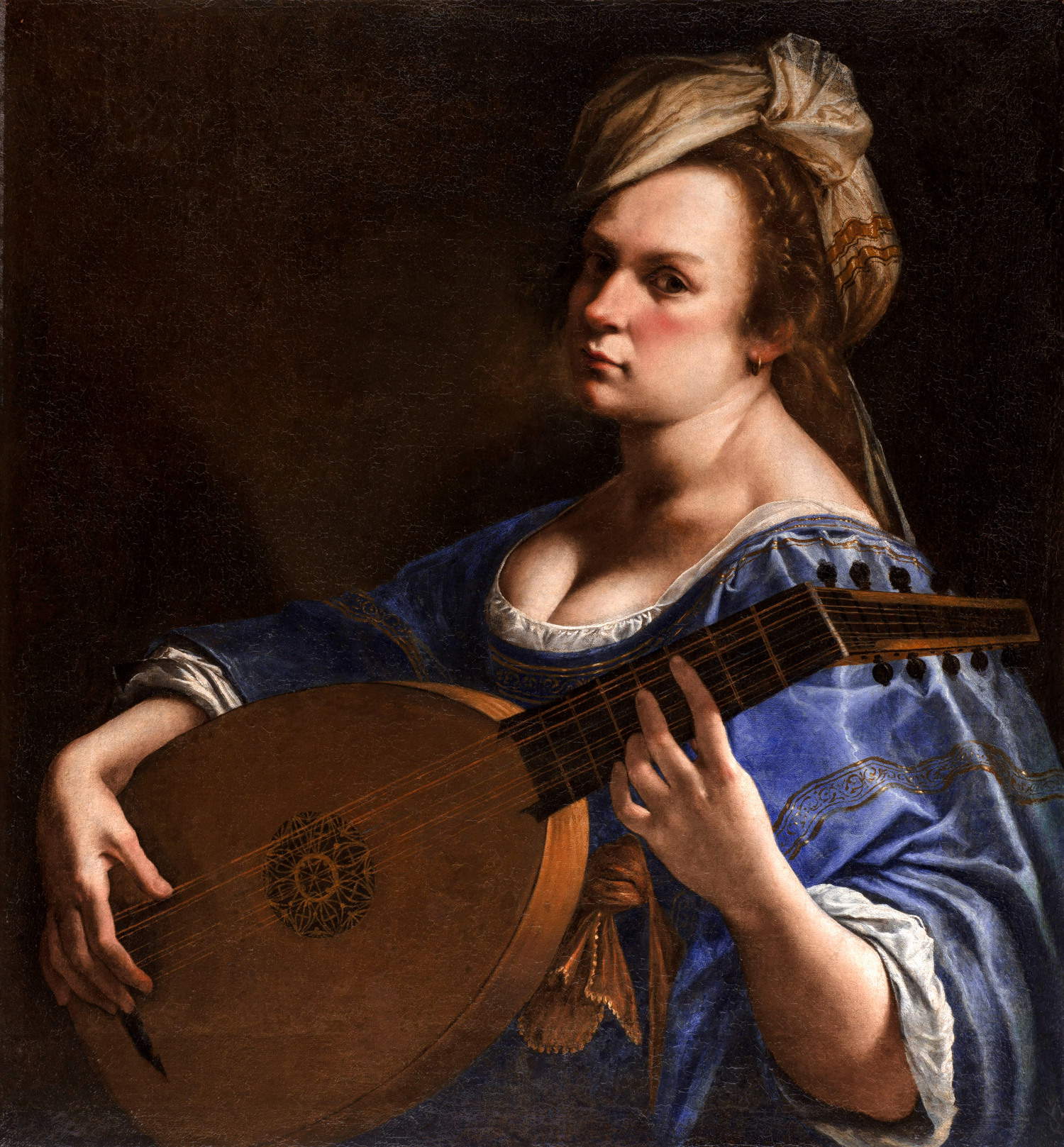
Most of Artemisia’s true self-portraits date from the Florentine period, when the artist was busy defining and disseminating her public identity. Her distinctive features, such as her pursed lips, pronounced nose, and heavy lidded eyes, are recognizable in numerous works and confirmed by other figurative evidence of the period, including engravings, medals, and portraits made by other artists.
Today’s success at Christie’s is part of a broader process of critical rediscovery and re-evaluation of Artemisia Gentileschi’s role in European art history. An artist capable of combining narrative power, emotional intensity, and an unprecedented feminine perspective, Artemisia built a career spanning more than forty-five years, working for important patrons and establishing herself as one of the most influential voices of the seventeenth century. The new world record represents not only a market result, but also the recognition of an artistic career that continues to attract interest and study, confirming Artemisia Gentileschi as a central figure of the Baroque and as one of the absolute protagonists of European painting of her time.
 |
| World record for Artemisia Gentileschi: her self-portrait exceeds 5.6 million at Christie's |

Warning: the translation into English of the original Italian article was created using automatic tools. We undertake to review all articles, but we do not guarantee the total absence of inaccuracies in the translation due to the program. You can find the original by clicking on the ITA button. If you find any mistake,please contact us.


























 IT
IT FR
FR DE
DE ES
ES CN
CN


