





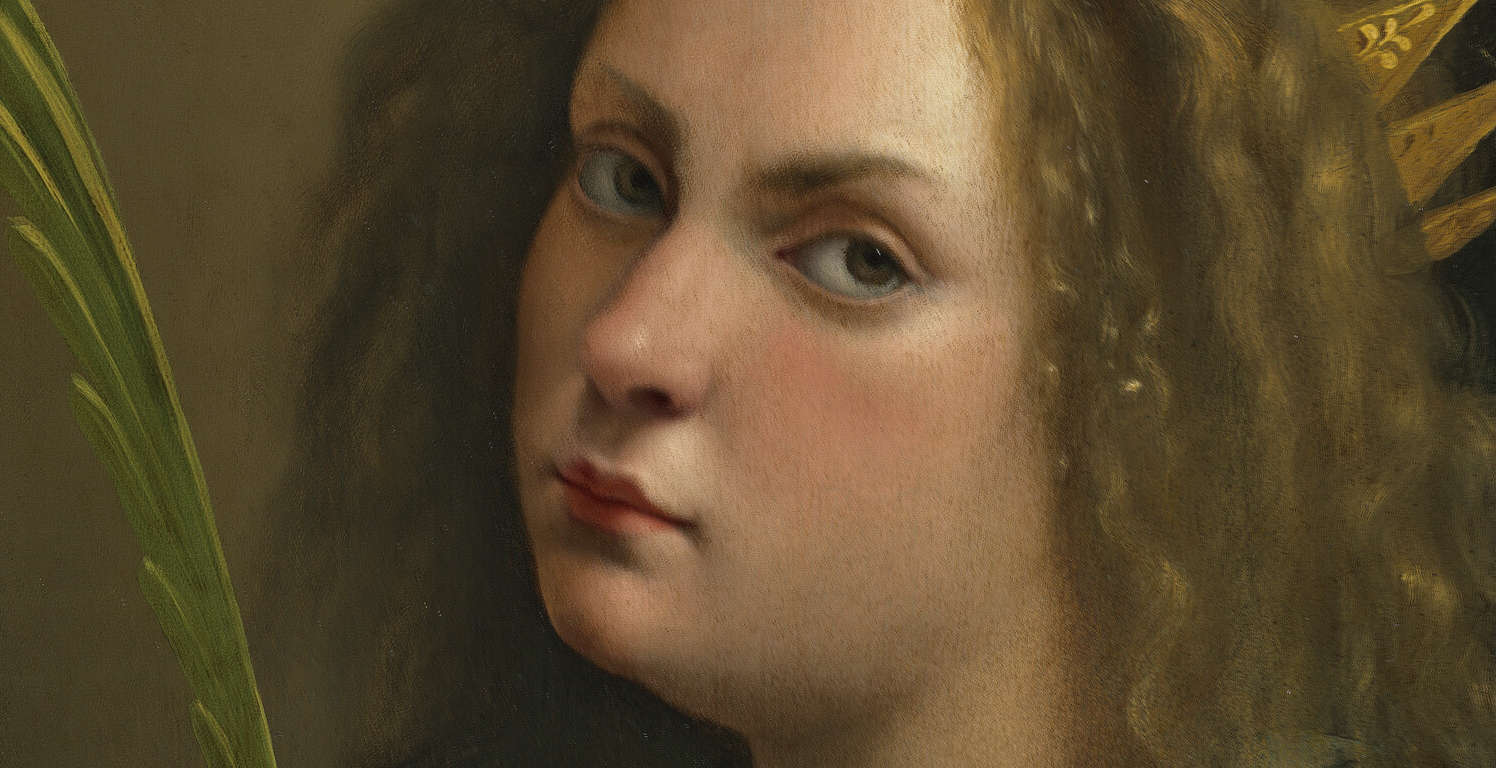
A masterpiece by Artemisia Gentileschi (Rome, 1593 - Naples, post-1654) is preparing to return to the international market spotlight. In fact, on February 4, 2026, Christie’ s is offering the 17th-century painter’sSelf-Portrait as Saint Catherine of Alexandria in its Old Masters sale in New York, with an estimate of between $2.5 million and $3.5 million (€2.15 million to €3 million). The work, painted in oil on panel and small in size, 32.3 by 24.6 centimeters, is considered to be one of only five authentic self-portraits known today by Europe’s most celebrated seventeenth-century painter and probably also the oldest in chronological order.
The painting dates from the years immediately following Artemisia’s move to Florence in 1613, when the artist was in her early twenties. That period marked a decisive turning point in her life and career: far from Rome and the cumbersome figure of her father Orazio Gentileschi, Artemisia found in the Medici city the space to assert her own professional and personal identity. It was in Florence that, according to art historian Keith Christiansen’s famous definition, the process by which Artemisia “became Artemisia” took place, a stage of maturation that transformed her into an autonomous, cultured and determined painter.
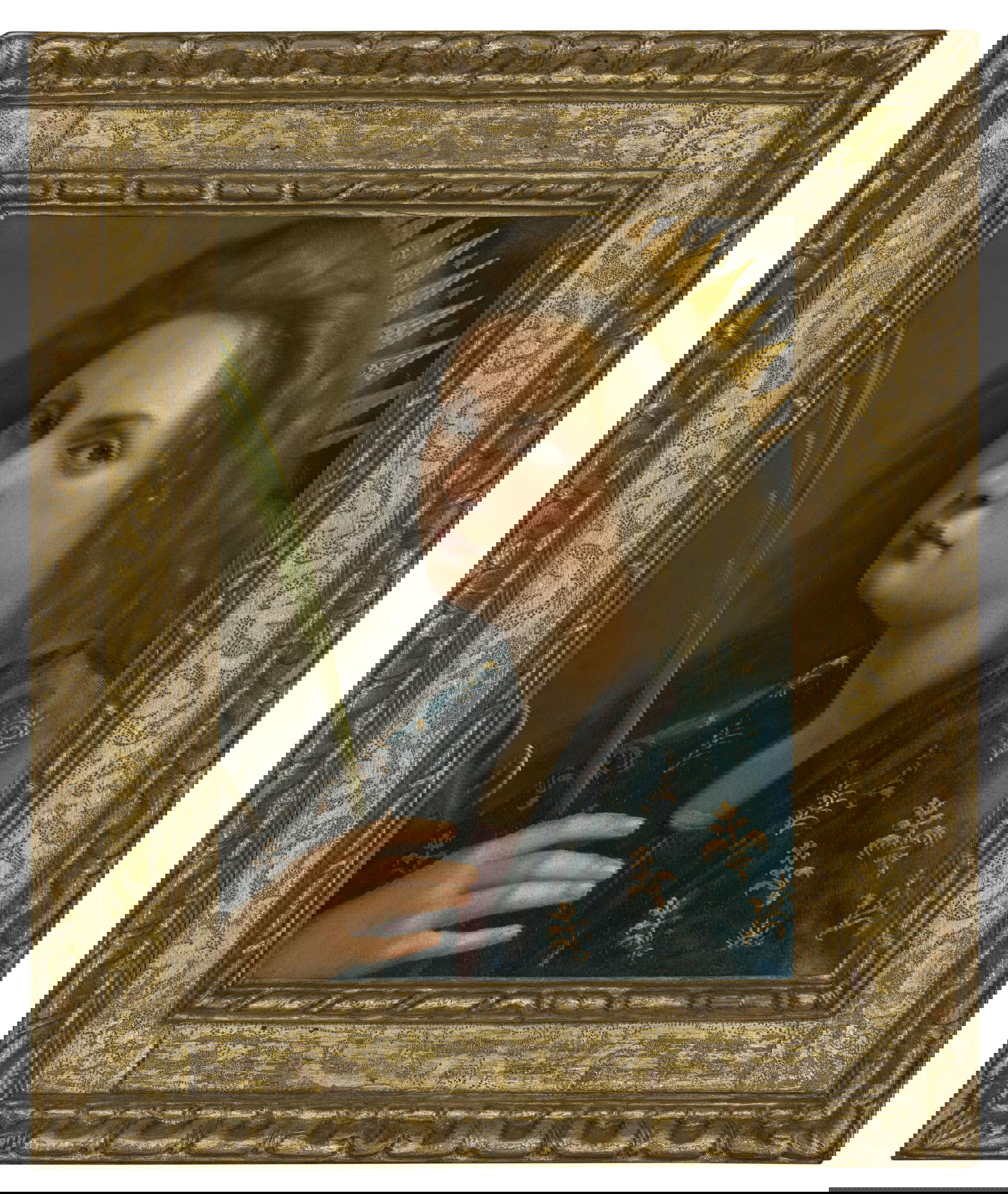
Born in Rome in 1593, Artemisia was the eldest child of Orazio Gentileschi, a Caravaggio-trained painter who oversaw her artistic education after her mother’s untimely death when the daughter was 12. Unlike her siblings, however, Artemisia grew up in severely limiting conditions: as an unmarried young woman, she was forbidden to move freely around the city, with obvious consequences for her access to artistic circles and direct study of works. Nevertheless, her talent manifested itself early on. By the age of sixteen she was already painting independently, and in 1612 Orazio wrote to Christina of Lorraine, Grand Duchess of Tuscany, calling her daughter “without peer.”
Her youth was marked by the trauma of being raped in 1611 by Agostino Tassi, her father’s colleague. The trial that followed, held in 1612, forced Artemisia to testify under torture to confirm the charges. The day after the verdict, the young woman married Pierantonio Stiattesi and moved with him to Florence, beginning a new phase of her existence. It is in this context thatSelf-Portrait as Saint Catherine of Alexandria , which goes to auction, was born.
In the painting, Artemisia depicts herself as the fourth-century martyr saint, recognizable by her traditional attributes: the palm of martyrdom, the crown that alludes to her royal origin, and the broken wheel bristling with nails, the symbol of torture. The framing is close, almost intimate. The face occupies most of the pictorial space and captures the viewer’s gaze with a resolute, concentrated expression. The pose suggests that the artist was working in front of a mirror, a solution that Artemisia would also adopt in other self-portraits painted in the same years.
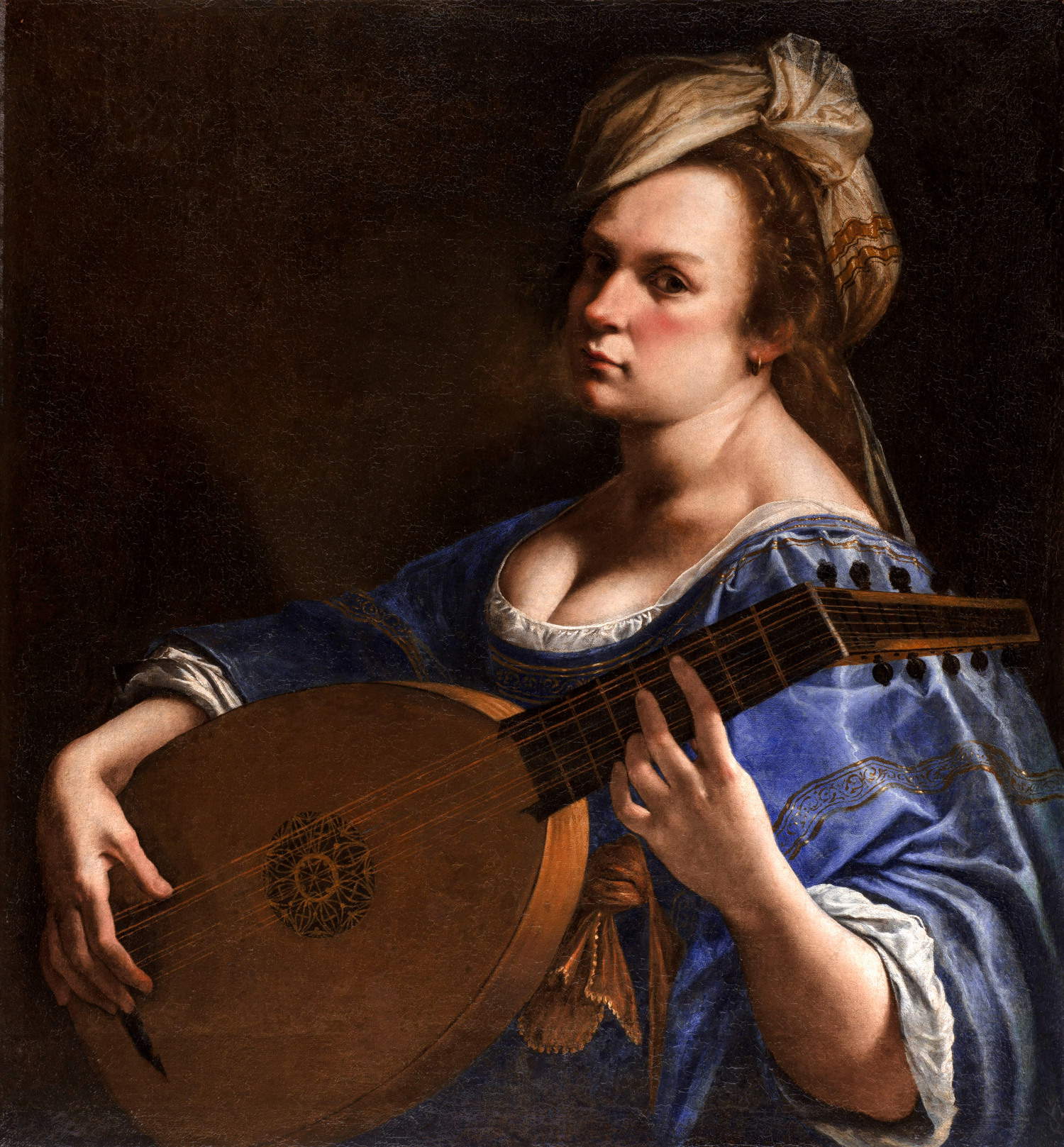
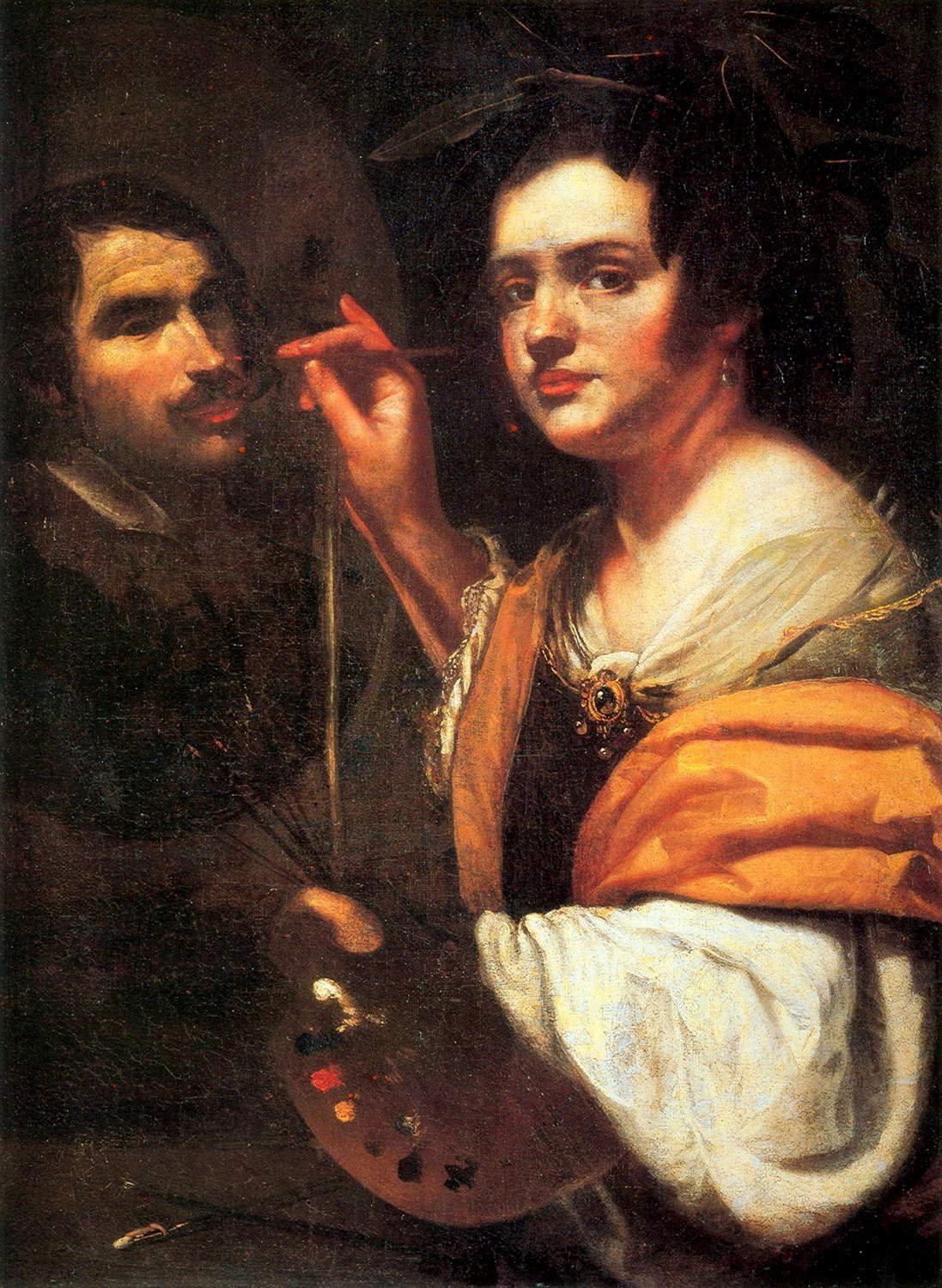
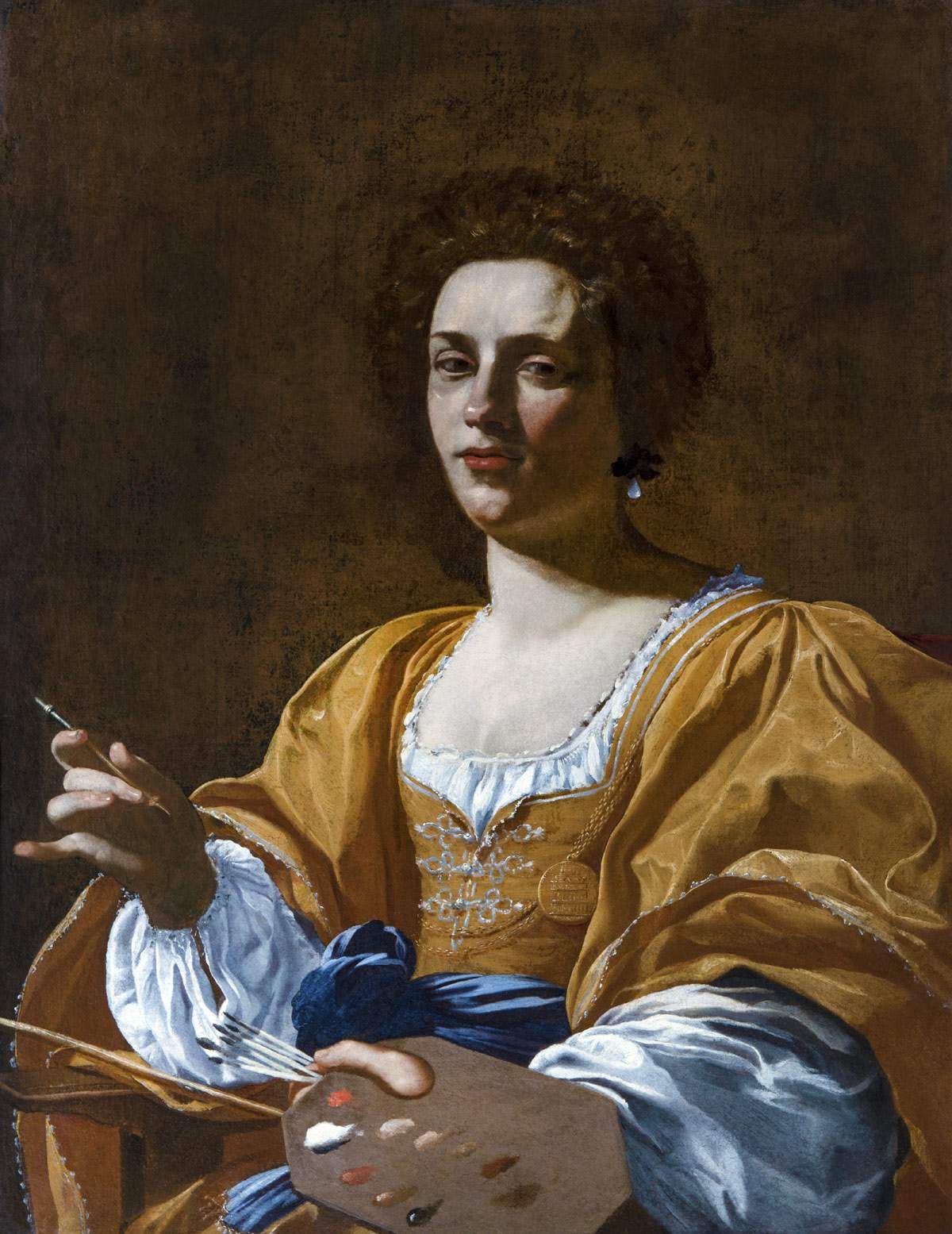
This self-portrait belongs to a very small nucleus of works in which Artemisia restores a faithful image of her own features. Alongside it are a Self-Portraitas a Martyr in a private collection, aSelf-Portrait as a Lute Player at the Wadsworth Atheneum in Hartford, another Self-Portrait as St. Catherine of Alexandria now in the National Gallery in London, and a later Self-Portrait in the Galleria Nazionale d’Arte Antica at Palazzo Barberini in Rome. The artist’s distinctive facial features recur in all these paintings: the pursed lips, the full jaw, the characteristic relief on the back of the nose, the marked eyebrows above heavy eyes. Details that are also reflected in other iconographic evidence, such as the engraving by Jérôme David, a 17th-century bronze medal, and the portrait painted by Simon Vouet preserved in Pisa’s Palazzo Blu.
The Florentine period is when Artemisia made the most extensive use of self-portraiture as a means of affirmation and promotion. Aware of the value of her own image in a competitive, male-dominated environment, the artist adopted strategies that we would today call entrepreneurial. As scholar Christopher Marshall has pointed out, Artemisia manipulates portrait conventions to make her own face instantly recognizable and tie it to her artistic reputation. In a city where there was a long tradition of artists’ self-representation, the painter was able to exploit this language with intelligence and audacity.
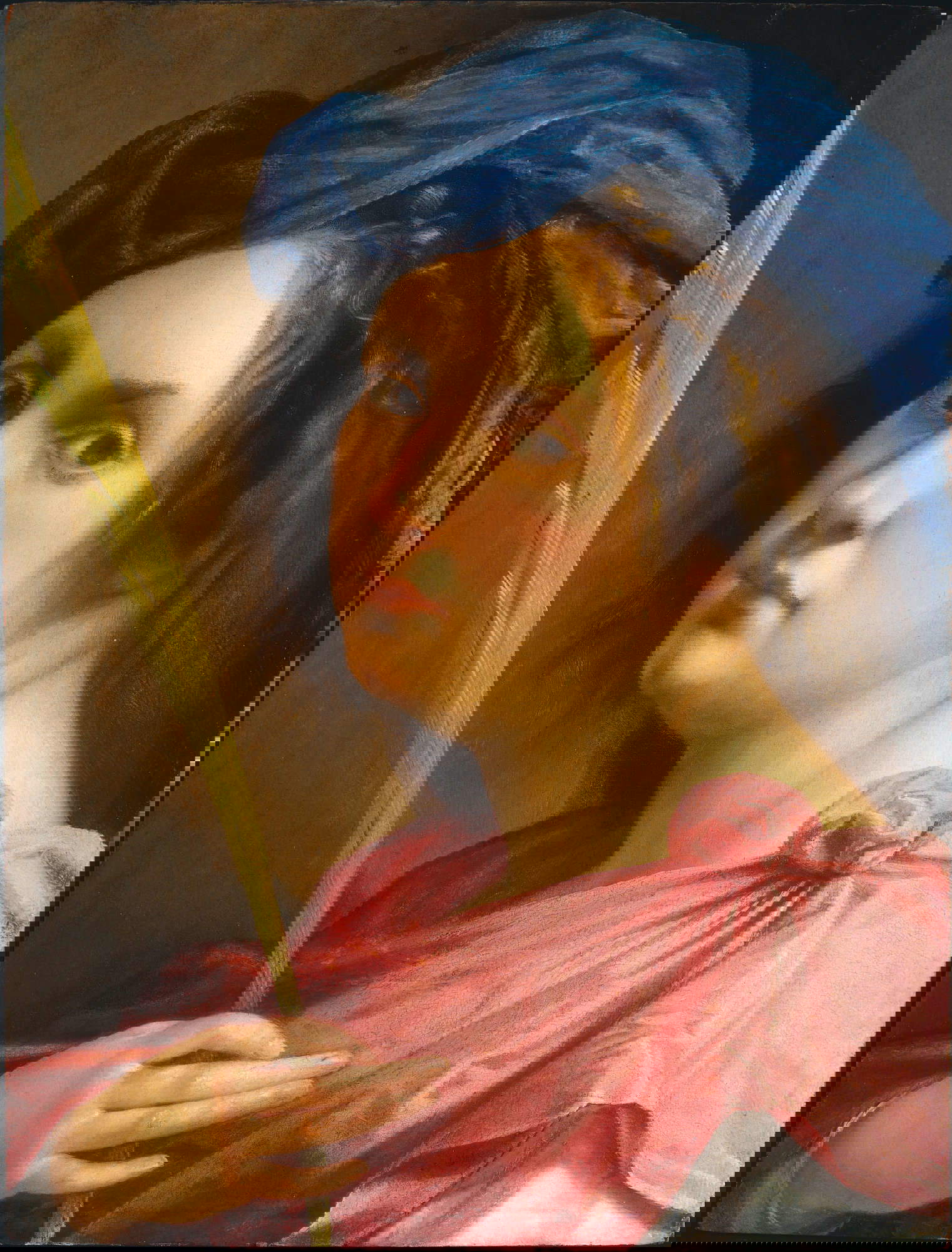
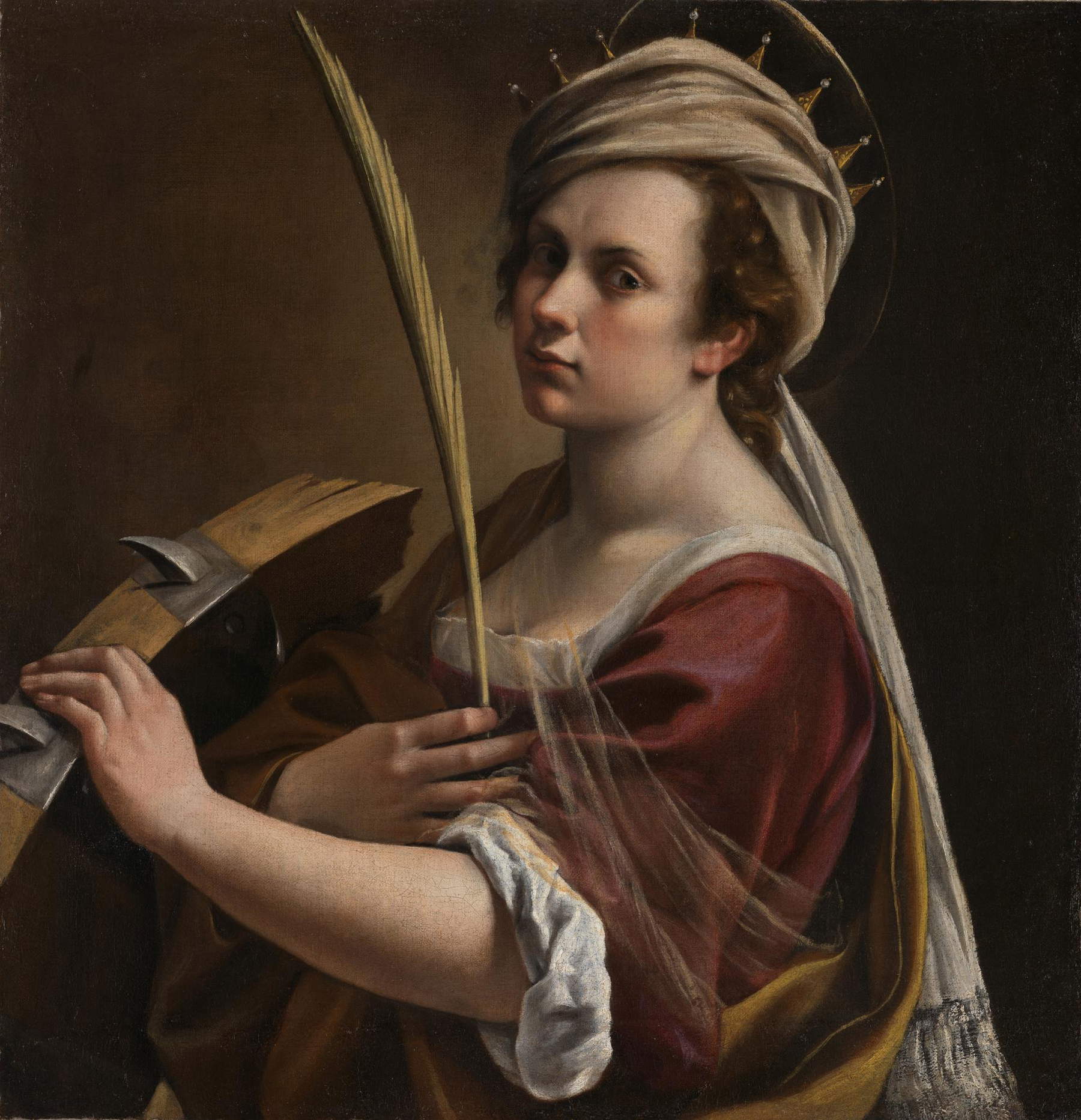
Self-Portrait as St. Catherine of Alexandria is closely related to another painting almost identical in size and support,Self-Portrait as a Martyr. Both are executed on panel, an unusual support for Artemisia, who probably used small walnut panels she received from local artisans, as some archival sources document. Technical analysis and infrared reflectography revealed that the composition underwent changes during the course of the work: initially the painting was conceived as a simple secular self-portrait, later transformed into a devotional image with the addition of the saint’s attributes. A similar process is found in the London example, suggesting that Artemisia adapted her images according to the requests of her patrons.
The work’s provenance further contributes to its value. Purchased in Livorno in the last century by a private collector from Pisa, it remained in the same family until 2016, before moving to the European market and then to New York, where the current owner acquired it in 2018 through Murphy & Partners. Between 2022 and 2025, the painting was exhibited on loan to the Nasjonalmuseet in Oslo, while a request has already been made to include it in the major exhibition Artemisia Gentileschi: The Triumph of Painting, planned at the Nivaagaard Collection in Denmark in 2028.
The attributive solidity of the work is confirmed by a broad critical consensus. Scholars such as Sheila Barker, Keith Christiansen, Jesse Locker, Christopher Marshall, and Judy Mann have recognized its authorship and included it permanently in the artist’s catalog. Numerous citations in scholarly literature and presence in major international exhibitions strengthen the profile of a painting that combines painterly quality, rarity, and symbolic power.
By offering this self-portrait at auction, Christie’s brings to market not only a work of exceptional value, but also a crucial testimony to the construction of Artemisia Gentileschi’s identity. In an image that blends self-representation and sacred iconography, the painter affirms herself as an artist and as a woman, transforming her face into an instrument of storytelling, resilience, and ambition. A work that embodies, in a few centimeters of painted panel, the beginning of a career destined to leave a profound mark on the history of European art.
 |
| A very rare self-portrait by Artemisia Gentileschi stars at Christie's auction |

Warning: the translation into English of the original Italian article was created using automatic tools. We undertake to review all articles, but we do not guarantee the total absence of inaccuracies in the translation due to the program. You can find the original by clicking on the ITA button. If you find any mistake,please contact us.



























 IT
IT FR
FR DE
DE ES
ES CN
CN


