




by Redazione 19/01/2026



Categories: Archaeology / Disclaimer
In Fano, the Basilica of Vitruvius, the building described in De Architectura that had been sought for half a millennium, emerges from excavations in Piazza Andrea Costa: a discovery that rewrites the history of archaeology and restores Fano to a central role in Western architectural culture.


Important news comes fa Fano where some archaeological remains unearthed in the city during redevelopment work in Piazza Andrea Costa have been identified as the remains of the Basilica of Vitruvius. The official announcement was made at a press conference hosted this morning at the Mediateca Montanari in the presence of Marche Region President Francesco Acquaroli, Fano Mayor Luca Serfilippi, Superintendent Andrea Pessina, and with Culture Minister Alessandro Giuli speaking via a link.

After more than half a millennium of fruitless research conducted by scholars from all eras, the joint work between the municipal administration, the Superintendency and local universities has thus made it possible to crown a dream rooted in the Renaissance. Marcus Vitruvius Pollonius, a legendary figure in the service of Caesar and author of the famous treatise De Architectura, had meticulously described in the fifth book of his work the construction of a public building in Fano, a structure that today resurfaces from the earth to confirm the veracity of the literary sources. It is, moreover, the only building Vitruvius claims to have “cared for,” and he attributed to it summam dignitatem et venustatem, or “supreme dignity and beauty.” According to his indications, the basilica faced the center of the Forum and was in axis with the Temple of Jupiter, which was located on the other side of the ancient central square of the Roman Fanum .


If until a few days ago the basilica’s material existence was the subject of heated debates between hypercritical advocates and more confident researchers, today the material context data should put an end to any uncertainty. The city of Fano, already known as a prominent center in Augustan times, now sees its international projection radically change, unequivocally enriching the architectural heritage of the entire nation.


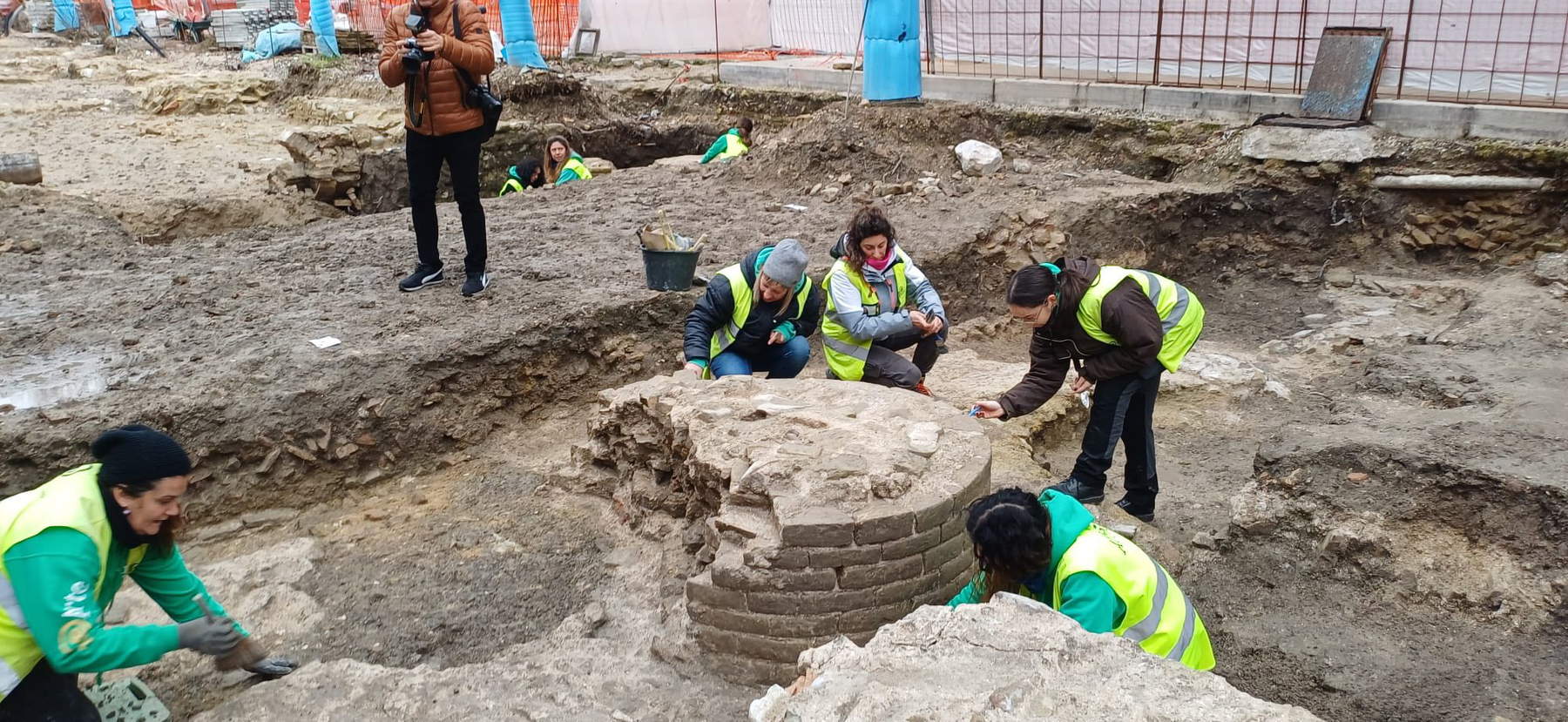
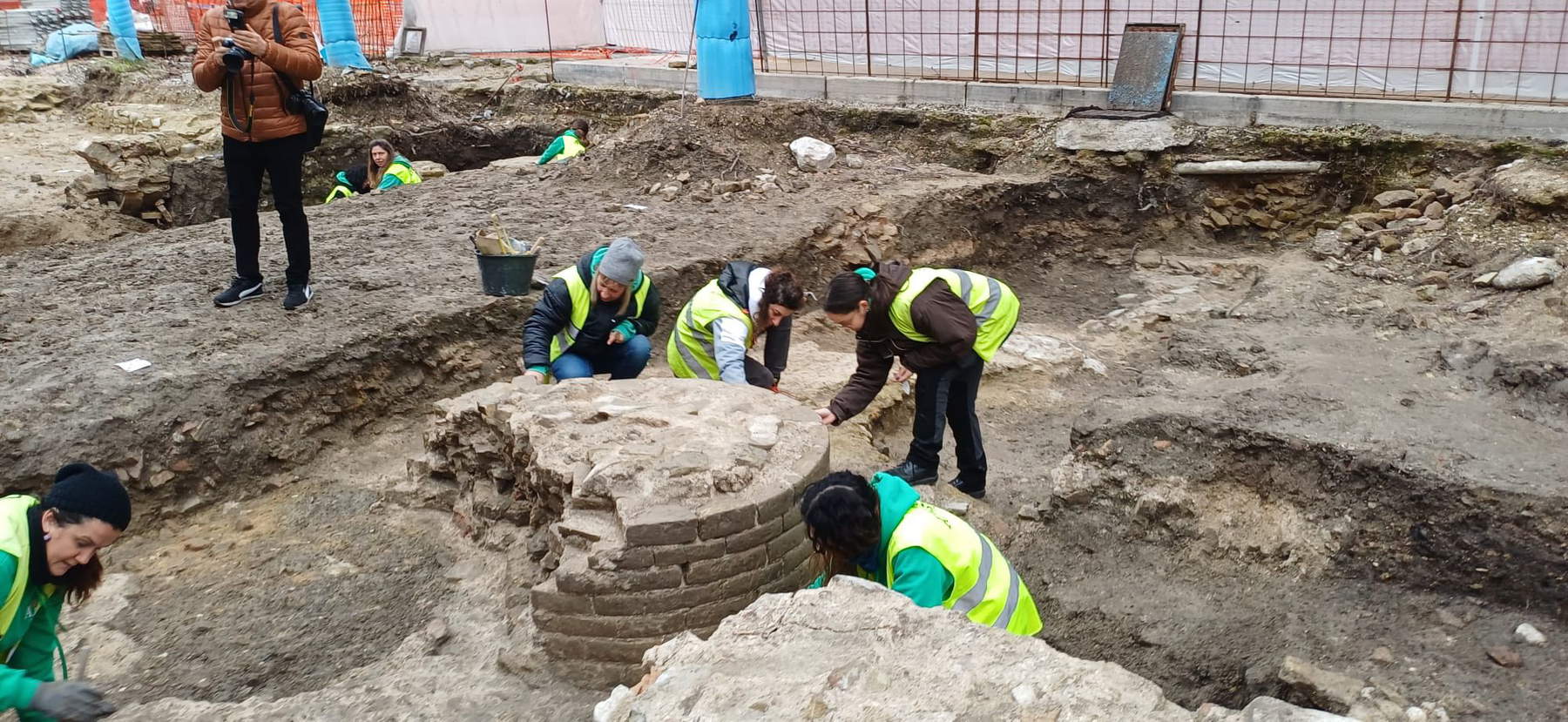
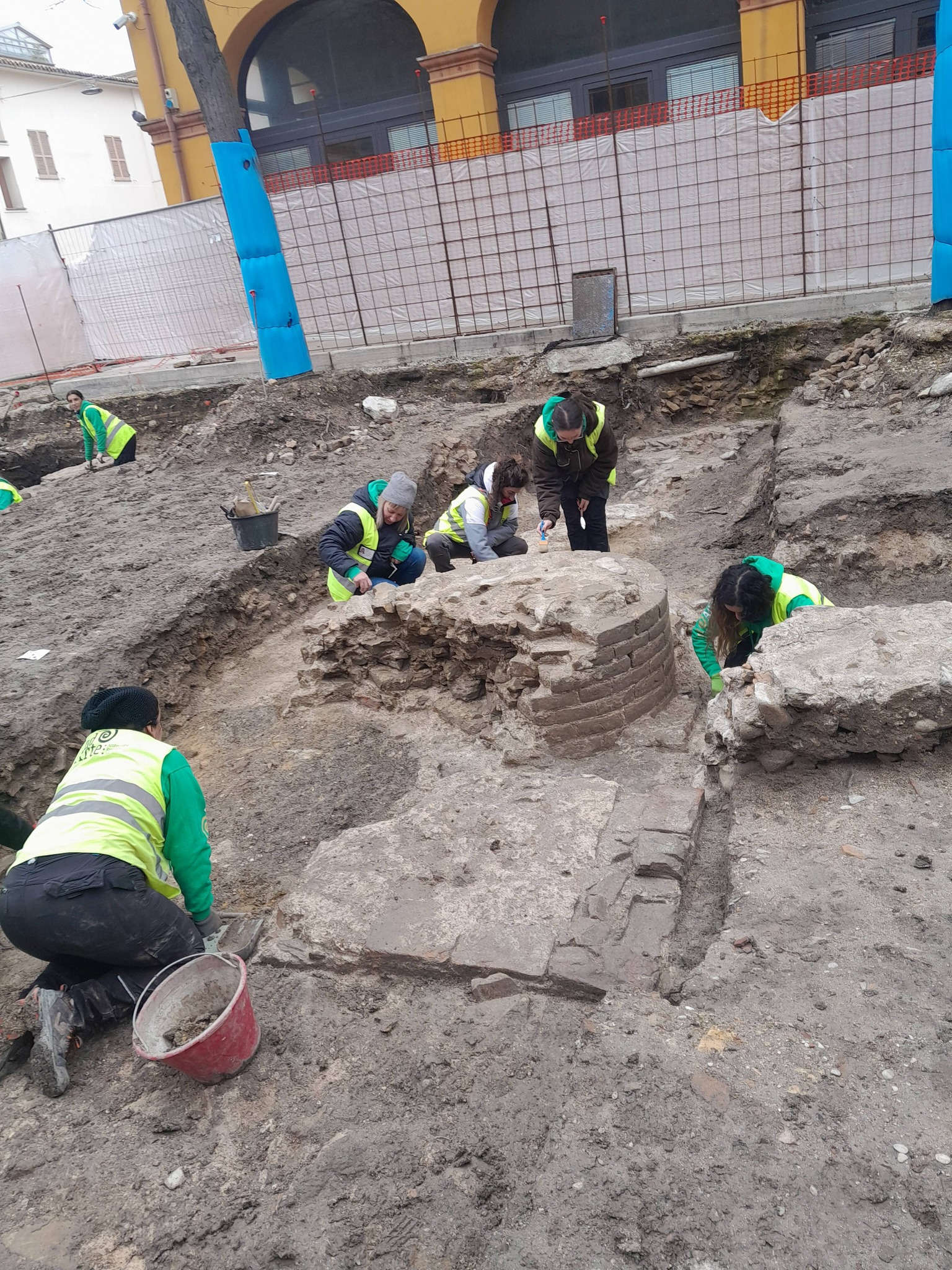
The identification of the site occurred, as anticipated, during some preventive archaeology work related to a PNRR project for the redevelopment and repaving of Piazza Andrea Costa. The accuracy with which the remains found coincided with Vitruvian descriptions left experts astonished. Indeed, Vitruvius had described a building with a rectangular plan and a specific arrangement of columns: eight on the long side and four on the short side, with the omission of two columns at the point of facing the forum. Surveys conducted in the field showed a very precise correspondence with these data, and confirmed the gigantic proportions of the work, which included columns about five feet in diameter and an overall height approaching fifteen feet.
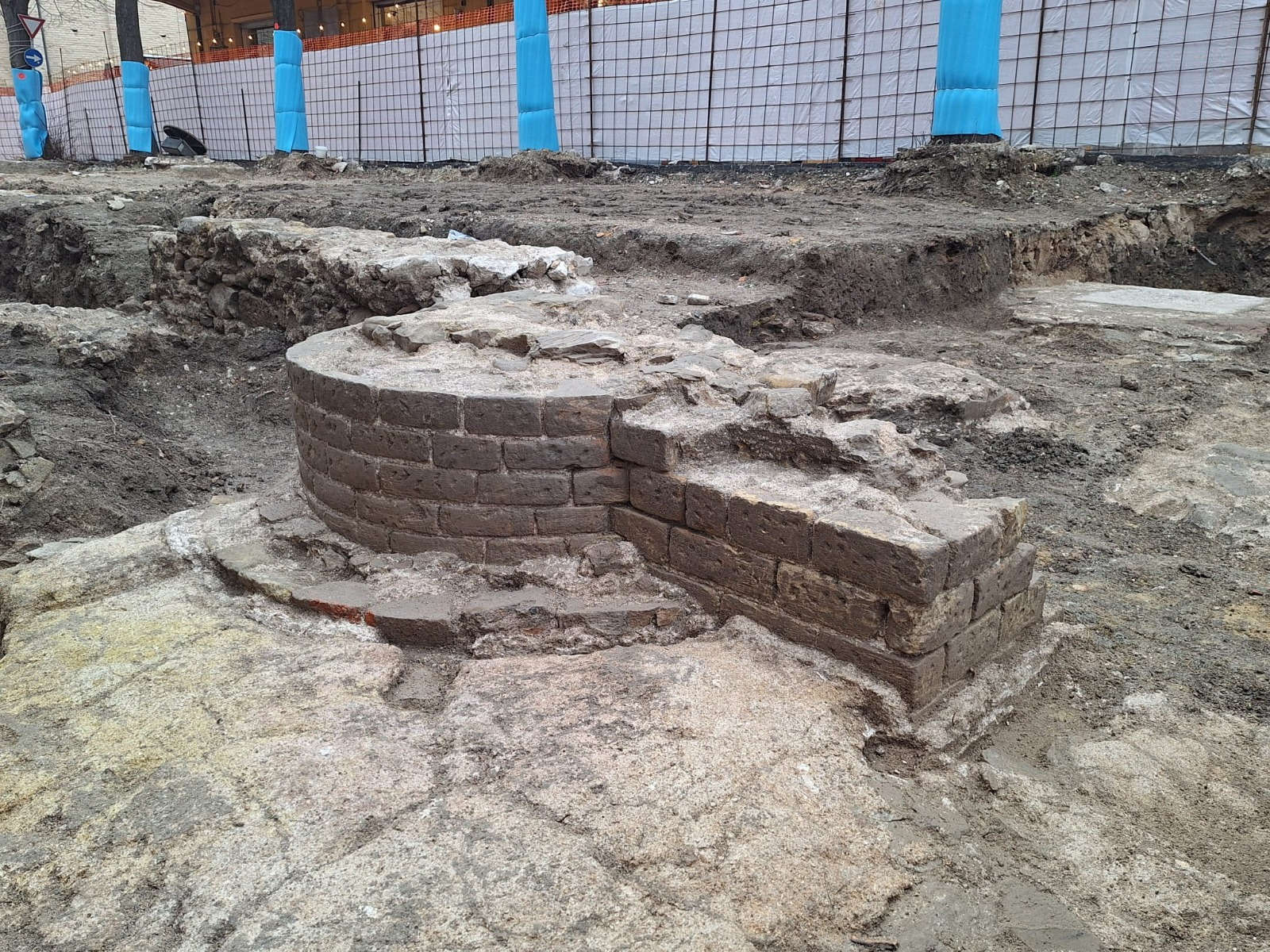
The crucial moment in the research was marked by what archaeologists called the litmus test. Through a targeted survey in Piazza degli Avveduti, carried out following the planimetric projections deduced from the treatise, the fifth corner column was found exactly where it was planned. This element, equipped with pillars on two sides to support the upper floor, provided definitive confirmation of the architectural layout. In addition to the column bases, the excavations uncovered a Roman-era perimeter wall still provided with plaster and the preparation levels of the floor layer, although the original flooring was lost due to the urban transformations that took place in subsequent centuries, such as the construction of medieval and modern buildings.
The cultural significance of this find transcends the boundaries of archaeology. For Vitruvius was not only a technician, but the author who canonized Pythagoreanism in architecture, transferring numerical ratios and musical harmony into spatial forms. His work was the bridge that enabled geniuses like Leonardo da Vinci to conceive theVitruvian Man, a symbol of divine proportion and balance between man and the cosmos. To rediscover the basilica today is to find the plastic manifestation of that thought, turning the citizens of Fano into living witnesses of a legacy that belongs to the whole world.
However, Fano’s subsoil is also returning something else: recent excavations in fact suggest the existence of a much larger monumental complex. Behind the Vitruvian structure, the presence of a macellum, an ancient covered market for the sale of meat and fish, characterized by a typical inner courtyard, has been hypothesized. Further investigations conducted in 2024 revealed traces of a possible bath building decorated with polychrome marbles, while remains of valuable public offices emerged in Vitruvius Street. The certain location of the basilica now makes it possible to reread the entire urban layout of Roman Fano, suggesting that the imposing concrete structures located under the church of Sant’Agostino actually belong to the Temple of Jupiter, which Vitruvius indicated was on axis with his work.
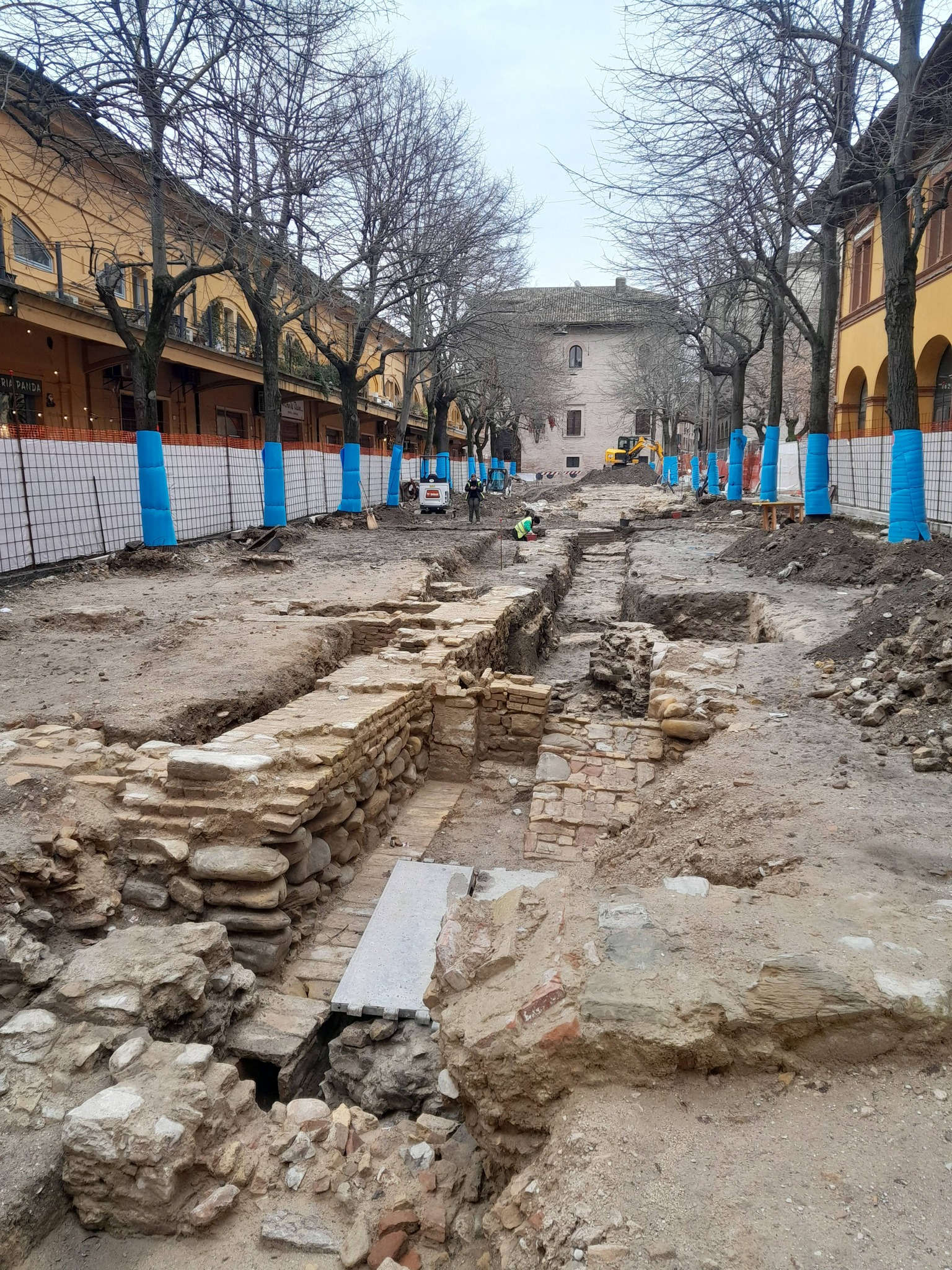
Despite the enthusiasm, the challenges ahead are many and complex. Managing a site of such importance requires coordinated institutional efforts and substantial financial resources. The Superintendency has emphasized that the immediate priority is the protection of the remains, since the materials found, particularly the lime preparations, are at risk of deteriorating rapidly if exposed to the elements without the proper protections. It will be necessary to set up a technical table to assess how to continue the research without unduly compromising the daily life of the city and the commercial activities facing the squares affected by the work.
The financial aspect remains the central issue for the continuation of the activities. The city administration has estimated the need for at least one million euros to ensure the continuity of the excavations and the subsequent enhancement of the site. The Ministry of Culture has already expressed its closeness, recognizing the absolute carateness of the scientific datum and the need for support that will enable the transformation of this site into a world-class research center. The goal is to harmonize funding related to the PNRR with new resources dedicated exclusively to archaeological protection, looking for solutions that will make the heritage usable without blocking urban development.
The economic and tourism impact of the discovery is already at the center of the Marche Region’s reflections. There is already talk of a possible candidacy of Fano as a UNESCO site, a recognition that would definitively consecrate the city’s centrality in the history of world culture. The discovery not only rewrites local history, but imposes a new paradigm in the valorization of cultural heritage, where scientific research and conservation become engines of civic growth and identity awareness.
The journey has just begun and will require years of in-depth study to complete the picture of this monumental rediscovery. The scientific community is ready now to analyze the results of the archaeologists’ work, while local institutions prepare to embrace a responsibility that transcends the present.
Statements
“In Fano today a fundamental piece of the mosaic that holds the deepest identity of our country was found,” said Culture Minister Alessandro Giuli. “The history of archaeology and research, with the current tools available, is divided into a before and an after: before the discovery and after the discovery of the Basilica of Vitruvius. History books, and not only journalistic reports, will historicize this day and all that will be studied and written around this exceptional discovery in the coming years. The scientific value is of absolute carat, the elements uncovered demonstrate in a plastic way that Fano was and is the heart of the oldest architectural wisdom of Western civilization, from antiquity until today.”
“The extraordinary discovery we are presenting today represents something truly unique,” said Regional President Francesco Acquaroli. “It changes the perception of the city of Fano, of our region and, more generally, of Italy’s cultural and architectural heritage. It is the result of decades of work, in-depth studies and research, and choices that have made it possible to get this far. It greatly enriches the heritage we already knew and, as of today, lives in a different light. In a sense, it also rewrites part of Fano’s history. We will have to be good, all together, at turning this discovery into a development engine for the city and for the entire Marche region. We are there, and there is full awareness of the value that this heritage can bring, not only from an economic point of view, but above all from a touristic and cultural one. The involvement of the Ministry and the government will be fundamental to accompany this path, and I thank Minister Alessandro Giuli for sharing this extraordinary satisfaction. This is not only a great archaeological discovery, it tells the extraordinary past of our land and looks to the future by solidifying the role of Marche in international cultural dynamics.”
For Fano Mayor Luca Serfilippi, “this is an extraordinary event for the city of Fano. The discovery of the Vitruvian Basilica in the heart of our urban center gives back to the community a fragment of historical and cultural identity of universal value. After centuries of waiting and study, what has long been handed down only through the written word has been transformed into a concrete, tangible and shareable reality.”
“Today’s discoveries, with the certain identification of the location of the Vitruvian Basilica, are of extraordinary importance,” concludes Andrea Pessina, head of the Soprintendenza Archeologia, Belle Arti e Paesaggio of Ancona and Pesaro-Urbino. “Not only for the history of studies and for the scientific community, but also because they open new and concrete perspectives on the archaeological heritage of the city of Fano. A considerable heritage, which has long been waiting to be investigated and enhanced. And today, finally, we also have a decisive key to interpret evidence that has been known for years, such as the building under Sant’Agostino, and to relate traces, structures and evidence of our past more clearly. It is the beginning of a new season of research: more conscious, more precise, more ambitious. And Fano, from today, has one more tool to tell the world about its history.”
|
| Basilica of Vitruvius found in Fano: "discovery of extraordinary importance" |
Warning: the translation into English of the original Italian article was created using automatic tools. We undertake to review all articles, but we do not guarantee the total absence of inaccuracies in the translation due to the program. You can find the original by clicking on the ITA button. If you find any mistake,please contact us.