





Important archaeological discoveries in Umbria, where the latest findings at the site of Carsulae (Terni) help rewrite knowledge of one of the most important Roman centers in the region and usher in a new phase of enhancement for the entire archaeological area. In fact, new and refined mosaic floors belonging to a large Roman residence directly facing the forum, the so-called domus dei mosaici, the subject of the most recent excavation campaigns, have emerged in Carsulae.
The archaeological investigations, which began in 2017, were carried out with the financial support of the Fondazione Cassa di Risparmio di Terni e Narni and conducted by the Associazione Astra ONLUS under a ministerial grant. In the course of these years of research, a vast domus dated to the end of the first century B.C. was brought to light, articulated in reception rooms, peristyles, nymphaeums and a complex private thermal sector. This is a residence of considerable size and value, testifying to Carsulae’s central role in the Roman urban and territorial system.
The discovered mosaics, made in black and white and characterized by geometric decorations in an extraordinarily well-preserved state, document the high architectural and decorative level of the building. The mosaic surfaces investigated so far cover about half of the total extent of the domus, hinting at the possibility of further discoveries in areas yet to be explored. The quality of the decorations and the state of preservation of the floors offer a significant contribution to the understanding of late-republican residential construction in Umbria.
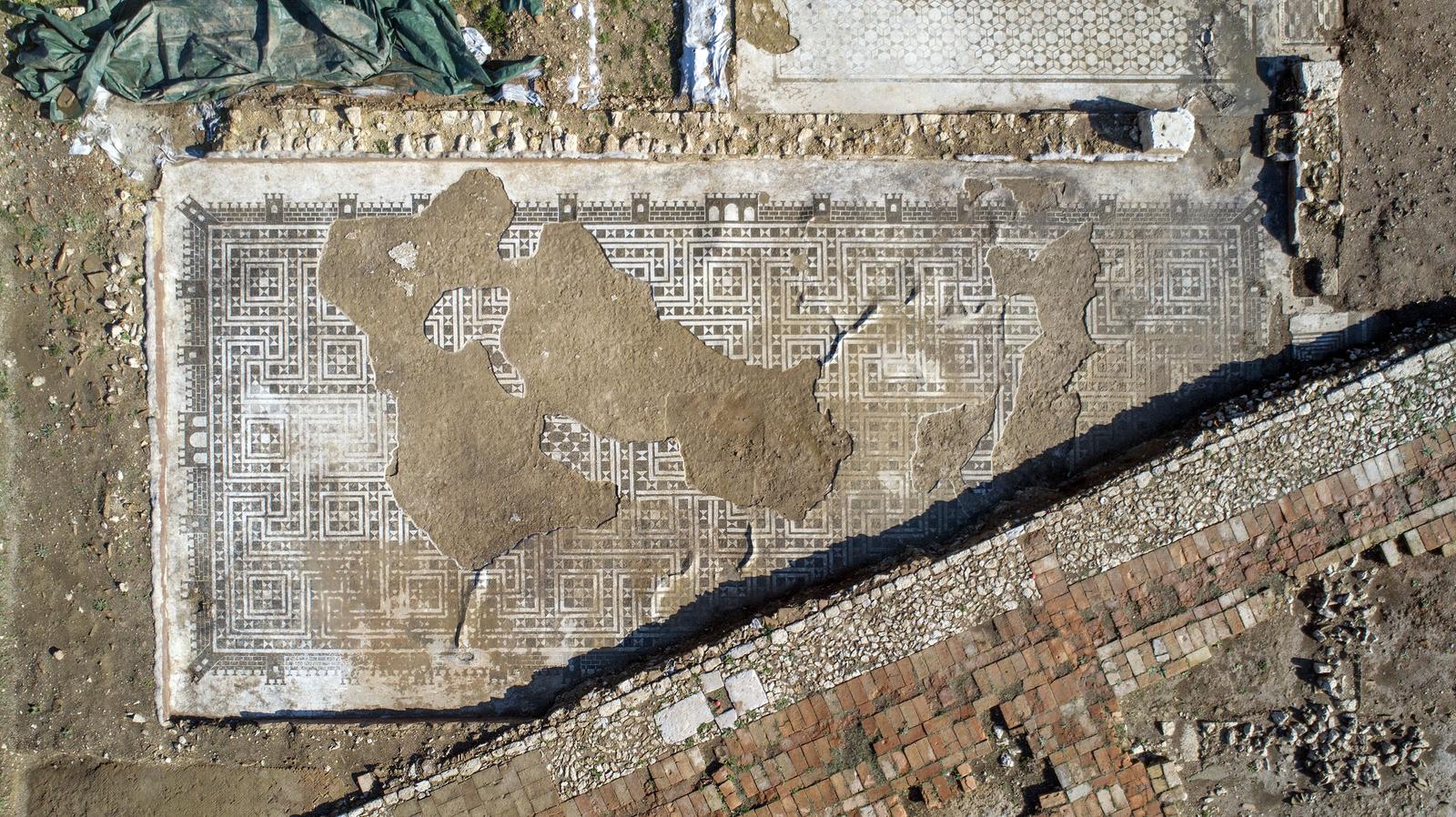
The latest excavation campaign, conducted in the summer of 2025, identified a second phase of the domus’ life. In this phase the original layout was expanded with the addition of a thermal complex divided into frigidarium, tepidarium and calidarium, rooms equipped with a hypocaust system for heating. Next to the thermal sector, additional living quarters, also characterized by large mosaic surfaces, emerged, confirming the continuity of use and the adaptation of the residence to the living and representative models of later periods.
In parallel with the excavation operations, consolidation and restoration work was carried out on the floors and the most significant materials found during the investigations. Currently, the mosaics have been covered to ensure their proper preservation, pending the construction of the structures that will allow their public enjoyment under conditions of safety and microclimatic stability. Preventive protection is a key step in ensuring the preservation of surfaces that, once exposed, will require careful monitoring.
The archaeological discovery is now accompanied by a significant investment intended to enhance the site. With a total funding of more than 2.3 million euros, arranged by decree of the Ministry of Culture under Alessandro Giuli, the design of an extensive plan of interventions has begun. The program includes the construction of a protective cover for the mosaics of the domus and the complete refurbishment of the Visitor Center of the archaeological area.
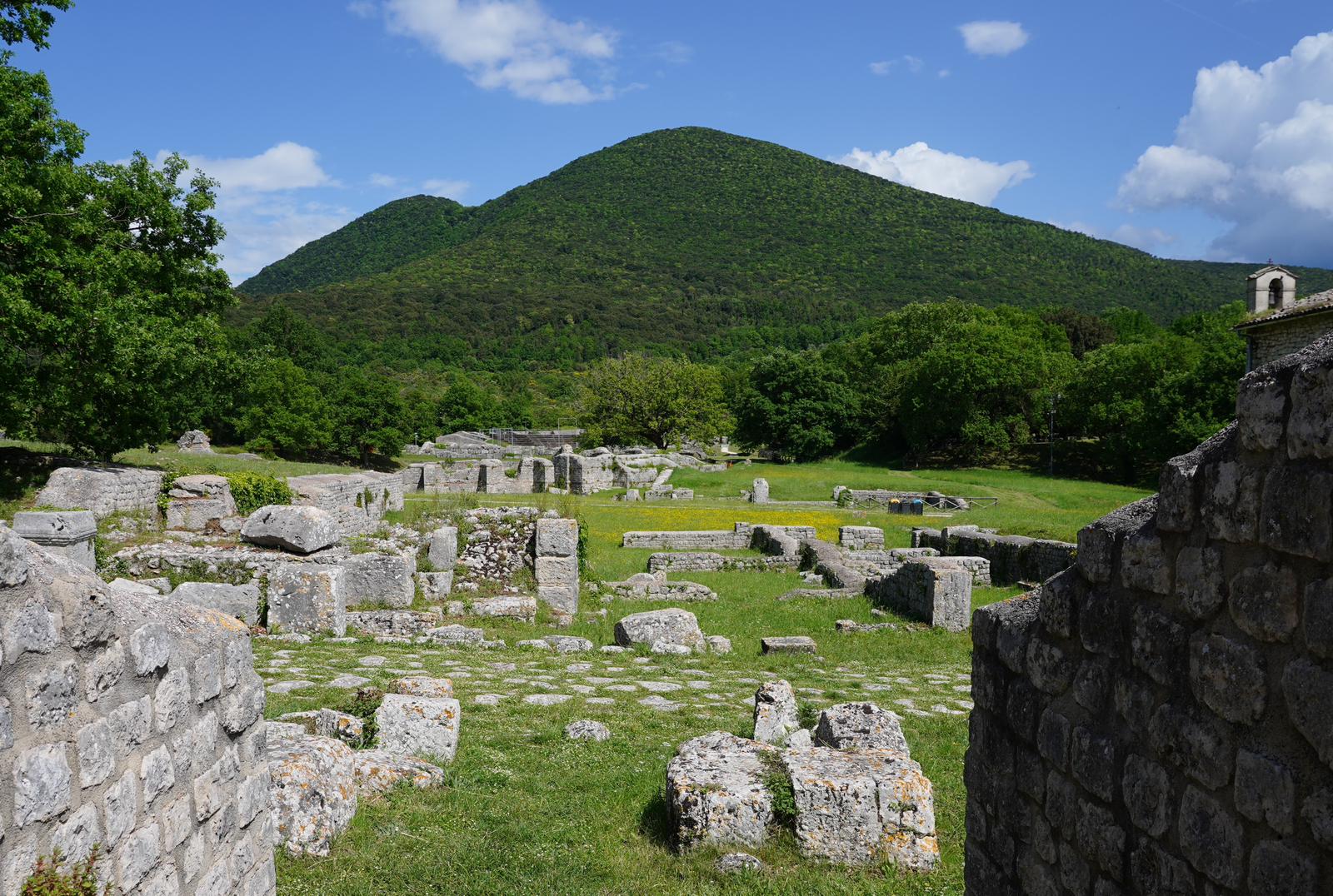
The goal is twofold: on the one hand to finally make the mosaic floors now covered for conservation needs visible to the public, and on the other to significantly improve accessibility and the quality of the visit to the site. The new covering will make it possible to protect the decorated surfaces from atmospheric agents, while at the same time ensuring a close and continuous view of the mosaics. The refitting of the Visitor Center, on the other hand, will offer updated tools for understanding the historical and urban context of Carsulae.
The project involves a wide institutional and scientific network. In fact, the National Museums of Umbria, the Soprintendenza Archeologica, Belle Arti e Paesaggio dell’Umbria, the Municipality of Terni and the University of Perugia are participating, with the collaboration of the Fondazione Cassa di Risparmio di Terni e Narni. The synergy between protection bodies, academic institutions and territorial realities represents a strategic element to ensure an integrated management of research, conservation and enhancement activities.
Strengthening this path will be helped by an additional ministerial funding of 340,000 euros, scheduled for 2026, aimed at enhancing enhancement actions through the creation of new educational apparatus and the improvement of services offered to the public. The integration of up-to-date information tools and services adapted to the needs of visitors is an essential piece in transforming scientific discovery into a cultural and tourism opportunity for the area.
|
| Carsulae (Terni), new mosaics discovered that rewrite history of Roman city |

Warning: the translation into English of the original Italian article was created using automatic tools. We undertake to review all articles, but we do not guarantee the total absence of inaccuracies in the translation due to the program. You can find the original by clicking on the ITA button. If you find any mistake,please contact us.

























 IT
IT FR
FR DE
DE ES
ES CN
CN


