





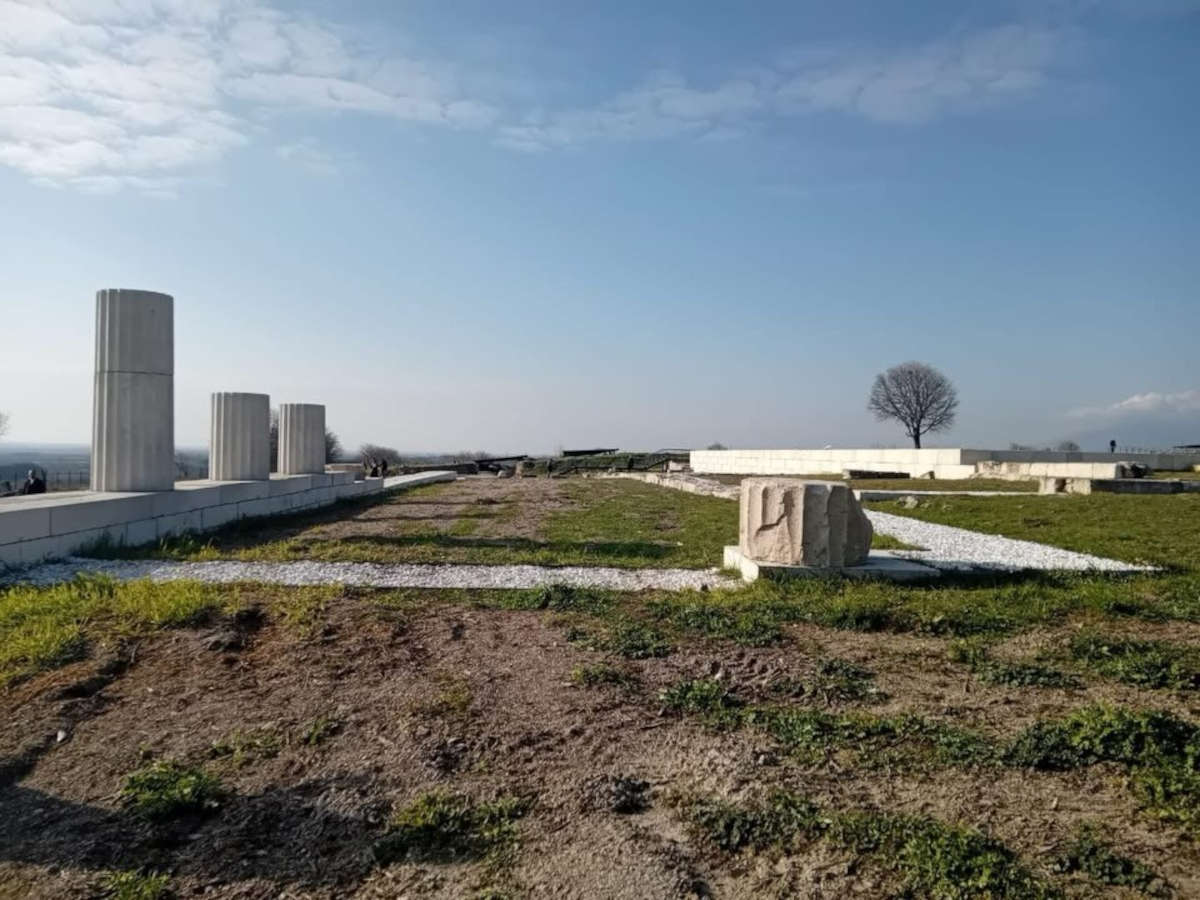
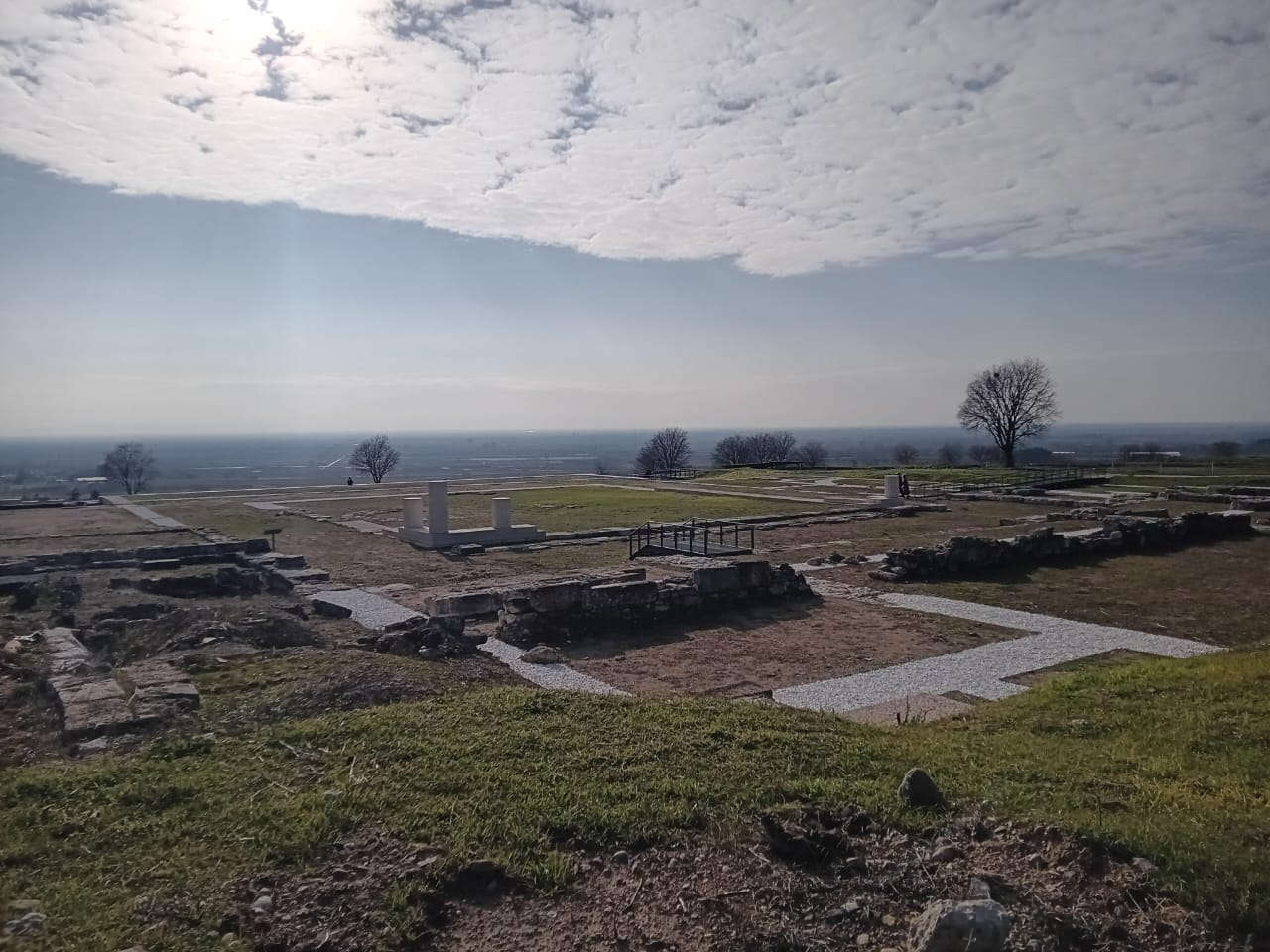
In Greece , the Palace of the ancient city of Pella, the birthplace and growth place of Alexander the Great, has been restored.The results of the work were presented the day before yesterday by Hellenic Culture Minister Lina Mendoni to the local community and visitors to this important archaeological site in the Macedonia region. The completed project covers the preservation, restoration and promotion of the Palace, the complex’s monumental entrance and gymnasium, upgrades to a new entrance and visitor route, and the construction of a reception building and visitor information center. The project cost 3.5 million euros.
Culture Minister Lina Mendoni, in her speech at the opening ceremony, spoke of “an important day of joy for the Ministry of Culture and its departments, which in fruitful cooperation with the Region of Central Macedonia have completed the work of enhancing the Pella Palace, a unique monument in size and complexity, which was the preeminent symbol of the power and political authority of the Macedonian kings. Central Macedonia, with its modern administrative structure, is home to the places where two prominent figures in Greek history lived, worked, and left their mark on history-Phillip II and Alexander the Great. The next step is the responsibility of the state, but more importantly of local governments and local communities themselves: these places should be included in one coherent promotion program, in a cultural itinerary dedicated to Philip and Alexander, using modern tools for historical exploration and understanding. Alexander the Great should be promoted in a way that serves both the defense of historical truth and the needs of modern Greek society. Such a comprehensive intervention, combining the promotion of the Palace, on a physical and digital level, education and production, in direct connection with the local economy of Pella, constitute a model of cultural policy, with a developmental and social footprint.”
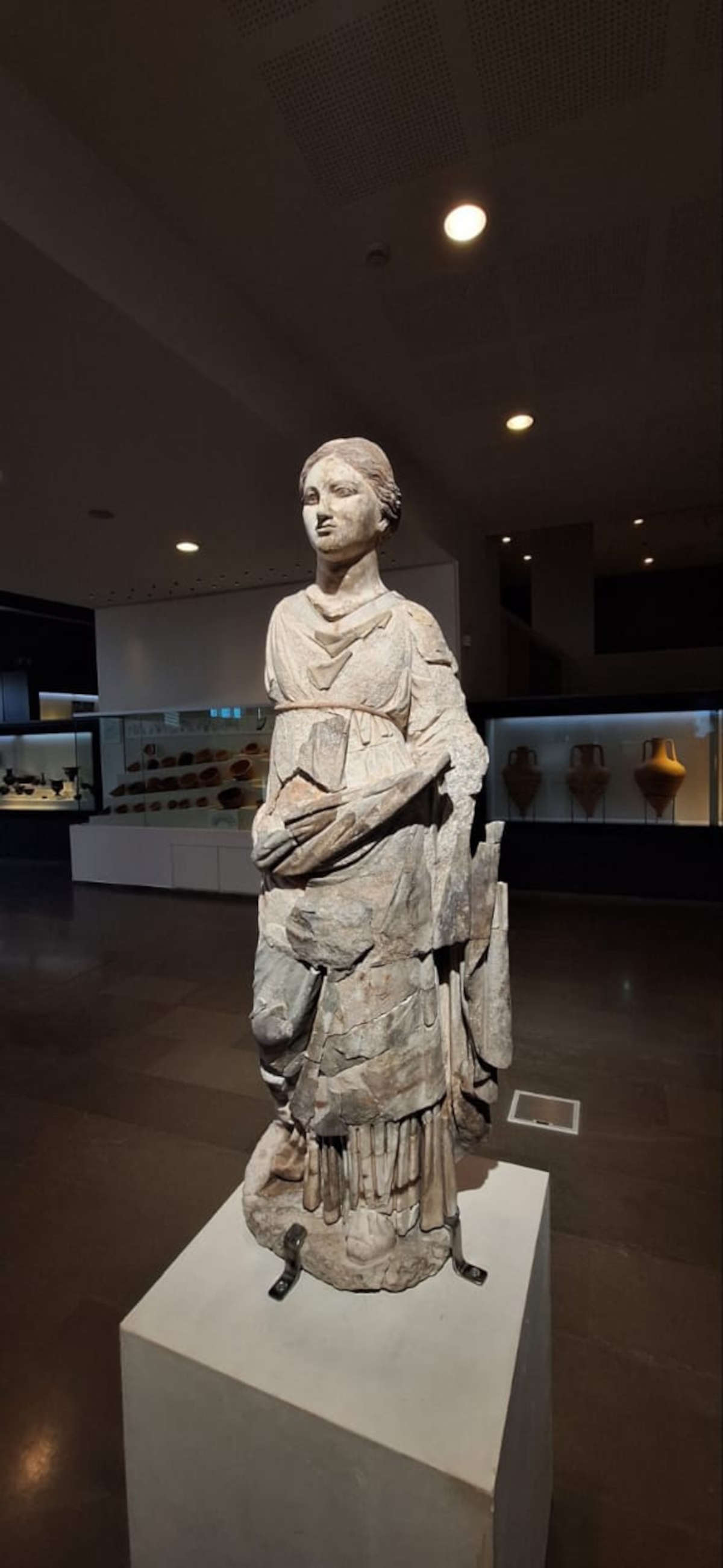
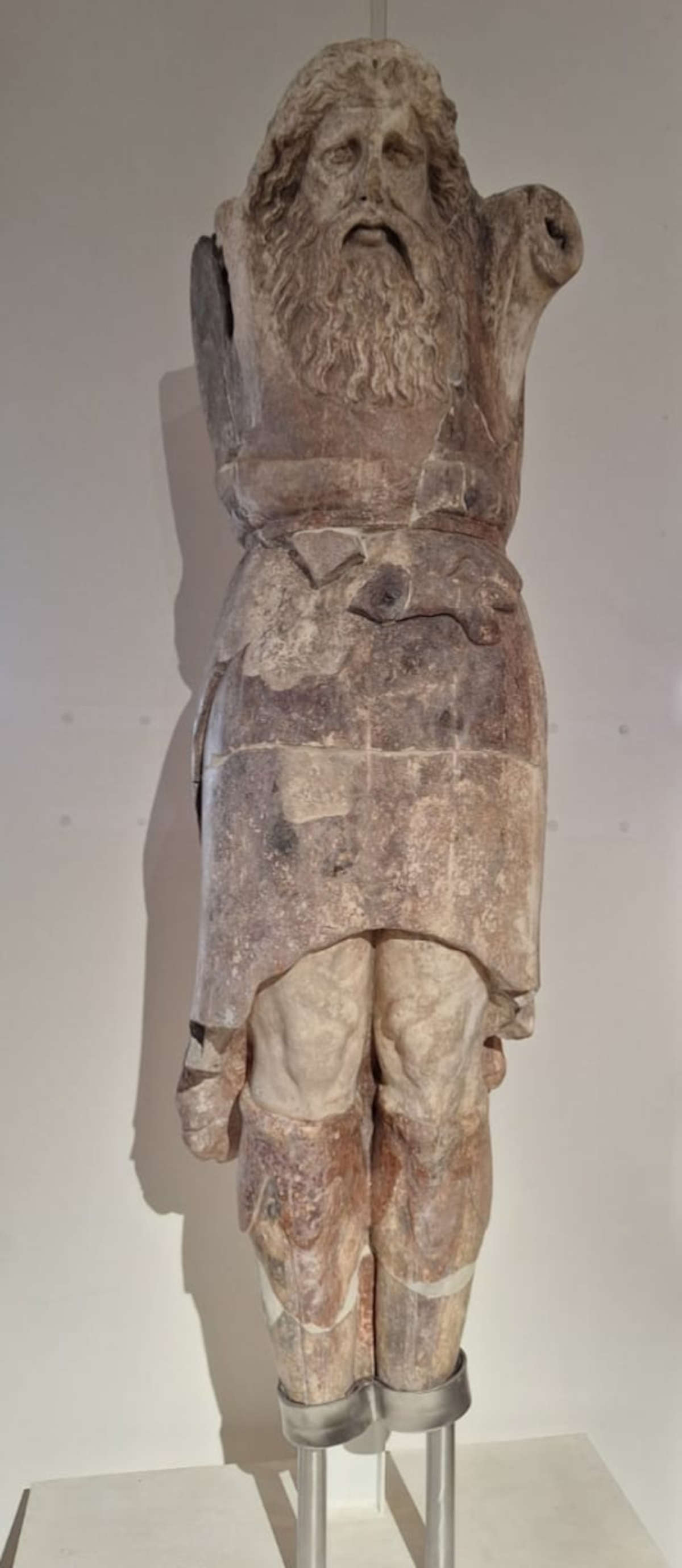
On the occasion of the return of the restored Palace of Pella, the Archaeological Museum of Pella presented two statues from the Hellenistic period, discovered in 2015 in the ancient Agora of Pella during excavations by Aristotle University of Thessaloniki, and now exhibited for the first time. They are two sculptures, a female statue and a Silenus statue, which adorned a building with a fountain. Earlier, during an inspection of the archaeological site of Ancient Pella, where maintenance and modernization work on the building’s supporting infrastructure has also been completed, Lina Mendoni visited the replica production workshops of the Organization for Resource Management and Development (ODAP), expressing the Ministry of Culture’s intention to further utilize the existing facilities on the basis of a new cultural and educational utilization framework in the form of a workshop open to the public, which will bring mosaic technique and the art of ceramics closer together.
The Palace of Ancient Pella is built on a plateau on a hill north of the city. Its location was strategic, as it could guard the area on which the city was built deep, as well as the ancient port and roads leading to the city and the surrounding fertile land. In those years the sea was much closer than today, making the city almost coastal. Two roads led from the Agora to the Palace. Architecture was used as a means of expressing royal authority.
The Palace area consisted of seven buildings built on stepped terraces, connected by corridors and staircases. The monumental entrance to the Palace was through a propylaeum, flanked on both sides by two large Doric arches. Behind the propylaea, on a higher terrace, were the two most important buildings: one where the king received foreign embassies, with rooms for banquets and religious rites. In the second building the Council, that is, the elite of the Macedonians, met.
To the north was a building with the royal apartments. There was also the gymnasium and boarding school for the education of the king’s children and the children of important families, and the building where the officers lived, and where the service rooms and stables were located. After the defeat of the Macedonians by the Romans in 168 AD, the palace was sacked. However, the Romans did not destroy it, nor was it ever rebuilt. In Byzantine times, there were agricultural buildings in the area. In later years, numerous thefts of stones occurred, making it particularly difficult to read.
In 2015, a master plan was prepared for the enhancement of the entire palace. The project, which began in 2020, involved the restoration of the royal apartments, the Propylaeum and the gymnasium. A new entrance, parking lot, visitor information and information building, and pedestrian paths with rest areas and universal accessibility standards were built.
|
| Greece, Pella Palace reborn: Alexander the Great's mansion restored |

Warning: the translation into English of the original Italian article was created using automatic tools. We undertake to review all articles, but we do not guarantee the total absence of inaccuracies in the translation due to the program. You can find the original by clicking on the ITA button. If you find any mistake,please contact us.





















 IT
IT FR
FR DE
DE ES
ES CN
CN


