





A Roman aqueduct of great significance has been discovered inside the Villa dei Casoni, in the territory of Montopoli di Sabina, in the province of Rieti. The discovery is the result of research and study activities dedicated to the vast underground heritage of Sabina, conducted by the ABAP Superintendence for the metropolitan area of Rome and the province of Rieti, which is coordinating the excavations, in collaboration with the Gruppo Speleo Archeologico Vespertilio.
The Villa dei Casoni, datable to the Republican period, was built on two sloping terraces: the lower one accommodated the garden, enriched by a nymphaeum and a circular pool, while the upper level housed the residential rooms, articulated around a cryptoporticus, with cubicles and tablinum. The existence of “very ancient aqueducts” and the so-called Varro Spring was already documented between the late eighteenth and nineteenth centuries by various historical sources; however, only today, thanks to a thorough topographical survey and repeated reconnaissance in the area, has it been possible to locate with certainty not only the spring, but also the aqueduct and the springs that fed the entire complex.
Speleological investigations led to the discovery of a complex underground hydraulic system, consisting of a dense network of tunnels dug into the natural conglomerate. “This is a drainage and water catchment system located about 300 meters from the villa,” explains Cristiano Ranieri, president of the Vespertilio Archaeological Speleo Group. “The water from these springs, which until a few decades ago fed a fountain known as ’Fonte Varrone,’ was piped into a cistern that also functioned as a limaria tank and then redistributed to the various users of the villa. It is a system that must have been in use even before the Romanization of Sabina, referable to an ancient settlement present in the area.”
The discovery represents a significant contribution to the expansion of knowledge about the territory of Montopoli di Sabina and the archaeological area of the Villa dei Casoni, already the subject of non-invasive survey campaigns and research activities conducted by the Department of Classical Studies of the University of Basel, under the direction of Sabine Huebner.
“The discovery of this aqueduct represents a unique opportunity to understand the hydraulic supply of one of Sabina’s most important villas,” says Nadia Fagiani of the Superintendency. “Thanks to LiDAR technology it will be possible to obtain a complete 3D mapping of the entire underground hydraulic system, in relation to the wall structures and the rooms above the villa. Since this is a very ancient hydraulic work, the study will also allow to expand the knowledge about the Sabine settlements, the so-called vici, prior to the Roman conquest.”
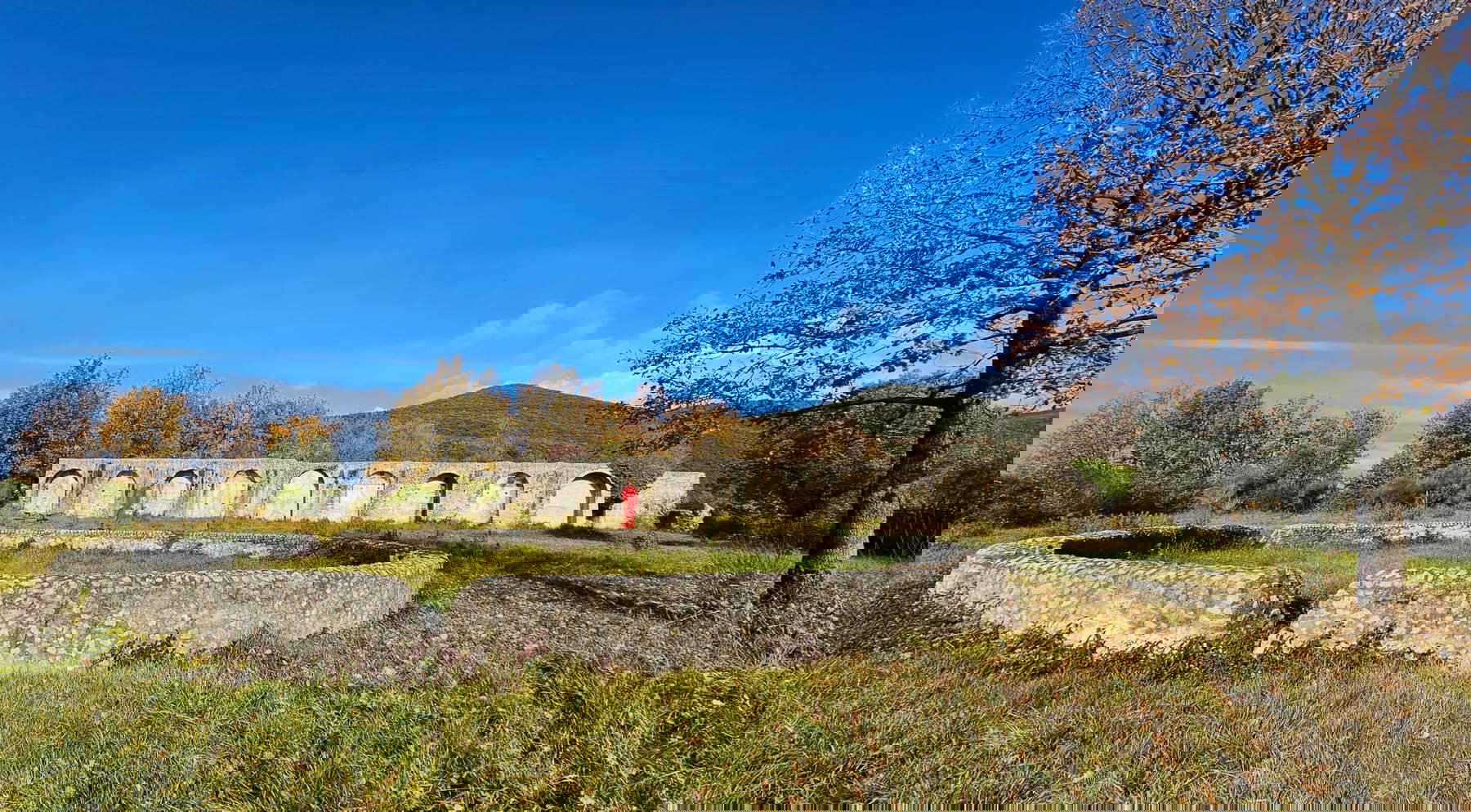 |
| In Montopoli di Sabina (Rieti), an aqueduct from the Roman era was discovered in the Villa dei Casoni |

Warning: the translation into English of the original Italian article was created using automatic tools. We undertake to review all articles, but we do not guarantee the total absence of inaccuracies in the translation due to the program. You can find the original by clicking on the ITA button. If you find any mistake,please contact us.





























 IT
IT FR
FR DE
DE ES
ES CN
CN


