








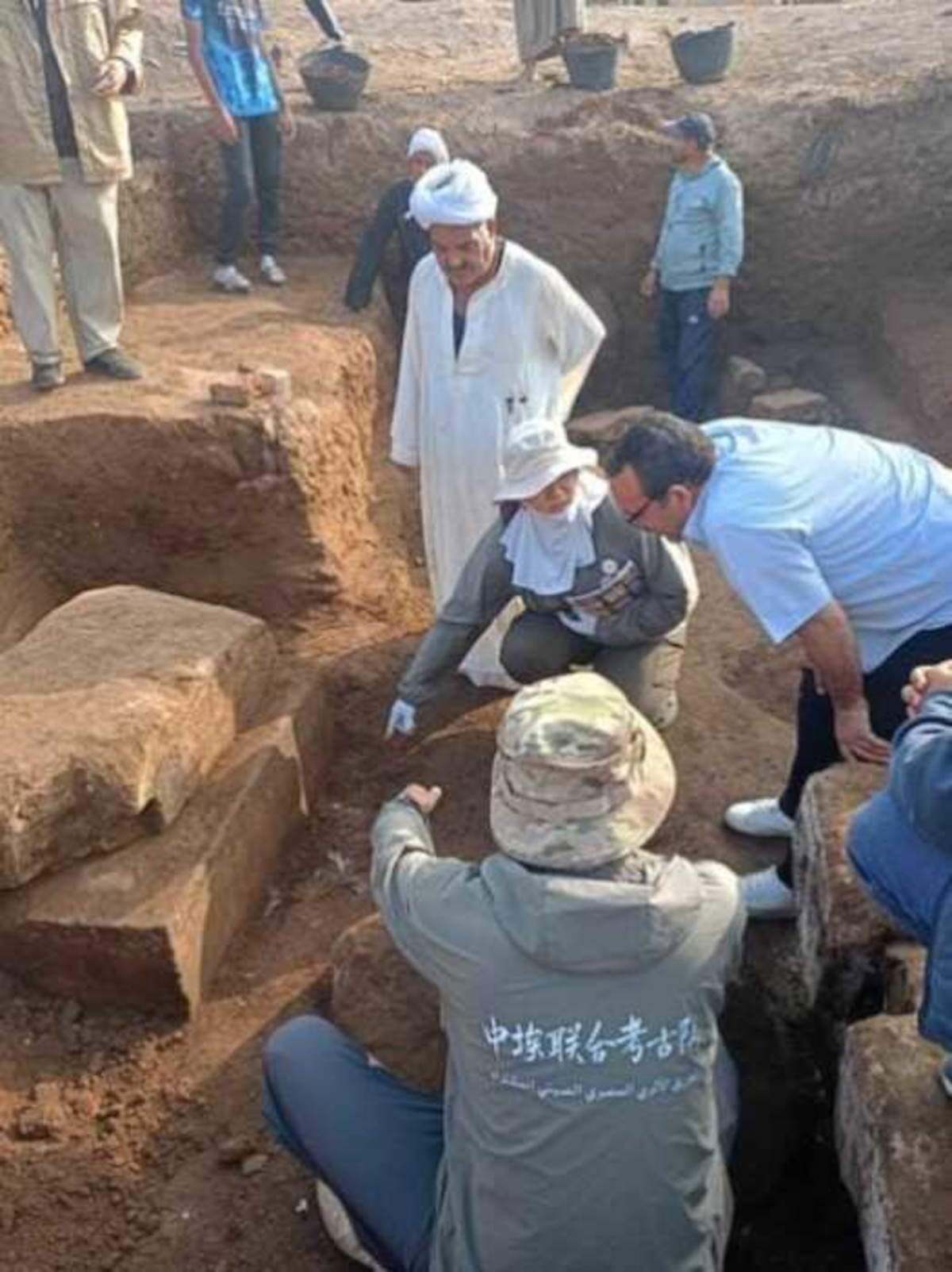
A joint Egyptian-Chinese archaeological mission, coordinated by the Supreme Council of Antiquities,Peking University and theShandongInstitute of Cultural Heritage and Archaeology , has unearthed a limestone-built building atMitRahina in Giza governorate. The uncovered element is believed to be part of the remains of the temple of PharaohApries, ruler of the XXVI Dynasty, which was already the subject of previous excavation campaigns at the Tel Aziz site in the eastern part of the area.
According to Sharif Fathi, Minister of Tourism and Antiquities, the find represents an important contribution to the ongoing archaeological research in Mit Rahina, enabling a deeper understanding of one of the main sites connected to the city’s ancient history. The minister stressed the effectiveness of scientific cooperation between the Egyptian and Chinese teams in the excavations. Hisham El-Leithy, Secretary General of the Supreme Council of Antiquities, pointed out that the find provides a better understanding of the urban planning of ancient Memphis (Mit Rahina) and religious practices late period up to the Greco-Roman period. Preliminary analysis suggests that the southern sector of Tel Aziz formed the central core of the city and that the temple remained in use from the reign of Apries until the Roman period.
The mission’s work, as indicated by Professor Mohamed Abdel-Badi, head of the Egyptian Antiquities Sector at the Supreme Council of Antiquities and head of the Egyptian mission, also led to the identification of five acephalous sphinxes , stone blocks and slabs engraved with hieroglyphs dedicated to the god Ptah and cartouches ofApries, as well as a variety of artifacts such as terracotta and glass vessels and copper coins. Zhang Hai, director of the mission for the Chinese side, announced the resumption of excavations in April, with the goal of unearthing additional architectural elements and artifacts to reconstruct the history of the area. The city of Memphis, located at the confluence of the Nile and its delta, between the eastern and western deserts, represents one of Egypt’s oldest capitals, a center of administrative, economic and religious activities for nearly three thousand years.
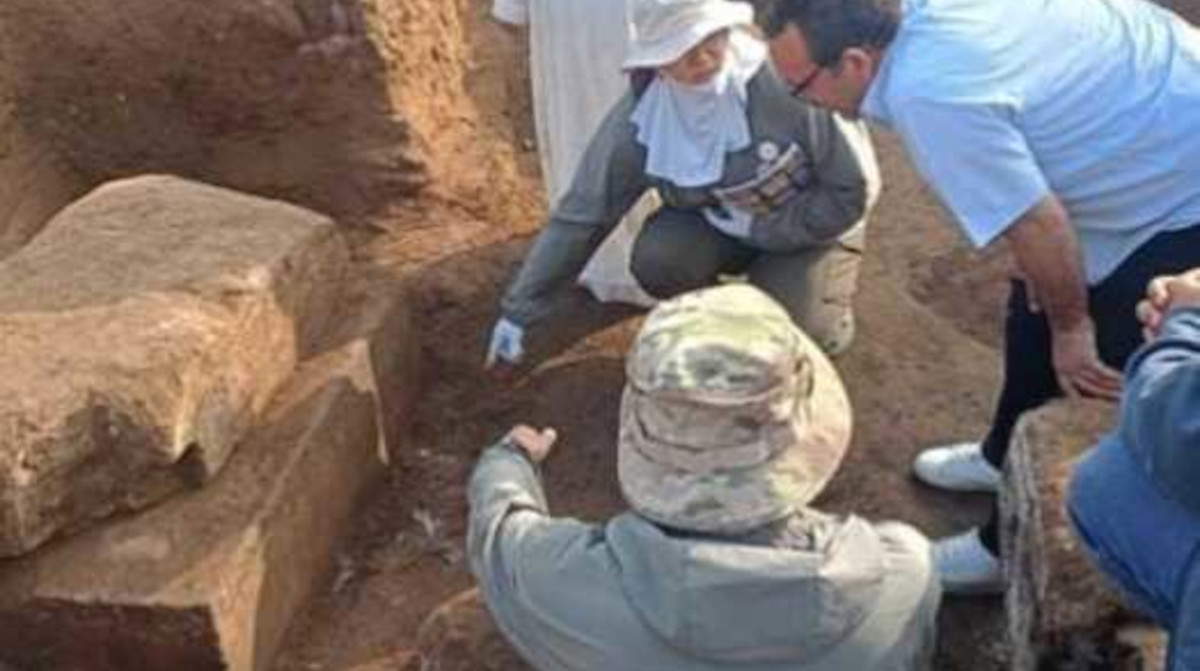 |
| Limestone building linked to the temple of Pharaoh Apries discovered at Mit Rahina in Egypt |

Warning: the translation into English of the original Italian article was created using automatic tools. We undertake to review all articles, but we do not guarantee the total absence of inaccuracies in the translation due to the program. You can find the original by clicking on the ITA button. If you find any mistake,please contact us.





















 IT
IT FR
FR DE
DE ES
ES CN
CN