





Two new excavation campaigns conducted in 2025 inside the Château de Versailles have unearthed hitherto little-known elements of the courts of the Queen’s and Dauphin’s apartments on the south side and the north terrace. The two excavation campaigns conducted by Inrap (French Institute of Archaeological Investigations), are part of a program of studies that, for more than two decades, has accompanied the maintenance, restoration, and infrastructural upgrades of one of Europe’s best-known and most stratified historic sites. In addition to restoring evidence of occupations prior to the castle’s construction in the form known today, the operations have made it possible to document in a timely manner how the site has been transformed over nearly four centuries. From the earliest accommodations related to Louis XIII’s hunting pavilion, built in the 1730s, to the interventions of the first half of the 20th century, the subsoil of Versailles preserves a complex sequence of building, infrastructural and functional traces that reflect the permanent construction site nature of the royal complex.
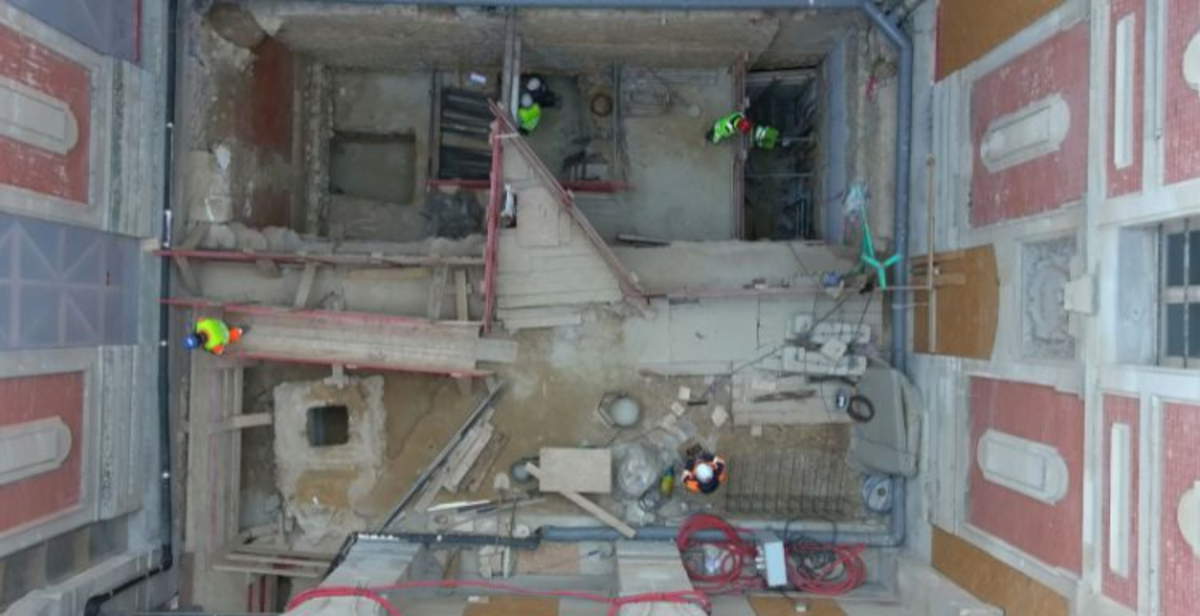
The Courts of the Queen and the Dauphin occupy a central position within the southern apartments. This sector of the castle was built in part on the fill of the moat designed by architect Louis Le Vau, which surrounded Louis XIII’s hunting pavilion and, later, Louis XIV’s first castle. The excavation therefore focused on the analysis of the moat fill levels, investigated down to the natural sandy substrate, identified at a depth of about 3.20 meters. The exceptional preservation of the stratigraphies allowed for a precise reconstruction of the different phases of intervention that took place in this area. Among the structures that have emerged are foundation walls belonging to tunnels on colonnades that have now disappeared, drainage systems built with stonework for water evacuation, vaulted tunnels intended for the maintenance of hydraulic networks, and imposing rainwater collectors. Particularly noteworthy are the late 17th-century interventions, characterized by round-arched vaults that testify to an advanced organization of the underground infrastructure serving the royal apartments.
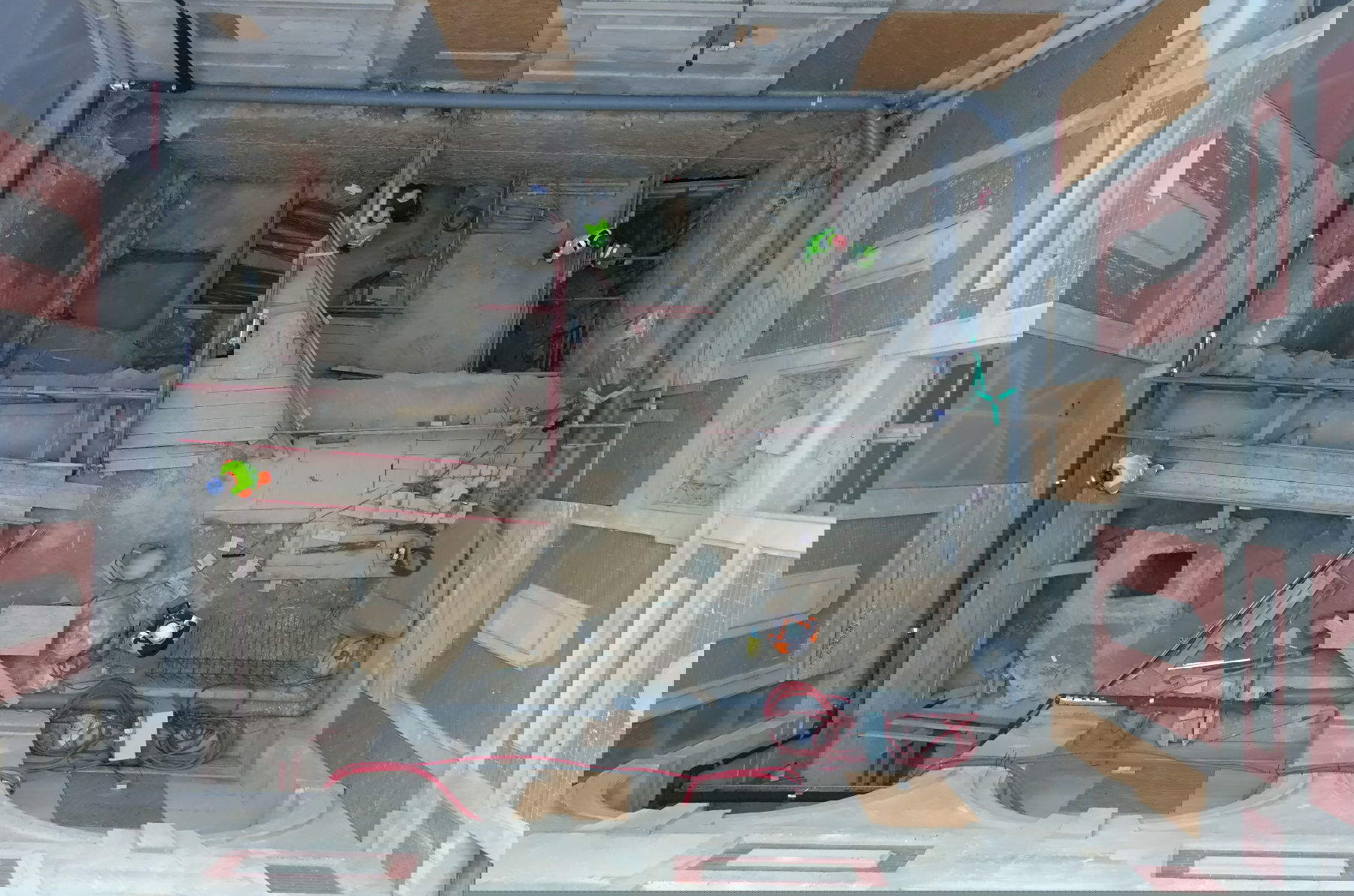
The density of structures identified in the two courtyards, combined with the legibility of the stratigraphic sequences, now makes it possible to articulately reconstruct the succession of intervention phases that shaped the spaces. The cross-analysis of archaeological data and documentary sources will make it possible to further refine the relative chronology of the different phases, offering new elements for the reconstruction of the castle’s building history. One element of particular interest is the so-called Le Vau Wall, or the brick counterscarp with limestone chains that formed the inner lining of the moat in the 1760s. This type of structure is only sporadically preserved today in the Versailles complex, and excavation has brought to light all sections of it that still exist in the two courts. Also associated with this early phase of occupation are a number of ceramic artifacts that can be traced to the consumption of the royal elites of the time: a fragment of Chinese porcelain, the importation of which into Europe was then in its infancy, and remnants of fine white and blue faïence (faience ) decorated with plant and bird motifs, pertaining to a chamber pot.
Investigations also revealed the existence of a vast circular basin placed in the center of the original Great Court between 1668 and 1690, before it was divided into two separate spaces following the construction of a pavilion added to the southern body. The construction type of the basin, equipped with a vaulted maintenance gallery, indicates that it was an elaborate and ornate feature. The archival record of this structure remains partly to be investigated, even with the input of specialists from the castle’s historical plumbing services. With the subsequent separation of the Great Court into two separate courts, the building extension of the apartments grafted directly to the edge of the basin, integrating its remains into the new spatial configuration. Several vaulted service galleries, intended for the maintenance and control of water networks, can also be traced back to this complex.
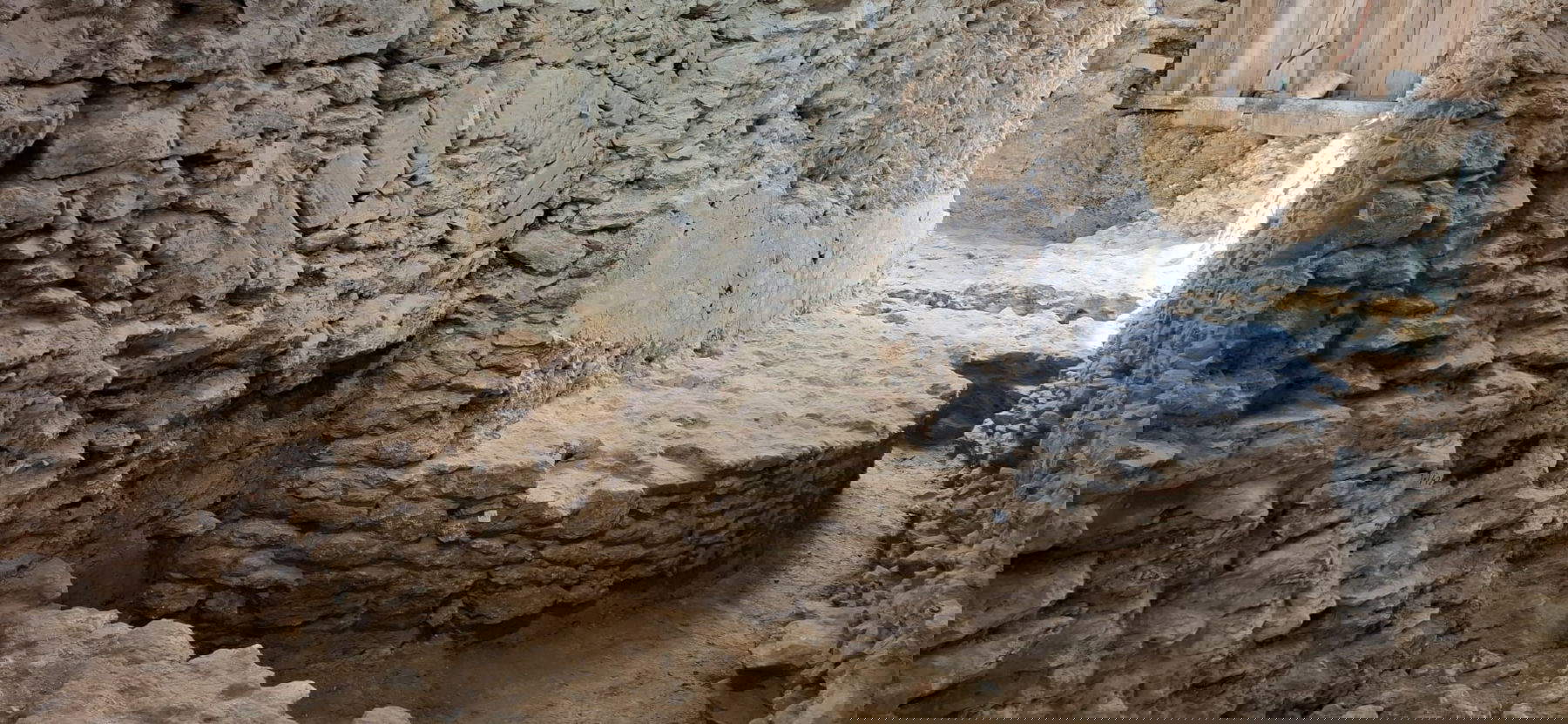
On the northern side of the palace, excavation and stratigraphic pickling operations conducted on the north terrace have contributed to the enrichment of knowledge about the construction methods of the different phases of the chateau. Negative structures were identified along the facade, subsequently filled with plaster and monumental sculptural fragments dating from the 17th and 18th centuries. These include carved anatomical parts, such as a hand, an equine jaw, and a ram’s head. It is speculated that these fragments were deposited when the bas-reliefs placed above the windows were removed or remade, interventions that could date back to the course of the 20th century. Several pits predating the two main masonry phases also emerged between the North Central Body and the North Wing. The fills of these pits contained fragments of mother-of-pearl and shells, elements that suggest a plausible connection with the demolition of the ancient cave of Teti, which occupied the sector before the construction of the North Wing began in 1685. A small quadrangular vaulted artifact, probably a drainage well, identified in the southeastern corner of the North terrace, seems instead to refer to the remains of seventeenth-century hydraulic networks.
Of particular note is the discovery of a foundation wall parallel to the North Wing, brought to light for a length of more than seventeen meters. The structure consists of four or five rows of blocks made with an obvious reuse of stone elements traceable to a balustrade. The size of the modules, the type of limestone, and the composition of the mortars indicate the use of older materials from the demolition of a railing or balustrade equipped with a staircase. At an early stage of research, a connection with the cave of Thetis was hypothesized, but this interpretation is no longer credited. Comparative analysis of the archaeological data may allow a more certain reading of the origin of these materials in the future. The wall founded on these reused elements could correspond to the construction of a fence surmounted by a grid, represented in a project attributed to Ange-Jacques Gabriel. The first barrier, installed in the 1780s, would have undergone several remakes, including one documented in 1771, with the function of separating the gardens accessible to the public from the space reserved for carriages authorized to reach the royal apartments.
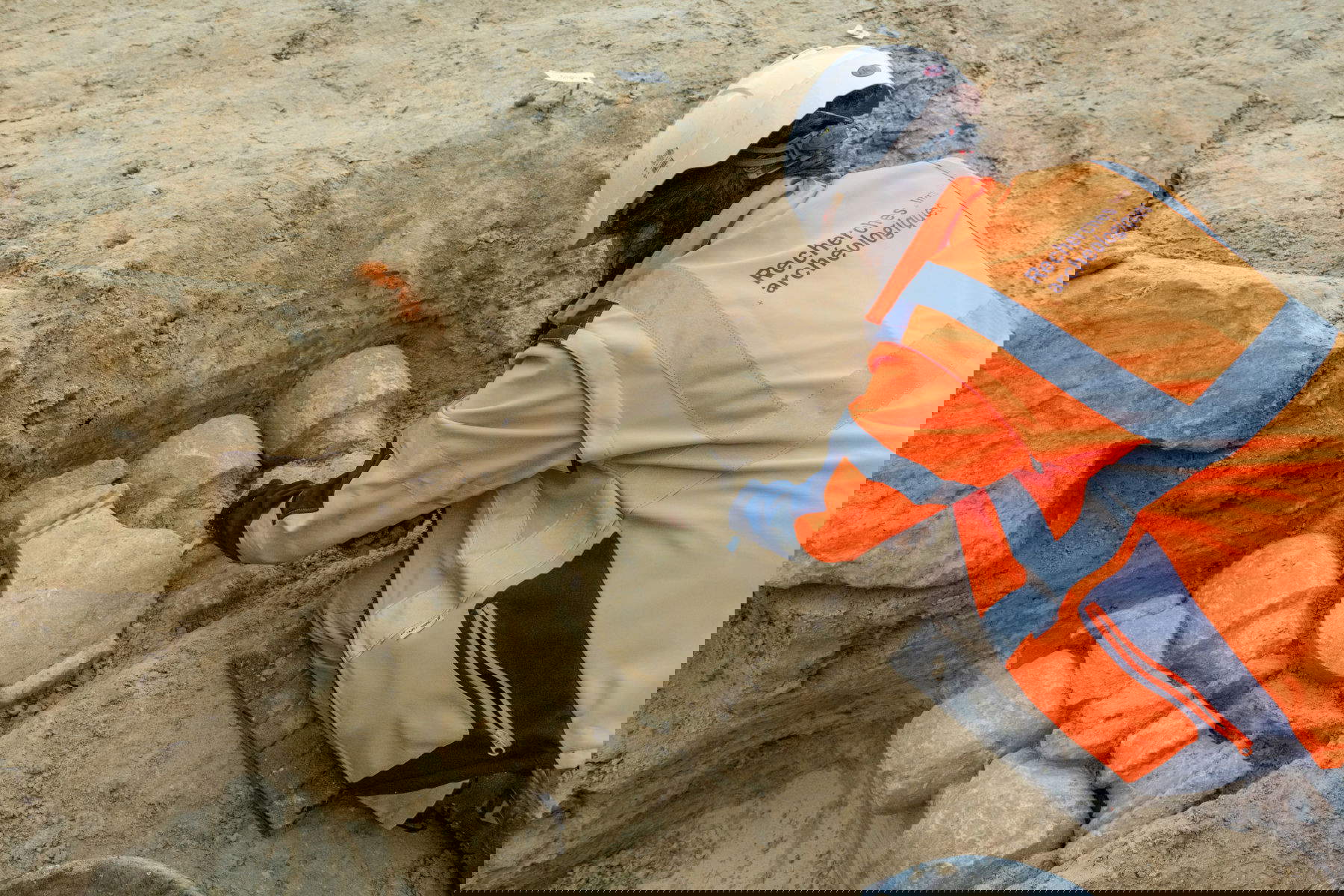
Taken together, the two excavation campaigns conducted in 2025 add to the numerous investigations carried out over the past two decades on the entire Versailles complex. The results confirm the extreme stratigraphic complexity of the site. The château is configured as an organism in continuous transformation, subjected to interventions of expansion, reorganization and functional adaptation that have left deep traces in the subsoil. The rapidity of changes, the overlapping of construction sites and the multiplicity of functions attributed to the spaces over time make an interdisciplinary approach indispensable, capable of integrating archaeological data, archival sources and architectural analysis. It is in the critical reading and systematic comparison of these different types of documentation that is based the possibility of formulating solid interpretative hypotheses and restoring, with greater precision, the material history of a monumental complex that continues to reveal new aspects of its own long and articulated evolution.
 |
| New excavations at Versailles unveil secrets of courts and north terrace |

Warning: the translation into English of the original Italian article was created using automatic tools. We undertake to review all articles, but we do not guarantee the total absence of inaccuracies in the translation due to the program. You can find the original by clicking on the ITA button. If you find any mistake,please contact us.
























 IT
IT FR
FR DE
DE ES
ES CN
CN


