




by Redazione 16/01/2026


Categories: Archaeology / Disclaimer
The hypogeum discovered in 2002 in the Punic necropolis on the island of Sant'Antioco, Sardinia, is undergoing restoration and consolidation work to enable its future use and deepen knowledge of its Egyptian paintings and sculptures. The mayor in recent hours entered the site and released some photos.
Tomb 7 PGM, also known as the Tomb of the Egyptian of Sant’Antioco, Sardinia, stands out among the burials of the Punic necropolis for the exceptionality of its decorations and for the historical value that makes it unique on the island. The environment, discovered in 2002, is currently undergoing restoration and consolidation work that will ensure its preservation and future use by including it in the visiting route of the necropolis. The quality of the paintings and architectural structures makes the site a point of reference for studies on Punic funerary culture and Egyptian influences in the Western Mediterranean. On the occasion of the ongoing work, the mayor of Sant’Antioco, Ignazio Locci, visited the tomb for the first time on January 14.
“Today I had the privilege and honor of entering for the first time the so-called ’Tomb of the Egyptian,’ discovered in the Punic Necropolis in 2002 and so baptized for the extraordinary paintings that make it unique in the Punic funerary world,” Mayor Ignazio Locci stated on his Facebook page. “Work is currently underway to restore and consolidate the hypogeum, of which we are extremely proud, which in time will be able to make it usable, included within the Necropolis visitor route. I had only seen it in photographs and, with some emotion, I admit that live it is a unique, unimaginable spectacle, which heartily deserves the work that is being done to make it accessible to all.”


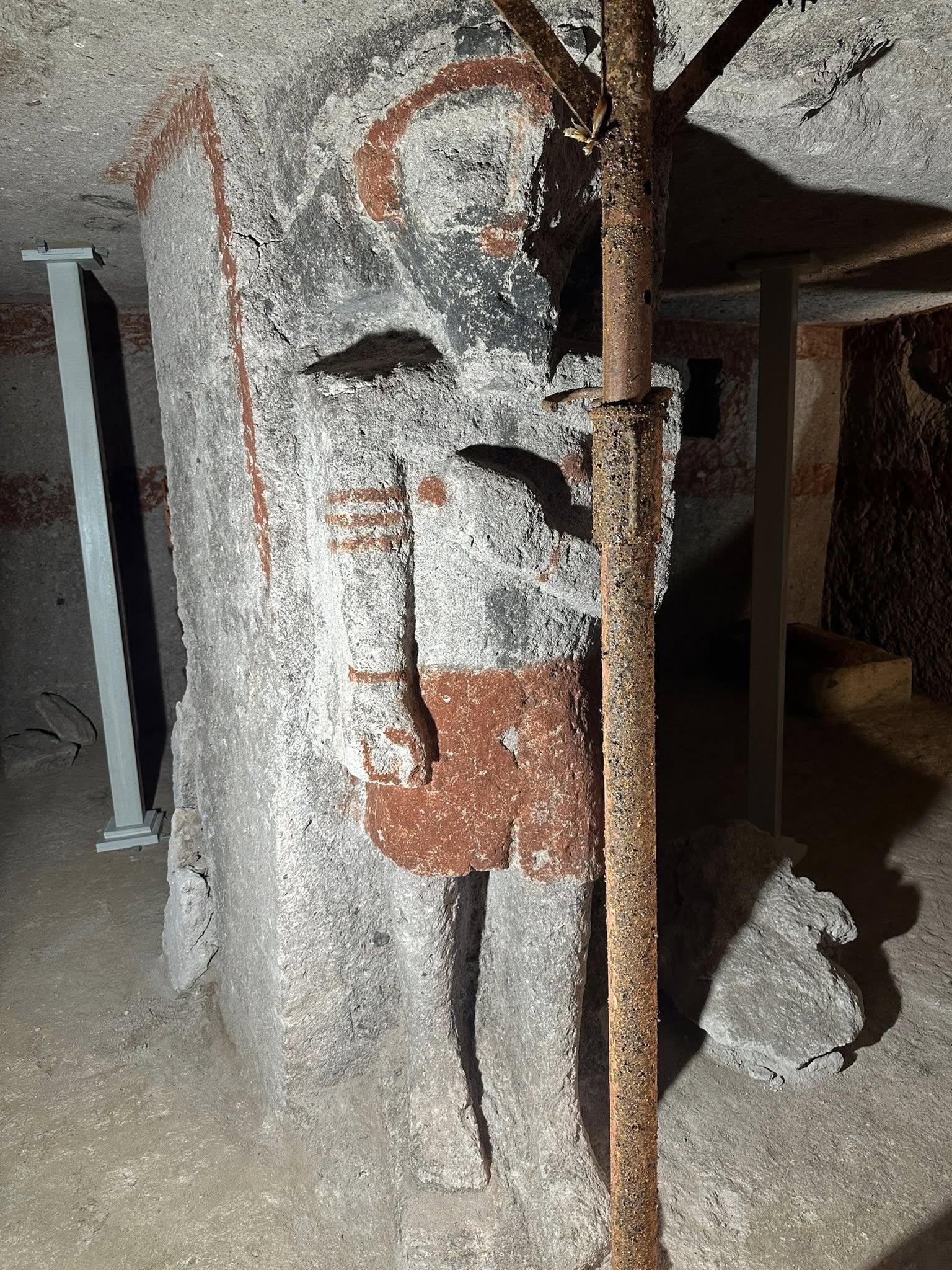
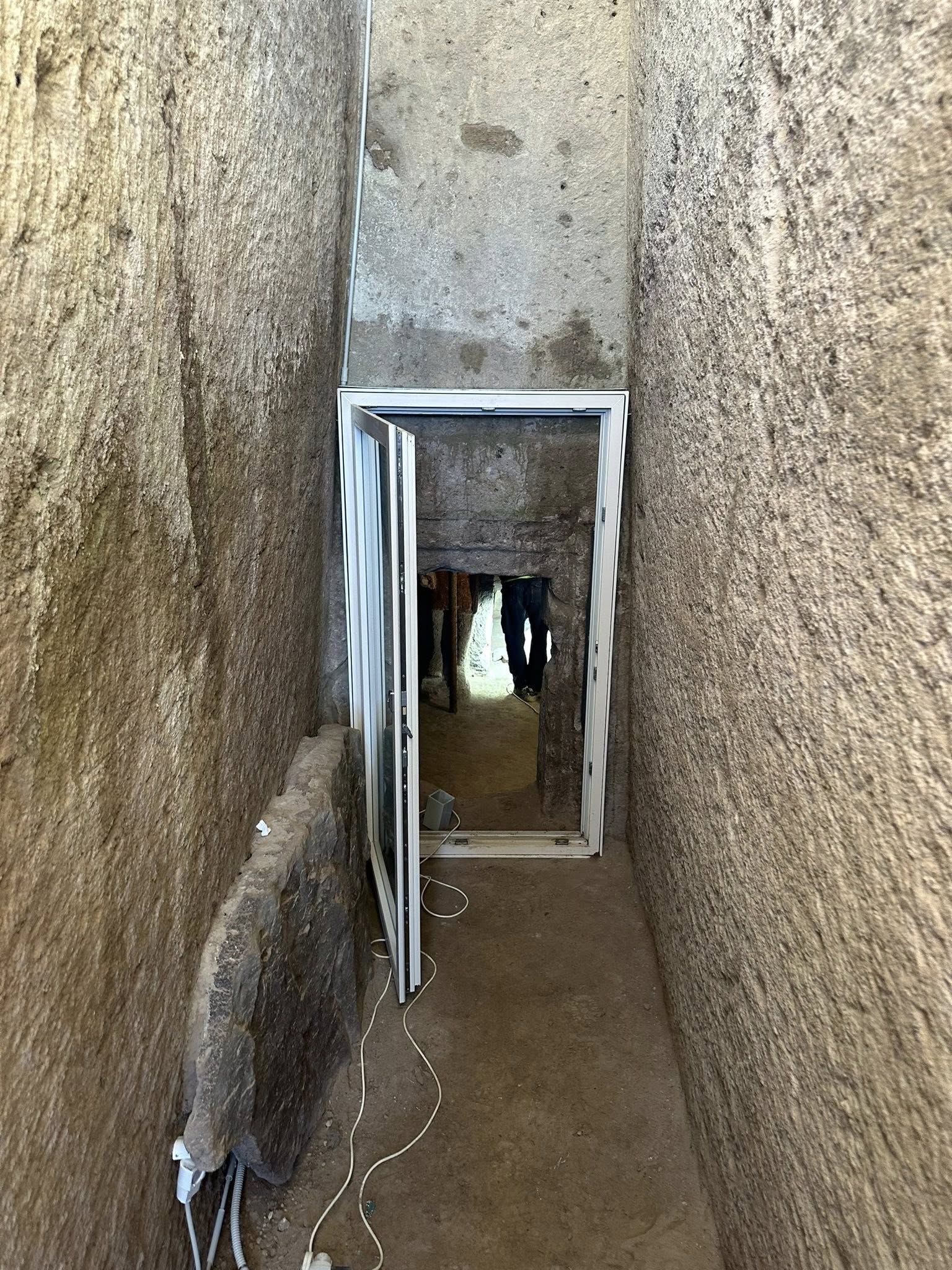
The necropolis of Sant’Antioco and the Tomb of the Egyptian.
The necropolis of Sant’Antioco is located on the island of the same name in southwestern Sardinia and represents one of the largest and best-preserved Punic burial areas on the island. The sector known as Is Pirixeddus includes more than fifty underground tombs, part of a funerary area that originally extended for about ten hectares. The hypogea were accessible via stepped corridors, called dròmos, and housed multiple burials, probably belonging to members of the same family, laid in wooden coffins often painted red or decorated with carved figures in relief. The use of the necropolis continued into Roman times, when capuchin tombs, incineration burials and earthen pits spread along the hill that descended from the Acropolis toward the ancient town.
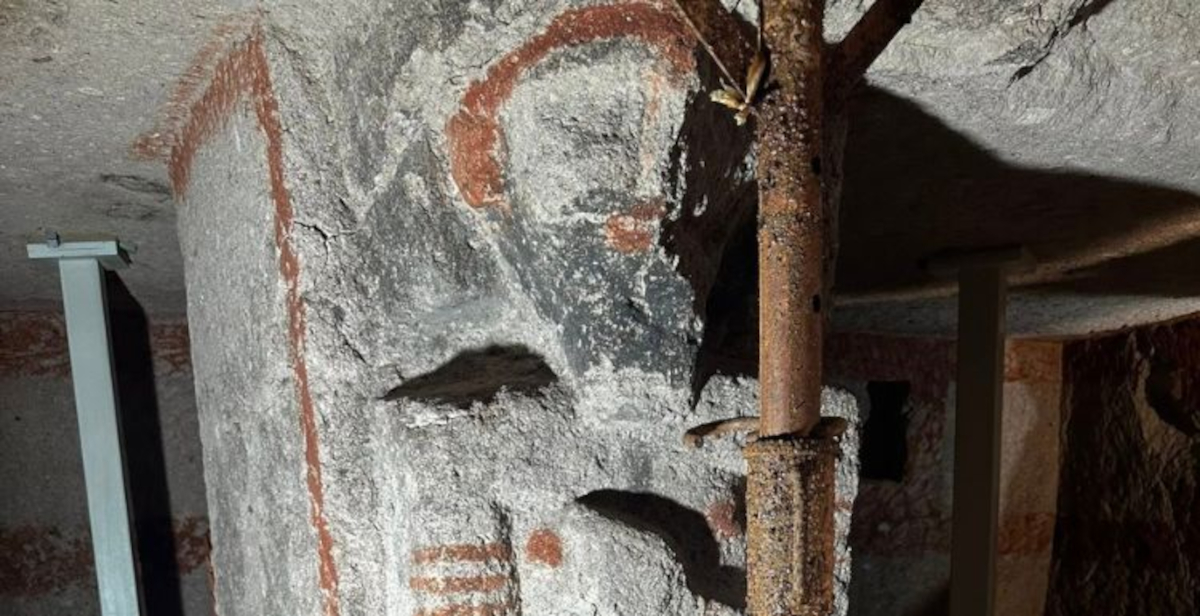
As Sant’Antioco Historical Archaeological Park director Sara Muscuso explains, the Egyptian Tomb constitutes a very rare case in the Punic Mediterranean due to the presence of a trapezoidal burial chamber with a central pillar carved in anthropomorphic relief. The male figure presents rigid and compact volumes, with geometric shapes evident in the squared shoulders, rectangular skirt, triangular face, and headdress. The arms adhere to the body, with the right arm extended along the side and the left arm folded across the chest. The symmetrical and static setting of the figure is animated only by the hinted movement of the left leg and arm, while the visual impact is enhanced by the color contrast of red and black pigments applied directly on the pale rock. Black color is used to define the details of the Egyptian hairstyle, the klaft, which falls stiffly behind the ears, as well as for the mustache and beard with the characteristic pharaonic curl. On the chest, held up by the folded hand, an unguentarium was identified tied to the wrist, an object related to personal hygiene. Red, the dominant color in the funerary chamber, takes on a strong symbolic and ritual value, connected to death, rebirth and the divine sphere: it is present in the skirt, hand, bracelets, nipples, lips, diadem and the linear frame that decorates the other sides of the pillar.
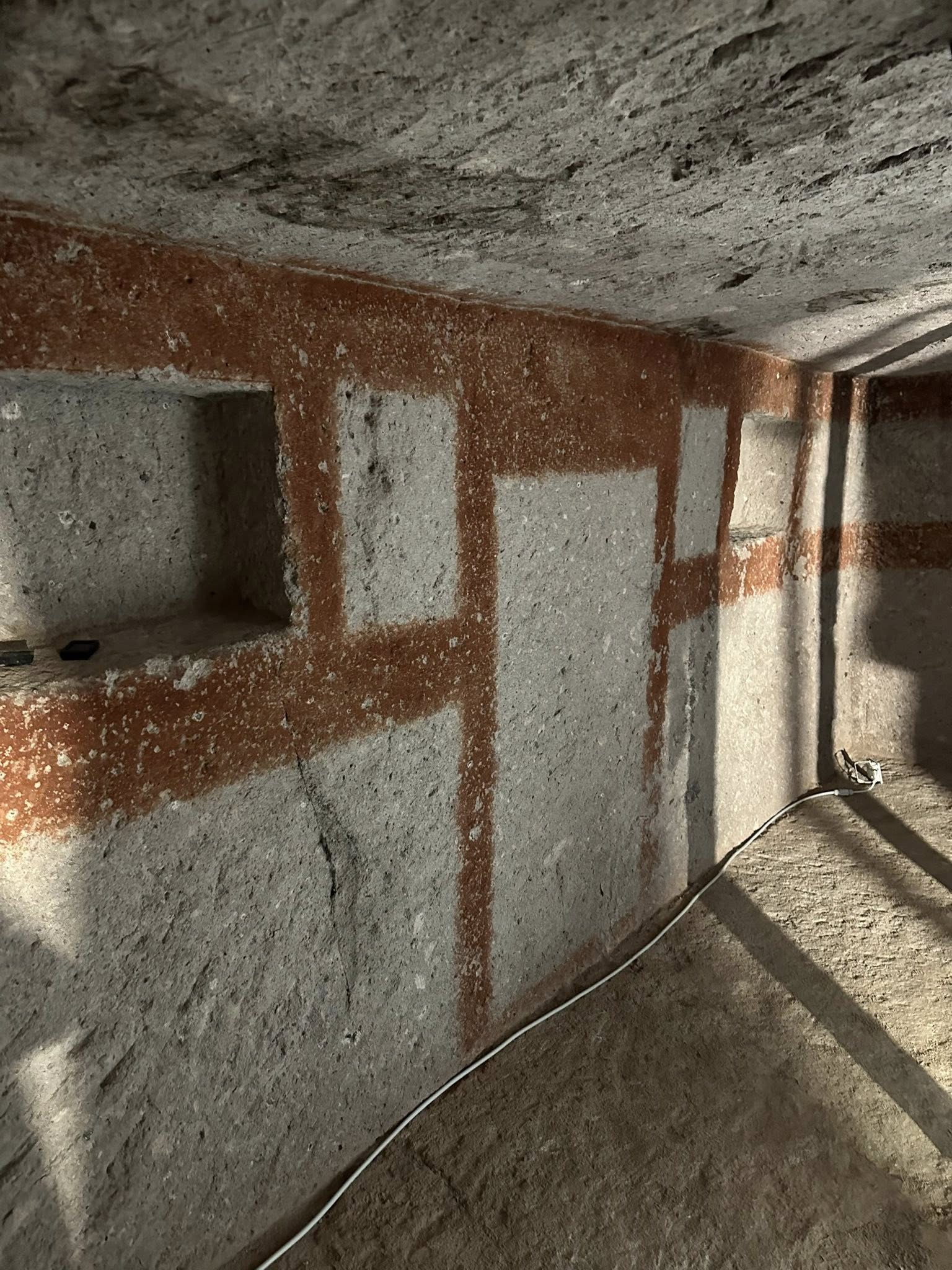
The decoration extends to the walls of the chamber through a geometric texture of wide bands and full bands, articulated in large rectangular spaces, false windows, and eight carved niches, two on each wall. The symbolic apparatus culminates in a false door placed in the left quadrant of the chamber, an element that, according to Egyptian tradition, allowed the soul of the deceased to transit to the world of the dead. Inside the burial chamber was laid a single individual, placed in the back corner within a wooden sarcophagus that imitated Egyptian cartonnage models (a material that was used for funerary masks), characterized by its anthropomorphic form and schematic portrait of the deceased on the lid. The associated vascular accoutrements were extremely basic and included an oil lamp with stand, an amphora, a dish, and a kernos, a vascular form in use in ancient Greece. The apparent contrast between the richness of the funerary architecture and the simplicity of the grave goods suggests that social distinctions in Punic Sulci (or Sulki), present-day Sant’Antioco, of the mid-5th century BCE were expressed primarily through the monumentality and symbolism of the burial space, rather than through the accumulation of objects.
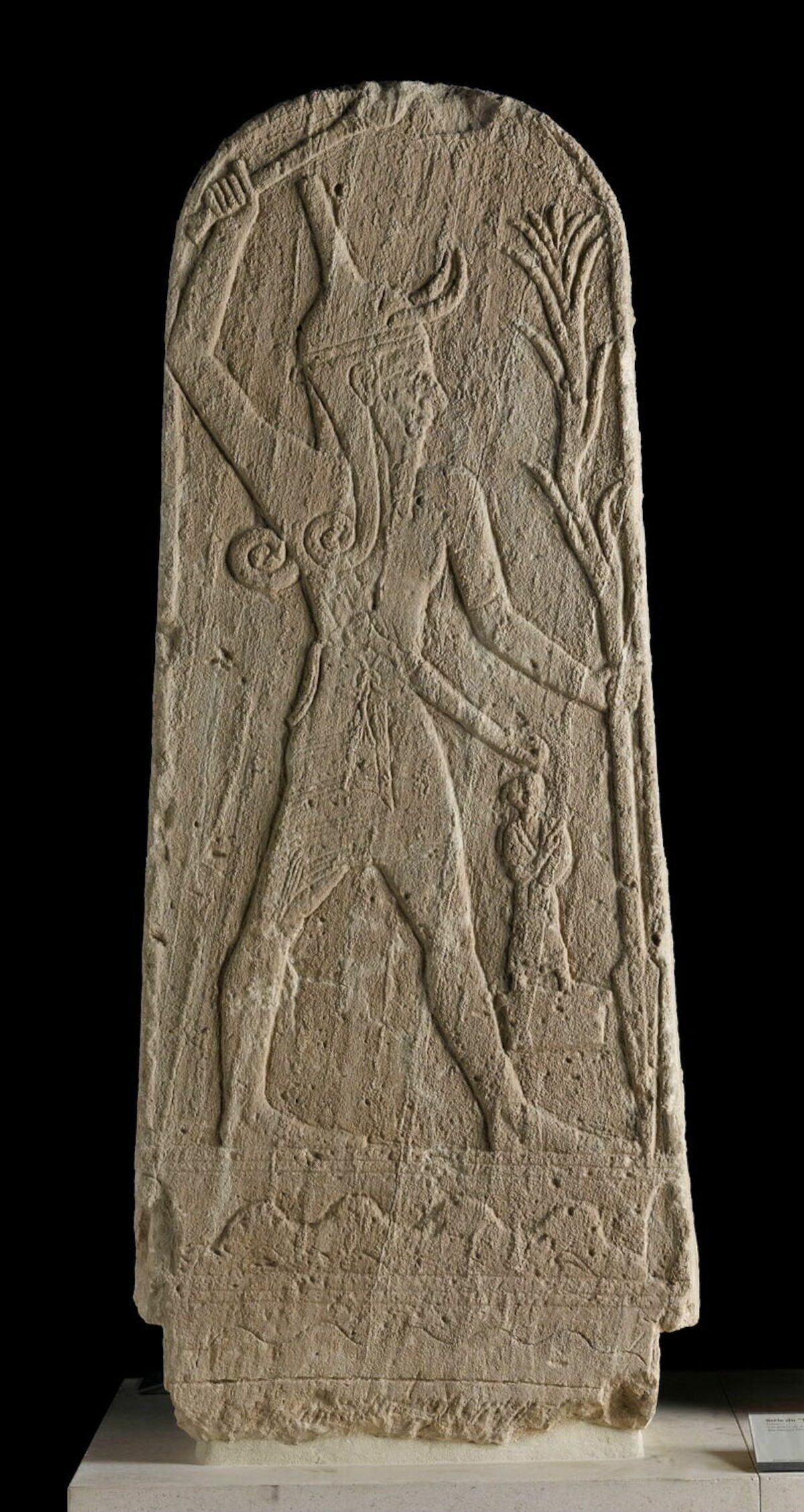
References to Egyptian culture, further attested by the discovery of birds and eggs as food offerings and symbols of rebirth, are not foreign to Phoenician and Punic traditions. In any case, the constant presence of Egyptian iconographic and symbolic elements in the Tomb of the Egyptian highlights a particularly important phenomenon related to the reception of Egyptian imagery in the Punic world, especially in the magical-religious sphere and in the representation of the superhuman. Hypotheses about the identity of the carved character remain open: it could be a chthonic deity or demon (a figure associated with the cults of the subterranean powers) linked to the protection of the deceased, Baal Addir “Mighty Lord,” a deity connected to the underworld, or the deceased himself represented in the context of funerary heroization rituals.
 |
| Sardinia, Sant'Antioco's Egyptian Tomb resurfaces with restorations |
Warning: the translation into English of the original Italian article was created using automatic tools. We undertake to review all articles, but we do not guarantee the total absence of inaccuracies in the translation due to the program. You can find the original by clicking on the ITA button. If you find any mistake,please contact us.