



by Redazione 18/02/2026



Categories: Events / Disclaimer
On the bicentenary of Carl Maria von Weber's death, the Saxon capital launches "Discover Romanticism 2026": concerts, operas, exhibitions and itineraries at the composer's sites. A program involving leading musical institutions and boosting cultural tourism in Saxony.


Two hundred years after the death of Carl Maria von Weber (Eutin, 1786-London, 1826), one of the greatest German composers of the 19th century, Dresden is building an entire year of cultural programming around the figure of the composer who contributed more than any other to defining the identity of German musical Romanticism. Indeed,2026 will be the festive yearDiscover Romanticism 2026, a billboard that brings together concerts, opera productions, theater performances, exhibitions and thematic itineraries, with the aim of bringing Weber’s legacy and the deep connection between his work and the Saxon capital back to the center of European cultural debate. The city that inspired the masterpiece Der Freischütz thus returns as an international stage for Romantic music. The program officially opens on May 15, 2026 with a performance of Jubel-Ouvertüre, marking the start of a season that will span the entire calendar year. Promoting and supporting the initiative are the city’s leading musical institutions: the Dresdner Philharmonie (The Dresden Philharmonic Orchestra), the Semperoper and the Staatskapelle Dresden (Orchestra of the State of Saxony), called upon to engage with Weberian legacy in the places that marked his career.

Highlights of the calendar include the May 29 concert at the Kulturpalast, where the choir and symphony orchestra of the University of Music named for Weber will offer rarely performed symphonic choral pieces, with the intention of bringing lesser-visited pages from the composer’s catalog back to attention. On March 30, however, the Weber meets Jazz event will offer an improvisational reinterpretation of his music, entrusting the jazz language with the task of measuring itself against the Romantic tradition. Theater occupies an equally prominent position in the program. The Landesbühnen Sachsen company offers two productions in the landscape of the Saxon Swiss National Park. On the rocky Rathen stage in June and August 2026, it will stage The Franco Hunter in one of the region’s most striking natural settings. To complete the theatrical journey, the rarely performed youth opera Silvana, considered Weber’s first masterpiece, will be offered on March 1, March 22 and June 7, 2026 in the settings of Meissen and Radebeul.


Alongside the performance dimension, 2026 includes a comprehensive exhibition program. The Saxon State and University Library holds Weber’s autographs, letters, and musical manuscripts, which will be presented in the exhibition No Freischütz for Dresden. Carl Maria von Weber and the German Opera, which can be visited until June 6, 2026 and is accompanied by a calendar of side events. The exhibition aims to explore the relationship between the composer and the German opera institution through original documents that testify to his role in defining a national repertoire. Further insight into the cultural context of German Romanticism will be offered by the Kügelgenhaus Museum of Romanticism, which will present Where the Shadows Dwell: E.T.A. Hoffmann, Carl Maria von Weber and the Dark Side of Romanticism from March 28 to September 6, 2026. The exhibition investigates the dialogue between Weber and E.T.A. Hoffmann, highlighting affinities and tensions between music, literature and fantastic imagery.
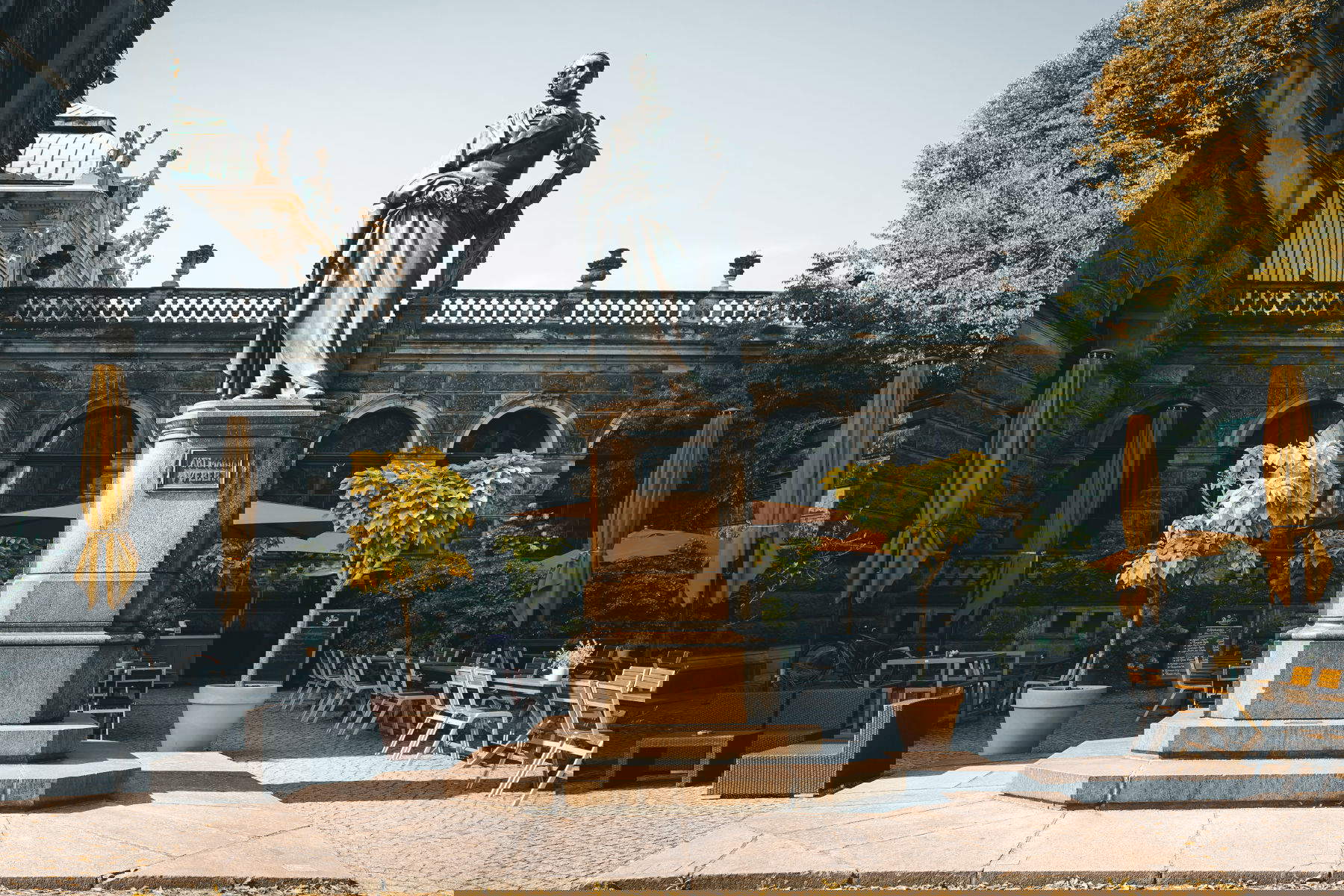
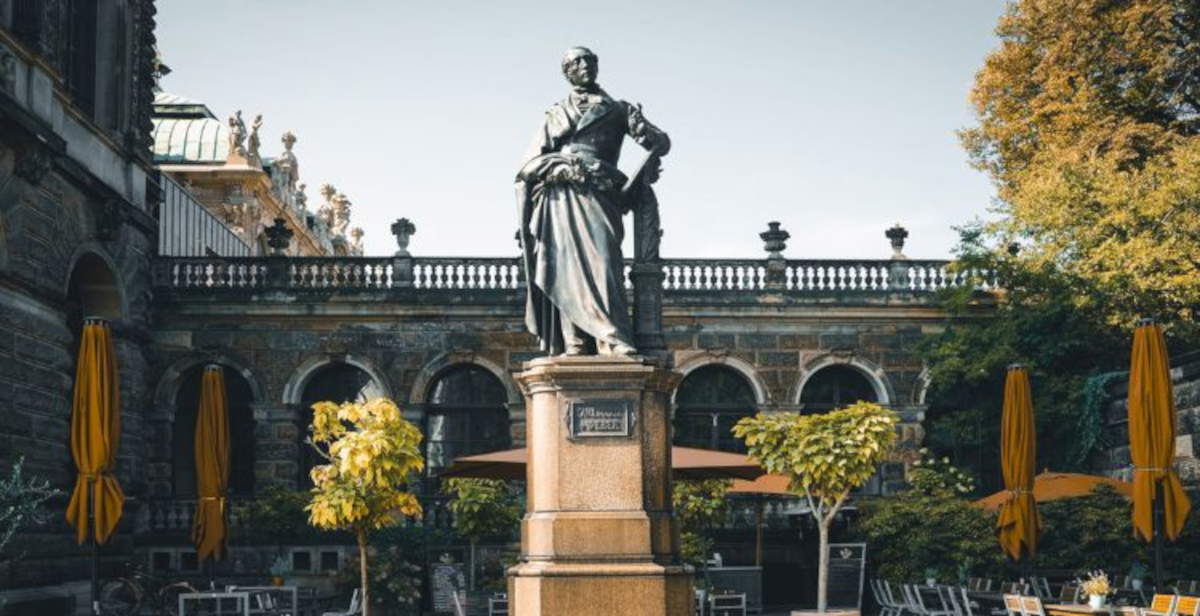
The project extends to the city through thematic routes that reconstruct Weber’s presence in the urban fabric. From the old Catholic cemetery, where the composer is buried in a tomb designed by Gottfried Semper, to the high school of music that bears his name, to Theaterplatz, where a monument by Ernst Rietschel overlooks the Semperoper, reopened in 1985 with Freischütz itself. The itinerary also touches on the Taschenbergpalais, the site of lessons given to Princess Amalia, the Royal Palace where Weber signed his appointment as court director in 1816, and the Cathedral where he conducted his own sacred compositions. Three thematic tours available on the Komoot platform connect the old town, baroque quarters and castles along the Elbe, offering a journey that interweaves music, architecture and memory.
The Weberian year is part of a context of enhancing Saxon musical heritage. Indeed, 2026 coincides with the 150th anniversary of the first performance of the Ring des Nibelungen in 1876, an occasion to renew attention to Richard Wagner, who was born in Leipzig in 1813. The region offers itineraries dedicated to Wagner’s sites in Graupa, near Dresden, and puts on operas such as The Flying Dutchman at the Chemnitz Theater on April 26, as well as The Ring without Words, a reinterpretation of Wagner’s opera at the Festspielhaus Hellerau in Dresden. The Saxon music scene also recalls the figures of Johann Sebastian Bach and Felix Mendelssohn Bartholdy, central to the region’s cultural identity. In Leipzig, the annual festival dedicated to Bach takes place in June, while the one named for Mendelssohn enlivens the month of November. In Dresden, from May 14 to June 14, the Dresdner Musik Festspiele rounds out a calendar that aims to consolidate Saxony’s role as a top destination for European music tourism.
 |
| Dresden celebrates Weber: 2026 year of Romanticism amid music and exhibitions |
Warning: the translation into English of the original Italian article was created using automatic tools. We undertake to review all articles, but we do not guarantee the total absence of inaccuracies in the translation due to the program. You can find the original by clicking on the ITA button. If you find any mistake,please contact us.