







One of the reasons why many contemporary art exhibitions are refractory to the general public is that they make the viewer feel a bit stupid. Of course, the more sensitive and knowledgeable viewers are, the higher their threshold of tolerance with respect to the accessibility of the works turns out to be, however, the moment when one gets the impression that an artist’s work (more or less intentionally) hinders understanding sooner or later comes for everyone. Even for “insiders,” at least those who approach art with a desire to encounter it without narcissistic cynicism at the aprioristic expense of a work or author. This is not a satisfying feeling, especially if one experiences it in an institutional exhibition venue that is trusted to be an authoritative reference point in the field. Such a feeling arises when visiting Untitled (I Love You), the first institutional retrospective of the American Uri Aran (Jerusalem, 1977) currently under way at the Museo d’Arte Contemporanea Donnaregina - Museo Madre in Naples, conceived as an articulate mid-career reconnaissance of an artist with a respectable curriculum (to the ’attivo also a participation in the 55th Venice Biennale, Il Palazzo Enciclopedico, curated by Massimiliano Gioni in 2013) and the support of leading galleries, such as Andrew Kreps Gallery (New York) or Sadie Cole (London). On paper, then, a niche proposal that generates the expectation of delving into an international artist not among the best known in Italy. No doubt, it comes to mind, this gap is to blame for our now internalized national artistic provincialism with respect to the contemporary. Opportunities to emancipate ourselves from it should be seized without delay. Having passed through the spectacular atrium of the Neapolitan museum incorporated in the environmental work Axer / Désaxer created by Daniel Buren (Boulogne-Villancourt, 1938) in 2015 (alone, this is worth the visit, even repeated), one then ascends to the top floor, entirely devoted to the exhibition. As the introductory panel states, the exhibition takes stock of more than two decades of creative production by an artist who “uses words, objects, images and gestures to compose works that seem suspended between the known and the unexpected. Through installations, sculpture, video and painting, he gives shape to rich visual scenarios where elements of the everyday are broken down and reorganized into compositions that evoke fragmentary and open narratives. In a discourse on subjectivity that accommodates the vulnerability and complexity of relationships, Aran works on the margins of codified discourse.”
It seems clear from the outset that it will take effort and perhaps pain to untangle the threads of a discourse that promises to be complex, and to exercise a great deal of sensitivity in order to enter into consonance with a poetics immediately presented as rarefied, although (one deduces) capable of orchestrating the almost all-encompassing range of expressive means mentioned in the service of a unified inspiration. But so be it, sometimes a non-immediate electrocution for an artist’s work ends up reserving intense satisfactions, made all the more gratifying by the challenge one was able to overcome in order to savor them. With this frame of mind, then, we approach one of the artist’s early works, the video Untitled (I Love You), 2012, to which the exhibition owes its title. A crooked shot captures at close range the artist’s desk, an ordinary stage of which we see the edge, a portion of keyboard and screen acting as a backdrop, and the corner of a cardboard box, from which his hand pulls out several miniature toy-fish one at a time. The appearance of each new character is underscored by calm affectionate statements, which theatricalize as an emotional event and a conceptual procedure the cryptic “recognition” ritual in progress. Quoting the explanatory apparatus again, “language is investigated as a system that generates meaning and structures relationships and hierarchies; text, moving images and objects are assembled and transformed into configurations [...].”
Is there any relationship, then, one wonders, between the specific commentary reserved for each fish and its signifying conformation or valence? Or with the specific gesture reserved for it? But, then, why have to dwell on these questions (with respect to which the work, moreover, remains impenetrable) when we risk losing sight of the main object? What is at stake seems to be, in fact, the presentation of a syntax so stripped down to the bone as to become aphasic, which by virtue of our introjection of the structuring mechanisms of language compels us to look for a link or rhythmic relation between everything that presents itself as a word, even when instinct would tend to reduce it to a component of a chain of random associations. On the other hand, Jacques Lacan identified speaking not as a property of the subject, but as its very substance, since the human being does not have a body to which language is then added: he is made of language, pockmarked by language from birth (and even before, in parental desire). Again for Lacan, it is language that defines the human being: while the animal communicates through signals, even very sophisticated ones, human language works differently. It is not a code where every signal refers back to a fixed referent, but is arbitrary and artificial since the real is not given otherwise than in the lack or excess of words. Framed from this angle, Uri Aran’s appears to be an intellectual exercise from full semiotic temperament, with a touch of melancholic formal neglect that claims to add sobriety to the concept. We are a long way from the radical artistic exploration of language that led Joseph Kosuth (Toledo, Ohio, 1945) in the glory years of conceptualism to explore linguistic devices (such as quotation, tautology, translation, repetition, contradiction and negation) to visually reveal the complexity of contemporary cultural codes, but the substratum Aran’s practice draws on is this.
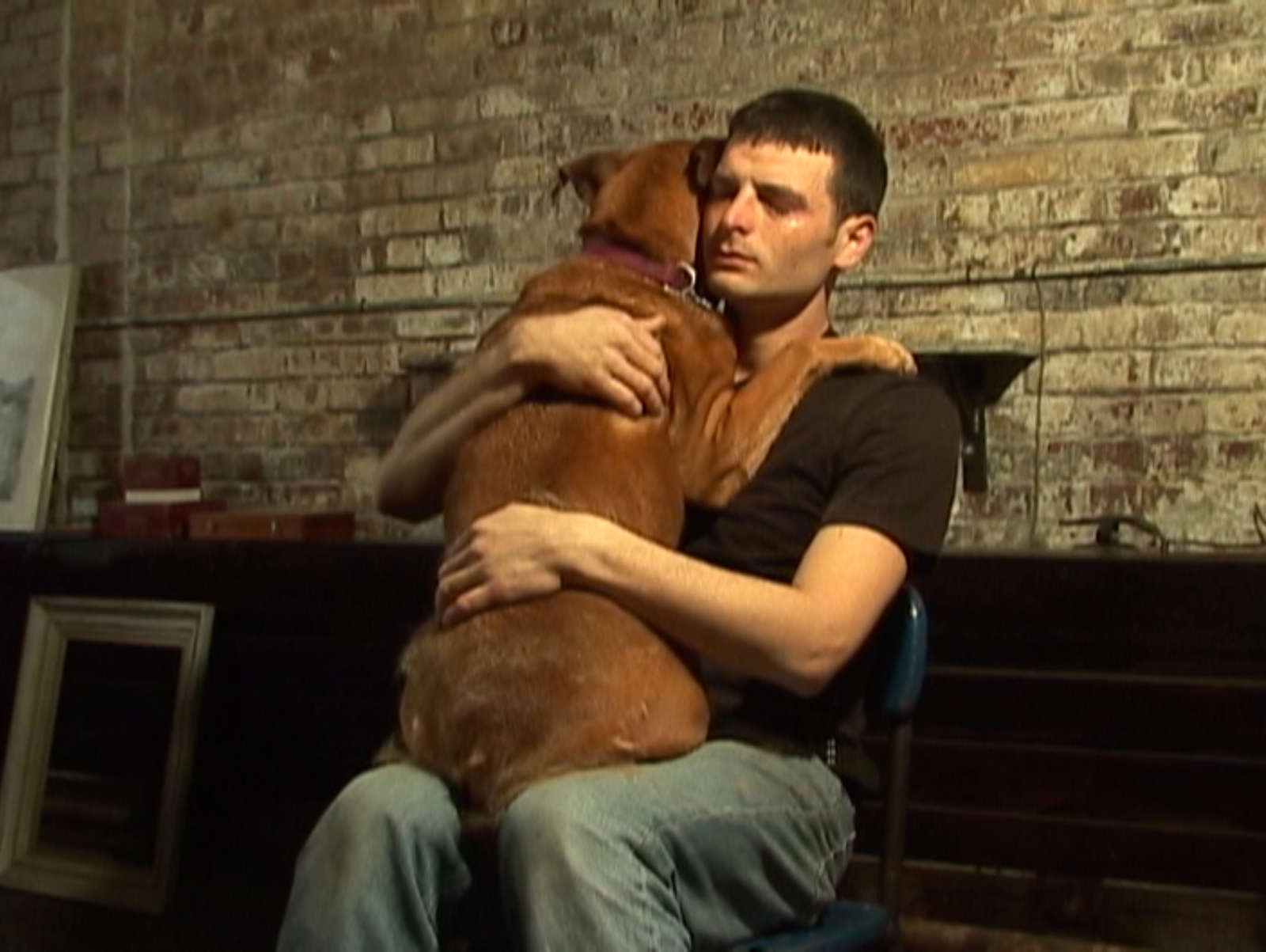
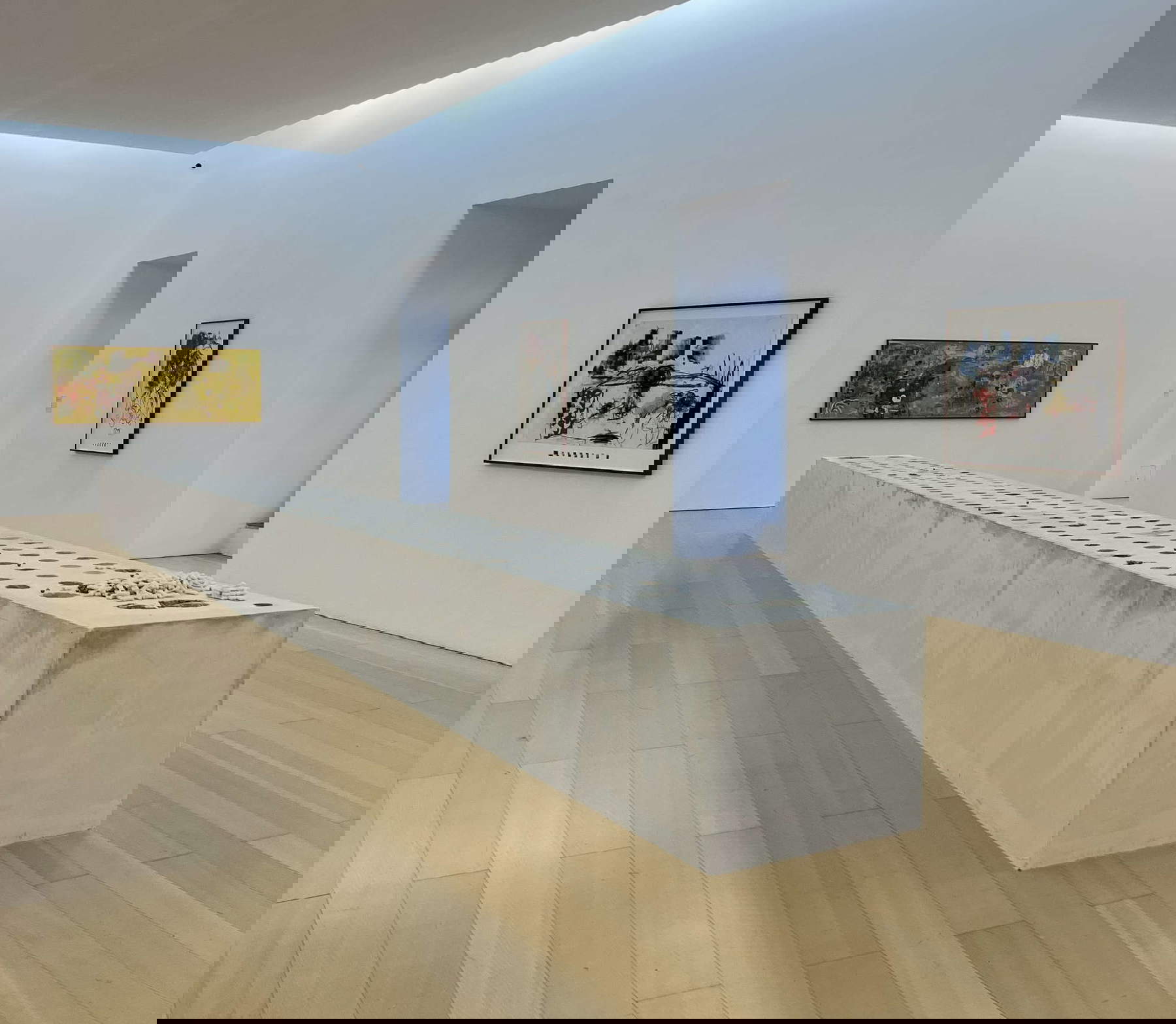
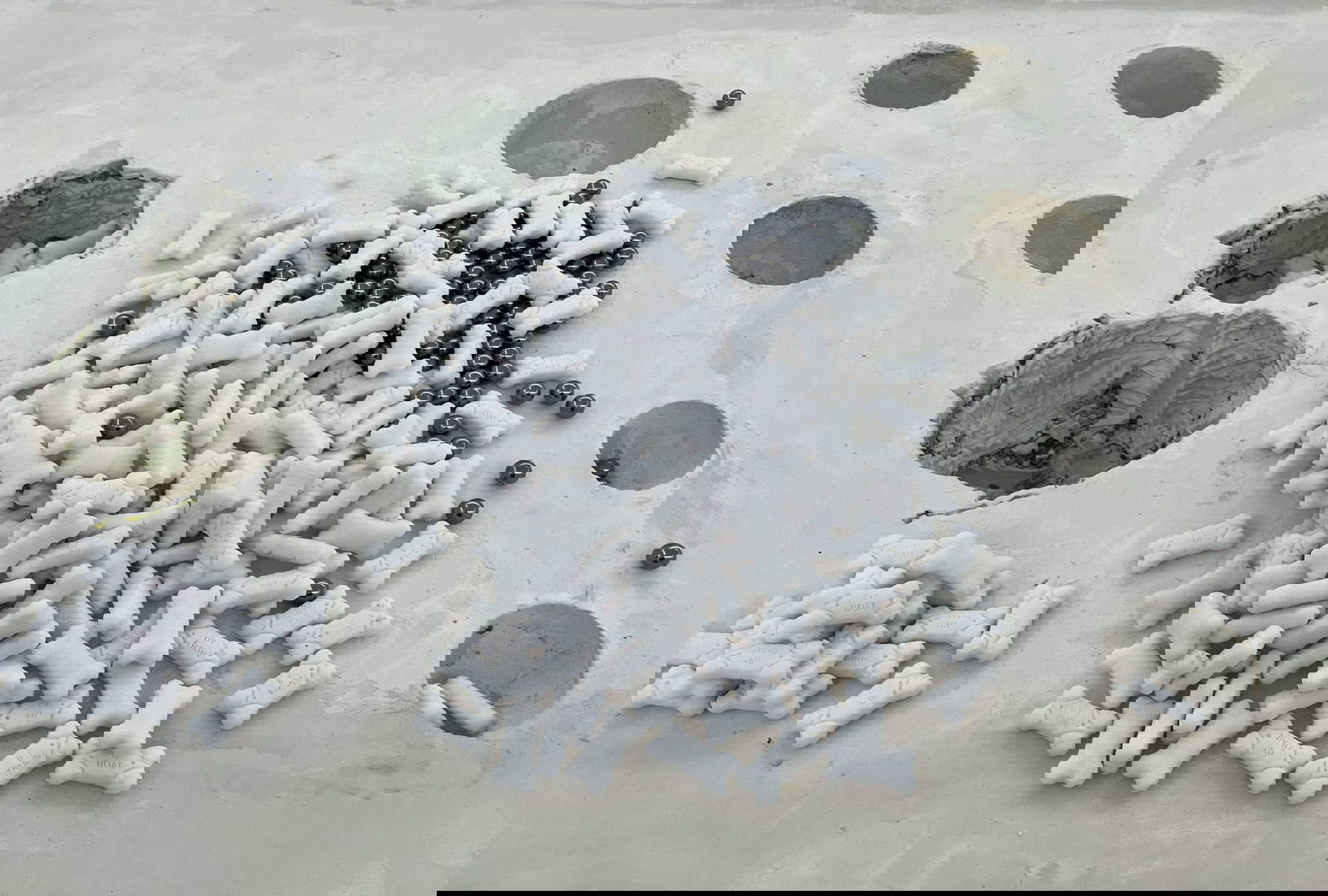
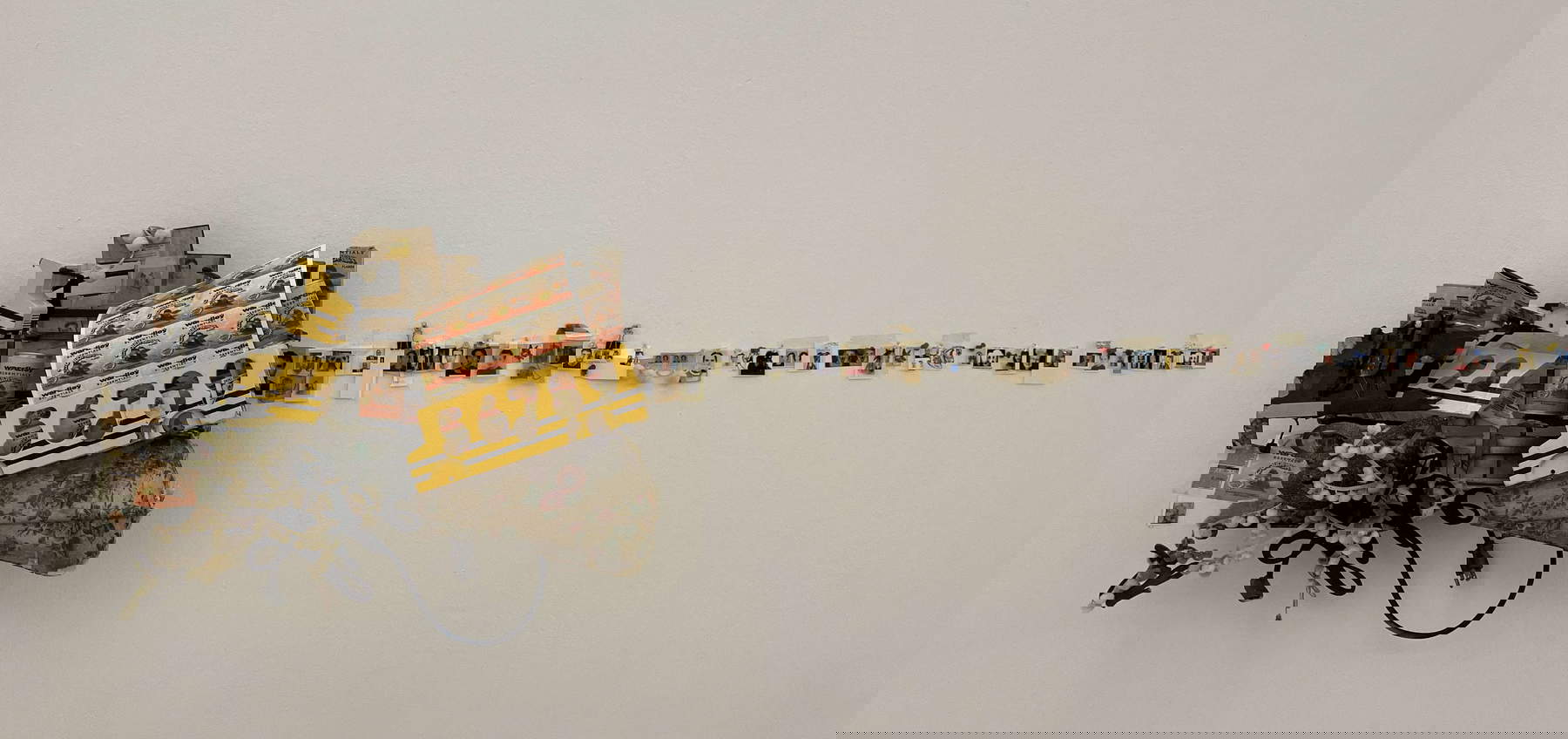
Further increasing the variables to be taken into account, the animal component proves to be equally foundational and pervasive, as well as the head of one of the sections into which the exhibition is divided (the others are: language, study, emotions, acting). Animals appear as taxonomic standards in the sticker paper silkscreens Teachers (2025) and Tenants (2025). Missing from both is a tile depicting one of the catalogued specimens, which reappears for no intelligible reason at the bottom of a drawing in which a sketchy car appears to be topped by the explosion of a skull suggestion (à la Basquiat). Or, the bestial as a direct term of comparison in the video Untitled (2006), in which the artist embraces the dog, exploring the possibilities of mutual empathy despite the untranslatability of each other’s languages. Or, again, as a conceptual pick to stage systemic coercions in the installation Untitled (Game), 2020, the protagonist of the largest exhibition hall, a brutalist plaster parallelepiped with a surface dotted with more or less regular, inside and outside of which accumulate handfuls of steel balls and bone-shaped dog cookies, each stamped with the name of a different means of transportation. Why? There is no point in trying to trace the distribution of these elements back to a logical or compositional reason; they remain ciphered allusions to danger or humiliating reward, as well as a reasoning contrived to be elusive. After trying in vain to read them, count them and analyze their reciprocal positions, one moves on and, following just some dog prints inked on the floor, lingers in one of the side rooms. The footprints lead not, as would be too commonplace, to the projecting wall chair, but to a closed panic door.
By now addicted to so many depressing clues, it does not come to open it, but instead that is what one must do: this time the sign does not point into the void but is a site-specific intervention that leads to the upper terrace of the Madre Museum where one can admire an evocative horse (2006) by Mimmo Paladino (Paduli, 1948) and Il mare non bagna Napoli (2015) by Giovanna Bianco (Latronico, 1962) and Pino Valente (Naples, 1967) silhouetted against the Neapolitan skyline. A tag reassures that the dog to whom the footprints are owed was not mistreated to make the intervention. One imagines that he was induced to cooperate with the promise of one of those little cookies that return a little everywhere, even later, in the clusters of objects in the later rooms.
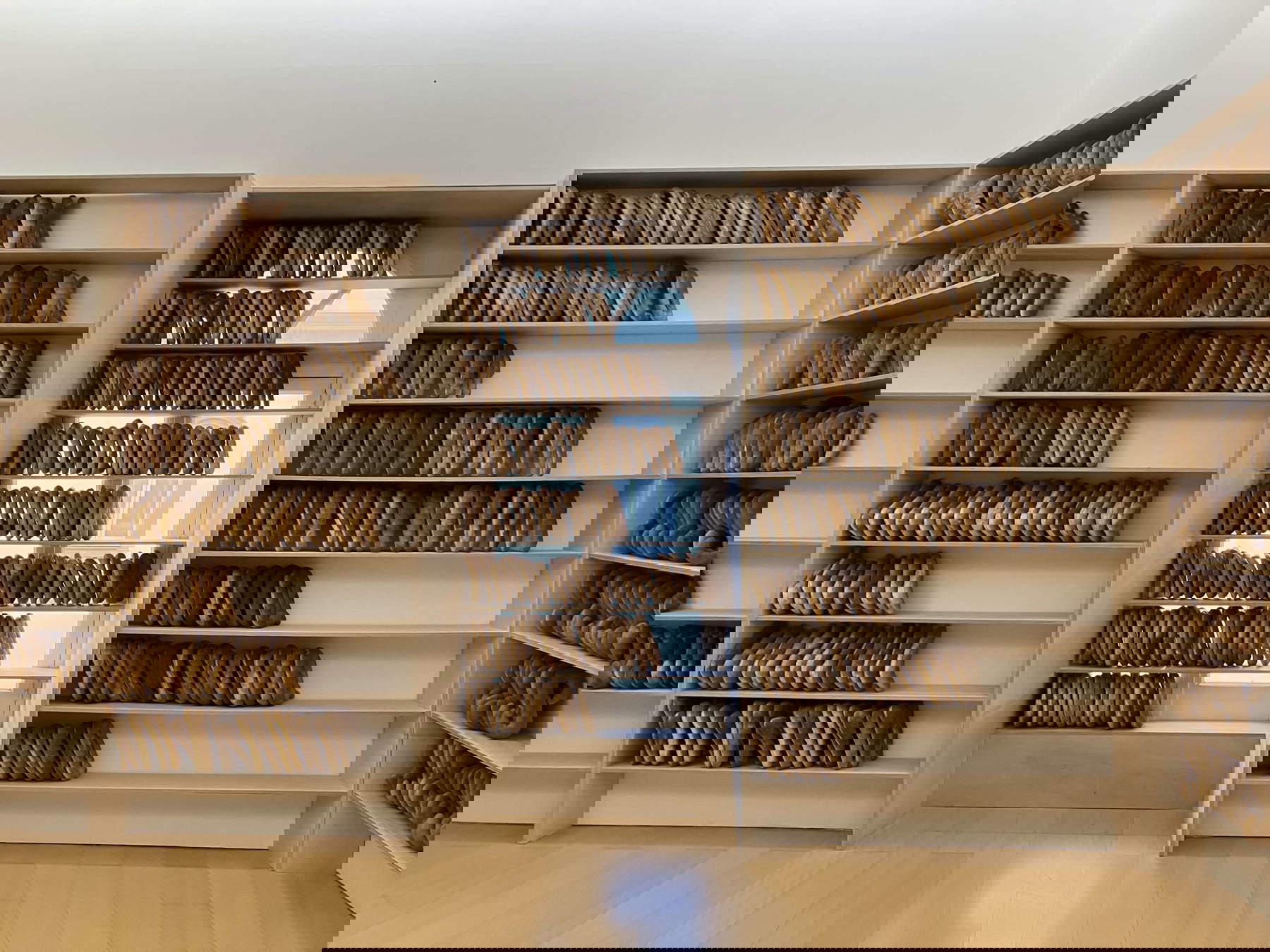
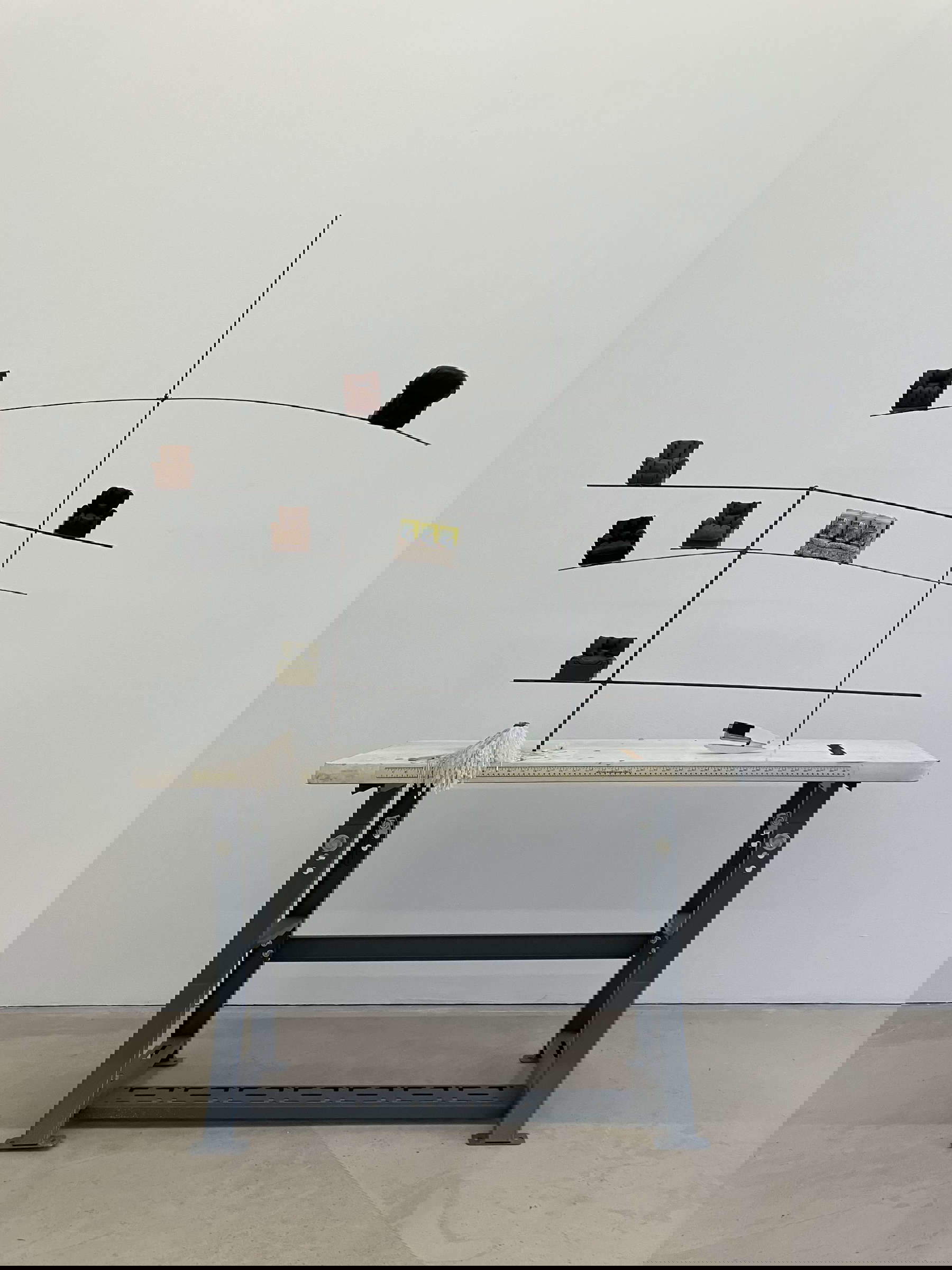
In these sculptural assemblages, some likened to enigmatic craft-laboratory tables, others to de-functionalized music stands, still others to clouds of junk and household waste (here the pet returns, evoked by cookies and empty jars of fish food), reasoning returns to rummage in the syntactic realm, confirming language as the main object of inquiry. With what outcomes? Not much help comes from one of the video interviews with the artist that can be found online, conducted on the occasion of his participation in the 2013 Venice Biennale, in which he explains how his work seeks to make sense of things through organization and that his seemingly haphazard works are composed of elements put in relation to the outcome of thoughtful reflection, a process in which anticipation is a predominant part. But then, what is the ultimate meaning? The demonstration of the weakness of any linguistic structure through the suggestion of a parallelism with aleatory configurations held together by the labile rhythmic sensation conferred on them by the recurrence of certain elements? The expansion of the alienating otherness of familiar objects? Semantic layering as an architectural principle? One fails to arrive at a point, as is the case in the video Untitled (Baryshnikov), 2008, in which in a hinted tussle with Rudol’f Nureev it is asserted with various gradations of absolute conviction (in itself an oxymoron) that Michail Baryšnikov is the best dancer in the world, even though seeing him in action Uri Aran, the performance’s protagonist, claims to feel a sense of uncertainty. Incidentally, his headphone close-ups are very reminiscent of those of Bruce Nauman (Fort Wayne, 1941) in Lip Synk (1969), who was also engaged in a whispered exercise of repeated linguistic articulation in the recording studio. Finally, one cannot help but mention Untitled (Bread Library), 2025, the room-library-bakery with shelved walls occupied by large block letters made of bread and arranged to evoke sequences of book spines. Each partition of the structure houses non-identical copies of the same letter but, it is almost pleonastic at this point to point out, there is no alphabetical progression or other intuitable logic.
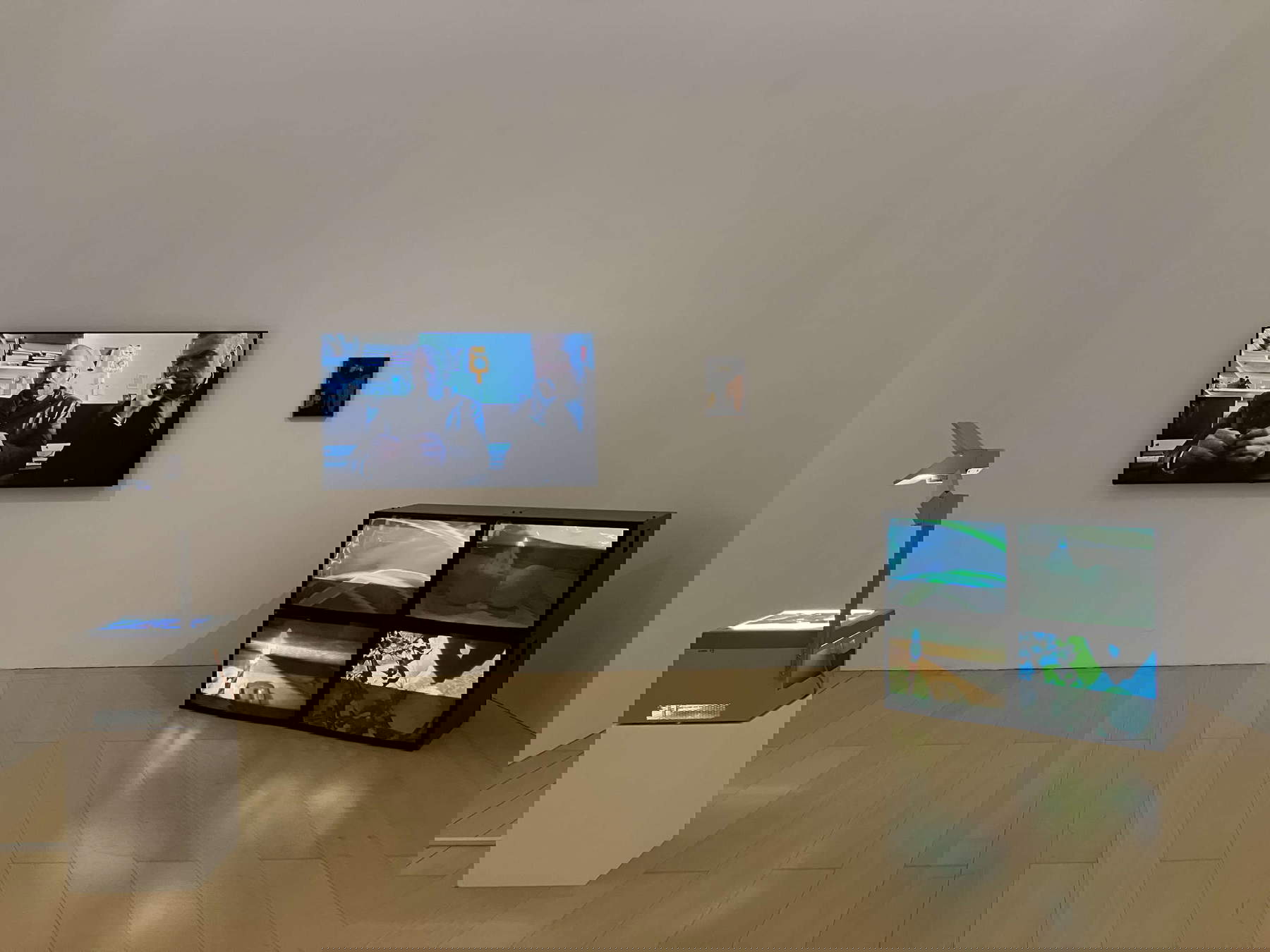
And so on. In this articulated excursus into semantic alienation, it comes to be considered interesting how the artist has managed to build an eclectic multimedia architecture that of the conceptual carefully takes on the aesthetic, making it inevitable to reflect on the implications of adopting this category in formalist meaning. Which is no small cue, if one imagines this as a key through which to sift many other artistic proposals one sees around. A bit of impatience remains, however, with the effort required by each work (although, in this regard, the exhibition itinerary proves to be functional) to bring back to a thread the relationships he deploys starting from nonsensical micro-obsessions otherwise difficult to share with an audience, and then arriving at a degree zero that coincides with maximum complexity and thus total deconstruction.
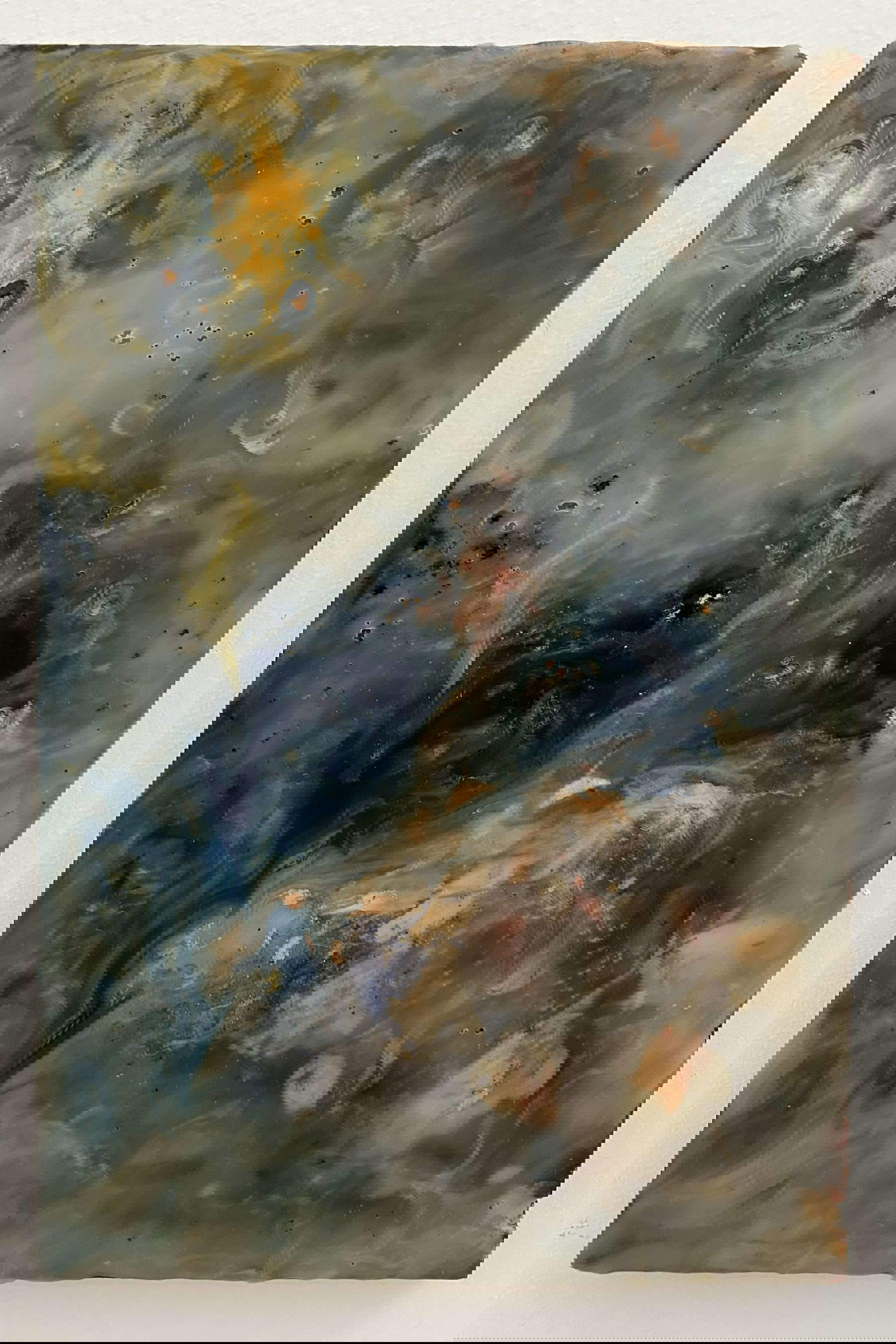
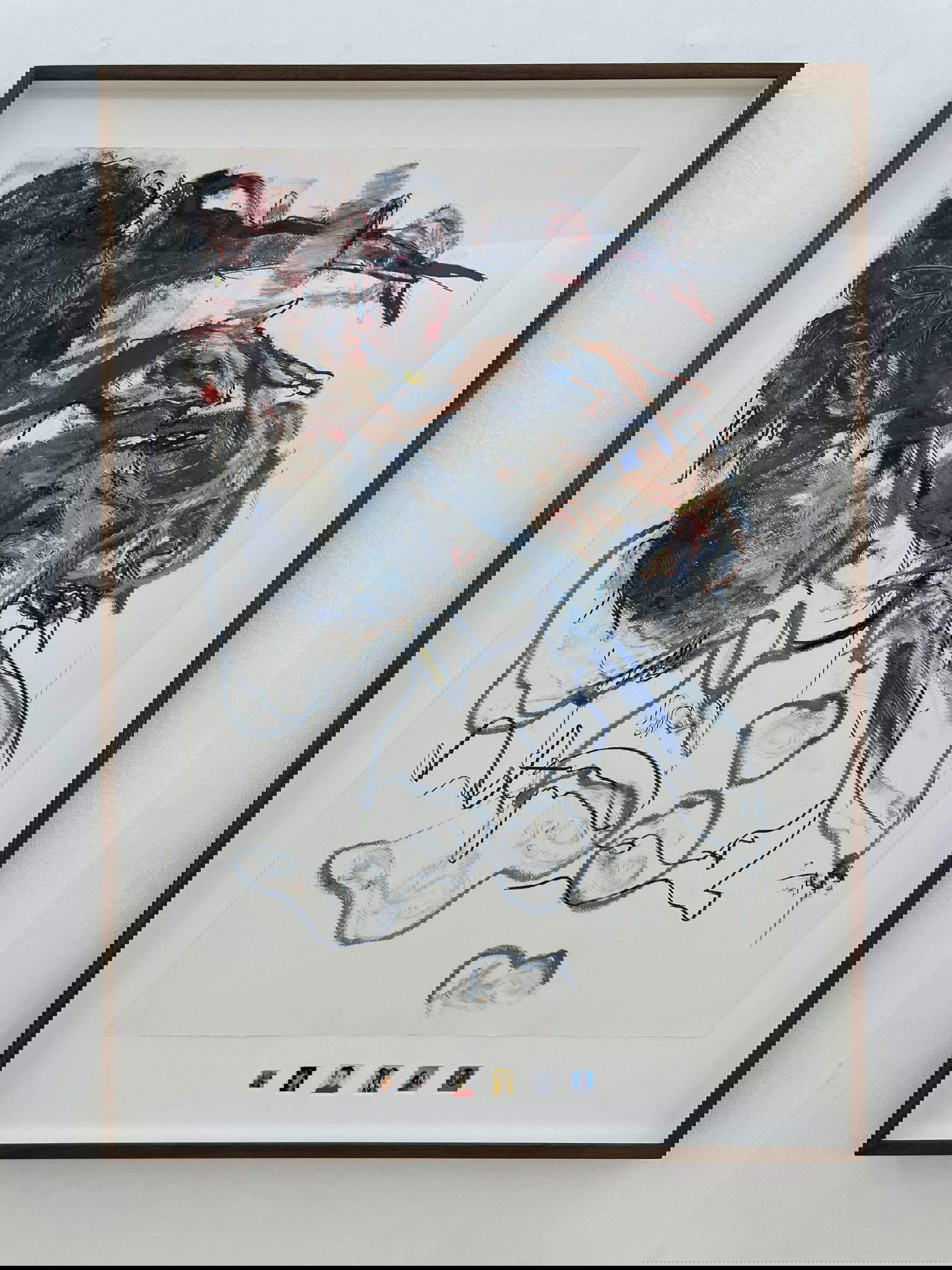
One wonders what the reasoned exposure of this sensibility, as exacerbated as it is indeterminate, is a symptom of, even at the level of the system that sustains it, given that storytelling and its dismantling are topics that are far from outdated though at high risk of cliché. A very last notation must be reserved for painting, for the presence of very engaging, passionate paintings, where sign and color impose themselves with sumptuous vehemence in sketches of figuration in which the urgency to say what cannot be paraphrased by reasoning seems to explode. It is a pity that in some cases the addition of conceptual phototexts on the sidelines of the main image is meant to cool its intonation, leading this lively turmoil back to the duty to reason, perhaps even in a vacuum, lest one be accused of superficiality.

The author of this article: Emanuela Zanon
Laureata in Discipline dell’Arte, della Musica e dello Spettacolo all’Università di Bologna, città dove ha continuato a vivere, si è specializzata in Beni Storico Artistici all’Università di Siena. Curiosa e attenta al divenire della contemporaneità, crede nel potere dell’arte di rendere più interessante la vita. È direttrice editoriale di Juliet Art Magazine online.Warning: the translation into English of the original Italian article was created using automatic tools. We undertake to review all articles, but we do not guarantee the total absence of inaccuracies in the translation due to the program. You can find the original by clicking on the ITA button. If you find any mistake,please contact us.













 IT
IT FR
FR DE
DE ES
ES CN
CN