




by Redazione 31/01/2026



Categories: Exhibitions / Disclaimer
The Fondation Beyeler in Basel is devoting a monographic exhibition to Paul Cézanne for the first time in its history. It brings together some 80 works and focuses on the last and most decisive phase of the French artist's career.

For the first time in its history, the Fondation Beyeler in Basel is devoting a monographic exhibition to Paul Cézanne, a pioneer of modern art and a central figure in its collection. Open to the public from Jan. 25 to May 25, 2026, the exhibition, titled Cézanne and curated by Ulf Küster, senior curator at Fondation Beyeler, brings together some 80 works and focuses on the last and most decisive phase of the French artist’s career. The exhibition presents Cézanne at the height of his expressive maturity: enigmatic portraits, bathing scenes of intense stillness, landscapes deeply evocative of his native Provence, and a series of variations on his favorite subject, the Montagne Sainte-Victoire. Working in his studio in the south of France, Cézanne developed an extraordinary tension between color, light and form, resulting in radically new images that would influence generations of artists to this day.
The exhibition includes 58 oil paintings and 21 watercolors from major public and private collections in Switzerland, France, Germany, the United Kingdom, Spain, the Netherlands, Denmark and the United States. Alongside masterpieces housed in leading museums, including the Museum of Modern Art and the Metropolitan Museum in New York, the Musée d’Orsay in Paris, the Philadelphia Museum of Art, the National Gallery of Art in Washington, DC, and the Tate in London, about half of the works come from private collections, many of which are rarely seen by the public.


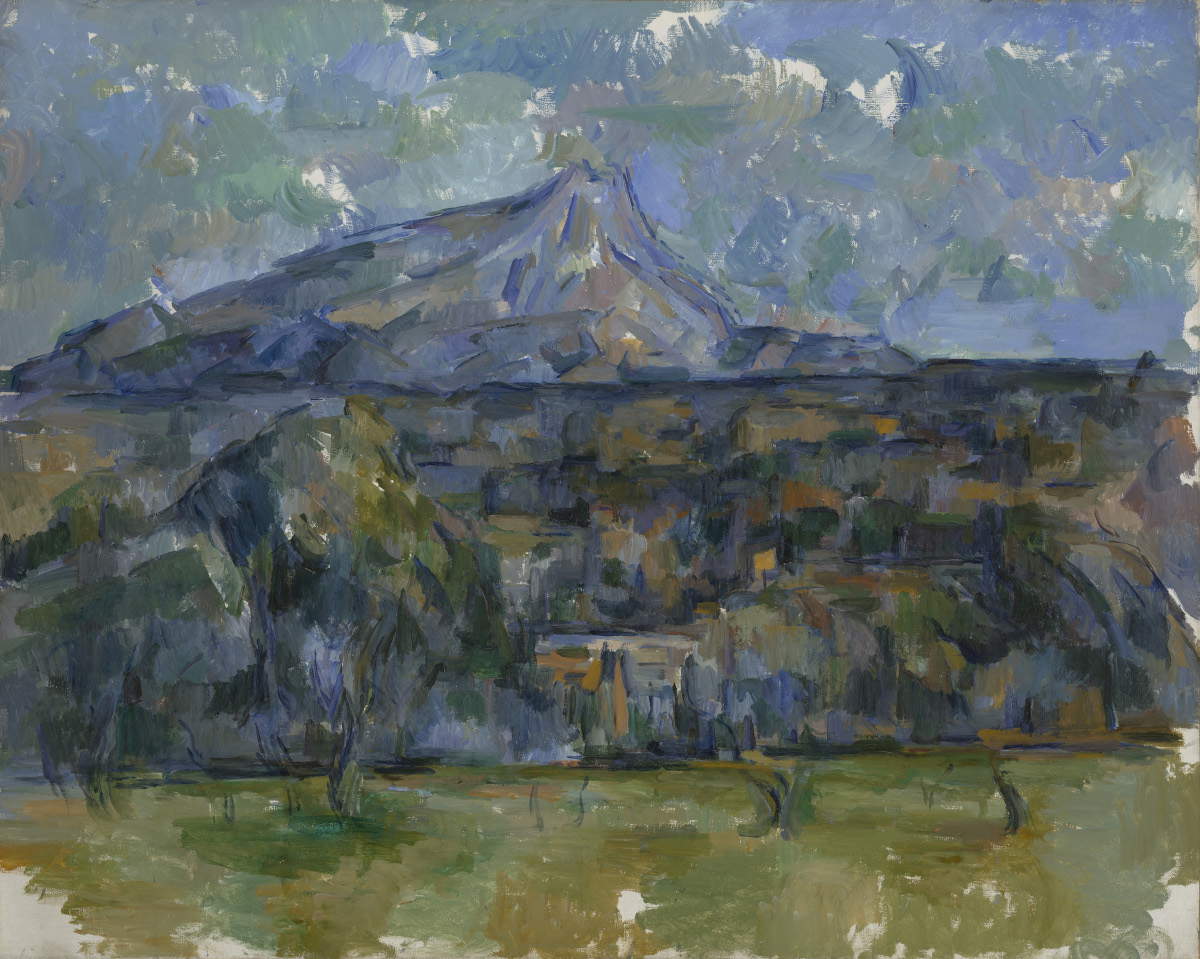
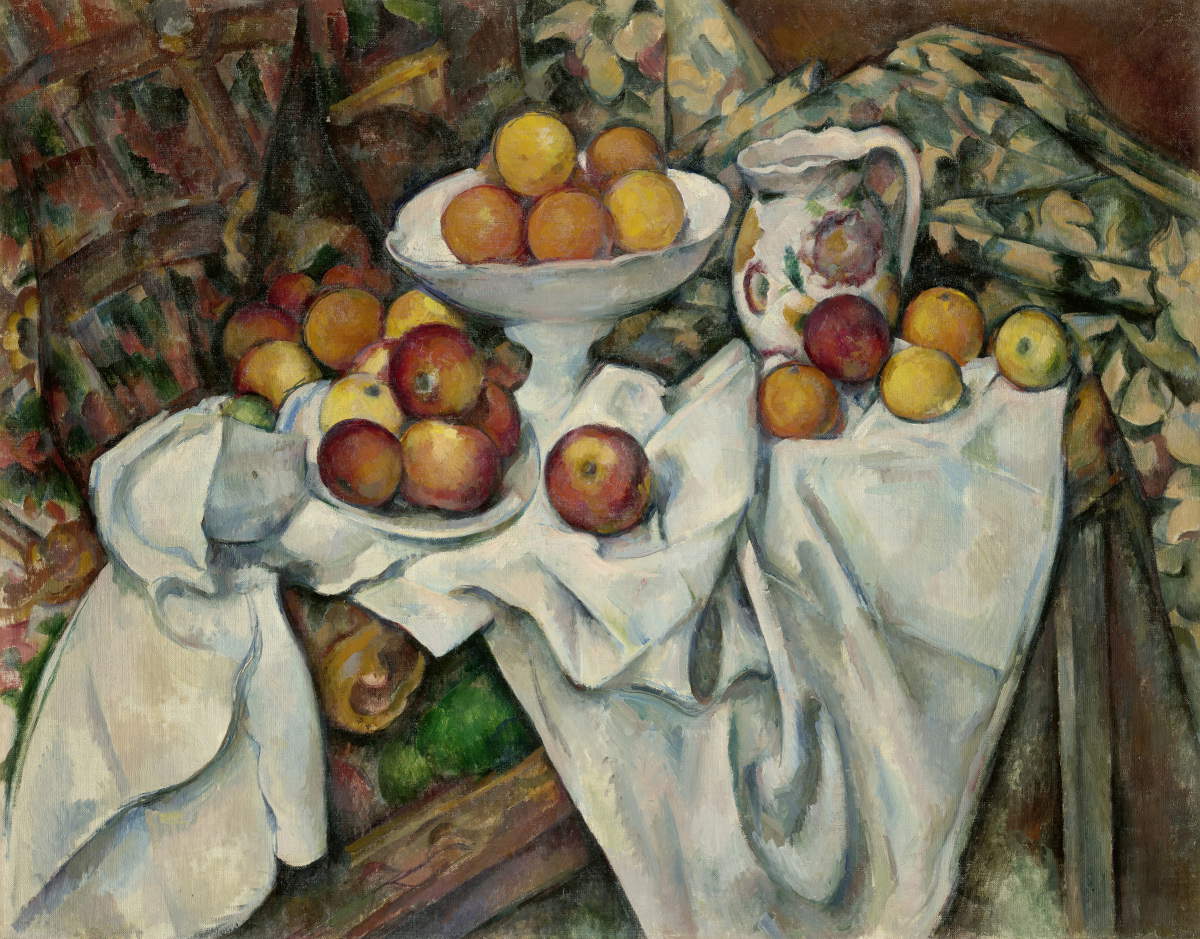
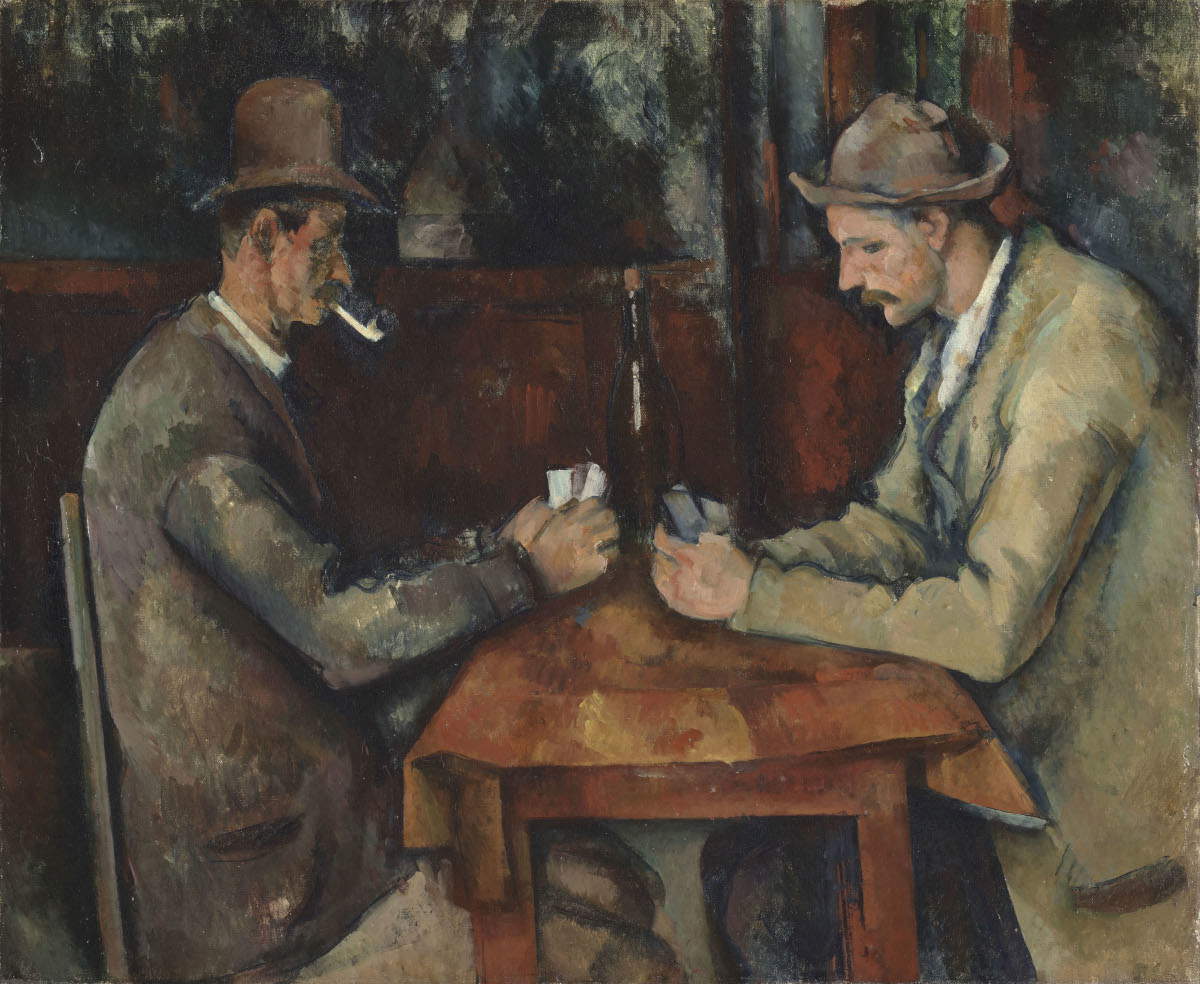
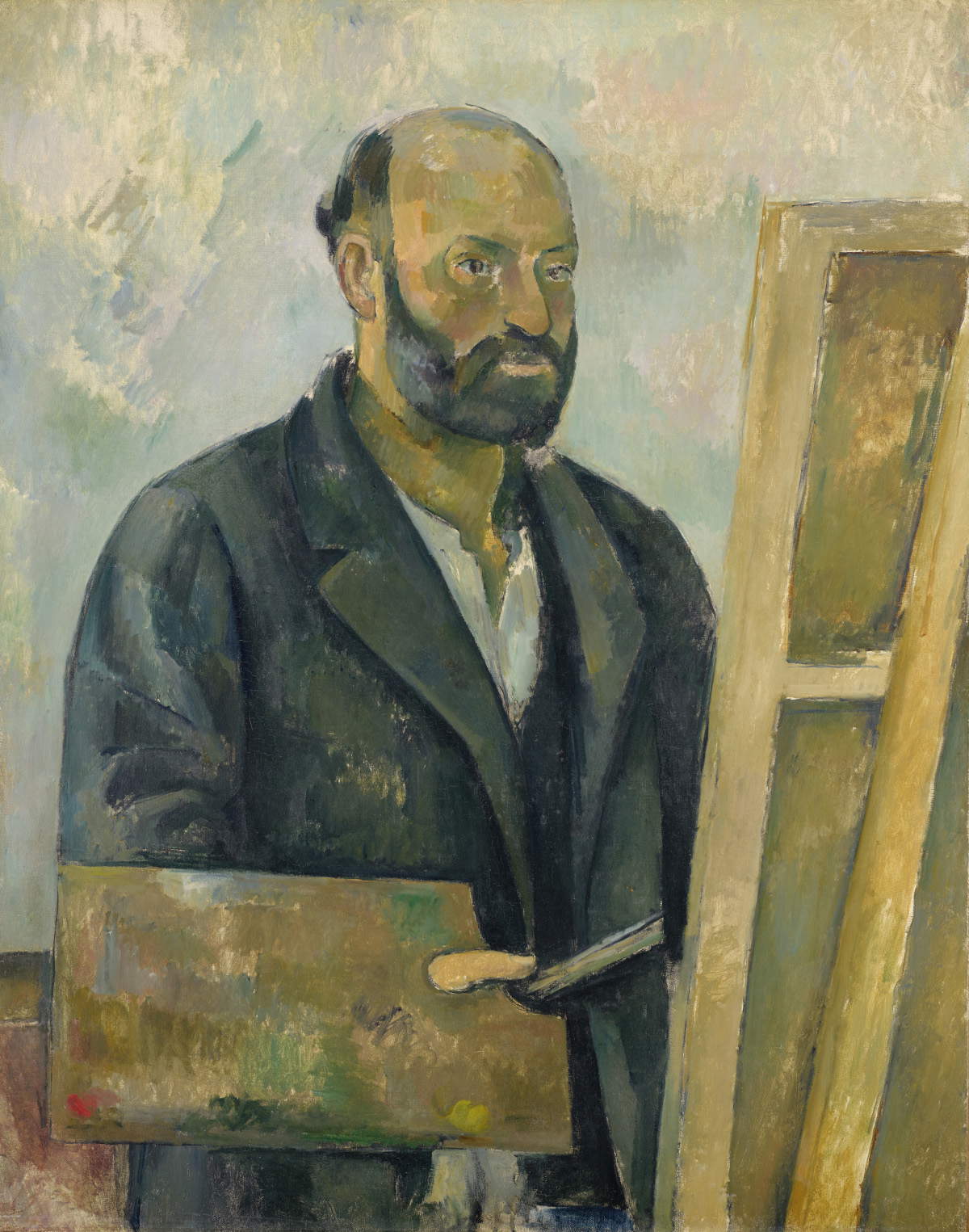
Among the exhibition’s main cores are nine representations of Montagne Sainte-Victoire, as well as the joint presentation of two of the rare versions of the Card Players: the famous painting from the Courtauld Gallery in London and the canvas from the Musée d’Orsay in Paris. Also on display are fourteen still lifes with fruit, eight portraits and self-portraits, and a work of particular note as La pierre à moudre au parc du Château Noir (La meule), 1892-1894, from Philadelphia and presented for the first time in Europe.
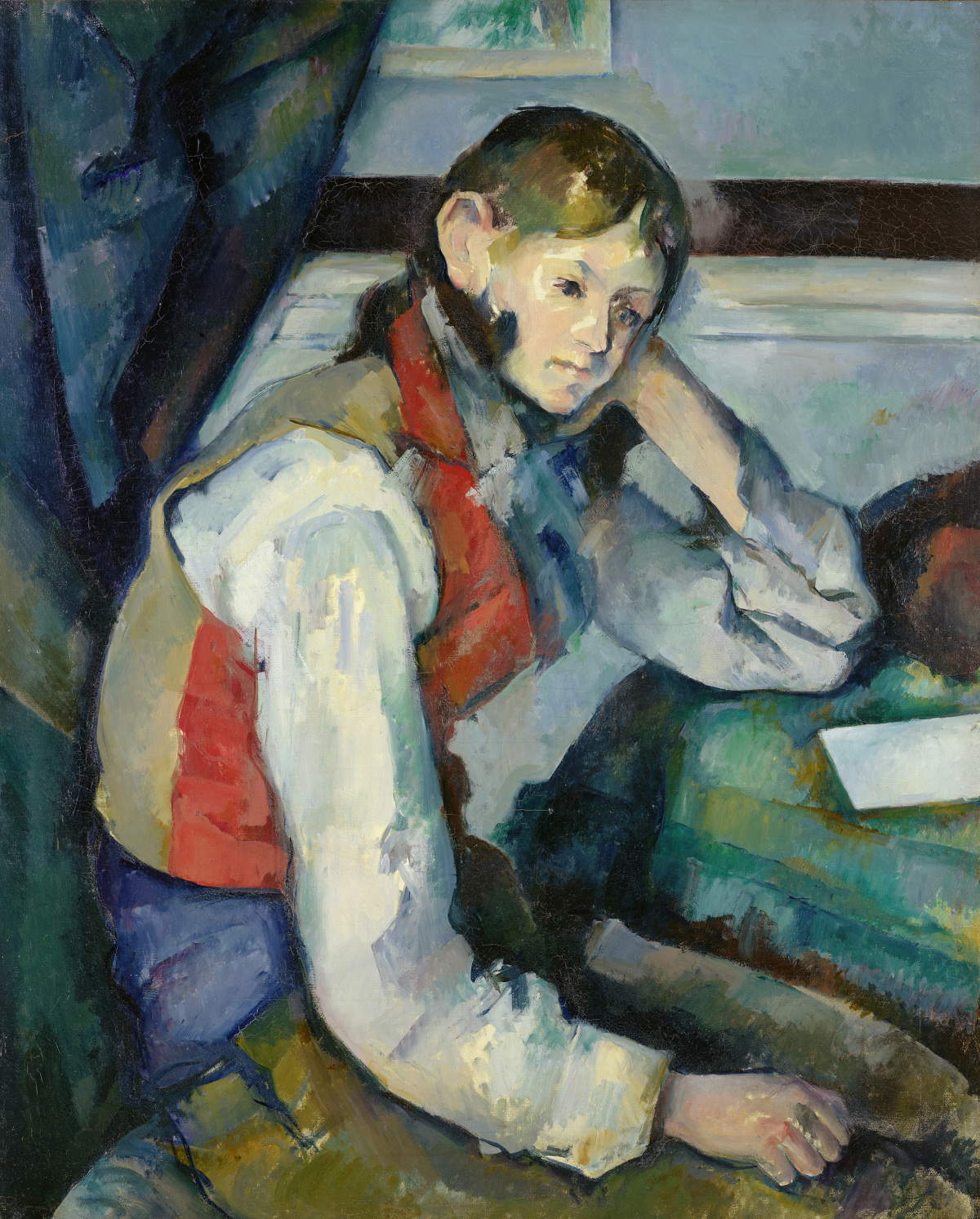
The exhibition also features a never-before-seen comparison of two watercolors of The Boy in the Red Waistcoat and includes several works that have not been exhibited to the public for decades, including the Portrait of Paul Cézanne made around 1895. Ample space is reserved for paintings deliberately left unfinished, in which the artist interrupted the painting process, leaving parts of the canvas visible, as well as more than thirty landscapes of Provence.
The exhibition begins in the mid-1880s, when Cézanne finally emancipated himself from Impressionism and defined the language that would establish him as a key figure of modernity. Born in Aix-en-Provence, in the late 19th and early 20th centuries the artist undertook a radical transformation of painting, freeing it from traditional conventions such as central perspective. His goal was no longer to represent nature, but to analyze and make visible the very process of painting from it. In this context, Provençal landscapes became the main experimental ground for his research. In Cézanne’s works, the landscape ceases to be mere background and transforms into the heart of a new and surprising visual language. Views of Montagne Sainte-Victoire and forests bathed in southern light helped define the very imagery of Provence, evoked as a place of quiet, nostalgia and timeless beauty.
Fascinated by the Montagne Sainte-Victoire, Cézanne tirelessly painted it as a testing ground for his art: how to represent the world as it is really perceived? Between the 1880s and his death, he produced about thirty oil versions of the subject, as well as numerous watercolors. This exhibition brings together seven paintings and two watercolors, highlighting the method by which Cézanne constructed images through “coloring sensations” translated into brushstrokes of color. More than intuitive variations, these works testify to a systematic investigation of the relationship between form, color and perception, destined to profoundly influence artists such as Picasso and Georges Braque.
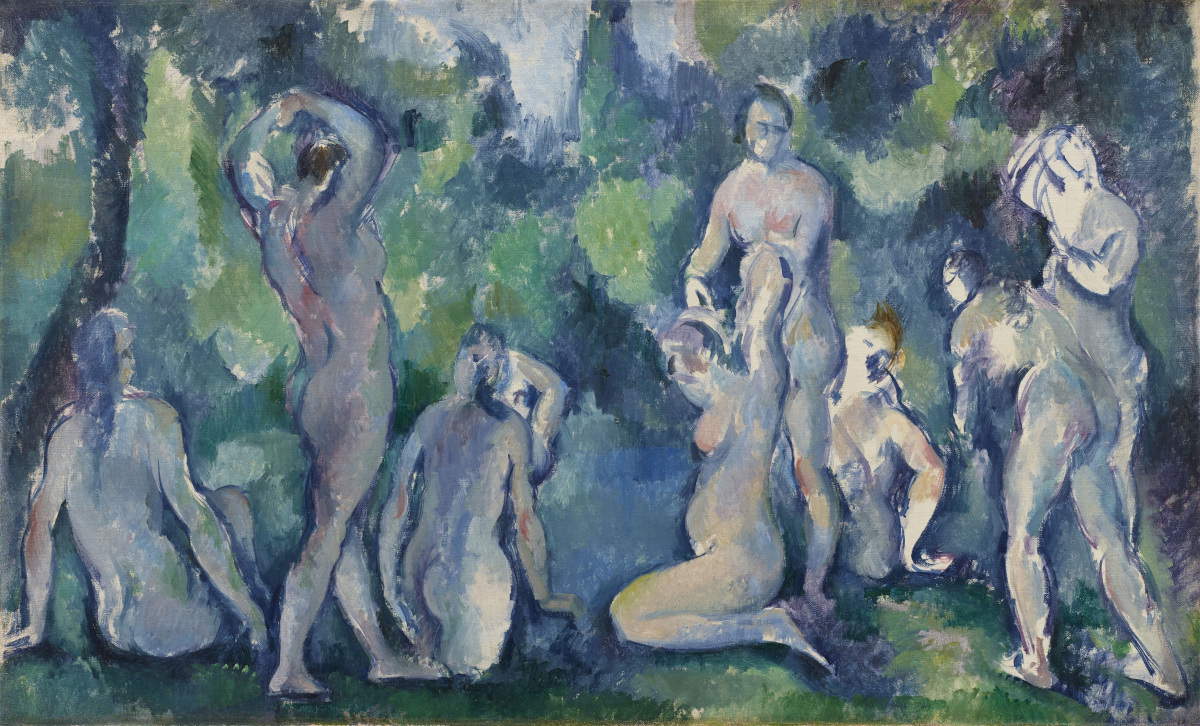
A central role is also reserved for the figures of bathers, a recurring subject in Cézanne’s work. The artist fuses bodies and landscape into a single visual structure: the figures seem to take on the rhythm of trees or emerge from the ground, creating scenes charged with a silent tension, suspended between presence and dissolution. The still lifes, on the other hand, reveal the tireless search for a stable order in the visible world. Seemingly simple compositions of fruit, jugs, bread and textiles become true pictorial laboratories in which Cézanne explores balance, volume and space. Ordinary objects are transformed into elements of a new visual architecture, where each form gains weight and density.
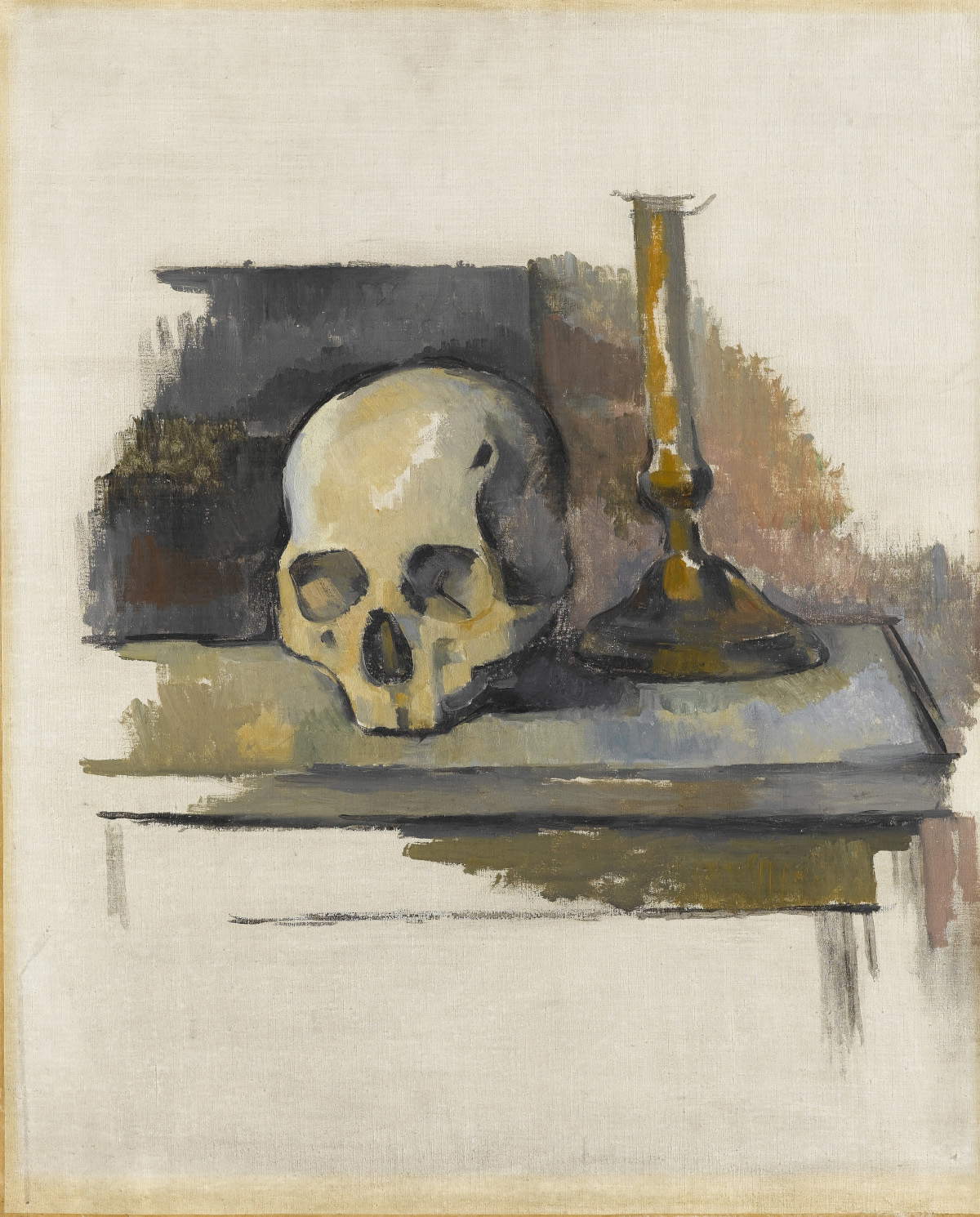
Alongside these works, the exhibition also addresses the motif of the skull. Far from any decorative function, the skull becomes a symbol of the transience of life and of fundamental questions about existence, treated with the same formal attention given to other subjects.
A central aspect of the exhibition is the invitation to the public to enter the artist’s creative process. The unfinished works, in particular, reveal the internal structure of the painting and leave room for the imagination of the viewer, who is called upon to mentally complete them. With this in mind, the exhibition concludes with a workshop space that allows visitors to experiment directly with the technique of watercolor, a medium in which Cézanne achieved extraordinary mastery.
The exhibition concludes with a screening of the short film Cézanne on art (2025), conceived by contemporary painter Albert Oehlen and directed by filmmaker Oliver Hirschbiegel. Inspired by conversations between Cézanne and writer Joachim Gasquet, the film weaves art, philosophy and landscape into an evocative portrait of the artist, starring Sean O’Brien, Sam Riley and Nichole Galicia. Shot in such emblematic locations as the Montagne Sainte-Victoire and the Bibémus quarries, the film captures the light and atmosphere that so influenced Cézanne’s painting and will premiere at the Fondation Beyeler.
|
| For the first time in its history, Fondation Beyeler dedicates a monographic exhibition to Paul Cézanne |
Warning: the translation into English of the original Italian article was created using automatic tools. We undertake to review all articles, but we do not guarantee the total absence of inaccuracies in the translation due to the program. You can find the original by clicking on the ITA button. If you find any mistake,please contact us.