





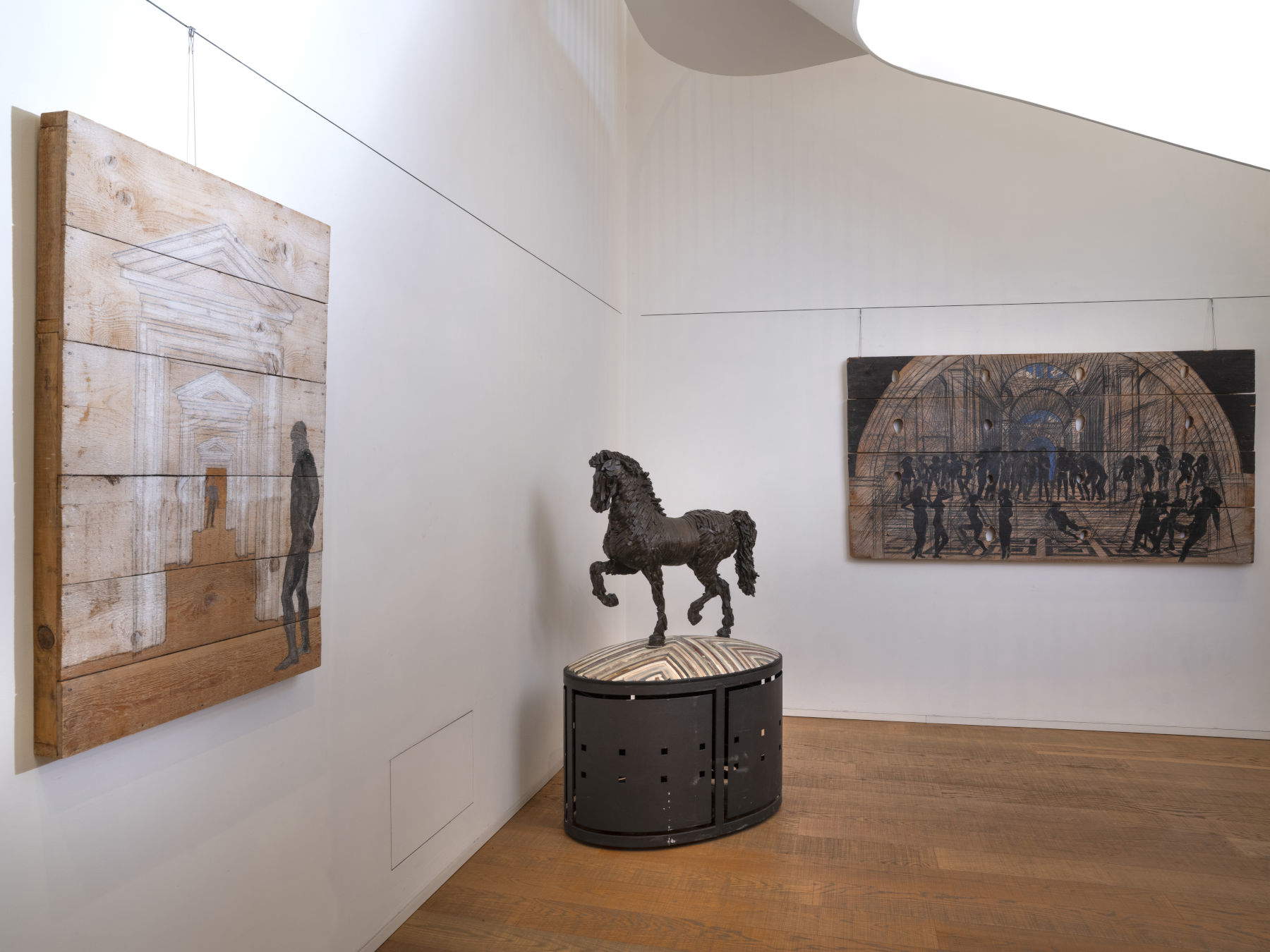
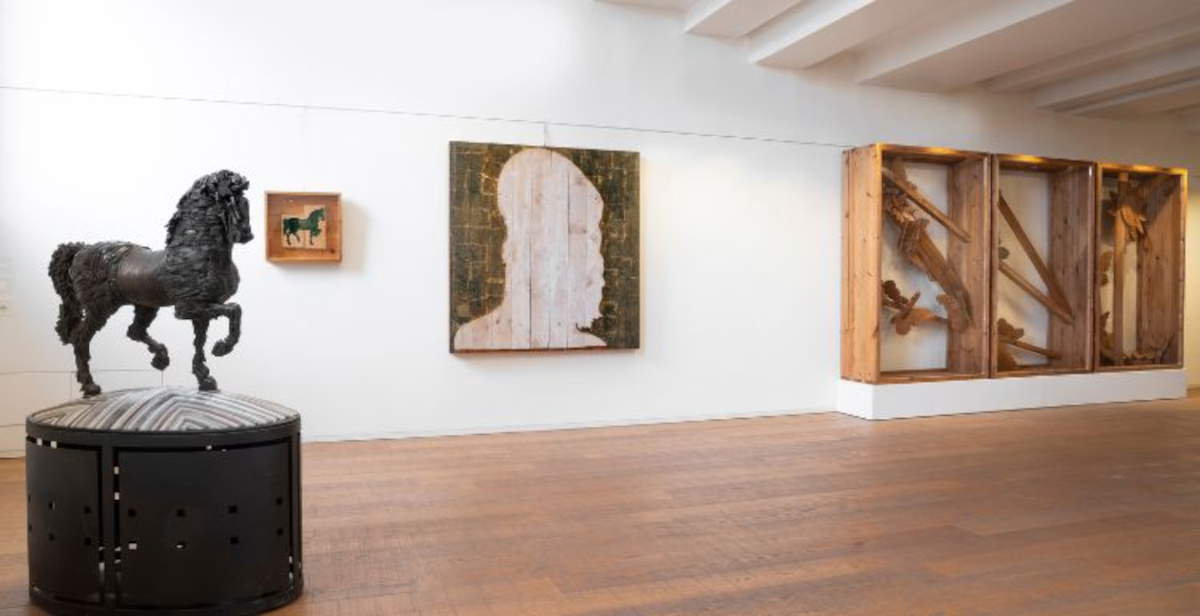
An exhibition in Florence traces more than 40 years of Mario Ceroli’s research. The Tornabuoni Arte gallery is hosting, at its headquarters on Lungarno Benvenuto Cellini 3, the exhibition Mario Ceroli. Myth and Matter, which can be visited until May 29. The exhibition represents the first anthological exhibition dedicated to the artist organized in Italy by the gallery and comes a few months after the major monographic show hosted at the Galleria Nazionale d’Arte Moderna e Contemporanea in Rome, which ended last January.
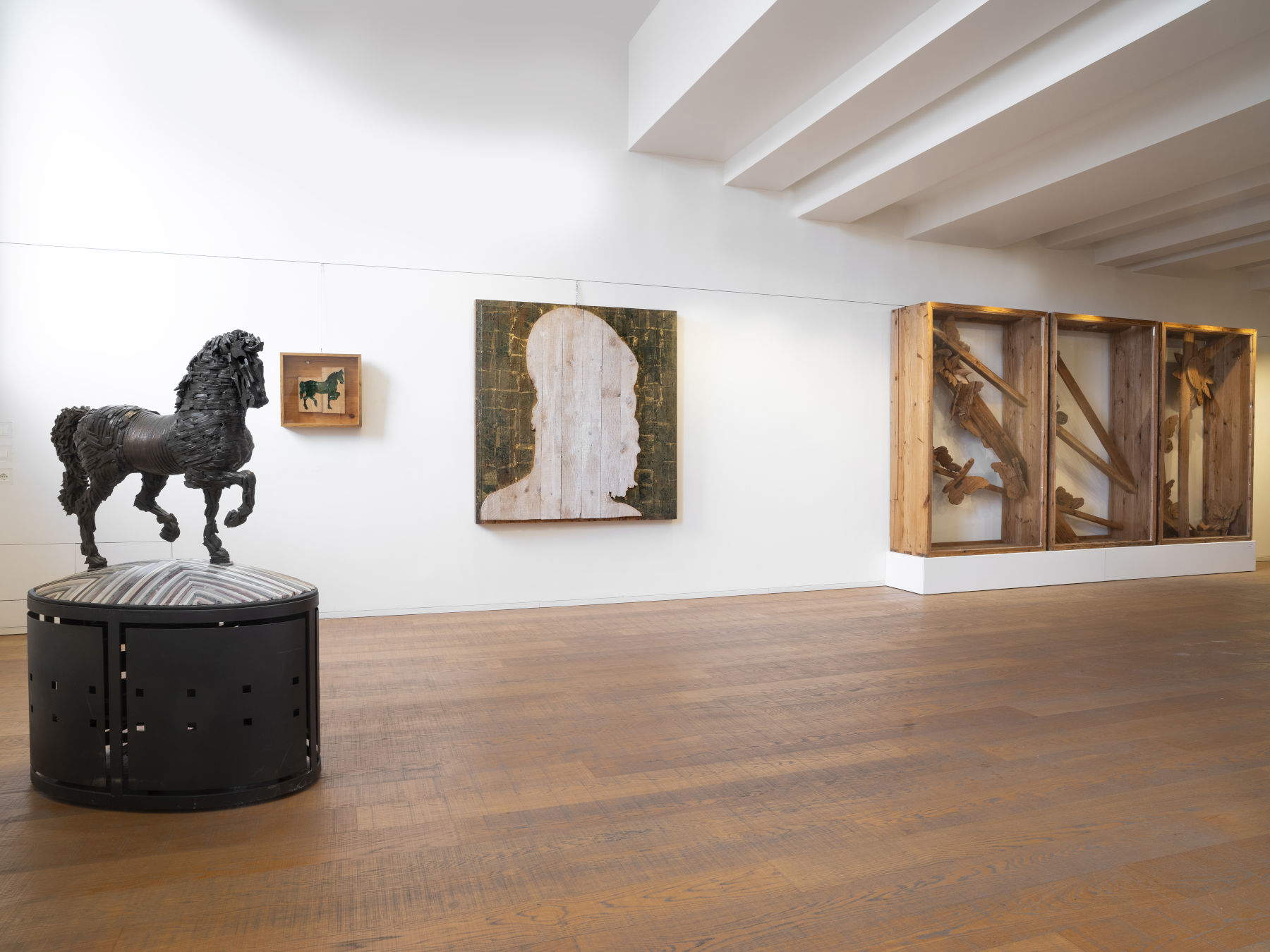
The relationship between Tornabuoni Arte and Ceroli has a well-established history. In fact, the gallery’s Paris branch has dedicated two solo exhibitions to the artist, in 2010 and 2022. The Florentine review builds on this relationship and proposes an exhibition itinerary that traverses the main stages of the career of Ceroli, a protagonist of the Roman art scene since the 1960s. The itinerary brings together forty works including sculptures and installations, together with the famous silhouettes made of wood, a material that the artist chose as the central element of his research.
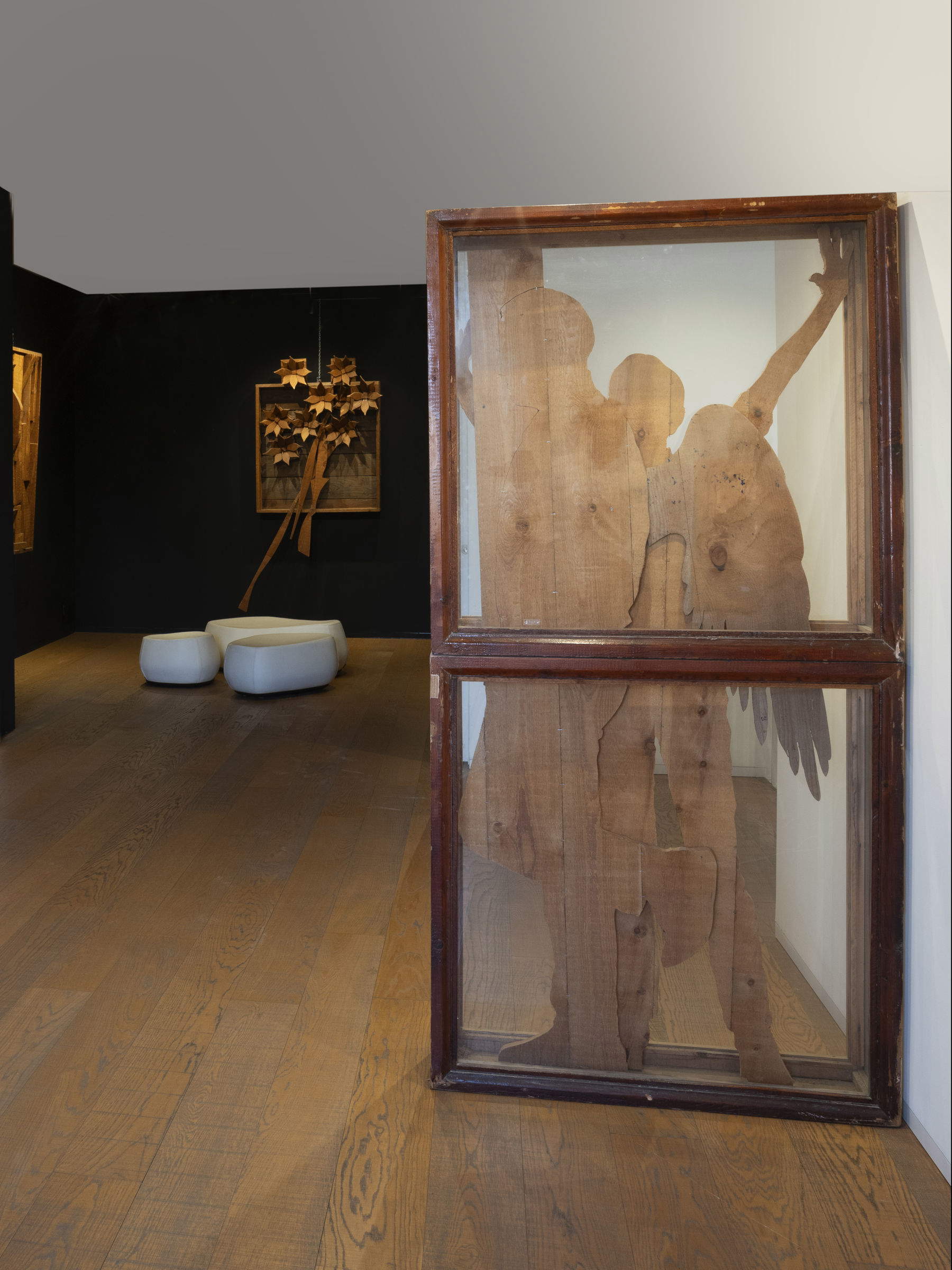
“Ceroli has presented a possible new way of understanding sculpture, without renouncing the elements of its historical identity and at the same time subjecting it to a substantial, and therefore deeply personal, innovative transformation,” wrote Enrico Crispolti, who had curated the 2010 exhibition.“Ceroli gradually developed the modes of a plastic language that rejects both the structural and representational continuity of traditional sculpture and the consequent weight and enveloping uniqueness of the event placed in space.”
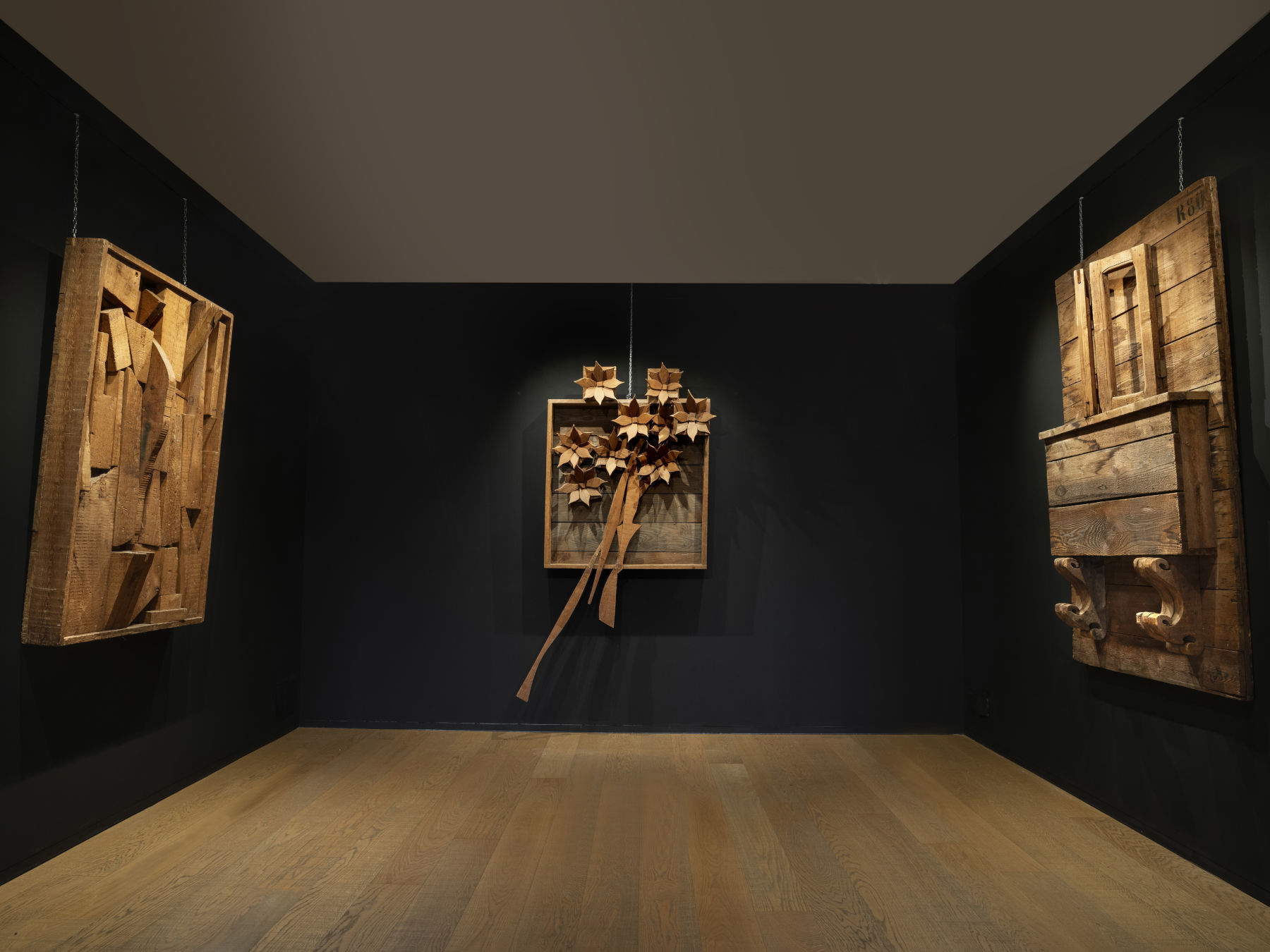
Among the works in the exhibition is Squilibrio, made in 1988 and presented here in a reduced-size version in bronze. The work draws inspiration from Leonardo da Vinci ’s famous drawing of theVitruvian Man and is one of the artist’s most recognizable inventions, often considered almost his emblem. The work makes explicit the three-dimensional tension that characterizes many of Ceroli’s works and reflects his constant dialogue with the Western artistic tradition. The exhibition also includes a series of works made between the 1980s and early 1990s in wooden planking, particularly Russian pine. The protagonists of these works belong to the world of Greek myth and the figure of the warrior. Some cycles take their cues from the famous Riace Bronzes, found in 1972 in the waters of Calabria. Among the works on display appear Interior Temple (The Riace Bronzes) from 1981 and Portrait of a warrior, made in the same year with mixed media and gold leaf on wood. In these works, reference to antiquity and the classical tradition emerges as a constant element in the artist’s research.
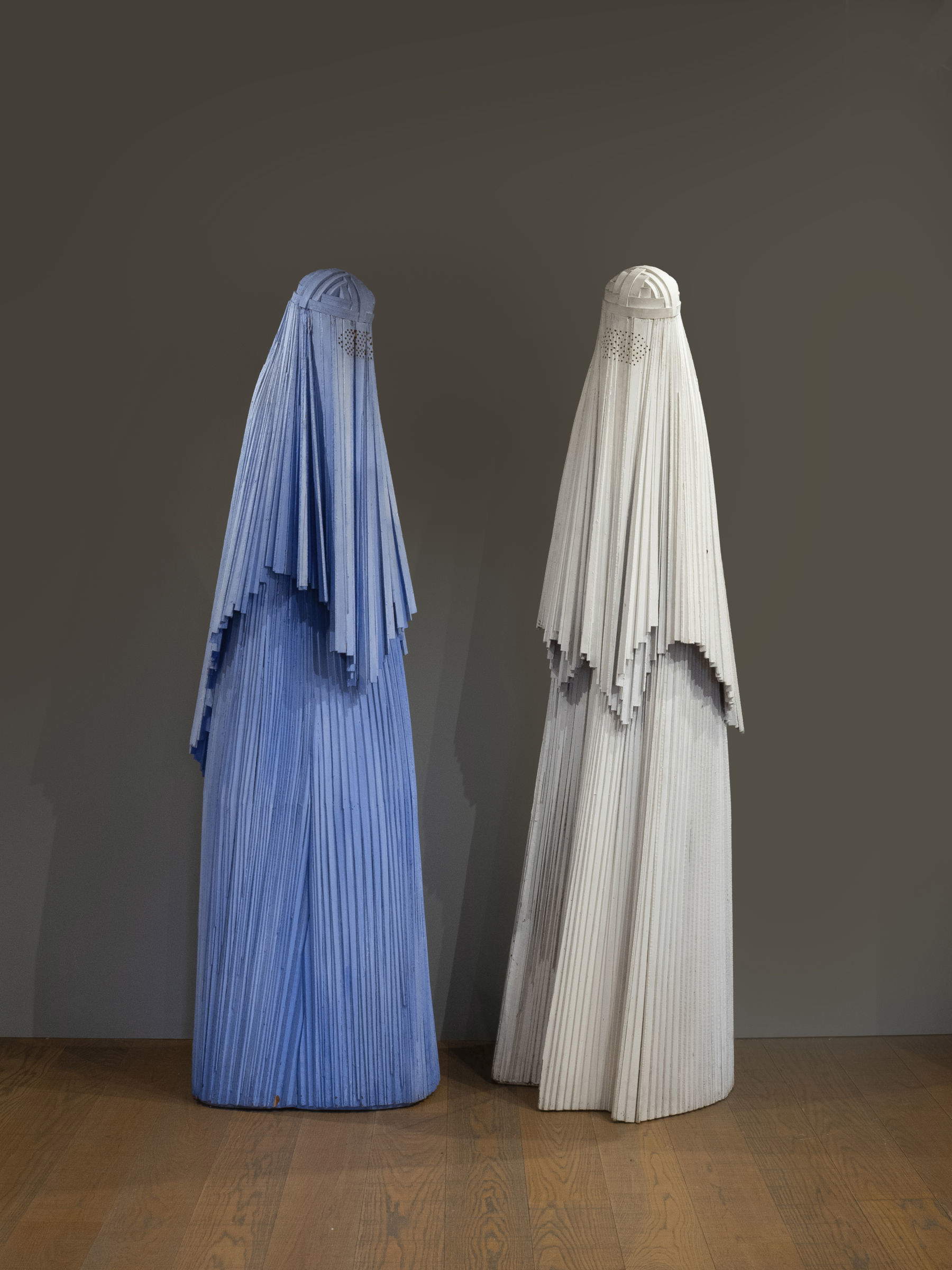
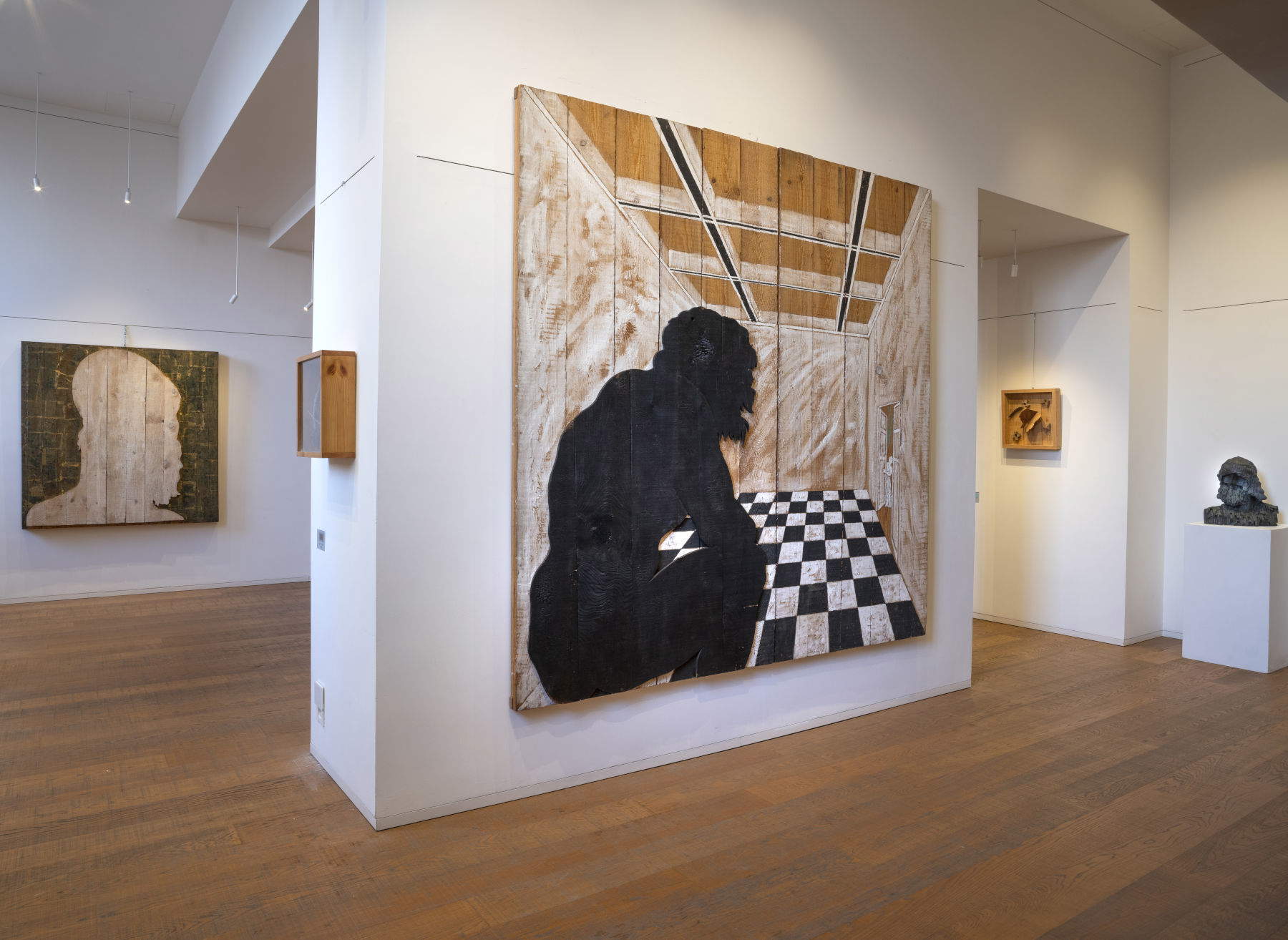
Two more recent wooden sculptures, The Taliban, made in 2002, also find space within the exhibition. The works, one white and one blue, each about two meters high, present motionless and silent figures that take on the character of enigmatic simulacra. The project stems from suggestions related to international political news, which Ceroli reworked through an essential formal synthesis and a strong evocative component. The sculptures also allude to the cultural traditions of the East, reinterpreted through the artist’s language.
Also included in the exhibition is Gloria eternal to the fallen for painting, a monumental retable in wood and bronze dated 1972. The work is engraved with the names of art critics, collectors and dealers, transforming the commemorative device into an ironic gesture. The work is located in a phase of Ceroli’s production, between 1972 and 1975, in which the element of writing takes on a recurring role within his works. The itinerary also includes Eleusi, a 1979 work that refers to the Great Eleusinian Mysteries, ancient agrarian rites of an esoteric nature. The work depicts a field of ripe wheat and testifies to the artist’s interest in the natural and plant dimension. In this case Ceroli uses branches, straw and ears of corn inserted into the bottoms of traditional wooden boards, materials that reinforce the link with the cycle of nature and the symbolic dimension of fertility.
The attention to natural elements finds some of its roots in the dialogue withArte Povera, a movement with which Ceroli shared some poetic orientations, particularly in his early years. However, the artist maintained an autonomous position with respect to the declinations developed in the Turin area by figures such as Merz and Penone, elaborating a personal language over time.
 |
| Mario Ceroli on display in Florence: forty works at Tornabuoni Arte |

Warning: the translation into English of the original Italian article was created using automatic tools. We undertake to review all articles, but we do not guarantee the total absence of inaccuracies in the translation due to the program. You can find the original by clicking on the ITA button. If you find any mistake,please contact us.























 IT
IT FR
FR DE
DE ES
ES CN
CN


