




by Redazione 19/01/2026



Categories: Exhibitions / Disclaimer
From Jan. 20 to Feb. 22, 2026, the Borghese Gallery presents two sculptures by Zanabazar, for the first time in Europe, in a project that compares the visual culture of Central Asia with the Roman Baroque, starting with Bernini's legacy.

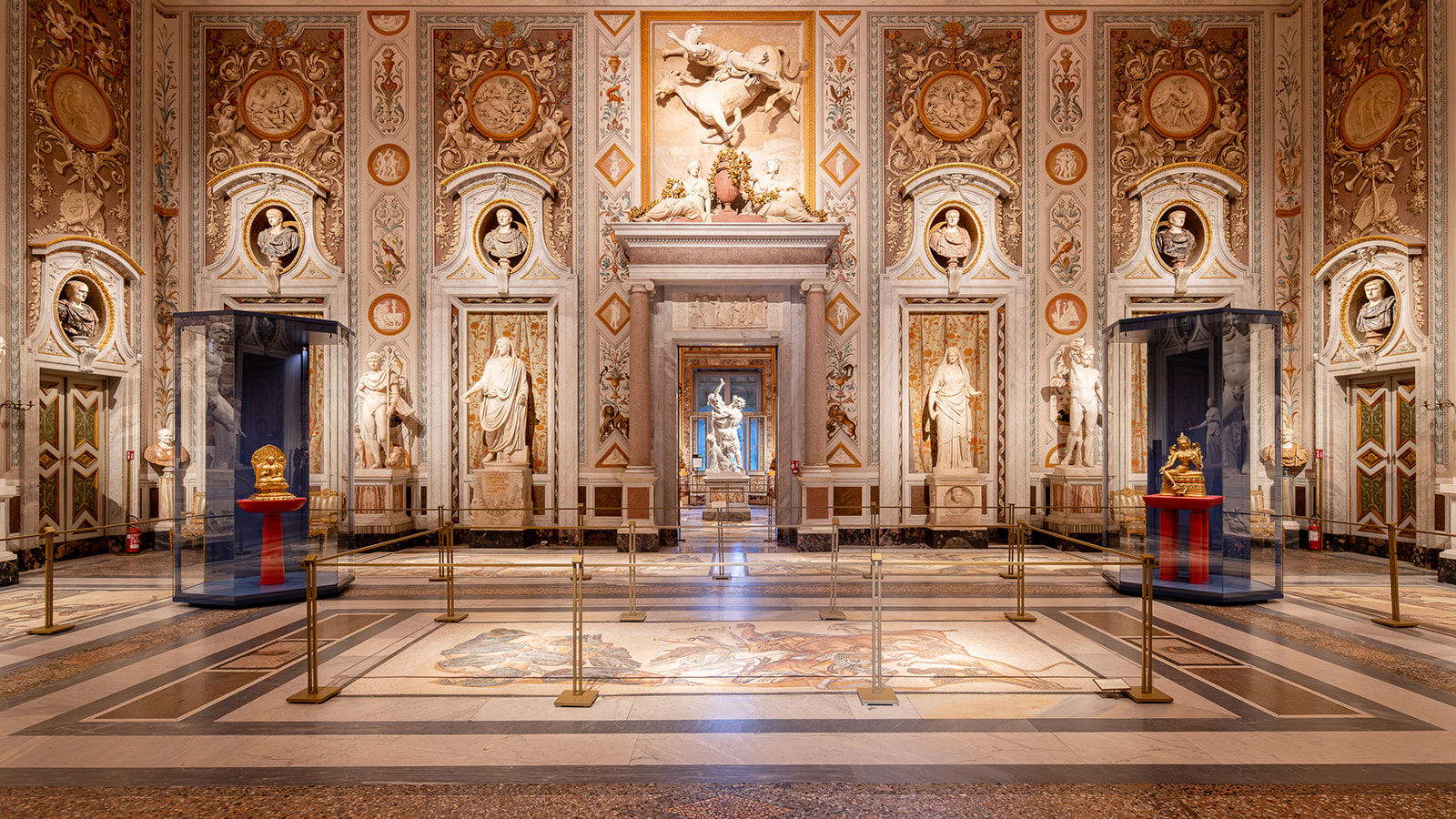
From January 20 to February 22, 2026, the Borghese Gallery is hosting the exhibition Zanabazar at the Borghese Gallery. From Mongolia to Global Baroque, which offers a novel reading of artistic relations between East and West in the 17th century. In collaboration with the Museum of Oriental Art in Turin, the Roman museum presents two works by the Mongolian artist Zanabazar (1635 - 1723), placing them in dialogue with the context of the European Baroque and the legacy of Gian Lorenzo Bernini, a central figure in the Borghese collection. The initiative is part of the framework of reflection on the so-called “global Baroque,” a concept that aims to overcome a Eurocentric view of art history in order to restore the complexity of an era traversed by exchanges, circulations and connections on an intercontinental scale.
In the century in which Bernini defined a language destined to make a lasting mark on European sculpture, painting and architecture, a personality of similar significance emerged in Central Asia. Zanabazar, born in 1635 as Eshidorji in the heart of the Asian steppe, within one of the largest empires ever built, belonged to the noble lineage of Genghis Khaan. His fame is mainly linked to the religious role he assumed under the spiritual name of Zanabazar, when he was recognized as Ondör Gegeen, “His Holiness the Enlightened,” first Khutuktu Jetsundamba, the highest authority of the Gelug school of Tibetan Buddhism in Mongolia. Revered as the reincarnation of one of the Buddha’s original five hundred disciples, Zanabazar exerted a profound and lasting influence on the spiritual and cultural life of his country.


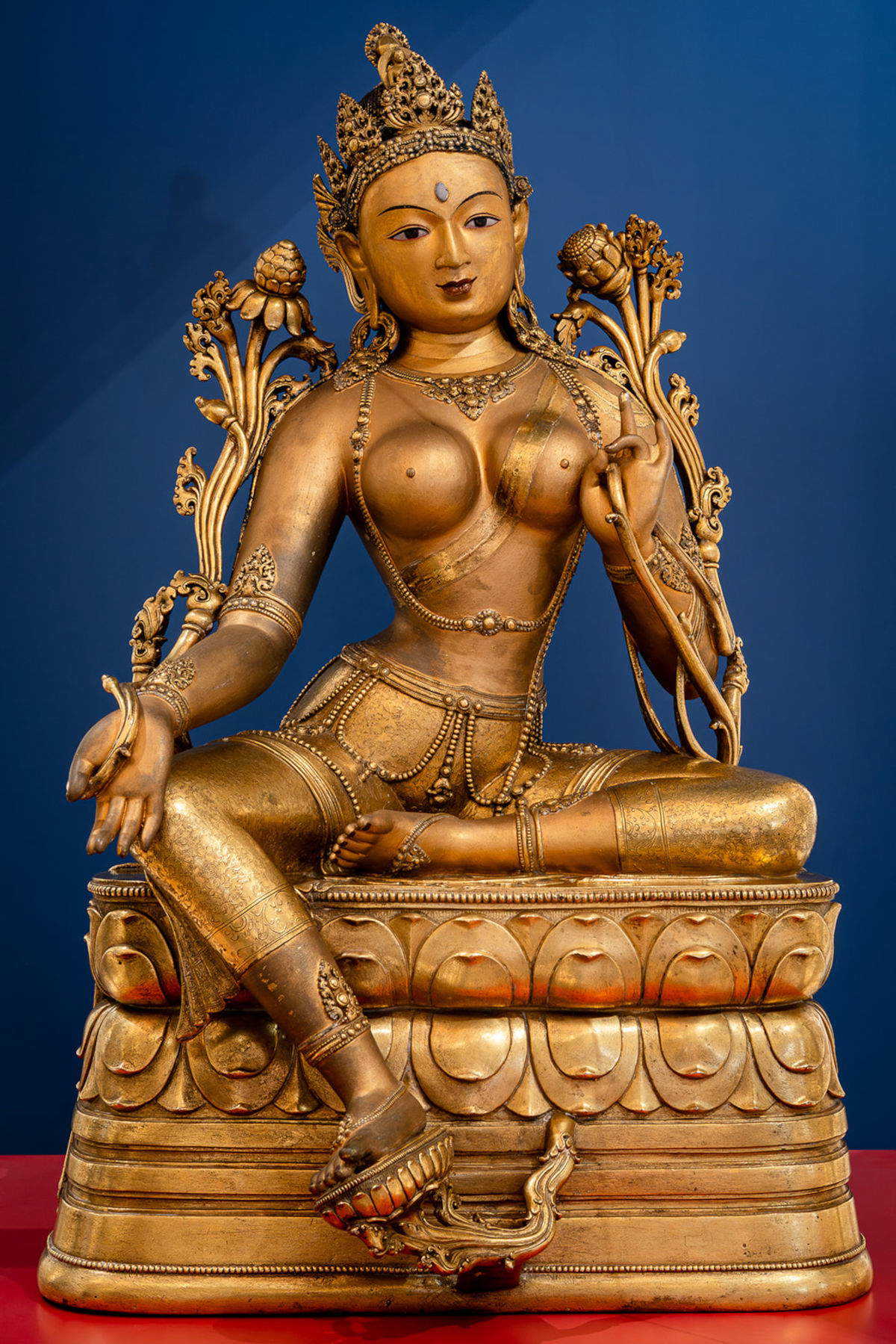
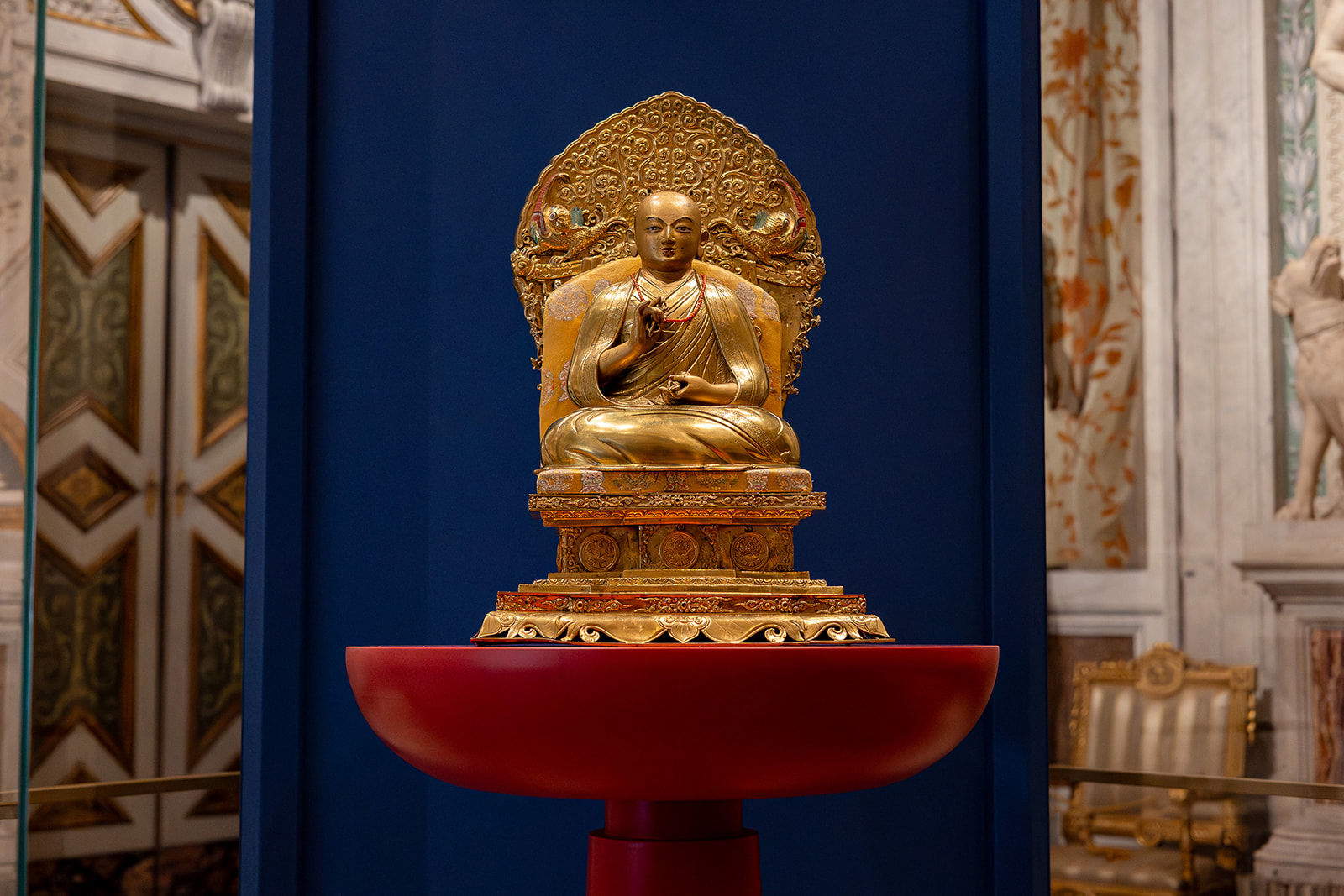
Alongside his role as a religious leader, Zanabazar developed an intellectual and artistic activity of extraordinary breadth. He was a brilliant linguist and, above all, the most important Mongolian sculptor of the modern age. The works attributed to him and his school show a profound assimilation of experiences gained during travels and sojourns in Tibetan monasteries, from which they derive iconographic models and formal solutions later reworked into a personal language. These sculptures, conceived as sacred objects, were intended for temples and places of worship founded by Zanabazar himself in different areas of Mongolia, assuming a central role in the spread of Buddhism among the population.
Among the most important types of his production are representations of the Tara, female manifestations of the Buddha associated with protection, liberation and inner states of being. In particular, the Green Tara images are distinguished by their high formal quality and a balance between spiritual idealization and natural rendering of forms. Zanabazar pursued the goal of making the religious message accessible even to ordinary worshippers through sculptures capable of speaking directly to the eye and soul. Sources recall how his works were considered warm to the eye, an expression that alludes to an immediate and engaging perception, far from abstraction and rigidity.
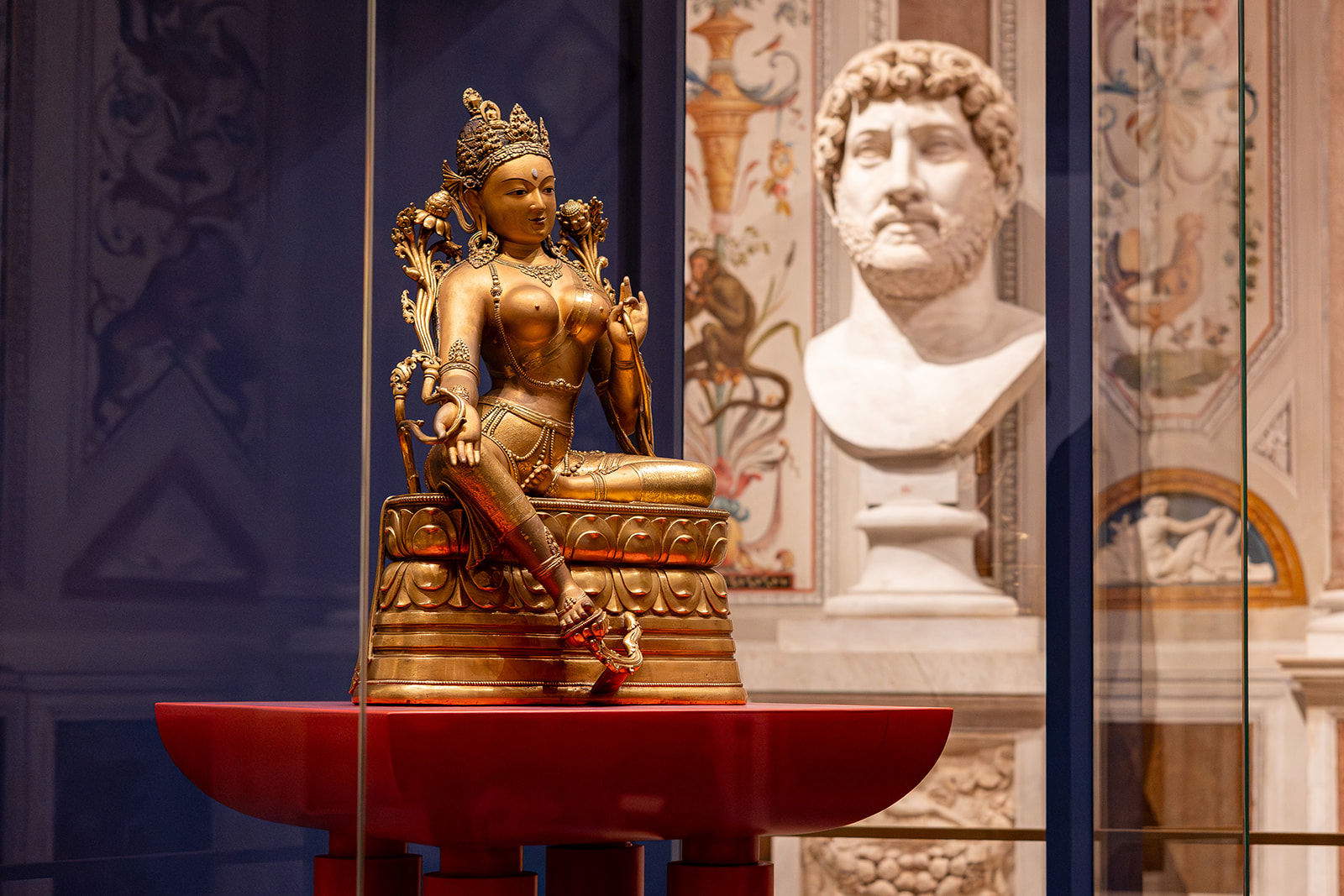
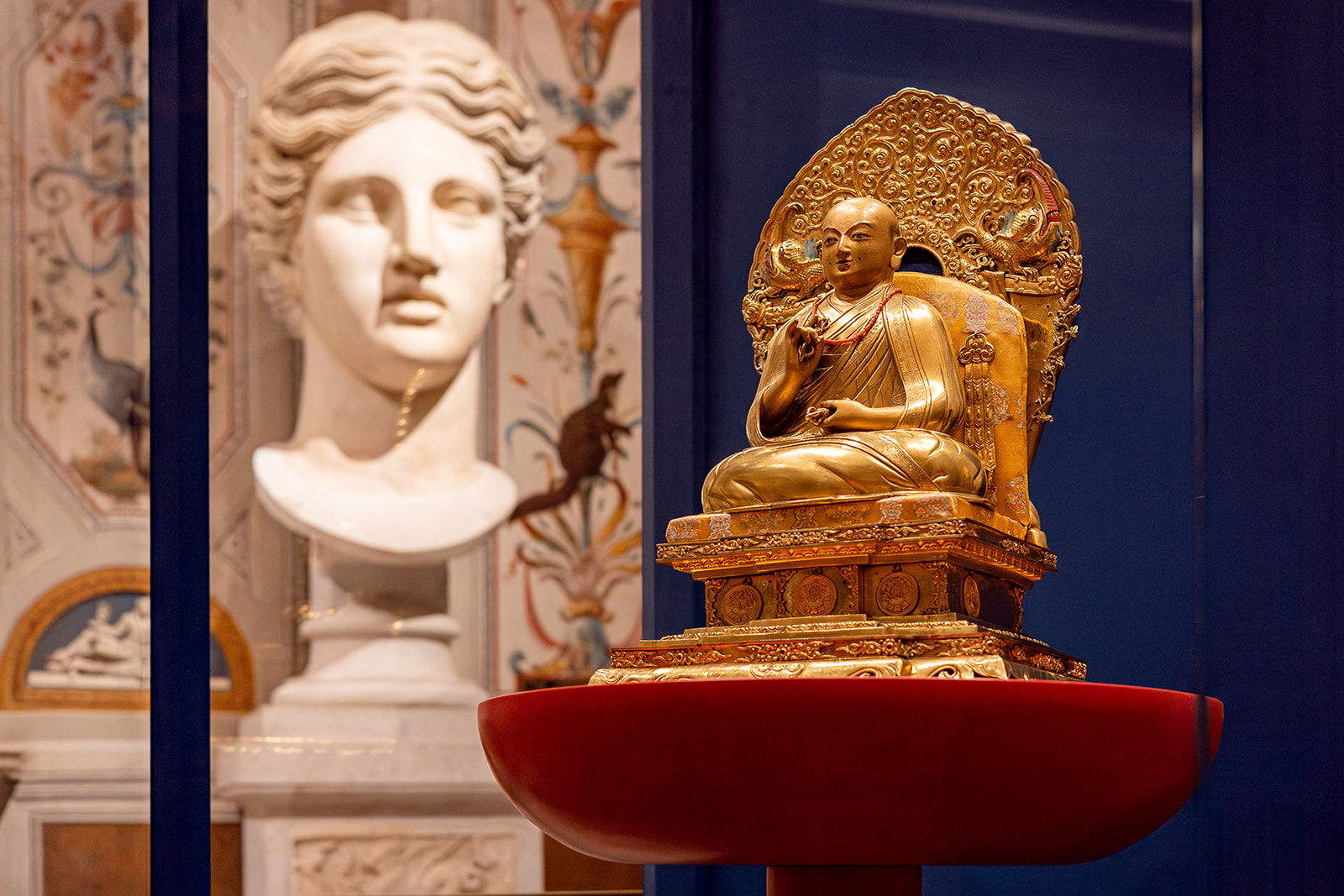
The Galleria Borghese project relates this artistic experience to Bernini’s, emphasizing how both inaugurated new languages in their respective cultural areas. Although working in profoundly different geographical, religious and political contexts, Bernini and Zanabazar shared the ability to rework traditional themes through innovative solutions, giving rise to models destined to have a lasting influence on subsequent generations. The two works on display come from the Chinggis Khaan National Museum in Ulaan Baatar, Mongolia. They are a fine Green Tara and a bronze self-portrait-sculpture depicting Zanabazar himself seated on a throne. Their presence at the Borghese Gallery represents an unprecedented event, as it is the first time that works by Zanabazar have reached Europe. For the first time in history, visitors to a Western museum can directly observe these sculptures and assess their aesthetic and formal contiguity with the European artistic heritage, within a context that encourages comparison and analysis.
The initiative finds a direct antecedent in the exhibition Global Baroque. The World in Rome in the Age of Bernini, held from April 4 to July 13, 2025, and produced in collaboration with the Scuderie del Quirinale, under the curatorship of Francesca Cappelletti and Francesco Freddolini. That exhibition had highlighted the profoundly cross-cultural character of seventeenth-century Rome, shaped by trade, diplomatic relations and the travels of artists and religious figures. What emerged was a portrait of a city traversed by a dense network of global connections, anticipating dynamics now associated with globalization. Building on these premises, the Galleria Borghese has developed a project that explores the complexity of the relationships between figures and artifacts seemingly distant in historical, geographical and technical context, but united by a surprising affinity in creative spirit and ability to affect the future of the arts in their respective fields.
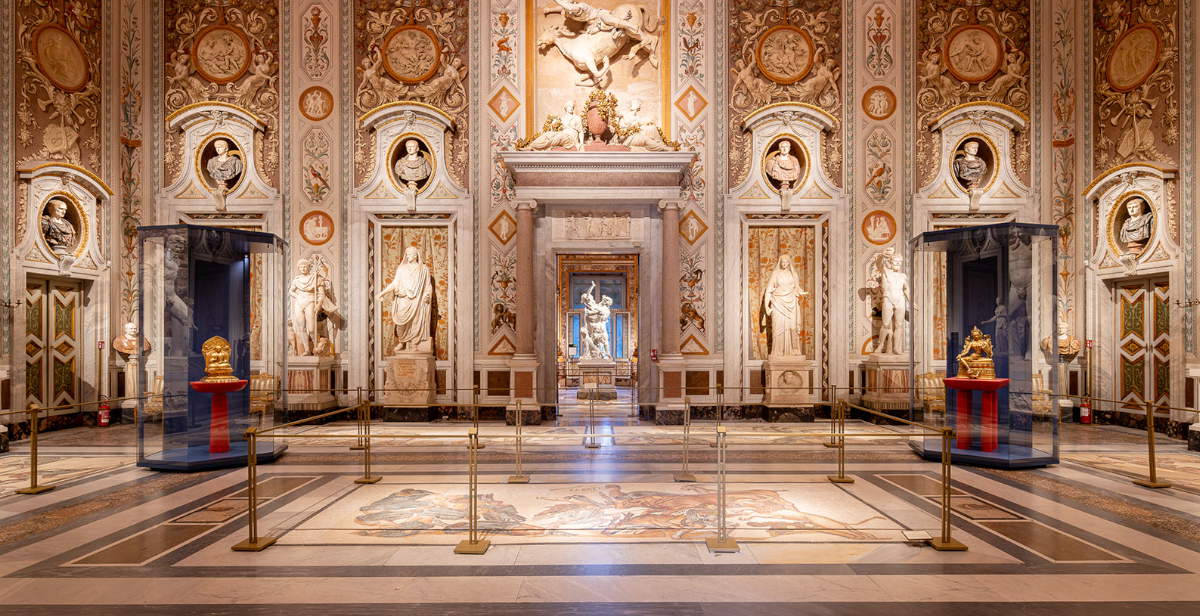 |
| Rome's Galleria Borghese hosts two Zanabazar works from Mongolia |
Warning: the translation into English of the original Italian article was created using automatic tools. We undertake to review all articles, but we do not guarantee the total absence of inaccuracies in the translation due to the program. You can find the original by clicking on the ITA button. If you find any mistake,please contact us.