





At the conclusion of the restoration of the tapestries of the Salottino Giallo, also known as the Salottino di Ercole, in theAppartamento dell’Imperatrice in Corte Vecchia, the Ducal Palace of Mantua presents a renewed layout of the rooms with an exhibition project dedicated to the neoclassical painter Giuseppe Bottani (Cremona, 1717 - Mantua, 1784).
The centerpiece of the new exhibition space is the large canvas with the Death of Dido (c. 1770-1775), recently acquired thanks to a grant from the General Directorate of Museums in Rome. The work is flanked by two other significant paintings by the same author, which came to the museum through free loan: theAllegory of the Arts and Trade Revived by Maria Theresa (1771), granted by the Fondazione Banca Agricola Mantovana, and the Birth of Venus (1770), owned by the Banca Monte dei Paschi di Siena. The exhibition also includes four paintings from the National Virgilian Academy, currently in storage at the Ducal Palace: the portrait of Maria Theresa of Austria and those of three senior officials of the Habsburg administration. Temporarily completing the display is a fine self-portrait by Giuseppe Bottani, on loan from the Mossini Gallery in Mantua.
The works on display testify to the artist’s versatility in the different genres he practiced: from history painting to portraiture to celebratory and allegorical compositions. With this restoration and rearrangement, the rooms of the Empress’s Apartment are once again accessible to the public in a renewed guise and are included in the Ducal Palace’s normal tour itinerary, at no additional cost to the ordinary ticket.
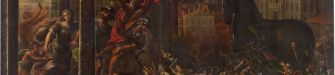
The large canvas with the Death of Dido depicts the tragic suicide of the queen of Carthage after her abandonment by Aeneas, an episode narrated by Virgil in Book IV of the Aeneid. The body of the sovereign, pierced by the sword “dardania,” lies on a pyre placed in the center of the scene; at her feet are arranged the weapons and effigy of the hero, while in the background are glimpses of ships setting sail. Among the rushing female figures appear his sister Anna and some handmaids, in attitudes of despair. The upper part of the painting depicts the goddess Juno sending Iris to cut off a lock of the queen’s hair, a symbolic gesture that sanctions the final detachment from life. The work, probably executed in Mantua, seems to reveal an homage to Peter Paul Rubens, and indirectly to Giulio Romano, in the twisting columns visible on the left.
Bottani’s "Self-Portrait," from a private collection, on the other hand, depicts the artist painting in front of his easel, with brush and palette in hand.
“Thanks to Bottani,” says director Stefano L’Occaso, “there came to Mantua a painting that no longer derived from a supernatural inspiration, it was no longer yearning, contemplation, meditation or exaltation of revealed truths, but a discipline with a precise didactic function, in line with the trends of the Enlightenment.”
The scientific project is by director Stefano L’Occaso, with the collaboration of art historian officers Giulia Marocchi and Silvia Merigo, while the rearrangement was supervised by Verena Frignani, an architectural officer. The restoration of the tapestries was directed by Daniela Marzia Mazzaglia, restoration officer.
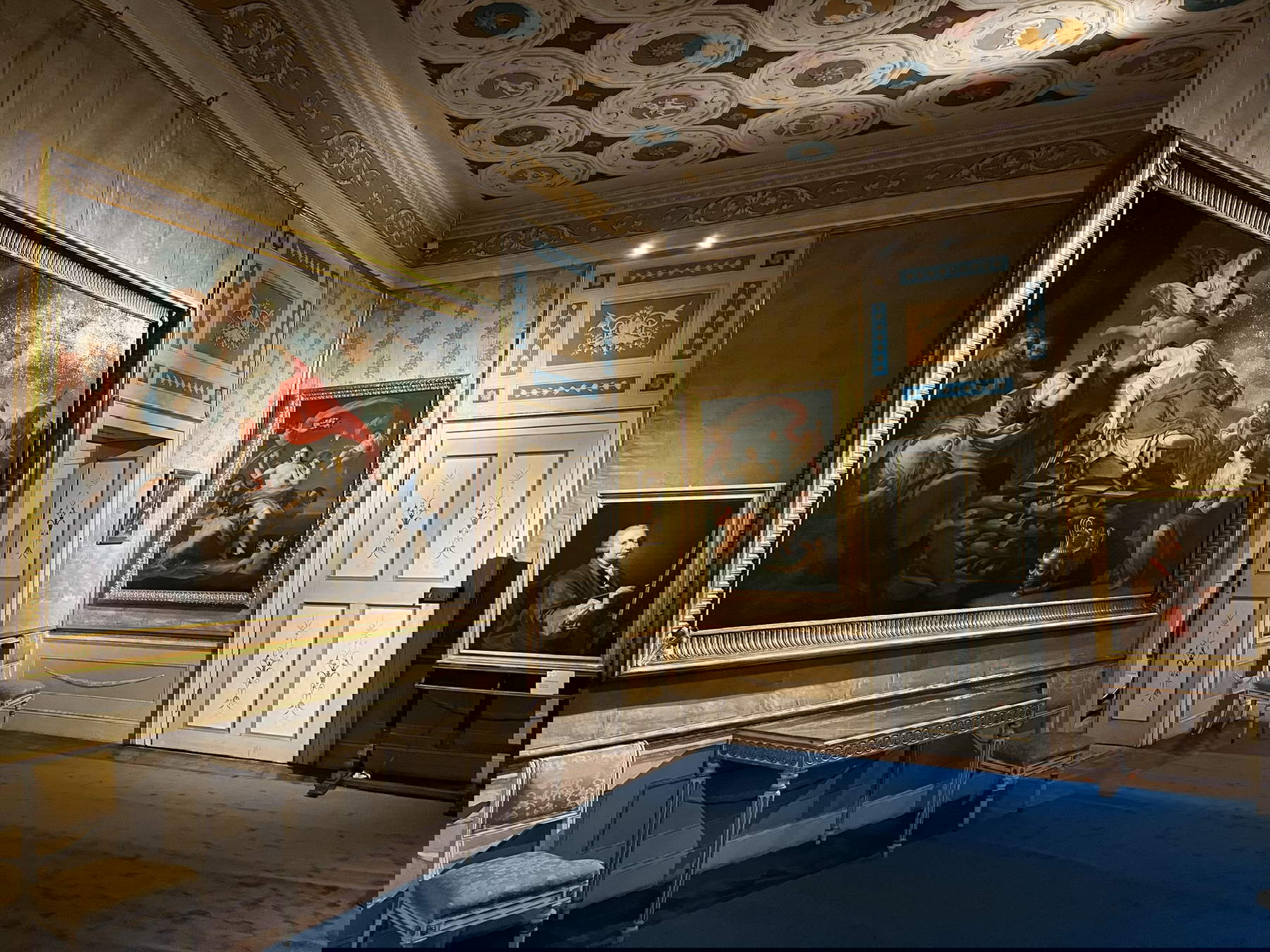 |
| Mantua's Ducal Palace opens Empress Apartment with a display dedicated to Giuseppe Bottani |

Warning: the translation into English of the original Italian article was created using automatic tools. We undertake to review all articles, but we do not guarantee the total absence of inaccuracies in the translation due to the program. You can find the original by clicking on the ITA button. If you find any mistake,please contact us.
















 IT
IT FR
FR DE
DE ES
ES CN
CN


