








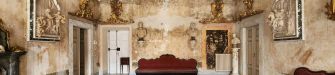
After nearly nine years of closure for works, one of the symbolic places of the Uffizi Galleries in Florence reopens: the Scalone Lorenese, the historic entrance to the Gallery’s exhibition itinerary, now returns fully visible and accessible to the public, rearranged according to the arrangement it had in 1769, when Grand Duke Pietro Leopoldo of Lorraine first opened the museum to the general public. An intervention that is not only architectural, but also highly symbolic, as it returns to the city and visitors from around the world a space that marks the monumental entrance to one of the most important museums on the planet.
The reopening brings attention back to a specific date, June 24, 1769, the feast day of St. John, the patron saint of Florence. On that day Peter Leopold, son of Emperor Francis and Grand Duke of Tuscany, inaugurated a new season for the Gallery, placing it among the very first museums in the world to be born with a modern, public concept. The current rearrangement celebrates that very opening, reconstructing the atmosphere and celebratory apparatus that welcomed visitors in the 18th century.
A Latin inscription stands out at theentrance, recalling the reforming work of the Lorraine sovereign, who took care to rearrange the “Museo Mediceo,” enlarging its spaces, increasing the number of works and giving it an even more splendid appearance for the prestige of the city and the development of the Fine Arts. The dedication, composed in Latin in the handwriting of Abbot Luigi Lanzi, then director of the museum, welcomes visitors as a declaration of intent that links dynastic history to the birth of the modern museum institution.
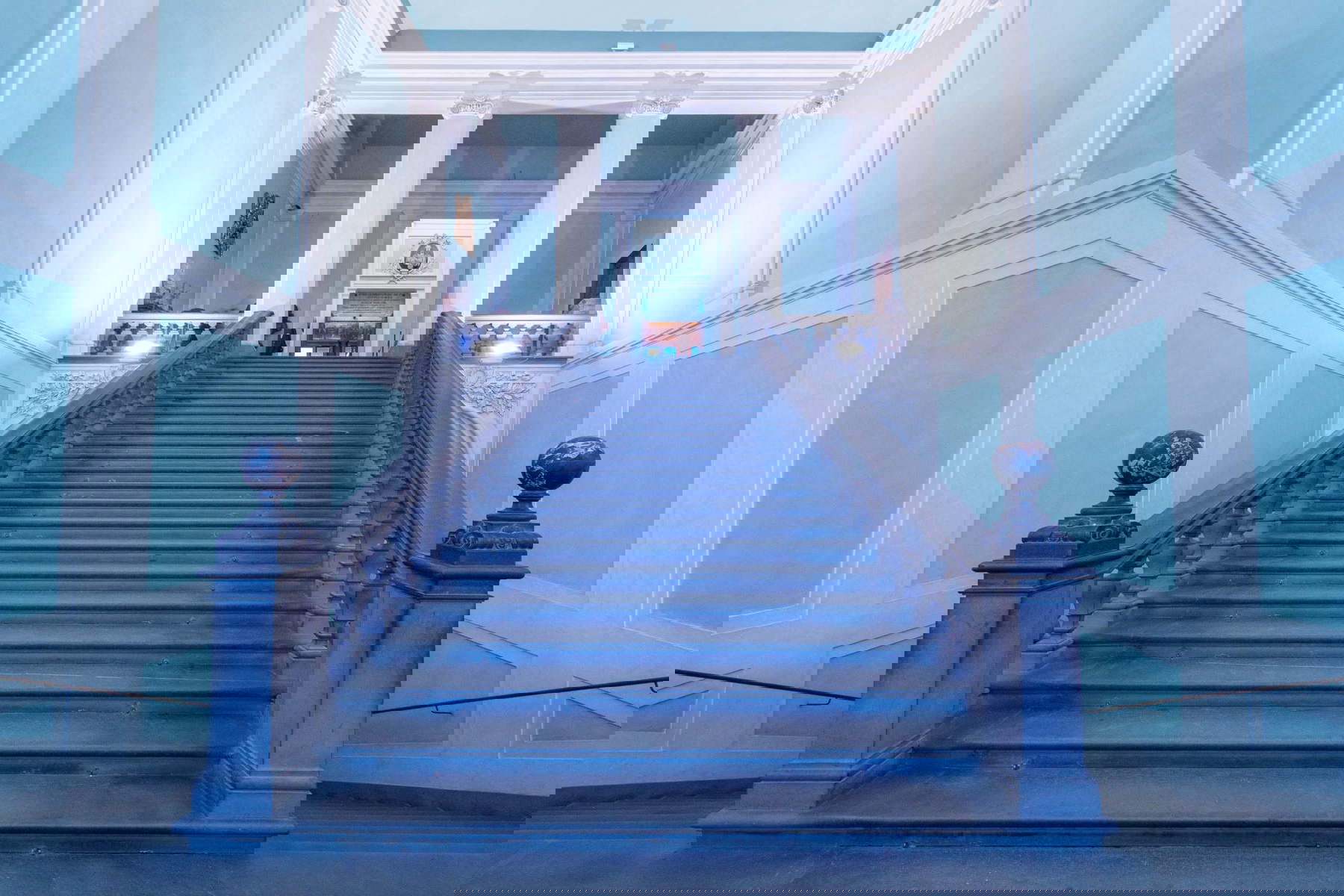
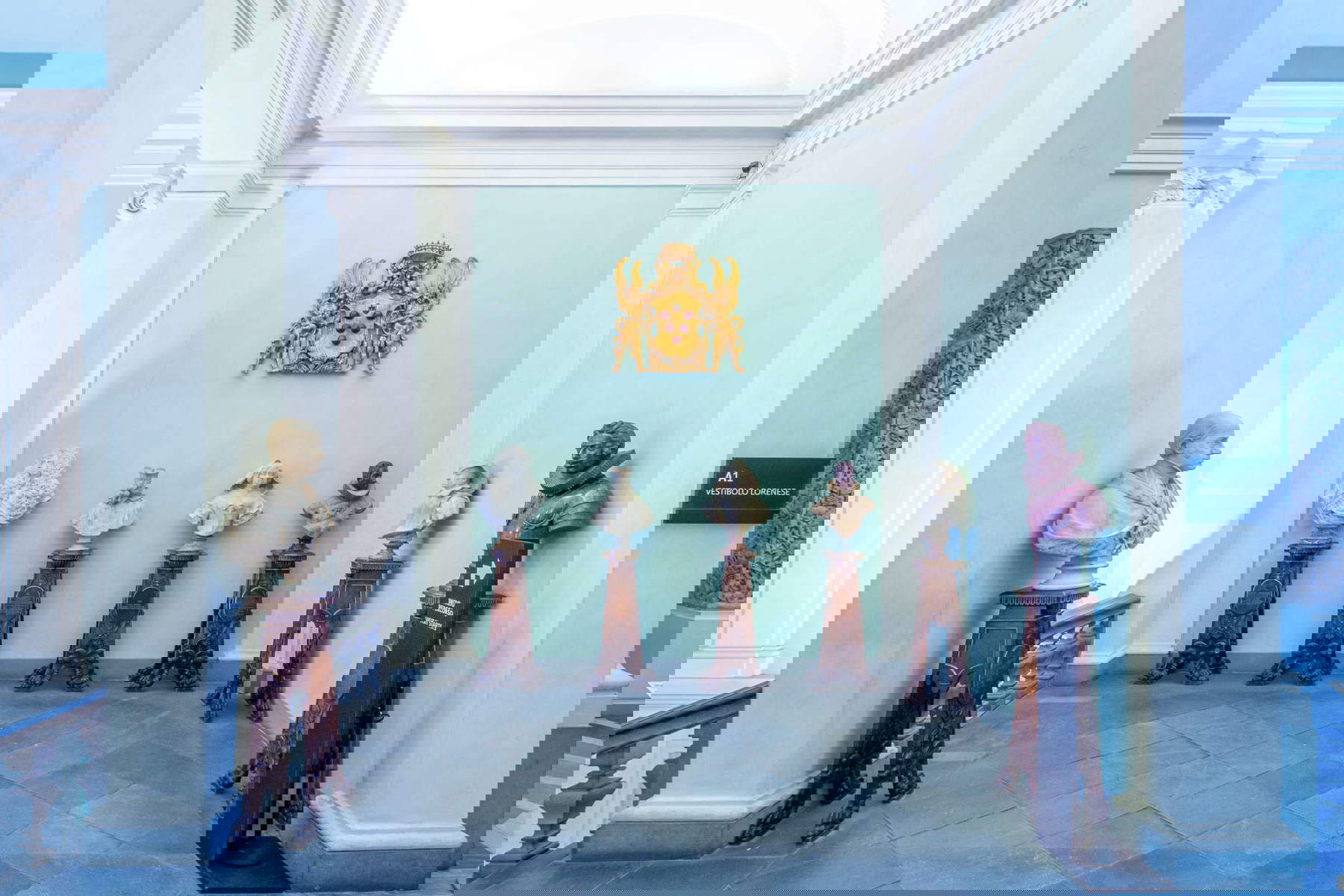
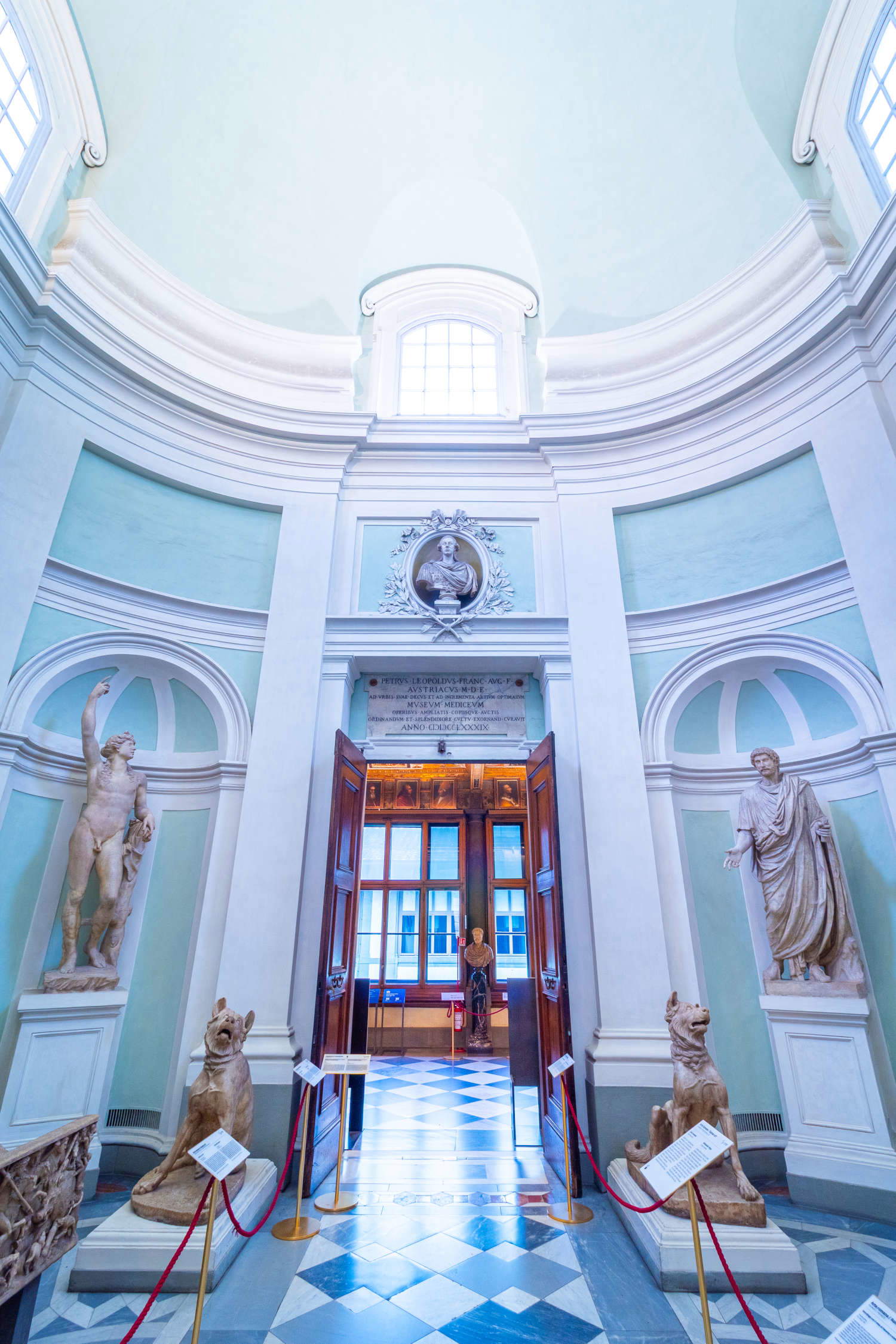
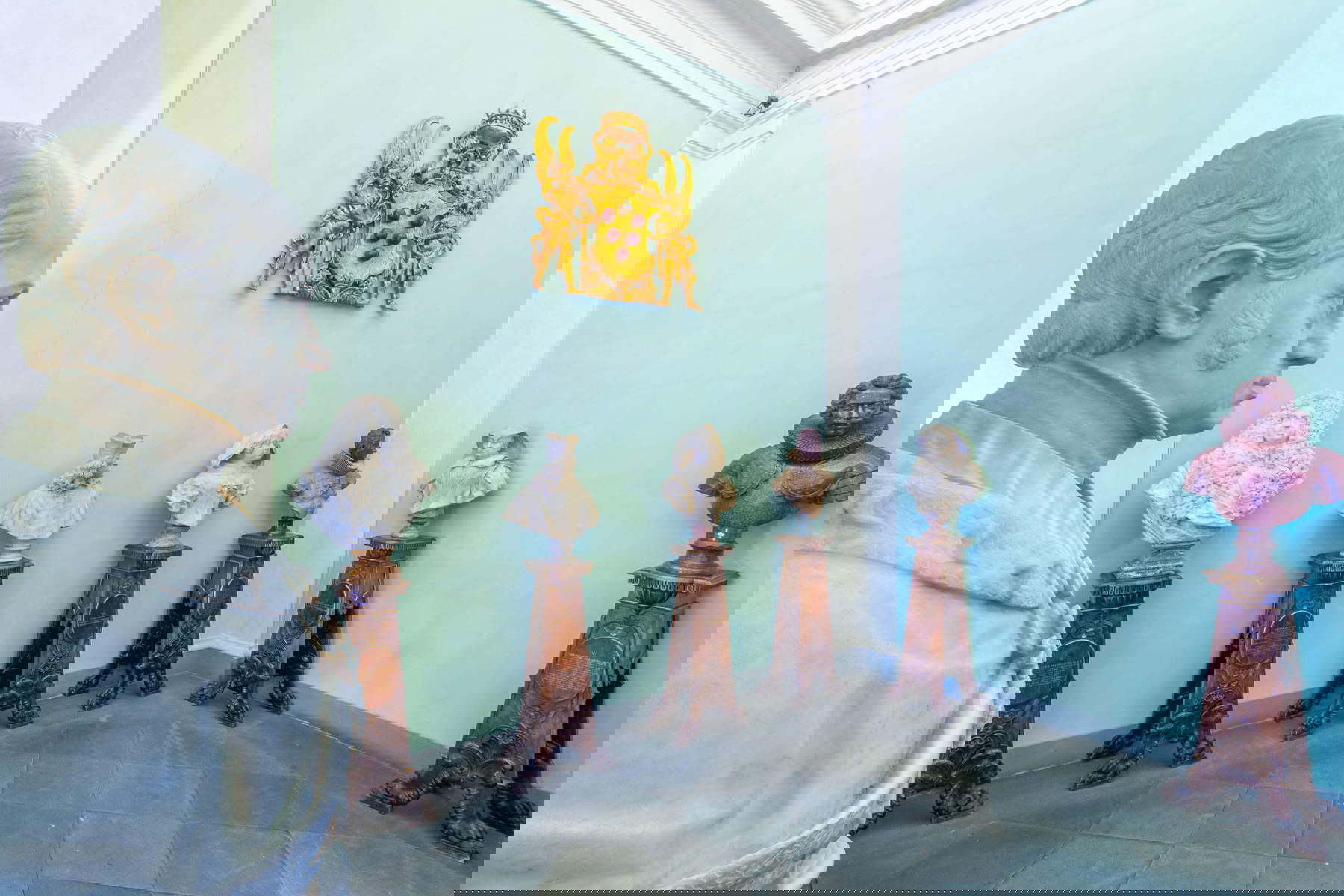
Above the inscription is placed the old-fashioned bust of Pietro Leopoldo, created by 18th-century sculptor Francesco Carradori, a figure that dominates the space with a celebratory setting consistent with the taste of the time. At the top of the staircase, newly rearranged, are also the busts of the Medici predecessors, from Cosimo I to the last Grand Duke, Giangastone, founders and augmentors of the Gallery. For each of them, too, Luigi Lanzi had composed Latin inscriptions in future memory, paying tribute to the merits and collecting exploits that had contributed to the formation of the Uffizi’s boundless artistic heritage.
The busts, characterized by the sumptuous wigs typical of the period, are now placed on massive wooden stools, while from the top of the wall dominates the large wooden polychrome coat of arms made by Baccio d’Agnolo, which towers above the marble parade below. The whole restores the original scenographic impact, designed to impress “outsiders,” as visitors from outside the city were called in the 18th century, and to affirm the prestige of the dynasty and the Tuscan capital.
The Scalone Lorenese had not been visible since 2018, when the area was entirely incorporated into the construction site of the New Uffizi. In that year, the need emerged to proceed with a consolidation and restoration of the wooden structure supporting the vaults of the staircase, a delicate intervention that required a long time and great attention. In fact, the structure, designed in the 18th century by court architect Zanobi Del Rosso during the rule of Pietro Leopoldo, had critical issues that made targeted architectural reinforcement essential.
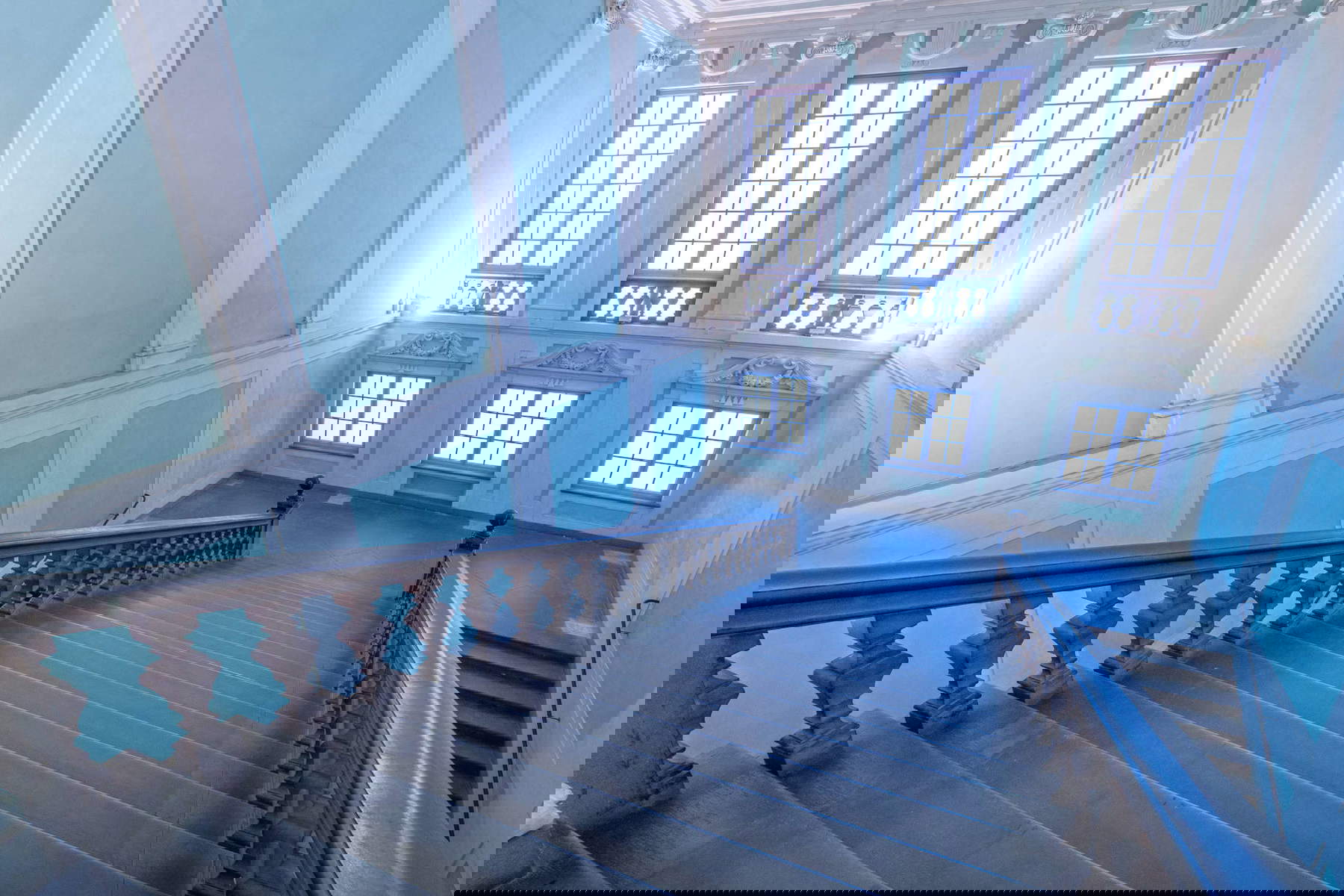
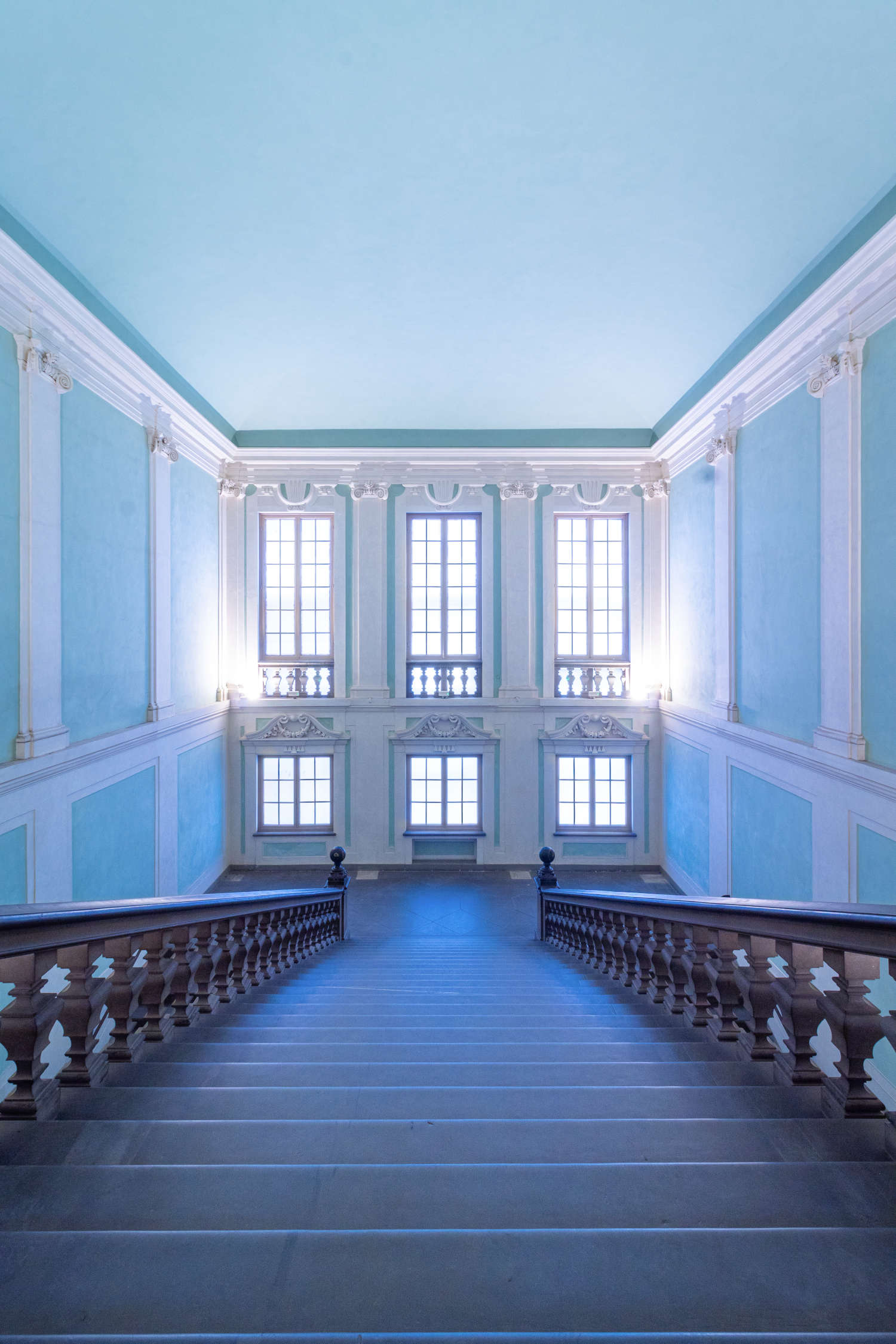
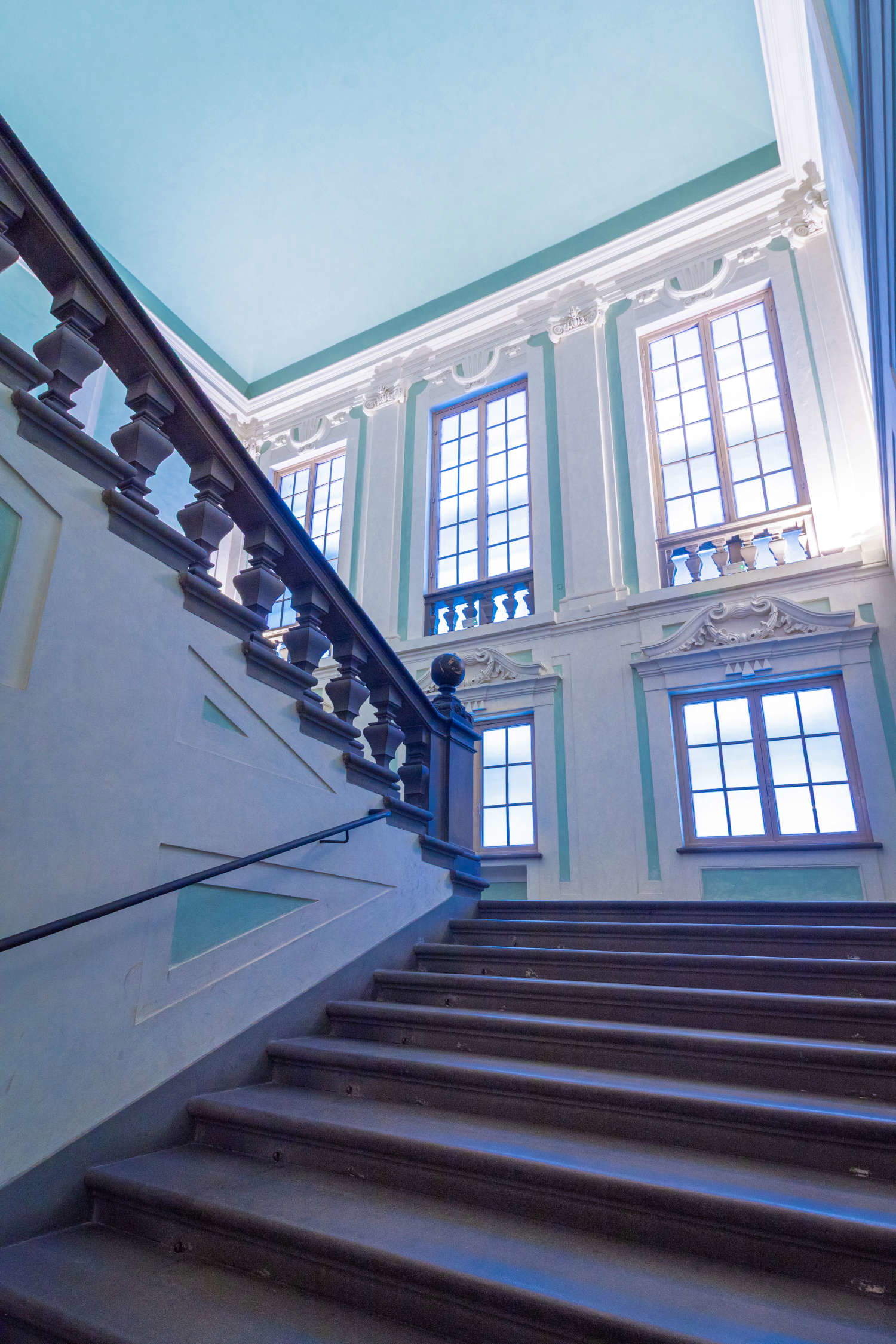
The consolidation operation was completed in recent weeks, allowing the reopening to the public and the remounting of the antiquities that the staircase has housed since the 18th century. This brings to a close a historic construction site that lasted eight years, part of a wider process of transformation and updating of the Uffizi Galleries that in recent times has also seen the reopening of the Vasari Corridor and the dismantling of the crane that had marked the Piazzale degli Uffizi for two decades.
The grand staircase, moreover, had already undergone a major intervention between 2005 and 2007, when the plaster, stucco and decorative apparatus were restored. On that occasion, the characteristic painting of the walls in the so-called “Lorraine green” was also restored, identified through a series of stratigraphic essays that brought to light the color chosen by the Lorraine Grand Dukes. The particular hue, described in historical documents as “greenish with green earth, verdigris and others,” reflects a taste in line with what was practiced in the Austro-Hungarian Empire and fits into the dictates of an elaborate Rococo. The same color is attested in other places subjected to intervention by the Lorraine dynasty, such as Poggio Imperiale, the Specola, the Kaffeehaus and the Limonaia di Boboli, testifying to a precise aesthetic and cultural orientation. The recovery of the staircase thus restores not only an architectural environment, but also a coherent fragment of the artistic and representational policy of the Lorraines.
|
| Uffizi, after eight years reopens the Scalone Lorenese, the entrance wanted by Pietro Leopoldo |

Warning: the translation into English of the original Italian article was created using automatic tools. We undertake to review all articles, but we do not guarantee the total absence of inaccuracies in the translation due to the program. You can find the original by clicking on the ITA button. If you find any mistake,please contact us.





















 IT
IT FR
FR DE
DE ES
ES CN
CN