








After more than two years of work, the Hall of the Four Doors at the Doge’s Palace in Venice has been reopened to the public at the end of a comprehensive restoration project involving the ceiling decorations, stone portals, and monumental sculptural groups. The intervention was presented on February 5, 2026, by the Venice Civic Museums Foundation and was officially completed on January 30, after the start of construction on November 22, 2023.
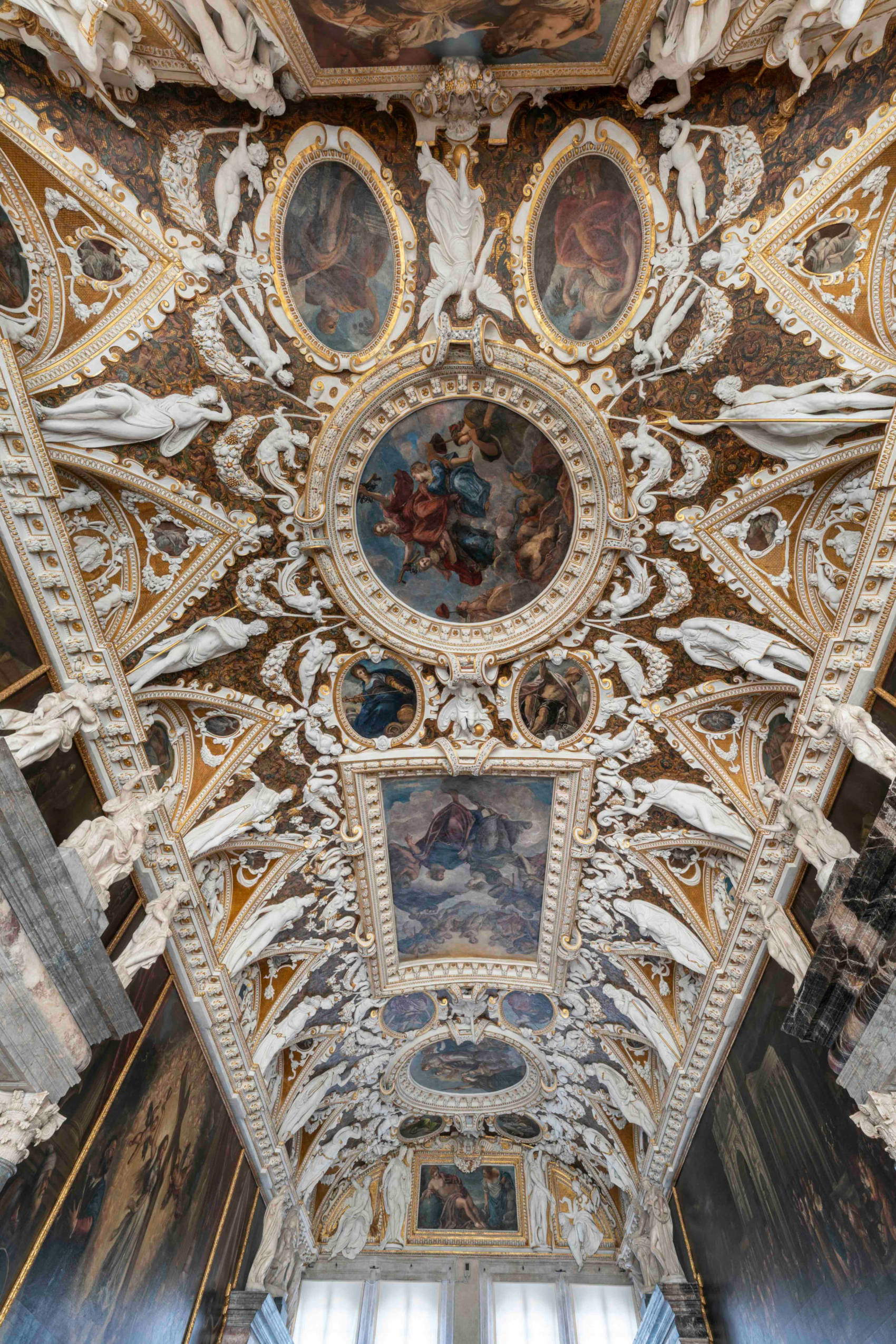
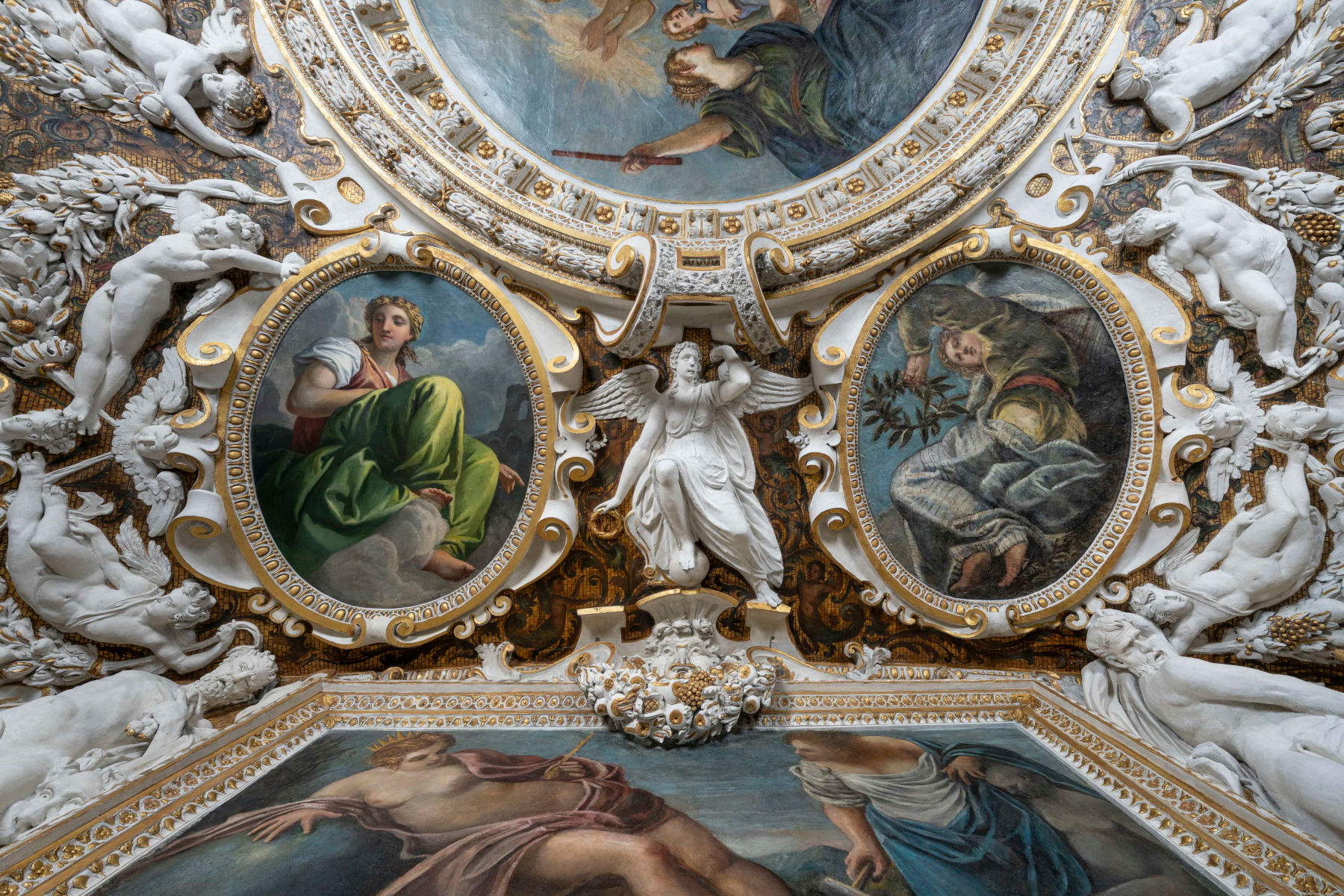
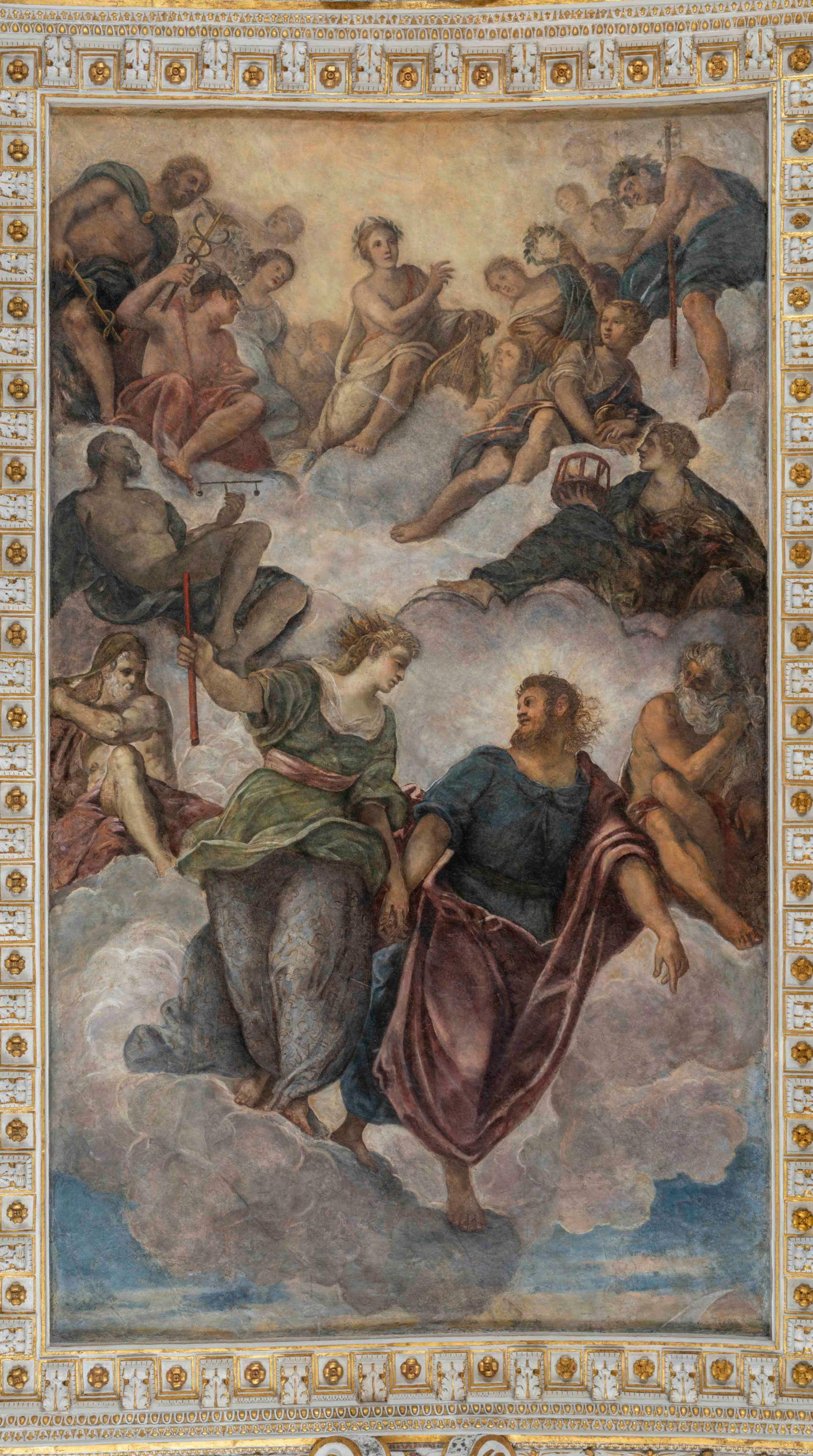
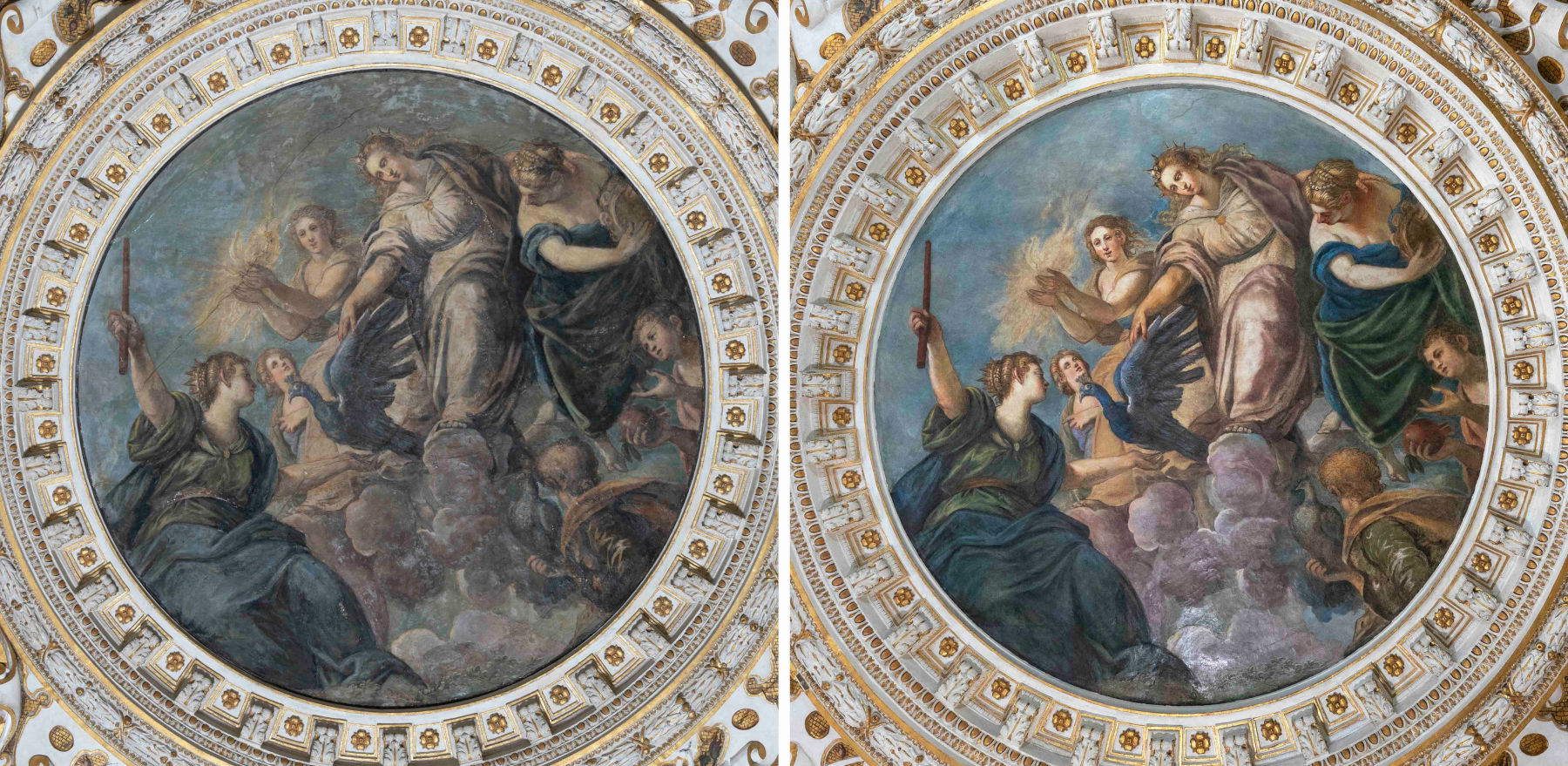
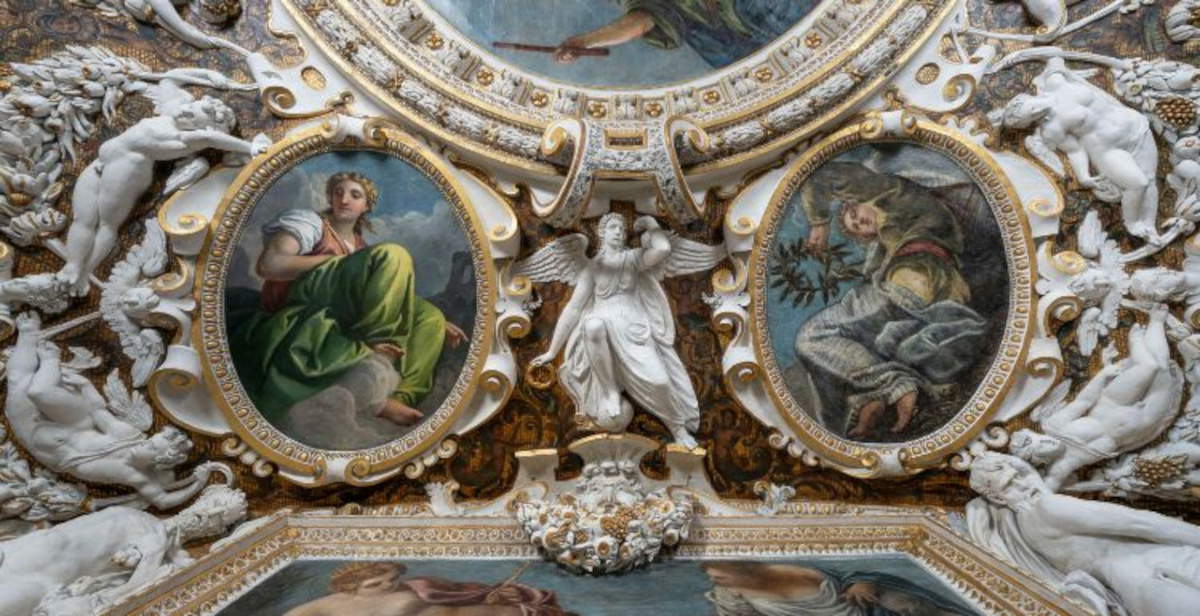
The Sala delle Quattro Porte constitutes one of the most important representative rooms in the palace, both symbolically and for the functional role it played in the institutional life of the Serenissima. Designed in 1576 by Andrea Palladio and Giovanni Antonio Rusconi, the room is distinguished by its solemn architecture and a particularly complex decorative apparatus, dominated by the great “Roman-style” vault and the four monumental portals that give the room its name. The ceiling is embellished with wall paintings originally executed by Jacopo Tintoretto in 1577, while the polychrome portals are crowned by sculptural groups made by some of the leading masters of late 16th-century Venice: Alessandro Vittoria, Girolamo Campagna, Francesco Caselli and Giulio dal Moro. Added to these elements are the stone windows and monochrome-painted canvases, which combine to define the visual and symbolic richness of the room.
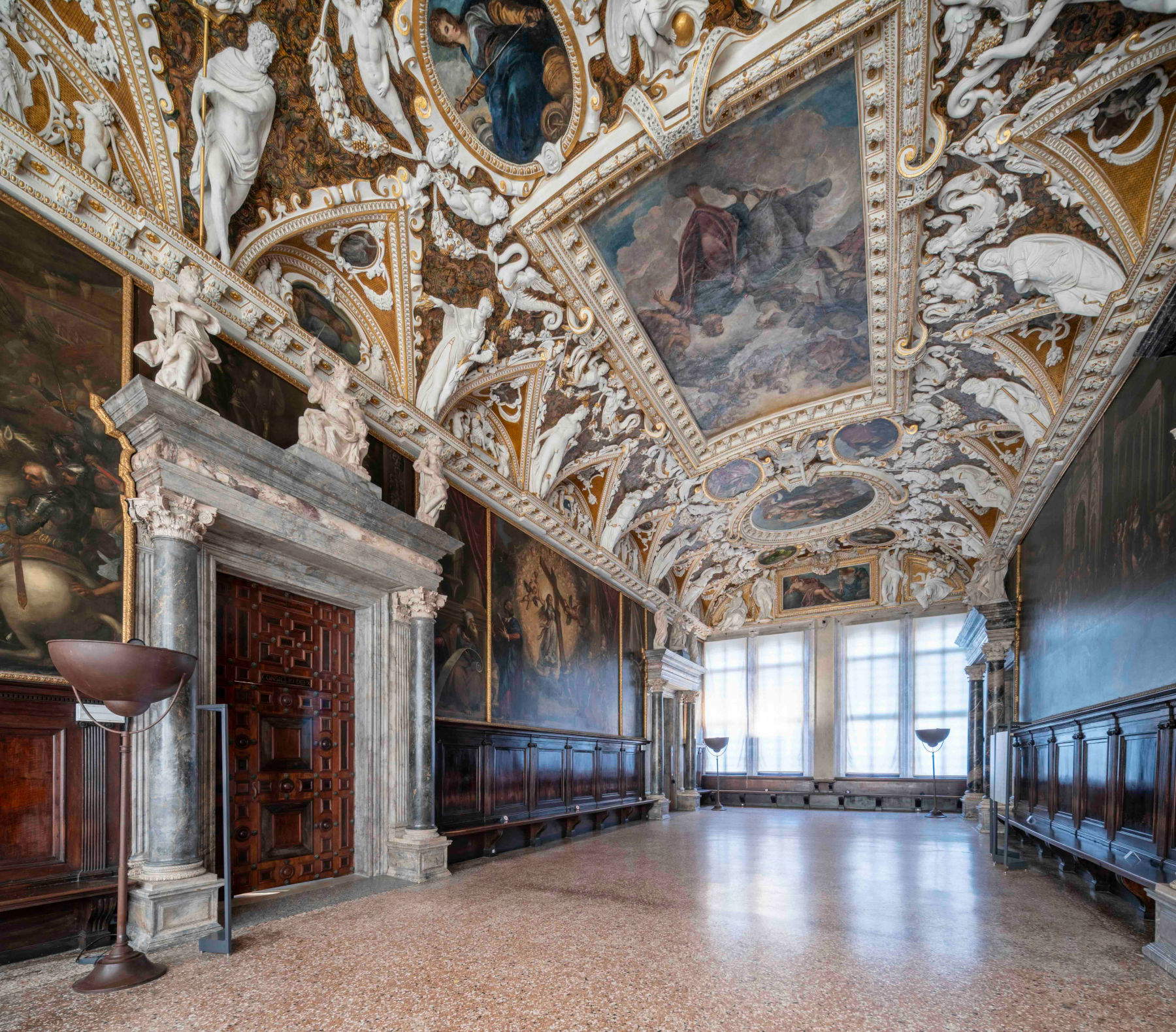
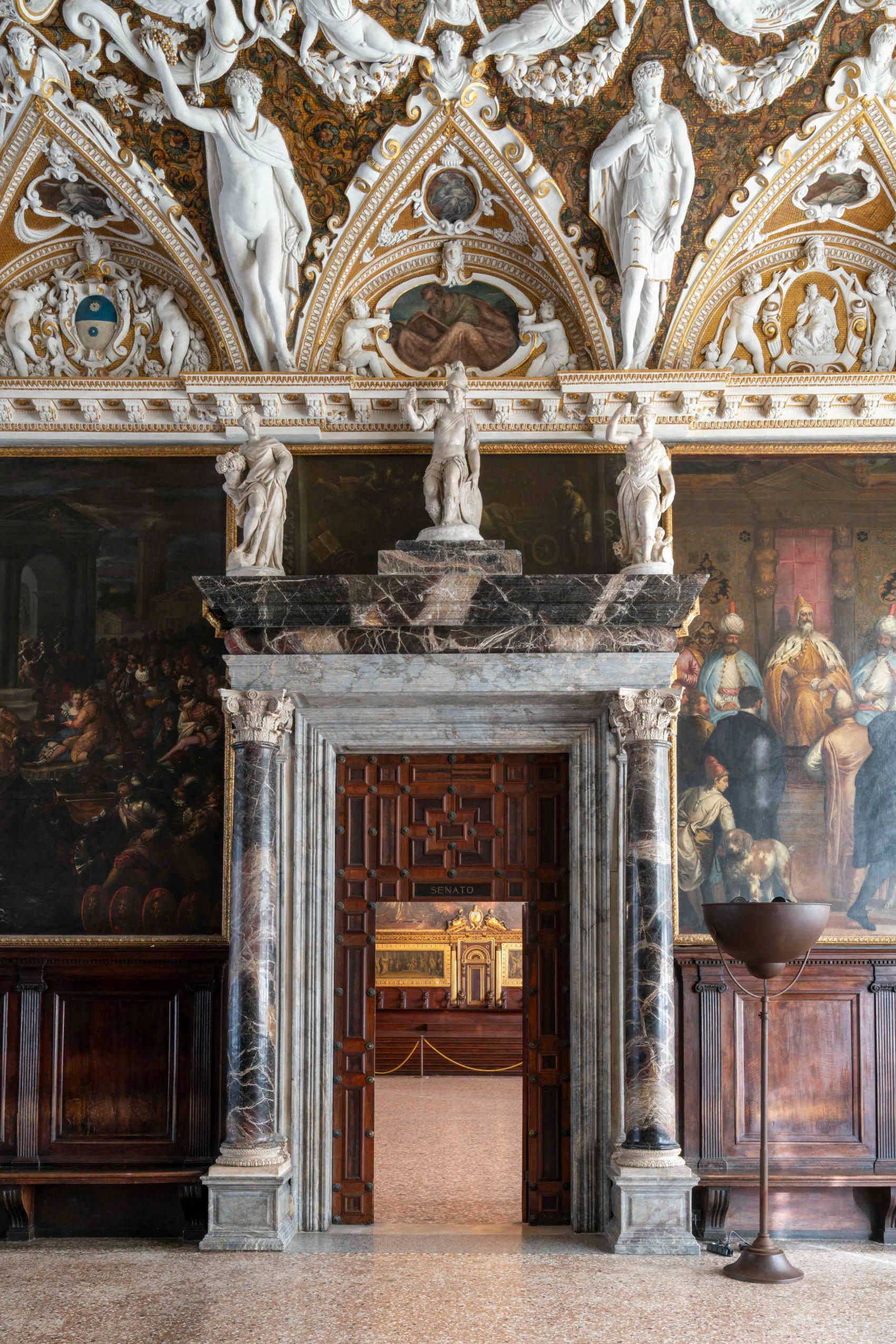
The restoration work required a total investment of 747,000 euros and was made possible in large part through the contribution of Save Venice, a U.S.-based nonprofit organization committed to protecting Venice’s heritage, which supported the project with 662,000 euros. Funding was completed through additional contributions activated through Art Bonus, including support from The Gritti Palace, a Luxury Collection Hotel, Venice, along with direct investment from the Fondazione Musei Civici di Venezia.
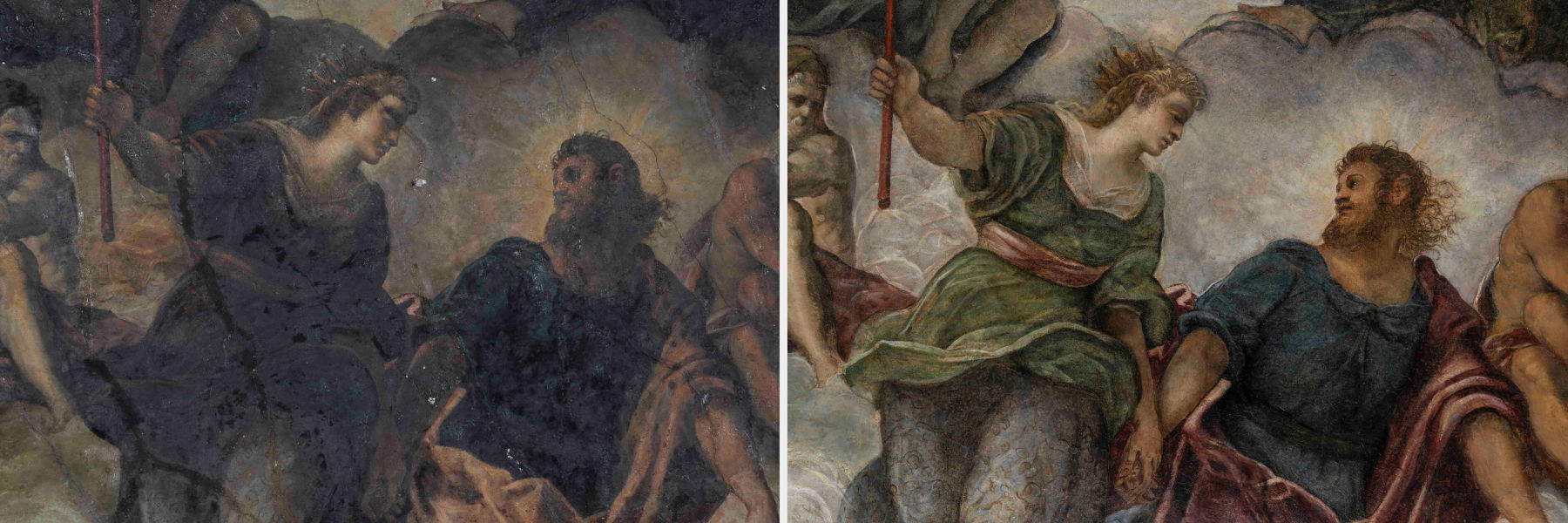
The work involved both the non-visible structural aspects of the large vaulted ceiling and its intricate decorative apparatus composed of wall paintings and stucco work. In parallel, the stone portals and sculptural groups were restored, as well as the stone windows and monochrome canvases. A central part of the project was devoted to the study of the execution techniques of the ceiling paintings, which led to a discovery of particular technical significance. Contrary to previous assumptions, the pictorial decorations do not appear to have been executed in fresco. In fact, analyses have shown that the colors were applied in oil on a plaster and glue preparation, according to a technique closer to painting on canvas than to the mural fresco tradition. This method of execution, combined with later interventions that are not always documented, made the conservation of the surfaces more complex over time and affected the legibility of the decorations.
The restoration was preceded by a detailed mapping of the state of conservation, accompanied by visual and tactile inspections and a campaign of analysis aimed at identifying the layers added to the original pictorial film. The cleaning phase involved the removal of a varnish applied in the 20th century and some repainting attributable to restorations of the last century. All operations were conducted with analytical controls performed before and after the intervention in order to ensure maximum protection of the original surfaces.
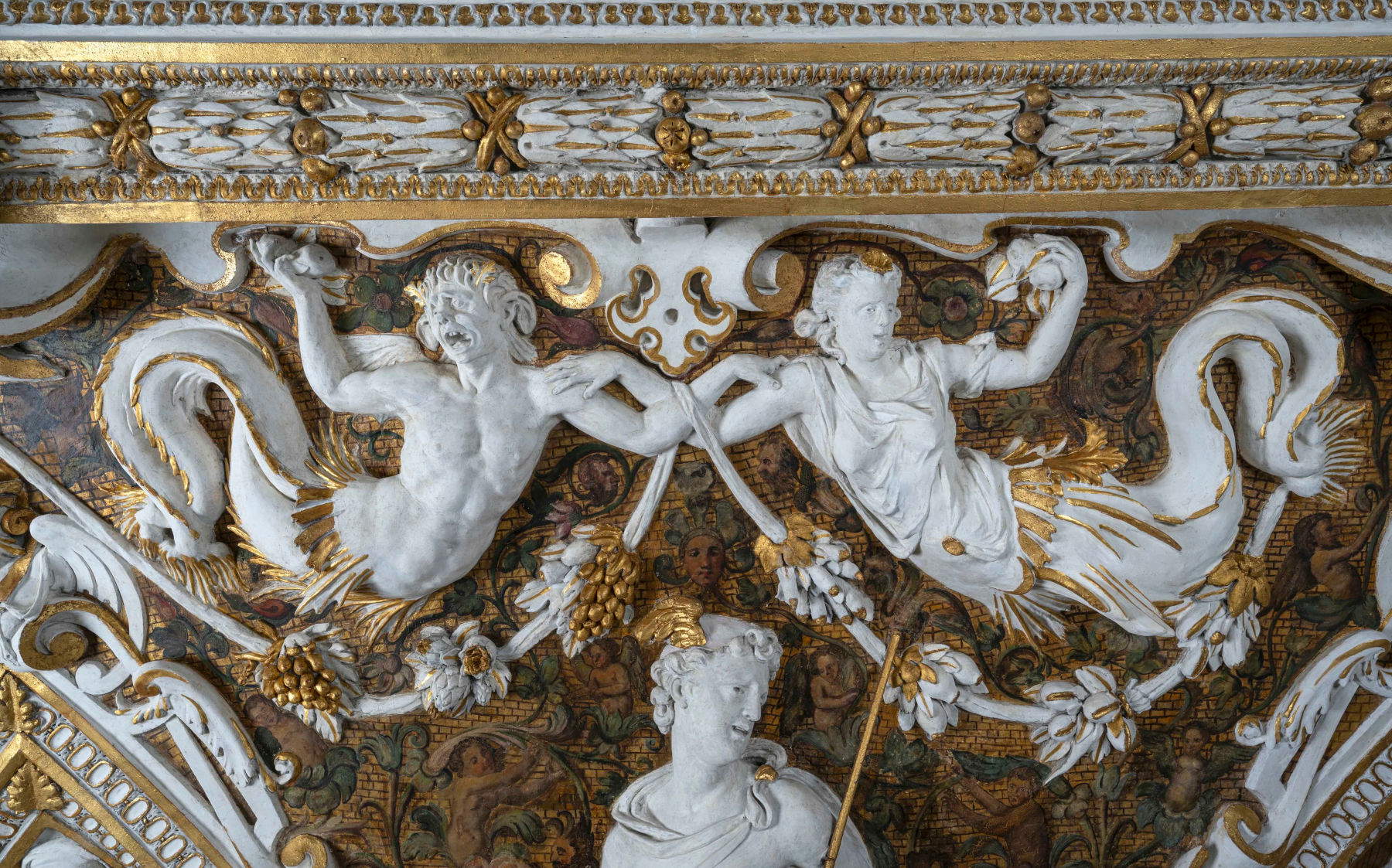
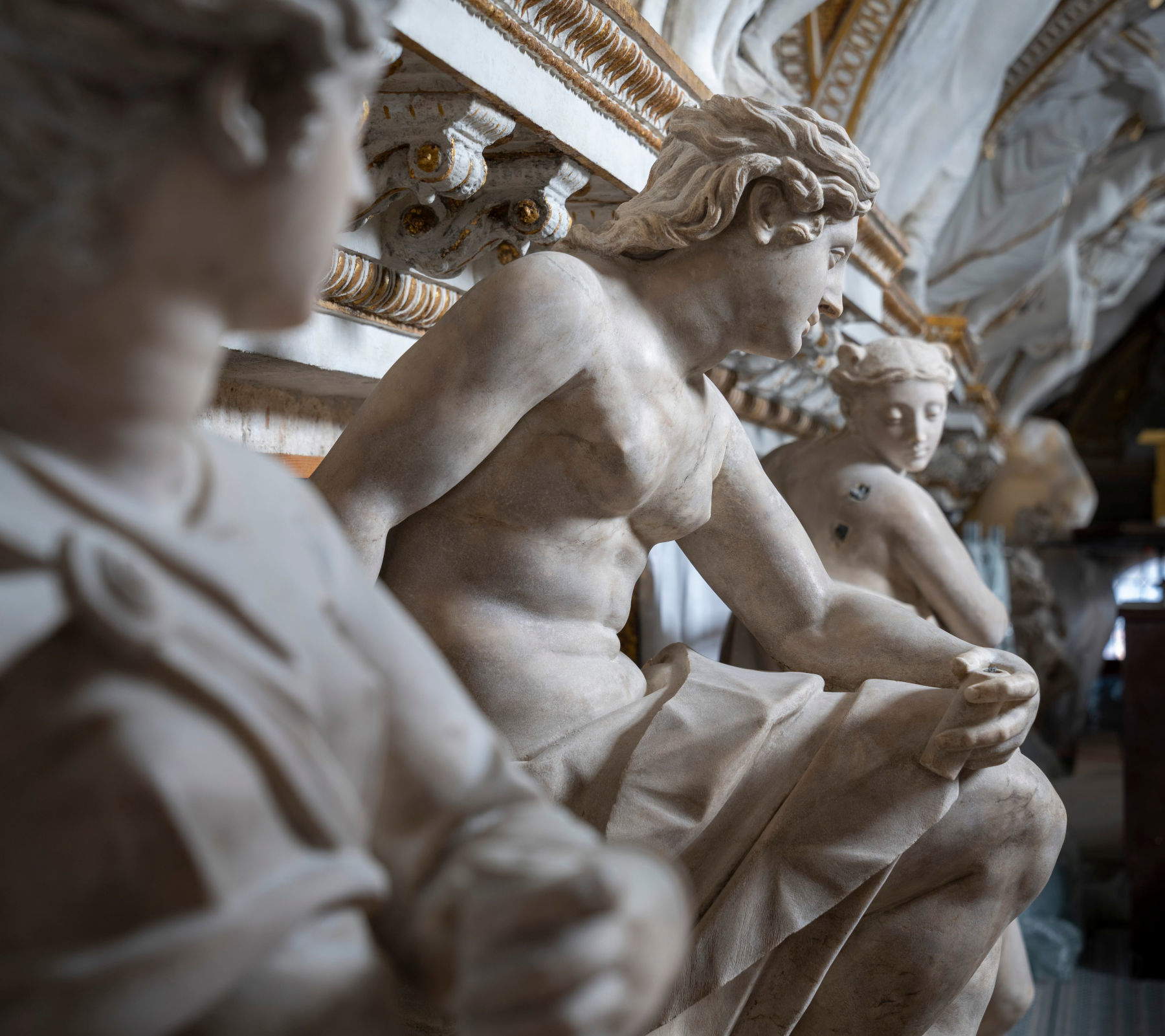
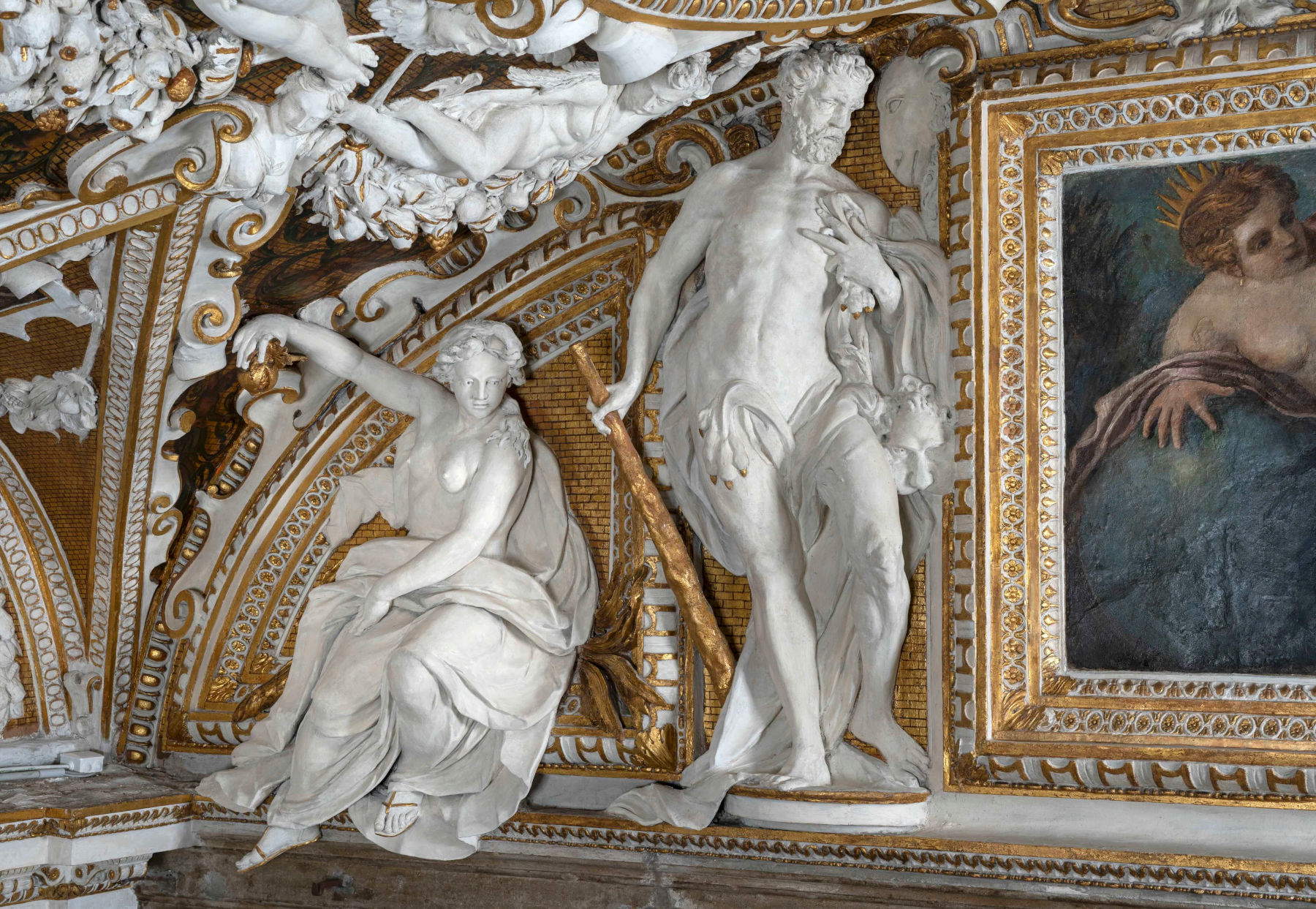
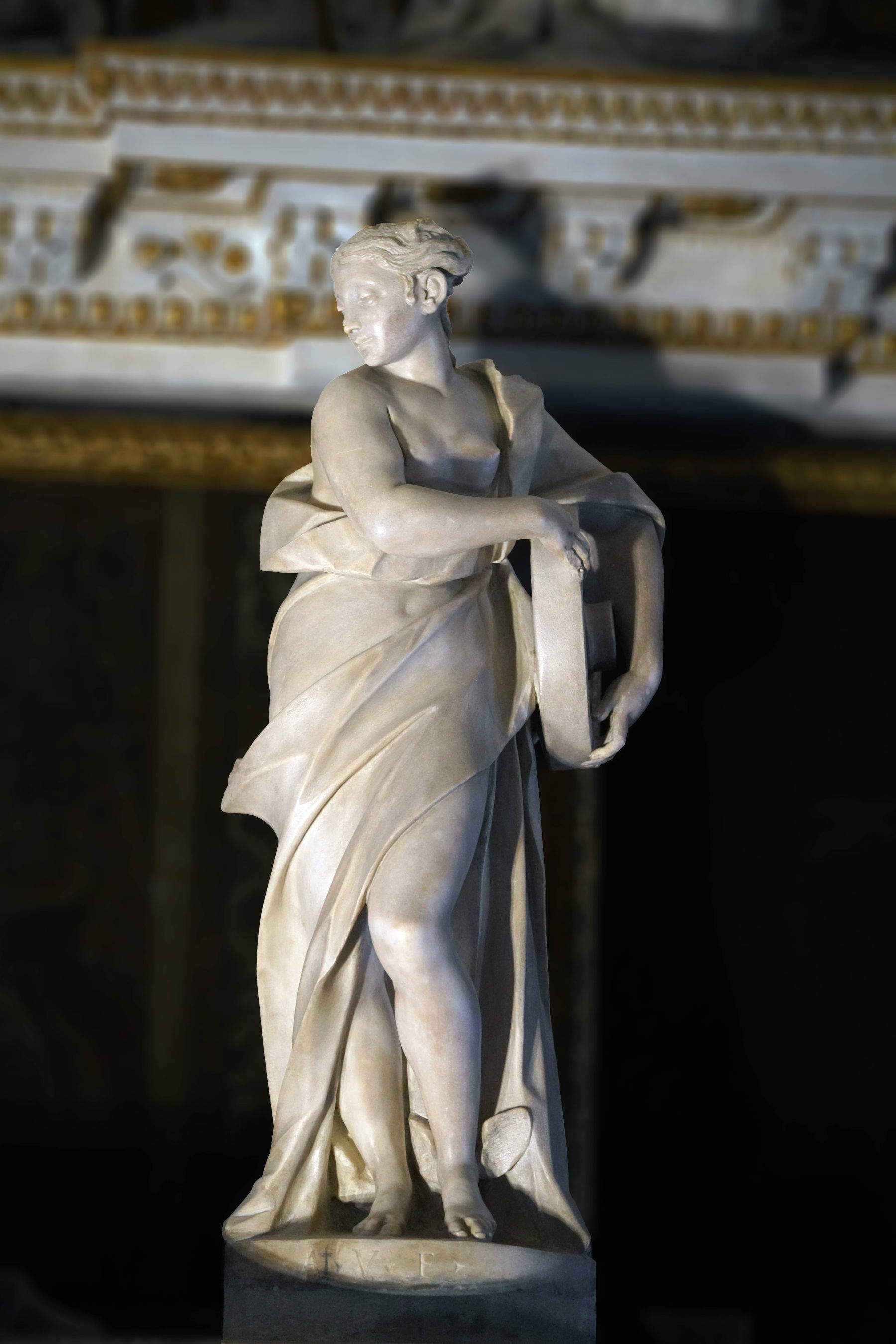
In the course of the work, old and now degraded plasterwork was removed, the paint film was consolidated, and numerous cracks and gaps were treated. Subsequently, after an extensive iconographic and stylistic comparison with scholars and art history experts, the missing parts and abrasions were integrated. The integrative intervention was carried out through the use of watercolor and varnish colors, with the aim of restoring a unified and balanced reading of the decorated surfaces, without altering the recognizability of the original parts.
Alongside the strictly conservative aspects, the project also included a strong focus on public enjoyment during the work phases. In fact, for the entire duration of the construction site, access to the hall and the possibility of observing the decorations was guaranteed, thanks to the setting up of a visible restoration workshop. The so-called open construction site, located on the first floor along the Ducal Palace’s visitor route, allowed visitors to closely follow the work of the restorers engaged on the wall decoration of the four portals.
“Preserving our treasures is essential to continue telling the world about the beauty and culture of our city,” says Giorgia Pea, Councilwoman in charge of culture: theater activities and cinema. “Venice and its monuments live on with the residents and visitors who choose it as a place of excellence in their travels. They deserve respect but they also deserve to be protected from their fragility. We cannot do this alone and that is why donations from private individuals who love our city as we do are crucial. That is why I thank them on behalf of everyone for having, in this case, restored light to the decorative apparatus of the great ceiling and portals of the Hall of the Four Doors in the Ducal Palace. I also thank all the workers of the Fondazione Musei Civici, from the first to the last, who are the primary custodians of our heritage and to those who choose every day to visit these places that today as a thousand years ago continue to enchant.”
“Every restoration, every intervention in our museums reminds us how immense, monumental and, at the same time, fragile and unique the context in which we operate is: the city of Venice where the preservation of monuments is a daily challenge,” says Mariacristina Gribaudi, president of the Fondazione Musei Civici di Venezia. “This intervention, in particular, in terms of extent, variety and complexity has been a challenge, made materially possible by the generosity of new patrons, brought together by the indispensable work of Save Venice, together with vital tools such as the Art Bonus, which allows companies to become major actors of restitution, to be truly involved in the welfare of the community, supporting artistic heritage. As a museum foundation, it is worth remembering, our commitment is to be able to put this generosity to the best possible use, managing resources wisely, initiating and concluding projects so that investors can see their commitments realized. Last, but certainly not least, there are the professional skills of the Foundation and outside consultants working in the field, without whom all this would not be possible: architects, technicians, restorers, art historians, right down to the excellent collaboration with the Superintendency that makes it possible to implement programs efficiently. This is taking care, in a widespread and mutual way, of our heritage.”
“Save Venice,” says Frederick Ilchman, President of Save Venice, “is honored to have contributed to the conservation of the magnificent Sala delle Quattro Porte, a masterpiece of architecture, painting and sculpture in the heart of the Doge’s Palace. This important achievement testifies to the dedication and expertise of the restorers who worked in close collaboration with the MUVE Foundation and the Superintendency of Venice. We express our heartfelt appreciation to all those who made this intervention possible and express our deepest gratitude to the major donors for their generosity: the Manitou Fund through Nora McNeely Hurley; Karin McKinnell Leidel and Peter Leidel; Gucci; The Gritti Palace, a Luxury Collection Hotel, Venice; Patricia Nagy Olsen; Meredith Brown, trustee of the Vail Memorial Trust; the James R. Dougherty, Jr. Foundation, Inc. and others.”
 |
| Venice, Doge's Palace reopens the Hall of the Four Doors after a two-year restoration |


The author of this article: Noemi Capoccia
Originaria di Lecce, classe 1995, ha conseguito la laurea presso l'Accademia di Belle Arti di Carrara nel 2021. Le sue passioni sono l'arte antica e l'archeologia. Dal 2024 lavora in Finestre sull'Arte.Warning: the translation into English of the original Italian article was created using automatic tools. We undertake to review all articles, but we do not guarantee the total absence of inaccuracies in the translation due to the program. You can find the original by clicking on the ITA button. If you find any mistake,please contact us.
















 IT
IT FR
FR DE
DE ES
ES CN
CN