





Bologna is celebrating the conclusion of one of the most significant restoration works in recent years, that dedicated to the hillside section of the Portico di San Luca. This imposing monument, which holds the record as the longest portico on the planet, represents an inescapable symbolic element for the Emilian territory, so much so that it has been included, together with the other Porticoes of Bologna, in the list of World Heritage Sites by Unesco in July 2021. The intervention just completed required a significant economic commitment, quantifiable in a total investment of 6 million 850 thousand euros. The financial coverage was guaranteed for the major share by the President of the Emilia-Romagna Region, in his role as Deputy Commissioner for the post-2012 earthquake reconstruction, who allocated 4 million 850 thousand euros through ministerial funds. These were supplemented by 2 million euros funded directly by the Ministry of Culture. When the work was presented, it was pointed out that about 2.5 million of the regional funds have already been disbursed to cover the expenses incurred.
The construction site was developed along the path that from theMeloncello Arch gradually ascends to the Shrine of the Blessed Virgin of St. Luke, located on the top of the hill. The primary objective of the work was to address and permanently repair the structural damage caused by the earthquake tremors that struck Emilia in 2012. The restoration work was not limited to a simple aesthetic repair, but aimed to strengthen the structure’s intrinsic ability to withstand any future seismic events, thus increasing the overall resilience of the monument. The extent of the intervention area was exceptional, covering about 1,800 linear meters of path and involving as many as 341 arches out of the total 658 that make up the entire infrastructure.
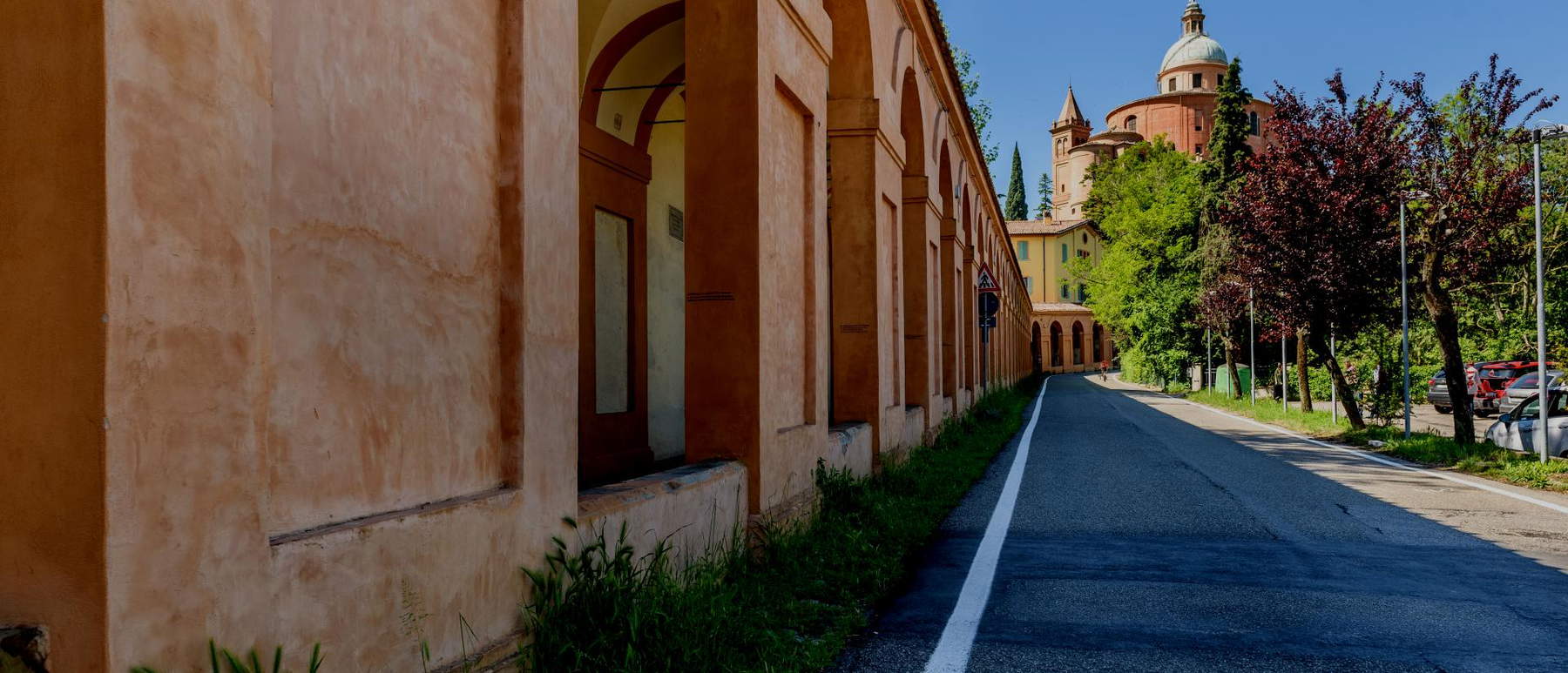
The technical operations were multiple and involved different aspects of architectural conservation. First of all, technicians dealt with the repair of deep lesions and the structural consolidation of the work. At the same time, the complete reconstruction of the plasterwork and roofing, fundamental elements for the protection of the artifact from atmospheric agents, was carried out. A major chapter involved the aesthetic and scientific restoration of the decorated lunettes. Thanks to meticulous cleaning and recovery work on the pictorial parts depicting the Mysteries, the portico’s natural visual continuity was restored, while preserving the high symbolic and devotional value it holds for the community.
The operation was made possible by the work of the Committee for the Restoration of the Portico of San Luca, composed of the Archdiocese of Bologna, the Sanctuary of the Blessed Virgin of San Luca, the Municipality of Bologna and the Porto-Saragozza District. The Archdiocese of Bologna acted as the Implementing Entity, under the coordination of the Single Project Manager. The technical and institutional component was represented by Superintendent Francesca Tomba, designers and construction managers Maria Luisa Pischedda and Aldo Barbieri, the contractor led by Claudio Candini, and Icomos inspector Olivier Poisson, a key figure in the site’s Unesco nomination path.
“With the conclusion of the restoration of the hillside section of the Portico di San Luca we return to the city and to the world an asset of extraordinary value, recognized by UNESCO as a World Heritage Site and to which every Bolognese is strongly attached,” says Mayor Matteo Lepore. “An intervention that is not only a response to the damage caused by the 2012 earthquake, but an investment in our cultural and landscape heritage and in the quality of public space. It is the result of a solid collaboration between institutions, the Church, technicians and businesses, which I want to thank because it shows how caring for heritage can become an engine of cohesion.”
“The conclusion of the intervention on the Portico di San Luca is a story of rebirth,” says Regional Councillor for Territorial Planning, Irene Priolo: “from the wounds of the 2012 earthquake to the full recognition of its universal value with the inscription, together with the Porticoes of Bologna, in the UNESCO World Heritage List. The longest portico in the world, which connects the city to the hill and leads to the Shrine of the Blessed Virgin, today returns to be not only an architectural masterpiece, but the concrete sign of a community that has been able to transform vulnerability into strength. The Region has supported this project with conviction: every repaired arch, every consolidated stone, every fresco restored to its splendor tells of the ability of this territory to rise again and to take care of its memory and culture, values that are fundamental to the identity and cohesion of the community.”
Future prospects also concern the international positioning of the site. By the end of January, a request to change the boundaries of the component called St. Luke’s will be officially submitted to UNESCO. The proposal calls for the extension of the protected area to include part of the territory of the municipality of Casalecchio di Reno, a move aimed at strengthening the territorial link and coherence of the Unesco site. Concurrently with this instance, a request will be made for the inclusion of the Garisenda Tower within the protected site, thus expanding the perimeter of protected property under the international aegis.
|
| Bologna, restored the Portico of San Luca, a UNESCO property |

Warning: the translation into English of the original Italian article was created using automatic tools. We undertake to review all articles, but we do not guarantee the total absence of inaccuracies in the translation due to the program. You can find the original by clicking on the ITA button. If you find any mistake,please contact us.
























 IT
IT FR
FR DE
DE ES
ES CN
CN


