




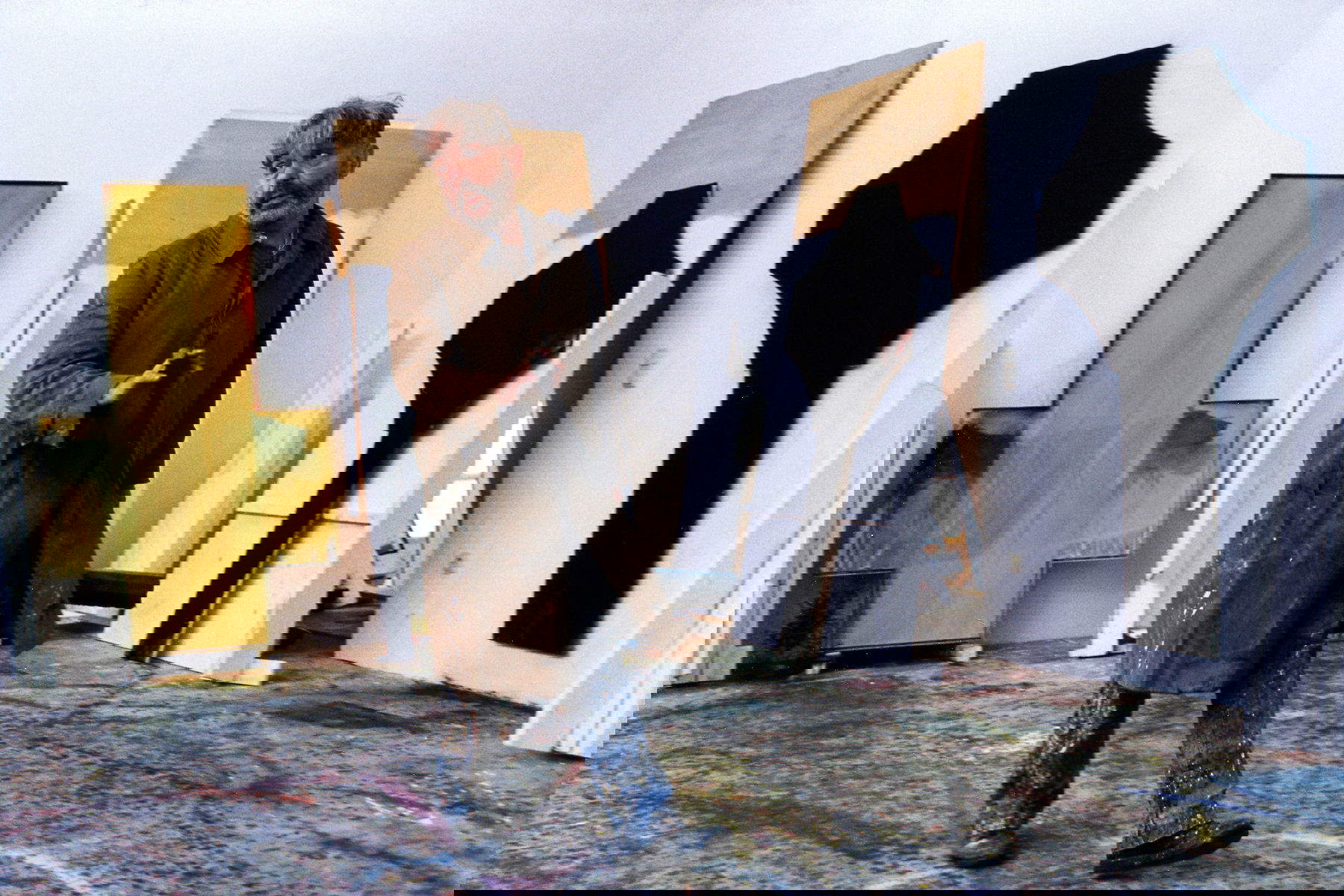
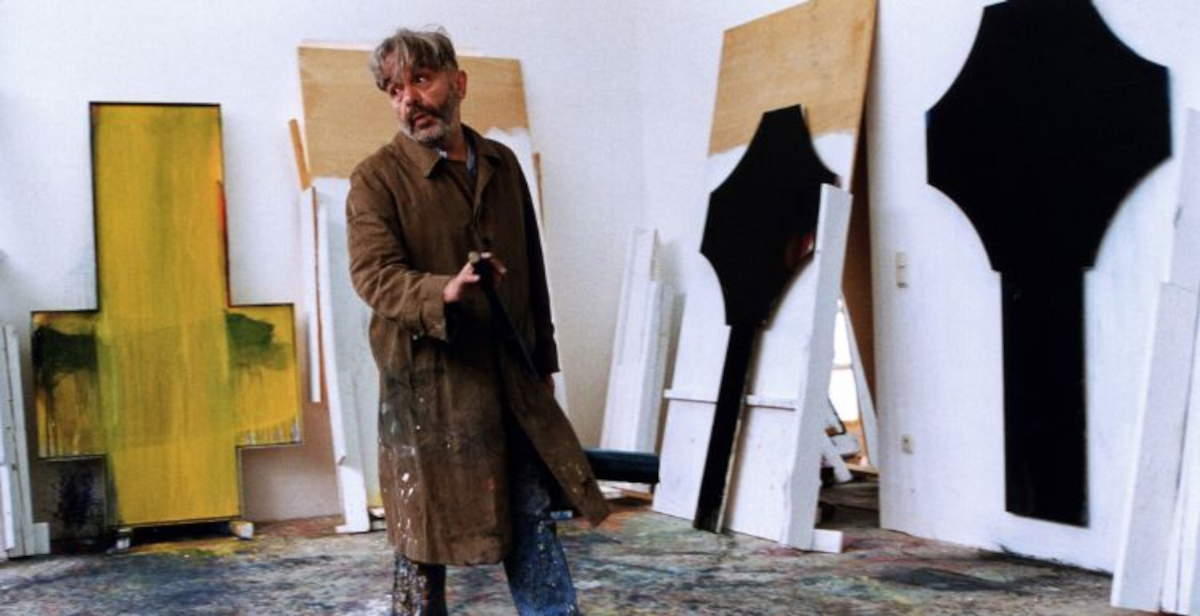
Arnulf Rainer, an Austrian artist known for his Übermalungen or overlapping paintings, died Dec. 18 at his home in Austria at the age of 96. The news was confirmed by the Thaddaeus Ropac Gallery. Born in Baden, Austria, in 1929, Rainer devoted more than seven decades to the search for new expressive languages, building a predominantly abstract artistic production in line with the characteristics of postwar European InformalArt. His work is distinguished by constant experimentation and the ability to transform painting into a field of superimposition, erasure and symbolic immersion.
As Artnews writes, his best-known work, the Übermalungen (superimposed paintings) begun in 1952, consists of superimposing dense brushstrokes on pre-existing images, first his own and, since 1953, those of other artists, such as the Italian painter Emilio Vedova. These works combine elements of destruction and devotion, transforming the act of painting into a process of accumulation and spiritual inquiry. In the 1950s and 1960s Rainer focused his attention on the body and the self, making series of overpainted photographic self-portraits, where gestural marks alter the perception of one’s psyche. Rainer’s art also reflects postwar trauma. His 1951 photographic series, Perspectives of Destruction, documents the catastrophic losses of the recent past, including Hiroshima, the Holocaust and wartime disasters. Successive layers of black, matte and glossy paint created a kind of pictorial skin in which history is enshrined, according to art historian Helmut Friedel. This approach was then applied to the self-portraits in the phototext format, where hand painting generated hybrid images between representation and abstraction.
In the 1960s and 1970s, institutional attention to his work grew. In 1968, the Museum des 20. Jahrhunderts (now Mumok - Museum of Modern Art) dedicated a retrospective exhibition to Rainer, while his participation in the 1972, 1977 and 1982 editions of Documenta in Kassel helped solidify his international reputation.
Important exhibitions at Kunsthalle Bern and Lenbachhaus in Munich in 1977 further strengthened his artistic profile. Rainer represented Austria at the 1978 Venice Biennale, the year he received the Grand Austrian State Prize. In the 1980s, his works found space in such prominent institutions as the Nationalgalerie in Berlin, the Centre Pompidou in Paris, the Abbey of San Gregorio in Venice, and the Guggenheim Museum in New York. Parallel to his exhibition activity, he taught at the Academy of Fine Arts in Vienna from 1981 to 1995, influencing several generations of artists. Rainer’s body of work is now held in numerous museum collections in Germany, Austria, France, the Netherlands, the United Kingdom and the United States. In 2009, the Arnulf Rainer Museum, a space dedicated to his work, opened in Baden. In 2024, the museum celebrated his 95th birthday with a monographic exhibition. The artist’s death marks the end of a creative journey of more than 70 years, characterized by continuous experimentation and reflection on the expressive possibilities of painting.
 |
| Farewell to Arnulf Rainer, Austrian master of the Overlapping Paintings |

Warning: the translation into English of the original Italian article was created using automatic tools. We undertake to review all articles, but we do not guarantee the total absence of inaccuracies in the translation due to the program. You can find the original by clicking on the ITA button. If you find any mistake,please contact us.















 IT
IT FR
FR DE
DE ES
ES CN
CN


