





The French judiciary has effectively reopened the debate on the relationship between heritage protection and freedom of expression after a decision destined to make jurisprudence and, above all, to cause discussion. In a Jan. 14, 2026, ruling, the Cour de cassation, Court of Cassation, in fact overturned the sentence imposed on anti-racist activist Franco Lollia from Guadalupe for defacing the statue of Jean-Baptiste Colbert in front of the Palais Bourbon in Paris in 2020. The case arose on June 23, 2020, when Lollia wrote the phrase “Négrophobie d’État” in red paint on the base of the statue of Louis XIV’s minister, before splashing further paint on the work. The gesture was intended to denounce what the activist called state racism, recalling the role attributed to Colbert in the drafting of the Code noir, the body of legislation that regulated slavery in the French colonies. The statue, erected in 1808 during the Napoleonic era, is the work of Jacques-Edmé Dumont (Paris, 1761 - 1808), one of the most important French sculptors of the time.
According to the supreme judges, the militant’s action was part of a debate of general interest relating to the history of slavery and the role of the French state in the colonial system. For this reason, the criminal conviction handed down in the previous trials could, according to the Supreme Court, represent a disproportionate interference in the freedom of expression guaranteed by European law. The Paris Criminal Court had convicted Lollia in the first instance on June 28, 2021 on the basis of Article 322-1 of the French Criminal Code, which punishes the destruction or damage of property belonging to others. The provision provides for a penalty of up to 30,000 euros in fines, reduced to 3,750 euros when the damage caused is considered minor. In the case of the anti-racist activist, the judges had imposed a penalty of 500 euros, with a suspended sentence.
The decision had subsequently been upheld by the Paris Court of Appeals in a ruling dated May 5, 2025. However, Lollia had appealed to the Court of Cassation, arguing that his conviction constituted a violation of the freedom of expression guaranteed by Article 10 of the European Convention on Human Rights.
In recent years, the jurisprudence of the French Court of Cassation has gradually expanded the control exercised by judges when it comes to reconciling the repression of a crime with the protection of freedom of expression. According to the guideline developed by the Court, the application of a criminal rule may in some circumstances constitute a disproportionate interference when the act challenged concerns a form of expression related to a public debate of particular importance. Originally this principle was applied mainly to press offenses, but in recent years it has been extended to common law cases as well.
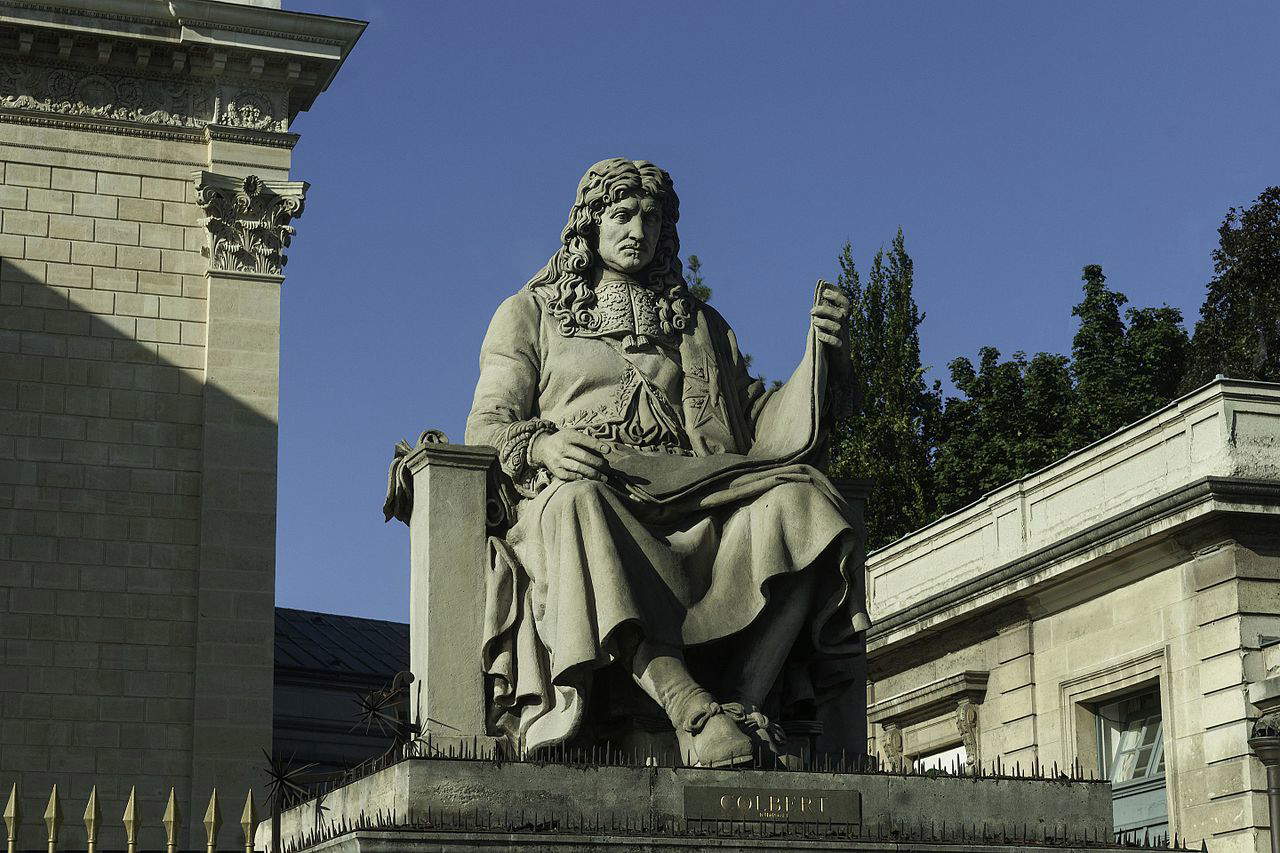
A central element of this orientation is the notion of “general interest debate.” When an action becomes part of a public discussion on issues of great political or social importance, judges must examine whether the conviction is really necessary or whether it risks unduly restricting freedom of expression. In Lollia’s case, the Paris Court of Appeals had recognized that the action did indeed concern a topic of general interest, namely the slave trade and thehistorical legacy of slavery. However, the magistrates had found that the inscription made by the activist was not sufficiently explicit to allow an uninformed observer to understand the political message of the action. Indeed, according to the Court of Appeals, the absence of contextual claims made it difficult to directly link the gesture to the debate about Colbert’s colonial past and historical role. For this reason, the judges had concluded that the criminal conviction did not constitute a disproportionate interference with freedom of expression, even if the act was set in a militant and political context.
The Supreme Court has now rejected this interpretation. In its decision, the court ruled that the appellate judges had not properly assessed the necessity of the criminal sanction and had ended up reversing the burden of proof. In essence, they had required the militant to prove that his action was indispensable as opposed to other forms of symbolic protest, such as the tearing down of statues. For the Supreme Judges, however, the effectiveness or impact of the claiming action is not decisive in determining whether or not a criminal conviction constitutes a disproportionate interference with freedom of expression when the act concerns an issue of general interest. As a result, the judgment of the Court of Appeals was overturned and the case will have to be retried.
The retrial could then conclude with the militant’s acquittal. Regardless of the final outcome, however, the Supreme Court’s decision represents an important step in the European debate on the relationship between freedom of expression, political activism and the protection of cultural property, an increasingly complex balance in an age when monuments and works of art often become a battleground on the most sensitive issues of historical memory and collective identity.
|
| France, daubed Colbert statue: Cassation grants him freedom of expression |

Warning: the translation into English of the original Italian article was created using automatic tools. We undertake to review all articles, but we do not guarantee the total absence of inaccuracies in the translation due to the program. You can find the original by clicking on the ITA button. If you find any mistake,please contact us.





























 IT
IT FR
FR DE
DE ES
ES CN
CN