



by Redazione 27/01/2026



Categories: News / Disclaimer
An open letter to Culture Minister Alessandro Giuli denounces the Ministry's recent personnel recruitment methods (with lowered requirements and multiple-choice tests as the method of selection) and calls for formal recognition of the work done between 2021 and 2024 by professionals who have collaborated from outside.


Formal recognition of the work done in recent years and a review of the Ministry of Culture ’s methods of recruiting technical and scientific staff are at the center of an open letter addressed to Minister Alessandro Giuli by the National Coordination of collaborating professionals from the ABAP, Museums, Libraries and Copyright General Directorates who worked with the MiC between 2021 and 2024. The document, circulated this morning, stems from a growing concern about the approach of the most recent calls for applications and administrative choices that, according to the signatories, risk weakening the quality of action to protect Italy’s cultural heritage.

Signing the appeal are archaeologists, architects, art historians, librarians, archivists, restorers, engineers, technical assistants and experts who in recent years have worked as external collaborators at the General Directorates for Archaeology-Fine Arts-Landscape, Museums, Libraries and Copyright. Professionals called upon to play an essential role in a phase marked by chronic staff shortages within the Ministry, aggravated by new requirements related to the management of extraordinary funds and the increasing complexity of heritage interventions.


In the text, the Coordination denounces a progressive devaluation of technical-scientific skills, which would be reflected in recent competition procedures and in Circular No. 133 of Nov. 10, 2025, which was later withdrawn. According to the professionals, the lowering of access requirements to technical profiles, the failure to value undergraduate and postgraduate degrees, and the exclusive adoption of multiple-choice tests as a selection tool represent an alarming signal for a sector that instead requires high levels of specialization.


Cultural heritage protection, the petitioners stress, cannot be considered a generic or merely administrative activity. It is, on the contrary, a complex, interdisciplinary and scientifically based action, which presupposes specific skills matured through high-level training courses and years of experience in the field. An approach that, in their view, is grounded not only in sector regulations, but also in the principles enshrined in Article 9 of the Constitution, which entrusts the Republic with the task of protecting the nation’s landscape and historical and artistic heritage.
The letter recalls the crucial contribution made by external collaborators in the years between 2021 and 2024. During that period, the professionals explain, their contribution made it possible to ensure the continuity of the activities of protection, enhancement and management of the heritage, making up for structural deficiencies in the ministerial staff. A service that, according to the Coordination, today does not find adequate recognition in the paths of access to public roles, either on a formal or substantive level.
The risk highlighted is that the current recruitment system ends up compromising the overall quality of the Ministry’s action, reducing the weight of specialized skills and experience gained in the field. This is a prospect that, according to professionals, could have direct repercussions on the state’s ability to fully fulfill its protection function, in a context in which Italy’s cultural heritage requires increasingly qualified and knowledgeable interventions.
The Coordination also points out that the decision not to adequately value advanced degrees and prior professional experience is a contradiction to the real needs of the sector. Cultural heritage management, the signatories say, requires in-depth knowledge, continuous updating and a critical vision that can hardly be measured solely through standardized tests.
The open letter concludes with a direct appeal to the Minister of Culture to open a consultation table with all actors in the cultural heritage sector. The goal is to initiate a constructive discussion that will allow for the recognition and enhancement of the service provided by professionals in recent years and to define a recruitment system consistent with the complexity and value of Italy’s cultural heritage. After the image, the full text of the letter.
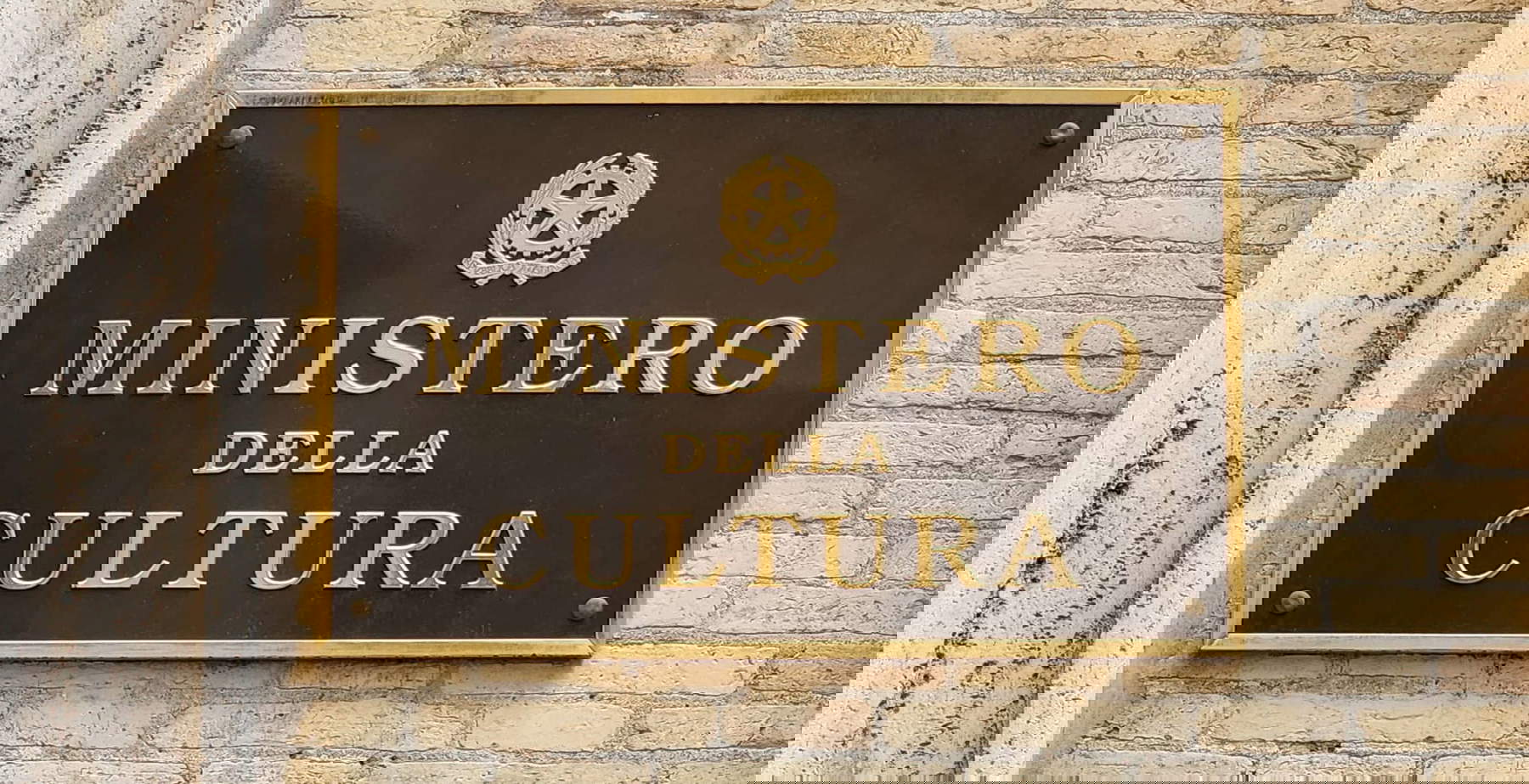
Hon. Minister Giuli,
the National Coordination of Professionals (archaeologists, architects, art historians, engineers, restorers, technical assistants, librarians, archivists, experts in tenders and procurement, and communication experts), external collaborators with VAT registration of the Ministry of Culture in the years 2021-2024 (Art. 24, c. 1, Legislative Decree 104/2020), writes to you in an open form following the publication of the notices issued by the Ministry headed by you regarding the recruitment of large contingents of personnel as well as Circular No. 133 of November 10, 2025, which was later withdrawn.
We express here the need for a profound reflection and revision of the methods of recruitment of personnel with which the Ministry of Culture intends to ensure the protection, conservation, enhancement and enjoyment of the national Cultural Heritage, which contemplates a process of public confrontation and sharing, in dialogue in particular with the audience of those who by virtue of titles and experience have been able to collaborate with the MiC in recent years. An assessment of professional skills will not be able to disregard the consideration that the whole of protection actions consists of activities of a technical-scientific nature. Recall that Article 9 of the Italian Constitution mandates the protection and safeguarding of Italy’s cultural heritage, placing scientific research as the cornerstone and preamble. Safeguarding actions, finely regulated by state laws, must guarantee and defend the Essential Levels of Performance, in order to ensure the enjoyment and care of cultural heritage for all, and nonetheless the fair treatment of citizens who have invested in their education and professional training in order to serve the country through the performance of qualified activities in the field of Cultural Heritage.
Protective action requires a highly specialized and interdisciplinary contribution, which is necessary to solve the complexities of securing and preserving cultural heritage. The issue of skills is also felt and discussed today within professional orders and professional associations, which are also engaged in the construction of specific training and certification paths, which are in addition to those of Specialization Schools and PhD Courses, in order to train professional figures, regulated in orders and not (art. 9bis of D. Lgs. 42/2004; D. M. 244/2019), capable of working through technical choices and methods that guarantee the right balance between safety, protection, preservation and enjoyment.
Assigning specialized activities to NON-suitable personnel, either for lack of or inadequate curriculum vitae et studiorum or for incongruous selection modalities in competitions for access to the role, entails the decay of the excellence internationally recognized to Italy, in addition to the employment damage to the burden of competent professionals and the potential harm to the safety of people and property.
Therefore, in the face of the growing demand for specialization, we find the actions of the Ministry of Culture regarding the ordering of professional families and the selection methods provided in recent calls for personnel recruitment contradictory:
1) Circular No. 133 of November 10, 2025-Directorial Decree DG RUO No. 1335 of November 10, 2025 (issued and fortunately withdrawn within a few hours), which reduced the qualifications for access to the positions of Technical Officer to only a bachelor’s degree, excluding the historic requirement to also hold a specialization or PhD degree;
2) the requirement of only a secondary school diploma for the Assistants area in the “Public Competition for the recruitment of a contingent of 1,800 full-time and permanent staff to be placed in the Assistants Area of the roles of the Ministry of Culture” (published 11.12.2025), although it provides for such figures to have a level of qualification, in our opinion, at least equal to the three-year degree specific to the sector. Such a notice can only result in a twofold negative effect: to give access to the performance of activities related to the profile of Assistant (in the notice, code 02 - protection) to graduates of any address and training, without, moreover, any possibility of asserting specific experience and skills at the ’formulation of the ranking list; recruiting personnel much more qualified than they should be (it is a fact that to apply for such competitions are a great many graduates and specialists or PhDs who face a competition not intended for them, in order to gain access to tenured positions in the P. A.), exposed to the potential exploitation of higher-level skills for a lower job position and pay;
3) the lack of the necessary evaluation of qualifications within the “Public Competition, for No. 577 units in the Civil Servants Area of the roles of the Ministry of Culture - professional technical-specialist family for the protection and enhancement of cultural heritage” (100 architects, 300 librarians, 167 archivists, 10 archaeologists), which excludes any possibility of making use of skills gained in the field and selects solely on the basis of multiple-choice tests and interviews.
We do not agree with the current methods of selecting ministerial staff, which are inexplicably aimed at lowering the level of education and pre-selecting candidates on the basis of multiple-choice tests, without even an evaluation of the candidates’ qualifications and experience gained over the years. Above all, such methods appear to us to be blatantly inadequate with respect to the objective of selecting specialized and established skills to deal with and manage the complexity of protecting a vulnerable and priceless monumental and cultural heritage. They are also contrary to the provisions of the sector regulations: see the aforementioned Art. 9bis of Legislative Decree 42/2004 (Cultural Heritage Code); Ministerial Decree 244/2019 (Regulations concerning the procedure for the formation of national lists of archaeologists, archivists, librarians, demoethnoanthropologists, physical anthropologists, experts in diagnostics and science and technology applied to cultural heritage).
On the contrary, we remain convinced that professionals trained through specific and high-level undergraduate and postgraduate courses, combined with operational and concrete knowledge gained in the course of work experience in the field (not mere internships, but professional activities), as, moreover, required by the Cultural Heritage and Landscape Code, are to be valued and considered as recipients of public selection notices for protection bodies (for the levels of Officials and High Professionalism).
In recent years, our group of about three hundred collaborators united in a National Coordination since the end of 2021, has tried several times to engage in an open confrontation with the MiC, unsuccessfully asking you, Mr. Minister, and your predecessor, for a concrete recognition of the qualified service provided in the years 2021-2024. We have likewise sought to be received.
Recently, we obtained an interview with the Head of the Cabinet of the Ministry, Dr. Valentina Gemignani. During the July 18, 2025 meeting at the Ministry headquarters, we again requested that our experience be recognized and valued. There it was shared that future competitions could provide appropriate scores for undergraduate and postgraduate degrees and especially recognize and reward the years of direct collaboration with the MiC peripheral offices. It was a very unpleasant surprise to witness, four months later, the publication of the above circular and notices.
Speaking of collaborations, we like to recall the plurality of professional figures simultaneously present within superintendencies, museums, libraries, at the outcome of the calls for selection ex D. Lgs. 104/2020, issued precisely because of the serious shortage of staff in the Ministry. Not only architects, art historians, and archaeologists but also engineers, archivists, librarians, restorers, site assistants, experts in communication and tenders, and accounting technicians, which have made it possible to improve theprotection action of the officials themselves, both by giving them breathing space with respect to the amount of work to be tackled, and by supplementing the professional skills already available within the offices for the purpose of carrying out new and/or more specialized activities than those traditionally within their competence.
A year after the conclusion of these collaborations, we receive from many officials and superintendents expressions of regret about the added value represented by the specialized skills and professional experience brought by the VAT-registered collaborators. On the other hand, we regret having to note the total silence (which we are now induced to consider intentional) on the part of the higher ministerial hierarchies towards us.
It seems to us that the entry of new officials that took place with the recent competitions has not yet corresponded to what was envisaged in the Integrated Plan of Activities and Organization (PIAO) three-year period 2025-2027, adopted by D. M. 39 of 31/01/2025, nor fully filled the staffing shortage and we express concern at the risk that, instead of addressing it with the use of qualified professionals who meet the requirements set forth in D. M. 244/2019, other personnel from within the ministerial offices, lacking the necessary qualifications, will be used for the purpose of carrying out specialized activities. We also observe that the latest competitions did not introduce new technical figures at all, which were instead present in the previous VAT collaborations, moreover specifically requested by the territorial offices in the selection notices that followed the initial ones published by the General Directorates in 2020 and 2021.
We hope that the present letter may have the effect of further reflection on the points raised and perhaps may lead you to decide to open a table of concertation that includes all the actors present on the scene of the Italian Cultural Heritage.
We greet you sincerely,
National Coordination of the Collaborating Professionals of the General Directorates ABAP, MUSEUMS, LIBRARIES AND AUTHOR’S RIGHTS
|
| Ministry, outside workers write to Giuli: "in recent years skills devalued" |
Warning: the translation into English of the original Italian article was created using automatic tools. We undertake to review all articles, but we do not guarantee the total absence of inaccuracies in the translation due to the program. You can find the original by clicking on the ITA button. If you find any mistake,please contact us.