





New political clash around the Venice Biennale and Russia’s participation in the next edition of the event (on the subject read also the editorial by Federico Giannini, editor of Finestre sull’Arte). In fact, Culture Minister Alessandro Giuli has asked for the resignation of the Culture Ministry’s representative on the La Biennale Foundation’s board of directors, Tamara Gregoretti: Giuli would like Gregoretti to resign her mandate because the relationship of trust would be broken precisely because of what is happening around the Russian participation.
According to reports from the Ministry of Culture, Gregoretti would not inform the department either of Russia’s possible participation in the event or of her own position in favor of the country’s presence, despite the particular international sensitivity of the topic in the current geopolitical context.
Gregoretti had been appointed to the Board of Directors of the Biennale Foundation on March 13, 2024 by then Culture Minister Gennaro Sangiuliano. Tamara Gregoretti is a journalist, television author and editorial consultant with a long career in the world of Italian news and television. Her career path began in the late 1970s at ANSA, where she worked in the London office from January 1977 to February 1982. Still in the British capital, he later collaborated with The Newsletter between March and October 1982. She then worked for FAO, producing a survey on the role of women in the farming community in Rwanda, carried out between December 1982 and April 1983. Back in Italy, she worked with Women’s Wear Daily from January 1984 to July 1989 at Studio Cavallini in Milan. She then worked for L’Espresso and in 1991 began working for television, first on Italia1 and then at Rai. To her credit she also had experience at Repubblica, Canale5, Tg1, La7 (where she was also deputy director of the station between 2002 and 2004), and at Fascino Pgt, Maurizio Costanzo’s production company, where she was responsible for programs including the Maurizio Costanzo Show. In recent years she has always been active as a television author.
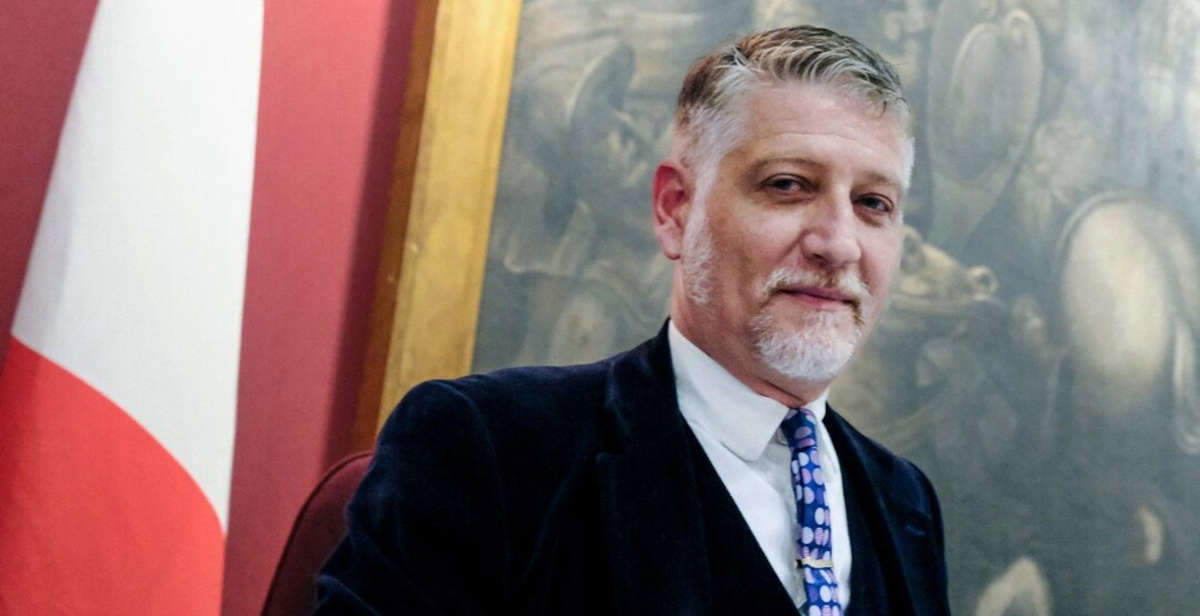
Her role in the Biennale formally represents the Ministry within the governing body of the Venetian institution, but it is precisely on this point that the retort of the person directly concerned is grafted. In fact, the journalist and editorial consultant rejected the call for her resignation, saying that she has no intention of leaving the post. “I am serene and have no intention of resigning,” said Gregoretti, “as I am certain that I am moving in compliance with the Statute of the Venice Biennale and the autonomy of the institution, according to which the members of the Board of Directors do not represent those who appointed them, nor do they answer to them.” The affair is part of a particularly heated political climate around the presence of the Russian pavilion at the Biennale, an issue that has prompted interventions from Italian and European politicians in recent days.
Also intervening in the debate was the chairman of the Chamber’s Culture Commission, Federico Mollicone, who expressed the hope that the Biennale might reconsider Russia’s presence at the event. Asked about the issue, Mollicone clarified that he never said that the Russian pavilion will not open, but reiterated his position in line with that of Minister Giuli. According to the chairman of the Culture Commission, in the current context in a Russian pavilion, as in the Iranian one, it would not be possible to guarantee real artistic freedom, but only a form of expression related to state art.
The case has also attracted the attention of European institutions. TheEuropean Union, after a letter signed by the culture ministers of twenty-two countries, including Ukraine, said it was ready to investigate whether the Venice Biennale had violated the grant agreement signed with Brussels. In fact, the European Commission has signed a grant agreement worth two million euros with the Biennale. Should a violation of the terms of the agreement be established, Brussels could decide to suspend or even terminate the contract. Explaining the possible consequences was European Commission spokesman Thomas Regnier, pointing out that the Commission could intervene if elements incompatible with the terms of the agreement came to light.
The political debate in Italy immediately widened, involving the main parliamentary forces. From the opposition came harsh criticism of the government’s actions. +Europa Secretary Riccardo Magi called the affair a “figurehead of the government on the Biennale,” ironically speaking of a real “masterpiece of art.”
Irene Manzi, head of the PD group in the Chamber’s Culture Commission, spoke of chaotic management of cultural policy by Minister Giuli and Mollicone himself. According to Manzi, the Culture Commission chairman’s statements risk delegitimizing the figure of the president of the Biennale. The 5-Star Movement also expressed support for Buttafuoco’s actions, while stressing the political distance from his positions. Pentastellati members present in the Culture Commission said they supported the institution’s choice to include all countries, including Russia, in the event.
Deputy Prime Minister and Minister of Infrastructure Matteo Salvini also spoke in the debate, announcing his presence at the Biennale in May. “Culture - as well as sports - expresses a universal message of unity,” Salvini said. “Just as it was for the Paralympics, everyone must be involved, no one excluded.” Along the same lines was Veneto Region President Luca Zaia, who said it is possible to condemn war without going so far as to censor culture.
Meanwhile, Biennale President Pietrangelo Buttafuoco chose not to intervene directly in the controversy. The Foundation’s position remains the one expressed on March 10 during the presentation of the Italian Pavilion. On that occasion Buttafuoco had strongly asserted the autonomy of the Venetian institution, recalling its more than century-long history. According to the president, the Biennale for one hundred and thirty years has been building in Venice a space of cultural confrontation in which closure and censorship have no place. The lagoon city, in his vision, represents a special place where cultural dialogue can continue even in complex international contexts.
In recent days, the Biennale Foundation had also officially intervened to clarify the functioning of the process of participation in international exhibitions. The institution recalled that “it is the countries recognized by the Italian Republic that autonomously request to participate in the exhibitions, with simple communication if the country owns a Pavilion at the Giardini, as in the case of Russia.” The country’s presence at the Biennale’s international exhibitions is therefore through an autonomous procedure, which does not require a direct invitation from the organization.
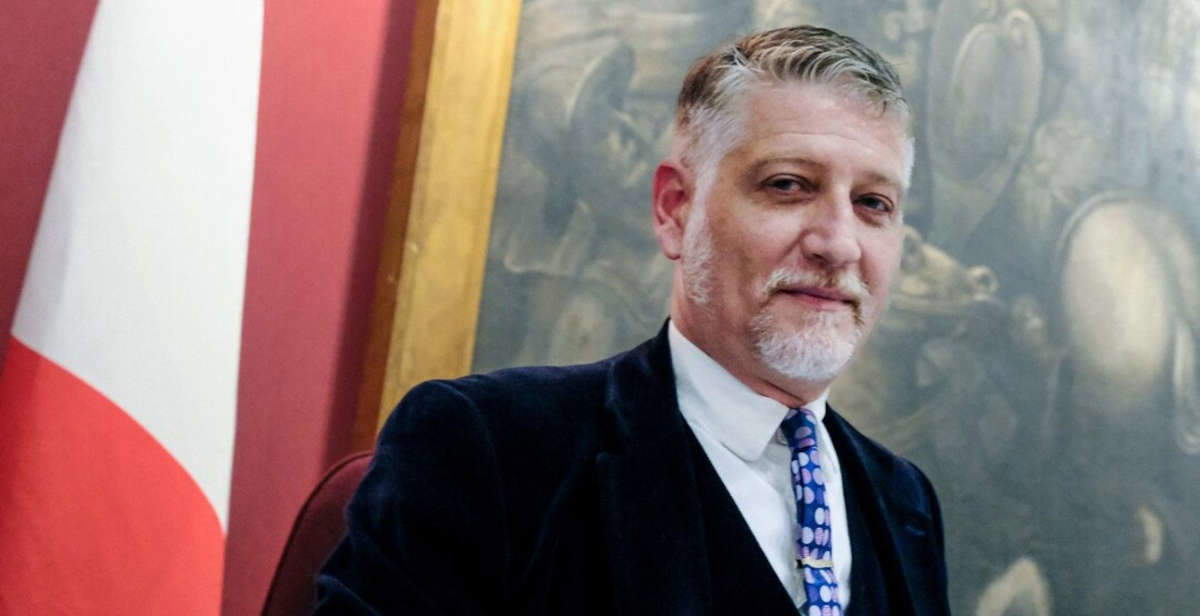 |
| Russia at the Biennial, Giuli calls for resignation of MiC quota councilwoman |

Warning: the translation into English of the original Italian article was created using automatic tools. We undertake to review all articles, but we do not guarantee the total absence of inaccuracies in the translation due to the program. You can find the original by clicking on the ITA button. If you find any mistake,please contact us.



















 IT
IT FR
FR DE
DE ES
ES CN
CN


