




by Redazione 18/02/2026



Categories: News / Disclaimer
The Museo de Bellas Artes de Gran Canaria acquires a dozen works, including pieces by Luca Giordano, Murillo and a 15th-century Flemish master, left to Spain by a nobleman as the balance of an inheritance tax.

Spain’s cultural heritage is being enriched thanks to a nobleman paying inheritance tax in works of art, an operation permitted by the Spanish tax authorities. It happens in the Canary Islands, where the family of Count de la Vega Grande de Guadalupe has completed the payment of inheritance tax through the handing over of a dozen works of great historical and artistic value, in an unprecedented operation in the Spanish archipelago. As El País reports, among the pieces surrendered are a panel by the Master of the Legend of St. Catherine, an anonymous 15th-century Flemish painter, and two canvases by Luca Giordano, along with works attributed to Bartolomé Esteban Murillo, Manolo Millares, and Juan Carreño de Miranda. The decision was made after the death in 2020 of the current owner’s father, Alejandro del Castillo Bravo de Laguna, and implemented by his son, Alejandro del Castillo y Benítez de Lugo, 10th Count, together with his brothers.

The operation is part of the payment system under Spanish law, which allows taxpayers to settle taxes with cultural assets in case of insufficient liquidity. This procedure requires an official evaluation and authorization from the relevant administration, in this case the Canary Islands government, which received the works by integrating them into its cultural heritage. The most relevant pieces are exhibited at the Casa de Colón, while Giordano’s canvases have been temporarily granted to the Cabildo de Gran Canaria for future display at the Museum of Fine Arts of Gran Canaria (Mubea), whose building in Vegueta is still under construction. The island administration plans to inaugurate the facility by the end of the term and considers the project a strategic cultural axis, with agreements with important national picture galleries and the goal of attracting residents and visitors.


Among the works delivered, the Flemish panel by the Master of the Legend of St. Catherine, active in the late 15th and early 16th centuries in the southern Netherlands, stands out in particular. The work was part of the large Retable of theAdoration of the Magi, commissioned by Isabella of Castile for a convent in Burgos, panels of which are now preserved in several European museums. The master’s name comes from a cycle of scenes dedicated to St. Catherine of Alexandria, which allow us to recognize his style characterized by stylized figures, great attention to detail in clothing and architecture, and a brilliant use of color typical of late medieval Flemish painting.


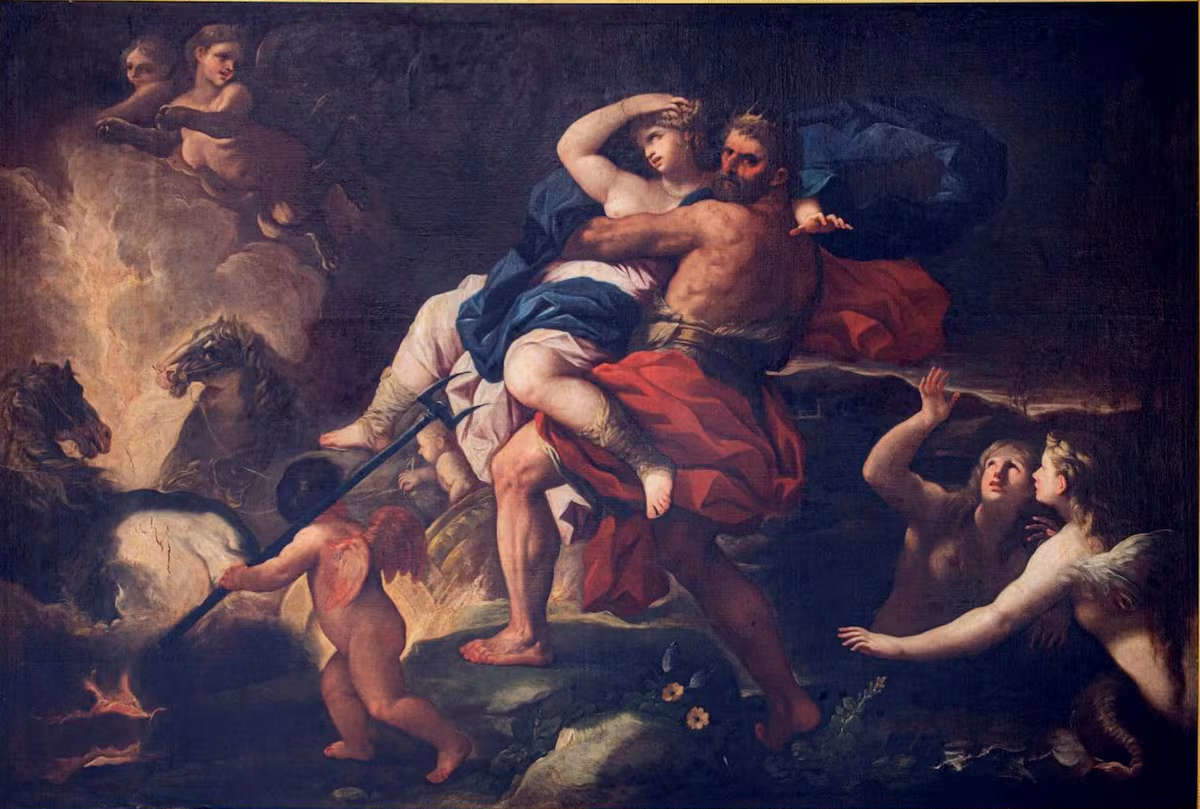
Luca Giordano’s canvases destined for Mubea are large in size, exceeding two meters in width and three meters in height, and depict scenes from Greek mythology. In Neptune, the god of the sea is depicted accompanied by gods such as Amphitrite and Hera, while The Rape of Proserpine depicts the moment when Hades abducts Proserpine to take her to Tartarus, the abyss that in Greek mythology serves as a prison for the condemned. Before the public exhibition, both canvases will be restored. The Ministry of Culture awarded the work for 125,000 euros, which will be carried out by the Cultural Heritage Institute of Spain in Madrid for about six months, with the goal of arresting structural damage, moisture problems, mold and loss of pictorial material.
The del Castillo family has played a major role in the economic and tourism development of Gran Canaria since Charles III granted the title of Count de la Vega Grande de Guadalupe to Fernando Bruno Castillo Ruiz de Vergara in 1777. Over the centuries, the family has accumulated vast agricultural and industrial properties, particularly in the south of the island. In the early 1960s, the economic opening of Francoism to foreign capital found in Gran Canaria a visible symbol of tourism development. In San Bartolomé de Tirajana, a sculpture by Pepe Dámaso commemorates the place where the eighth count, Alejandro del Castillo del Castillo, marked the beginning of the area’s first major tourist urbanization, the offshoot of the later development of Maspalomas and Playa del Inglés. Today the descendants continue to diversify investments through the company Casticapital, with presence in industrial and real estate sectors and historic holdings in companies such as Binter, of which they sold 20 percent in 2020.
|
| Spain, a Canary Islands museum acquires works by Luca Giordano and Murillo as... inheritance tax |
Warning: the translation into English of the original Italian article was created using automatic tools. We undertake to review all articles, but we do not guarantee the total absence of inaccuracies in the translation due to the program. You can find the original by clicking on the ITA button. If you find any mistake,please contact us.