





The European Fine Art Foundation (TEFAF) has announced that the Gemäldegalerie Alte Meister (Old Masters Gallery) in Dresden will be the recipient of the TEFAF Museum Restoration Fund (TMRF) 2026, awarded in Maastricht. Established in 2012, the fund annually supports museums around the world in the conservation, restoration and study of works of special art-historical significance, with the aim of strengthening the international community’s shared responsibility for the protection of cultural heritage.
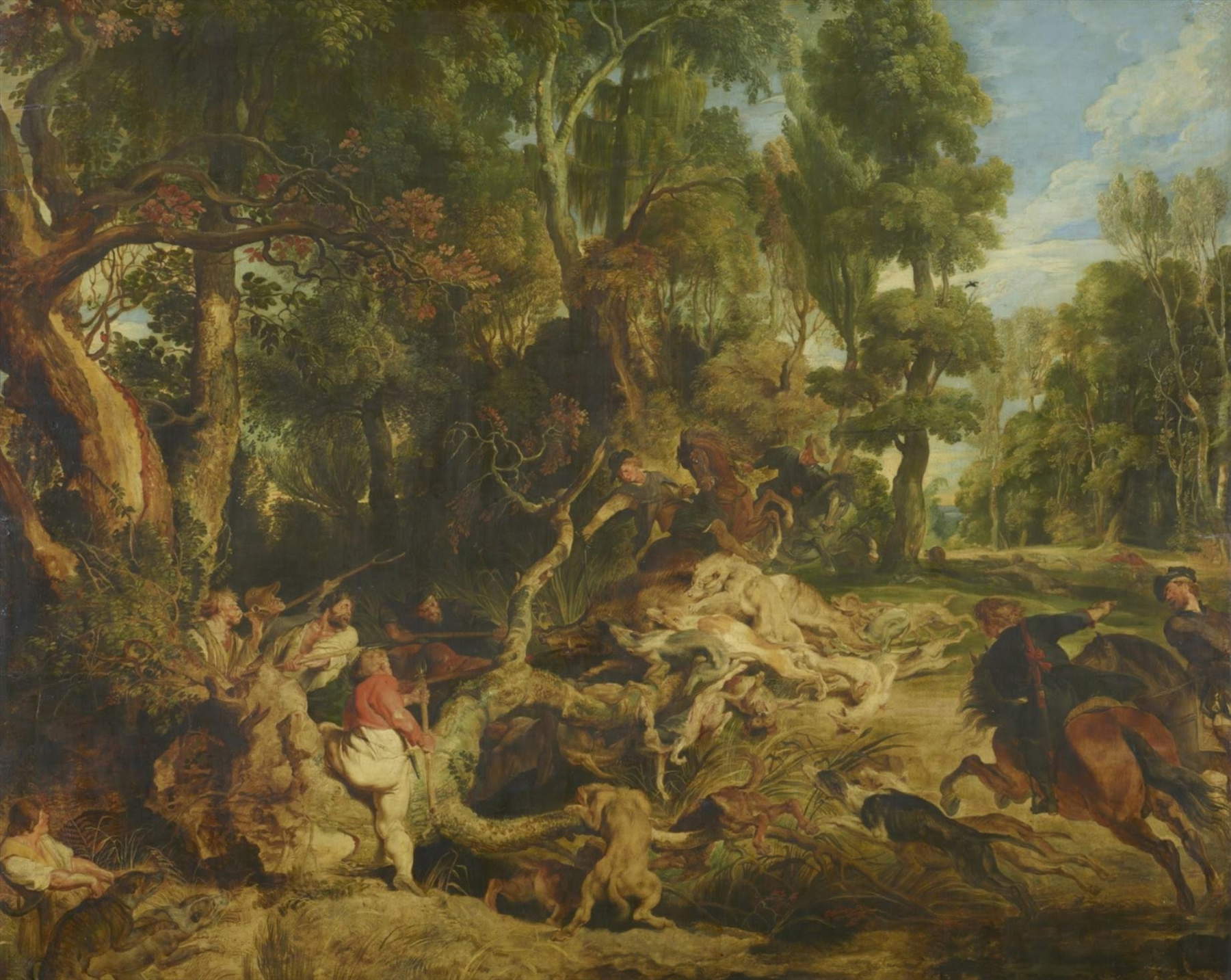
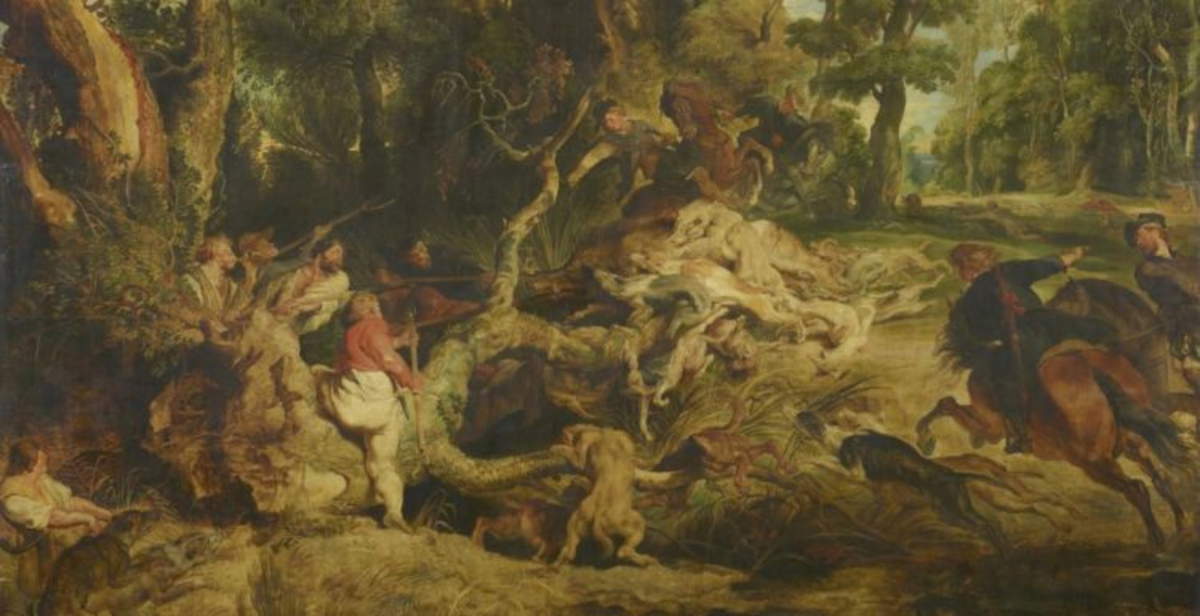
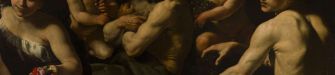
The funding will enable the Gemäldegalerie Alte Meister to work on The Boar Hunt (1616-1618), one of Pieter Paul Rubens’ monumental works. The painting, made at the height of the artist’s maturity, has a complex and well-documented collecting history. According to reconstructions, the work was probably purchased directly by Rubens in 1627 from George Villiers, Duke of Buckingham, before becoming part of the imperial collection in Prague. In 1749 it came to Dresden, entering the collections of Frederick Augustus II of Saxony, where it has remained ever since. During the 20th century the work also went through the vicissitudes associated with World War II, with its transfer to the Soviet Union in 1945, a decade in storage in Moscow, and its return to Dresden in the second half of the 1950s.
The painting’s conservative condition makes the intervention remarkable. The Boar Hunt is now weighed down by a thick layer of overlapping dark varnish, probably applied in the 19th century, which attenuates the original brilliance and chromatic depth of Rubens’ palette. Technical investigations conducted on the work have also identified an extension at the top of the canvas, where the preparatory drawing does not continue, opening questions about the chronology and authorship of this addition. Early evidence suggests that the extension may have been made under the direction of Rubens himself, while ongoing research is exploring the possible involvement of artists active in his circle, such as Jan Wildens, Lucas van Uden, or Anthony van Dyck.
The restoration is part of a four-year study and exhibition program dedicated to the body of nearly forty Rubens works preserved in Dresden, known as the Rubens Group. The project is being developed in collaboration with theAcademy of Fine Arts Dresden, the Royal Museum of Fine Arts Antwerp (KMSKA), and theUniversity of Antwerp, through the AXIS research group.
As part of TEFAF Maastricht 2026, there is also a TMRF Talk, organized in collaboration with ICOM-CC and with the support of Aon, scheduled for Saturday, March 14, at 1 p.m., dedicated to the topics of museum conservation and restoration.
Alongside the announcement of the restoration fund, TEFAF presented the initiatives of the institutional partners that will take part in TEFAF Maastricht 2026. Four institutions, Kunsthaus Zürich, Centraal Museum Utrecht, Prince Claus Fund, and King Baudouin Foundation, will each present a thematic exhibition on loan, offering an overview of different areas and periods of art history and cultural production. Kunsthaus Zürich will offer an exhibition dedicated to Alberto Giacometti, focusing on the dialogue between his works and those of artists from different generations, such as Meret Oppenheim, Cy Twombly and Rebecca Warren. The exhibition will relate different approaches to the representation of the human figure and the materiality of sculpture, highlighting continuities and transformations throughout the 20th century and beyond.
The Centraal Museum in Utrecht will present The Ecstasy of Mary Magdalene, a recently acquired work, ahead of the exhibition Gerard van Honthorst: Different from Rembrandt, scheduled for April 25 to September 13, 2026. The work will be exhibited to the public for the very first time at TEFAF, anticipating its museum debut.
The Prince Claus Fund will bring to Maastricht a selection of works by artists supported over the past three decades, with a focus on artistic practices related to cultural resilience, social engagement and a global perspective. The King Baudouin Foundation, on the other hand, will present important works from its collection, including Hans Memling’s Portrait of a Kneeling Member of the De Rojas Family, dated between 1460 and 1470, illustrating its role in the preservation and dissemination of Belgian cultural heritage.
Also part of the TEFAF Maastricht 2026 program is the third TEFAF Summit, scheduled for March 16 and held in collaboration with the Dutch Commission for UNESCO. The chosen theme, Beyond Economic Impact, offers a reflection on the social, cultural value and contribution to collective well-being of the arts, with a focus on their role in public policy, in the Netherlands and internationally. The Summit is supported by TEFAF’s lead global partner, AXA XL.
Deloitte’s Economic Impact of TEFAF report will also be presented at the Summit, which analyzes the value generated by TEFAF Maastricht for the region, considering aspects such as job creation, regional investment, and long-term economic activity. The paper aims to contribute to a broader discussion on the cultural value of art events, beyond just financial parameters.
Keynote speakers include Daisy Fancourt, lecturer and author of Art Cure: The Science of How the Arts Transform Our Health, who will outline the scientific evidence on the relationship between cultural participation and health, and Kathleen Ferrier, chair of the Netherlands Commission for UNESCO, who will address the issue of culture as a factor in social cohesion and international cooperation. Key figures in cultural policy and museum management will also speak, including Christianne Mattijssen, director of heritage and arts at the Dutch Ministry of Education, Culture and Science, and Tristram Hunt, director of the Victoria and Albert Museum. Roundtables planned during the day will examine the role of economic data in cultural policies, UNESCO’s vision of culture as an engine of inclusion and social resilience, and the growing recognition of arts-based interventions as prevention and support tools in health, museum and social service settings.
"The special significance of the Dresden Boar Hunt ," notes Bernd Ebert, director general of the Dresden State Art Collections, “is evident from the painting’s previous owners: Peter Paul Rubens painted it for himself, without commission. Years later, he sold it to the Duke of Buckingham, and it later became part of the imperial collection in Prague before King Augustus III purchased it for Dresden in 1749. This important work of the Old Masters Picture Gallery needs to be restored so that its high quality can be reopened. We are extremely grateful to the TEFAF Museums Restoration Fund for its generous support.”
“The painting depicts a dramatic scene of life and death,” comments Holger Jacob-Friesen, director of the Gemäldegalerie Alte Meister. "The typically baroque dynamism of the animals and people is conveyed through the magnificent forest landscape. After restoration, this masterpiece will be one of the highlights of the permanent exhibition of the Old Masters Gallery and will make its debut in the Rubens exhibition in Dresden (June 25, 2027-January 10, 2028), which will mark the 450th anniversary of the painter’s birth."
"The restoration of The Boar Hunt will reveal the painting’s vibrant colors as well as Rubens’ dynamic style of juxtaposing precise details with more freely executed passages," adds Rachel Kaminsky, a member of the TEFAF Museum Restoration Fund committee. “The committee is pleased to support the Gemäldegalerie Alte Meister in restoring and stabilizing this masterpiece, thus making it more accessible to national and international audiences.”
“The TEFAF Summit broadens the debate and raises awareness about key issues in art and culture at a time when it is more important than ever,” comments Will Korner, TEFAF’s head of exhibitions. “Against a backdrop of economic uncertainty and social challenges, the arts are too often considered marginal, when they could not be more important and far-reaching. We look forward to once again bringing together hundreds of Summit participants to share ideas and case studies on how culture strengthens economies and communities for public policy.”
 |
| TEFAF sets its sights on Rubens: funded restoration of Boar Hunt |

Warning: the translation into English of the original Italian article was created using automatic tools. We undertake to review all articles, but we do not guarantee the total absence of inaccuracies in the translation due to the program. You can find the original by clicking on the ITA button. If you find any mistake,please contact us.






















 IT
IT FR
FR DE
DE ES
ES CN
CN


