




by Redazione 12/03/2026



Categories: News / Disclaimer
Seventy years after being detached due to World War II damage, Francesco Traini's fresco is relocated to Pisa's Monumental Cemetery. An afternoon study illustrates history, iconography and state-of-the-art conservation techniques.

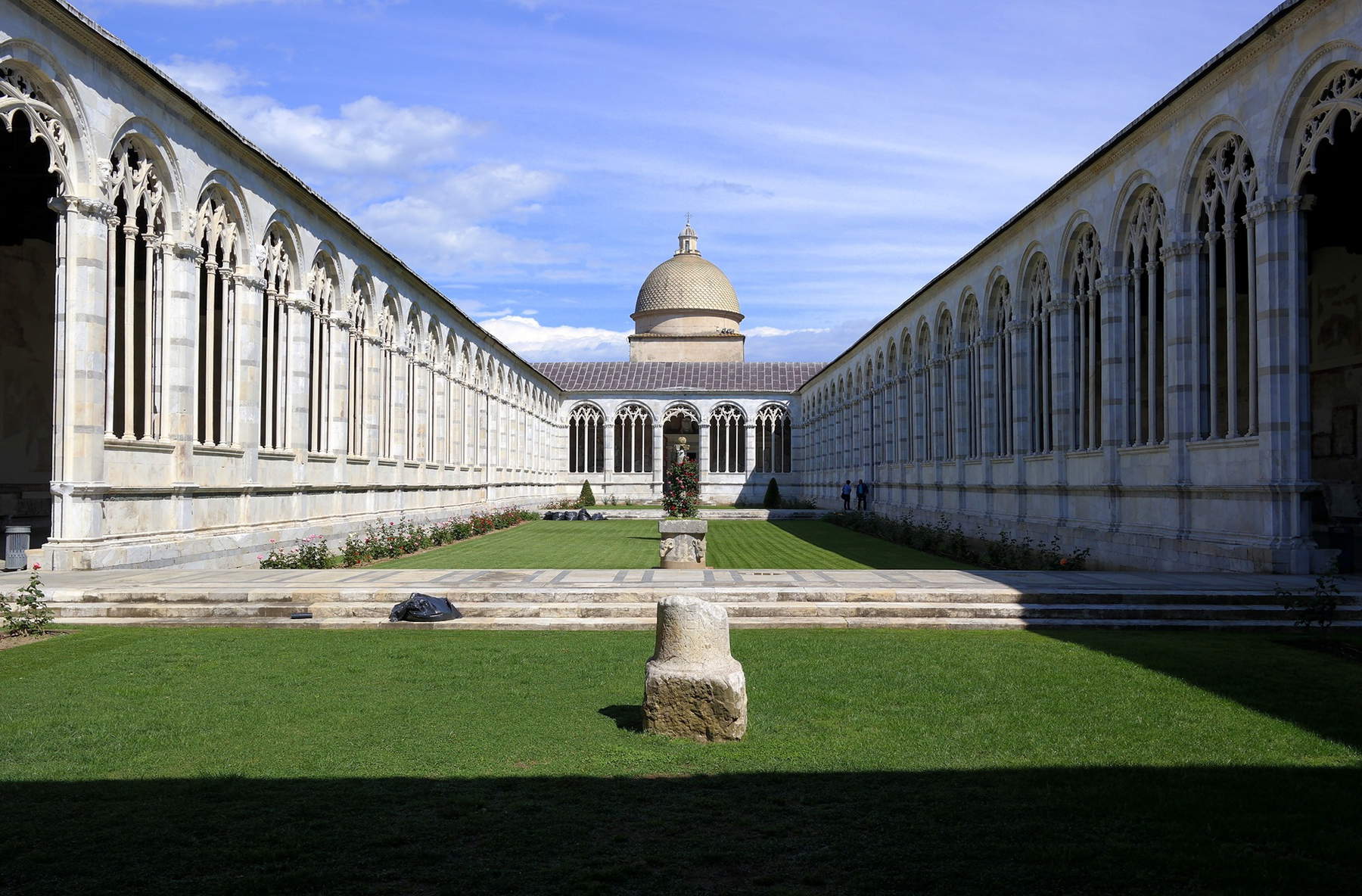
Seventy years after its detachment imposed by World War II damage, Francesco Traini ’s Crucifixion returns to its original place on the wall of the Monumental Cemetery in Piazza del Duomo in Pisa. TheOpera della Primaziale Pisana has organized a study afternoon open to the public on Wednesday, March 18, at the Auditorium Toniolo in Piazza Arcivescovado, followed by a guided tour of the Camposanto to admire the fresco in person. The initiative marks the launch of an innovative conservation system designed to protect the monument’s entire pictorial cycle.

“This intervention represents the natural evolution of a decades-long path of research and care,” stresses Andrea Maestrelli, president of the Opera della Primaziale Pisana. "Returning Traini’s Crucifixion to its original context, and doing so with conservation tools that look to the future, means honoring together the history and responsibility we have toward those who will come after us."
The fresco, which can be dated between 1330 and 1335, is the first chapter in the Camposanto’s figurative program and is part of the cycle of the Stories post mortem of Christ. The work marks the beginning of the pictorial decoration of the monument and testifies to the relevance of Pisa in the panorama of 14th-century Italian painting, at a time when the city was famous above all for the art of marble. Severely damaged by fire in 1944, the Crucifixion was detached in 1955, divided into eighteen panels, the sinopia into eight, and transferred to eternit frames in 1960. The first relocation to the wall was in September 2005, at the end of a long restoration conducted by the workers of the Opera della Primaziale Pisana.


Extreme weather events in late 2009 and early 2010 had highlighted the risk of condensation forming on the pictorial surfaces, making it necessary to update conservation strategies. The Opera has therefore experimented with and now installed a system of back-heating panels to prevent damage due to humidity and temperature changes. This technology had previously been successfully applied to the Buonamico Buffalmacco cycle starting in 2014 and is now being extended to the already relocated frescoes, starting precisely with the Traini Crucifixion.
The afternoon study will consist of two talks. Marco Collareta, art historian, will delve into the Crucifixion as an example of the Pisan fresco, illustrating the complex critical story of the painting, its iconography and the stylistic and technical aspects that make it one of the masterpieces of the Italian Trecento. Special attention will be paid to the preparatory drawing preserved in the Museo delle Sinopie, which provides insight into the artist’s creative process. On the other hand, Stefano Lupo, Head of the Restoration Area of the Opera, will present new conservation systems, explaining the technology of retro-heating panels and the results obtained in the protection of pictorial surfaces. At the end of the talks, participants will be able to visit the Cemetery to directly observe the Crucifixion in its original context.
 |
| Traini's Crucifixion returns to Pisa Cemetery with new conservation technologies |
Warning: the translation into English of the original Italian article was created using automatic tools. We undertake to review all articles, but we do not guarantee the total absence of inaccuracies in the translation due to the program. You can find the original by clicking on the ITA button. If you find any mistake,please contact us.