





The history of Europe’s artistic heritage is dotted with dispersions that, for decades, have left unbridgeable gaps within monumental complexes and historical collections. However, contemporary technologies are offering unprecedented tools for piecing together these centuries-old puzzles, as demonstrated by the extraordinary find announced yesterday by the ZamorArte Foundation in Zamora, Spain: an in-depth, multidisciplinary search has made it possible to identify with certainty a panel painted around the mid-15th century by Nicolás Francés (news from 1424 - 1468), a Spanish painter but of Burgundian origin, and a leading figure in international Gothic art. The work in question was originally part of the retable of the church of San Miguel de Villalpando, and was one of four pictorial elements that complemented the parish’s important wooden structure.
Until now, the scientific community and art history enthusiasts had only been able to accurately map three of the four panels that made up the decorative ensemble. These precious testimonies of the Spanish Quattrocento are now housed in prestigious museum institutions with a global reach: the Cincinnati Art Museum in the United States, the National Art Museum of Catalonia in Barcelona, and the Museum of Montserrat, also in Catalonia. The fourth panel, on the other hand, had been given up for lost since 1957, when the painting left the Villalpando location for good to embark on a tortuous journey through the international antiques market.
The decisive breakthrough in locating the painting came with the implementation of an investigative methodology developed by Jaime Gallego, technical historian at the ZamorArte Foundation. The investigation work, which lasted several months with extreme scientific rigor, initially led to the discovery of a key documentary find at the Institut Amatller. It is a photographic negative dated 1960 from the archival fund of historian and art dealer José Gudiol Ricart. This photographic document represented the first tangible evidence of the work’s passage through the channels of private collecting and provided investigators with the visual trail needed to initiate the next stages of the search.
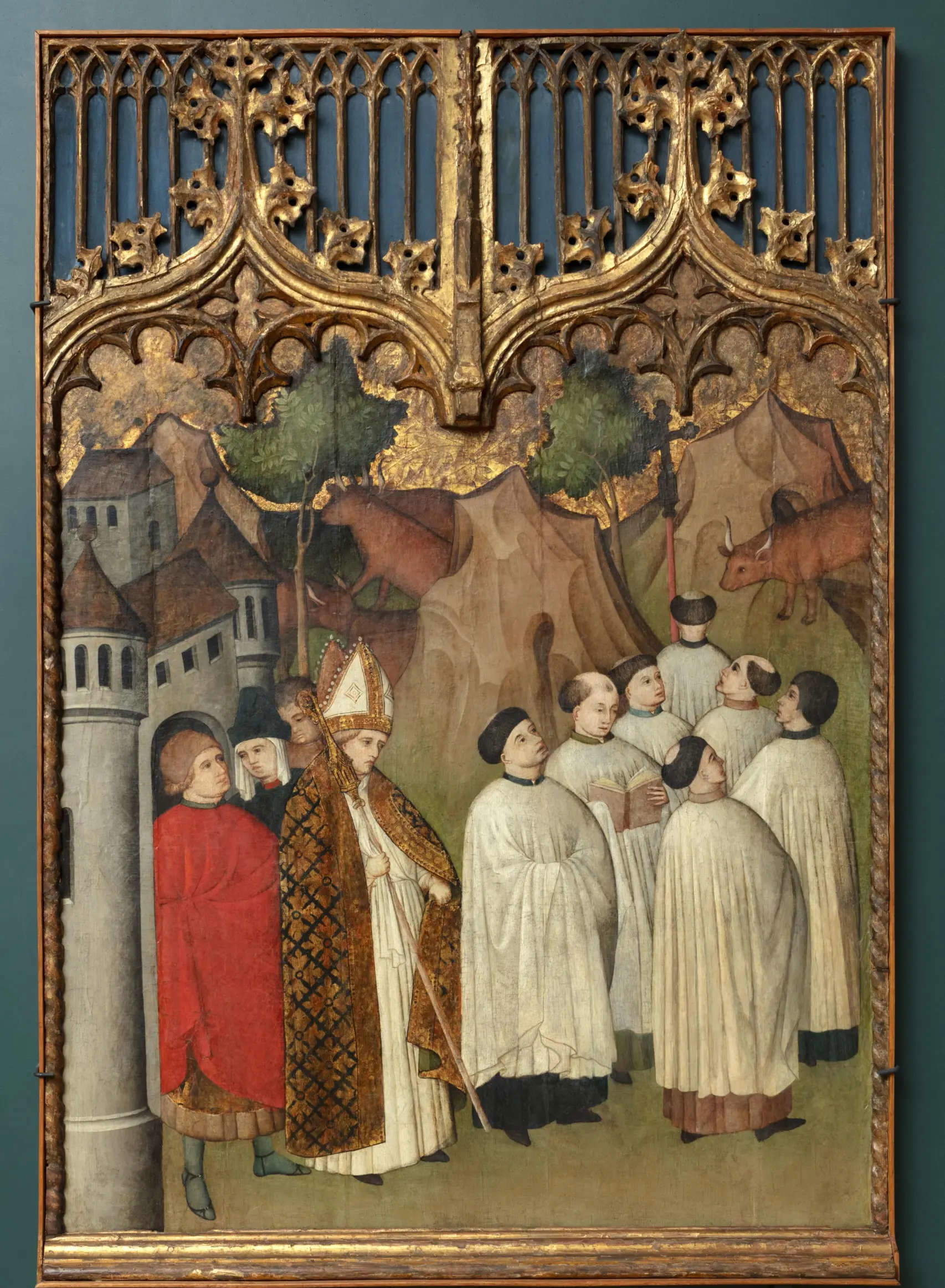
Following this lead, the investigation shifted to the analysis of historical correspondence between the renowned Schaeffer Gallery in New York and the Cincinnati Art Museum. From the study of these correspondence exchanges, it became clear that the Cincinnati institution was interested in acquiring the panel, although the negotiation had not then materialized into a final transaction. Precisely at this point in the research, where paper records offered no further outlets, digital technology intervened. In order to determine the current location of the work, a rather simple operation was performed: usingartificial intelligence and specifically Google Lens by applying it to the historical image found in the Gudiol archive.
The visual analysis software produced surprising results, identifying two exact matches between the Nicolás Francés panel and some recent photographs taken by ordinary visitors inside a U.S. museum. Cross-referencing the data and analyzing the metadata contained in these amateur images directed the researchers to the digital archives of the Michele and Donald D’Amour Museum of Fine Arts, a museum entity located in Springfield, in the state of Massachusetts. Once contacted, the U.S. institution officially confirmed that it holds the painting, currently displayed in its gallery dedicated to medieval art under the title Procession to Mount Gargano.
The U.S. museum has shown remarkable willingness by working closely with the ZamorArte Foundation to meticulously reconstruct the panel’s path to its entry into the permanent collections, also providing all necessary documentation and high-resolution photographic material. Despite the success of the search, Jaime Gallego expressed mixed feelings about the find. Although the excitement of having tracked down a work of such value is immense, there remains the bitterness of seeing it located geographically so far from its original context. Gallego pointed out with regret that many paintings from Villalpando have been sold off in the past, a situation that today, moreover, legally prevents one from demanding the formal return of these assets: the work located in Springfield did in fact legally leave Spain.
However, the researcher wanted to emphasize how this find should serve as a stimulus for a greater collective awareness of the value of the heritage that is still preserved there. The church of San Miguel, the place from which the panels were removed in the last century, is currently in a state of serious architectural deterioration, and the case of the Springfield panel should serve as a warning for more careful care of the surviving treasures. The four Nicolás Francés tablets were described by Gallego as the best ambassadors of the Castilian town’s history and art in the world. For this very reason, the hope was expressed that a temporary exhibition capable of bringing together all the fragments of the original retablo could be organized in the future at the planned Museum of the Church of San Pedro in Villalpando.
The technical details and discoveries that have emerged during this lengthy investigation of the Gothic paintings of San Miguel will not remain confined to the foundation’s archives. The full results will be officially presented during the International Congress “Memoria de la Ausencia,” a major scientific event soon to be held in the city of Burgos. On that occasion, precisely on January 23, Jaime Gallego will deliver a lecture entirely dedicated to the journey of these masterpieces of medieval art. The talk promises to unveil previously unpublished information and data on Villalpando’s artistic heritage, which has been subject to alienation and spoliation throughout the course of the 20th century, shedding new light on a dark chapter in Spanish cultural heritage conservation.
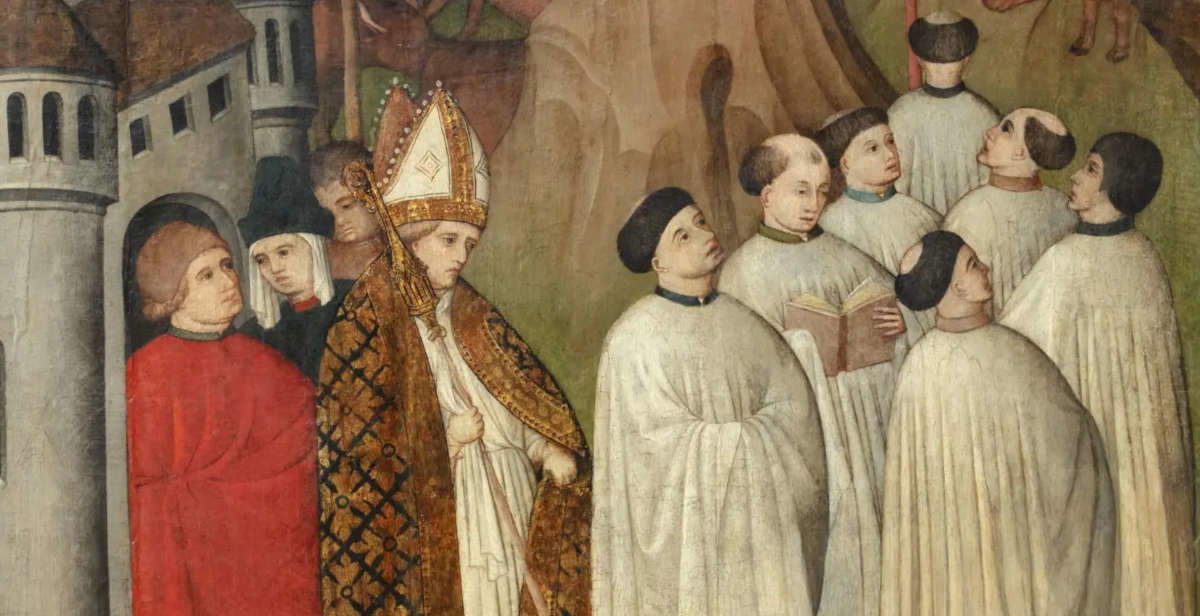 |
| With artificial intelligence rediscovered in the U.S. a 15th-century panel painting thought to be missing |

Warning: the translation into English of the original Italian article was created using automatic tools. We undertake to review all articles, but we do not guarantee the total absence of inaccuracies in the translation due to the program. You can find the original by clicking on the ITA button. If you find any mistake,please contact us.



















 IT
IT FR
FR DE
DE ES
ES CN
CN