





Of course, the first reaction at the end of the Venice Biennale press conference In minor keys, in a warm (and loud) voice, was surprise: “Not even an Italian artist!” But almost simultaneously, in a low voice (having reflected just enough to catch one’s breath), it was also spontaneous to say to oneself, “I would have been surprised to find an Italian artist.” The design of this Biennale In minor keys, its curatorial structure, so unbalanced and wide-eyed toward the Global South (starting with the Cameroonian director who is an expert on contemporary African art), poetry, free ensemble, post-colonial cultures, re-enchantment (only Suzi Gablik wrote about this in the 1980s in the West: if you have never read her, do so), musical and magical imagery, could not have contained Italian artists, let alone Western ones.
After all, who among Italian artists and curators, art historians, and critics has ever heard of Issa Samb, the Ghanaian artist and poet on whom one of the exhibition’s main themes established by director Koyo Kouoh before her passing is based? Has anyone read about, or knows who are, Ken Bugul, Teju Cole, Natalie Diaz, Tandazani Dhlakama, Wanda Nanibush, Oluremi C. Onabanjo, some of the authors of the texts in the catalog and exhibition, or know any of the five curators who carried out Kouoh’s project (Gabe Bechurst Feijo, Marie Hélène Pereira, Rasha Salti, Siddharta Mitter, and Rory Tsapayl)? The truth is that there could be no Italian artists because no Italian artists (and perhaps precisely because they are Italian) make works or research or have had experiences that go in the direction of the minor keys of this Biennale.
The Italian exhibition system has other occasions and opportunities to enhance its research in an international key. The Quadriennale first of all, which must promote Italian art in Italy and which in recent years has organized promotional studio visits by foreign curators to Italian artists: with what concrete results obviously remains to be understood. And then the Italian Council no doubt, which invests, often wildly, millions of euros every year to promote Italian art abroad: here too we can ask what real results it has achieved if these are the results (see the survey carried out some time ago by this very magazine). For that matter, it seems to me that no one in Italy has ever raised doubts or been scandalized by the fact that the German Pavilion has often exhibited non-German artists (in 1993 it was the turn of the immense Nam June Paik, and then in 2009 of the Englishman Liam Gillick, in 2013 of Ai Weiwei with Iranian, South African and Indian artists). I don’t know if the Germans did it in their time, but that is not our concern at the moment.
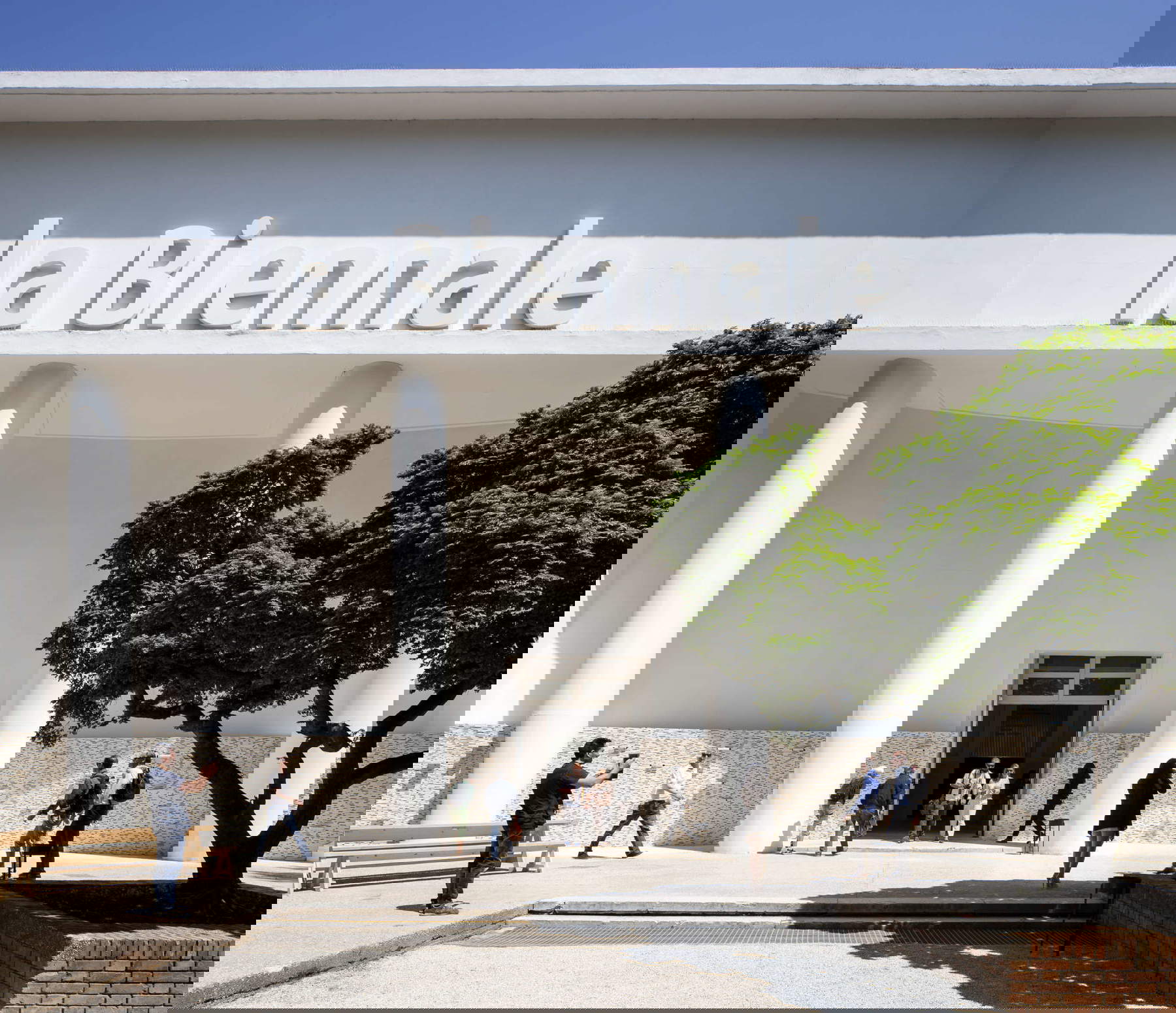
That we should then have Italian artists at the Biennale, as it were, “ex officio,” remains an outdated and completely off-topic assumption, I would say illegitimate and untimely, anachronistic. In the 2024 edition, the fine sculptor Victor Fotso Nye, a Cameroonian who has lived in Faenza for years, was invited. Would he have been Italian or not if he had been invited by Kouoh, according to the purists of the term?
The Venice Biennale by statute should not promote Italian art (for that within it there is the Italian Pavilion, although perhaps, if I may say so much, that formula, increasingly elitist and self-referential!) should also be revised. The Biennale must point to present trends and open future paths, and, like it or not, this Biennale opens an extreme, very current, cogent, vital one: that is, whether contemporary art is not undergoing an inevitable and total transformation, not a formal one, in the face of the epochal changes we are witnessing such as the technological/digital drift (totally absent in this edition and this seems to me a real point of discussion) and the inexorable erosion of the warmongering, turbo-capitalist and hyper-bureaucratized West. So welcome the minor keys if they serve to flake and uncover even more of the system. Is there something rotten in the West?
The speech by the President of the Biennial, Pietrangelo Buttafuoco, at the close of the presentation, was very enlightening in this regard, learned and poetic, with its own intrinsic narrative and not one of occasion: in particular the concepts of Being-for-Death and Care that he explicitly took up. Although not explicitly quoted, it was Martin Heidegger (although many thought rather of Franco Battiato’s albeit beautiful song The Cure), the philosopher who not coincidentally celebrated the West as the region of the fall, the land of the Hesperides, of oblivion, of evening, where precisely the sun does not rise, but sets and dies.

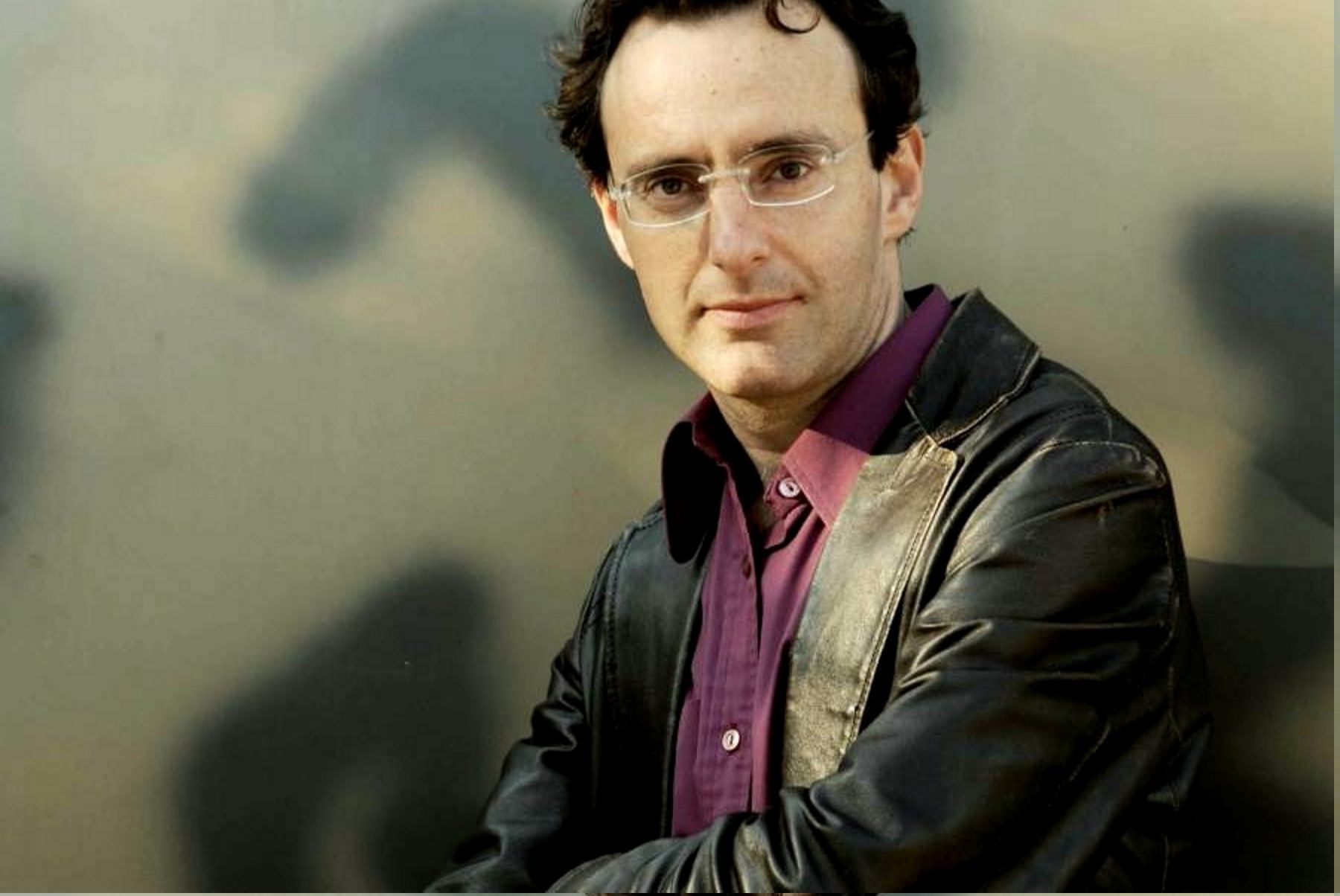
The author of this article: Marco Tonelli
Marco Tonelli (Roma, 1971), critico e storico dell’arte. Dopo la laurea in Storia dell’Arte presso l’Università La Sapienza di Roma (1996), ha conseguito il diploma di Specializzazione in Archeologia e Storia dell’arte (2000) e un Dottorato di Ricerca in Storia dell’Arte (2003) presso l’Università degli Studi di Siena. È stato assessore alla Cultura del Comune di Mantova, caporedattore della rivista Terzo Occhio e commissario inviti della XIV Quadriennale di Roma. Dal 2015 al 2017 è stato direttore artistico della Fondazione Museo Montelupo Fiorentino per cui ha ideato la rassegna Materia Prima e ha curato il progetto annuale Scultura in Piazza a Mantova. Dal 2019 al 2023 è stato Direttore artistico di Palazzo Collicola e della Galleria d’Arte Moderna di Spoleto. Attualmente è Curatore scientitico della Fondazione Progetti Beverly Pepper di Todi. Insegna all'Accademia di Belle Arti di Venezia.Warning: the translation into English of the original Italian article was created using automatic tools. We undertake to review all articles, but we do not guarantee the total absence of inaccuracies in the translation due to the program. You can find the original by clicking on the ITA button. If you find any mistake,please contact us.
























 IT
IT FR
FR DE
DE ES
ES CN
CN


