





The monographic exhibition on Emilio Malerba (Milan, 1878 - 1926) that the Fondazione Ragghianti of Lucca dedicated to the great Milanese painter on the centenary of his death, the first modern monographic exhibition devoted to him (curated by Paolo Bolpagni and Elena Pontiggia, from February 28 to June 7, 2026), had the merit of exhibiting for the first time to the public an important painting, now in a private collection, that Malerba exhibited in 1911 and whichhowever, then quickly fell into oblivion, despite the fact that it can be considered one of the peaks of the first phase of his career, when the artist, still far from experimenting with the language that would lead him to his militancy in the Novecento group, that is, that magical realism for which the artist is best known today, was still experimenting with a research related to the late scapigliatura.
In 1911, Malerba had taken part in the great International Exhibition organized in Rome to celebrate the fiftieth anniversary of the Unification of Italy. On that occasion, the painter presented a canvas entitled Intermezzo, a work that still questions the viewer for its subtle balance between pictorial artifice and emotional truth. It is a wonderful portrait of Amalia, the painter’s wife, depicted against an evanescent background while holding a guitar. However, it is not the instrument that interests Malerba, partly because, as far as we know, the artist had no particular interest in music. On the contrary, the woman’s pose appears almost improbable, with the guitar held with a grip that is out of all logic, the sound box under her elbow and the fretboard clutched between the fingers of her right hand, her wrist sliding over the strings. A pose that seems to want to emphasize the exquisitely painterly nature of the operation, the fact that this slice of life is actually a kind of artifice, of enchantment: we are not, in essence, in the presence of a portrait of a musician caught in the act of performance, but rather to a piece of pure painting, where the musical object becomes a formal pretext, an element of the composition, a justification for studying the light that darts over the forearm, that lingers on the folds of the silk robe, that then slides over the guitar case leaving half of it in shadow. With a barely perceptible veil of irony, Malerba seems to suggest that reality on canvas is a kind of intellectual construction, a play of volume and color that transcends the documentary, the minimal episode.
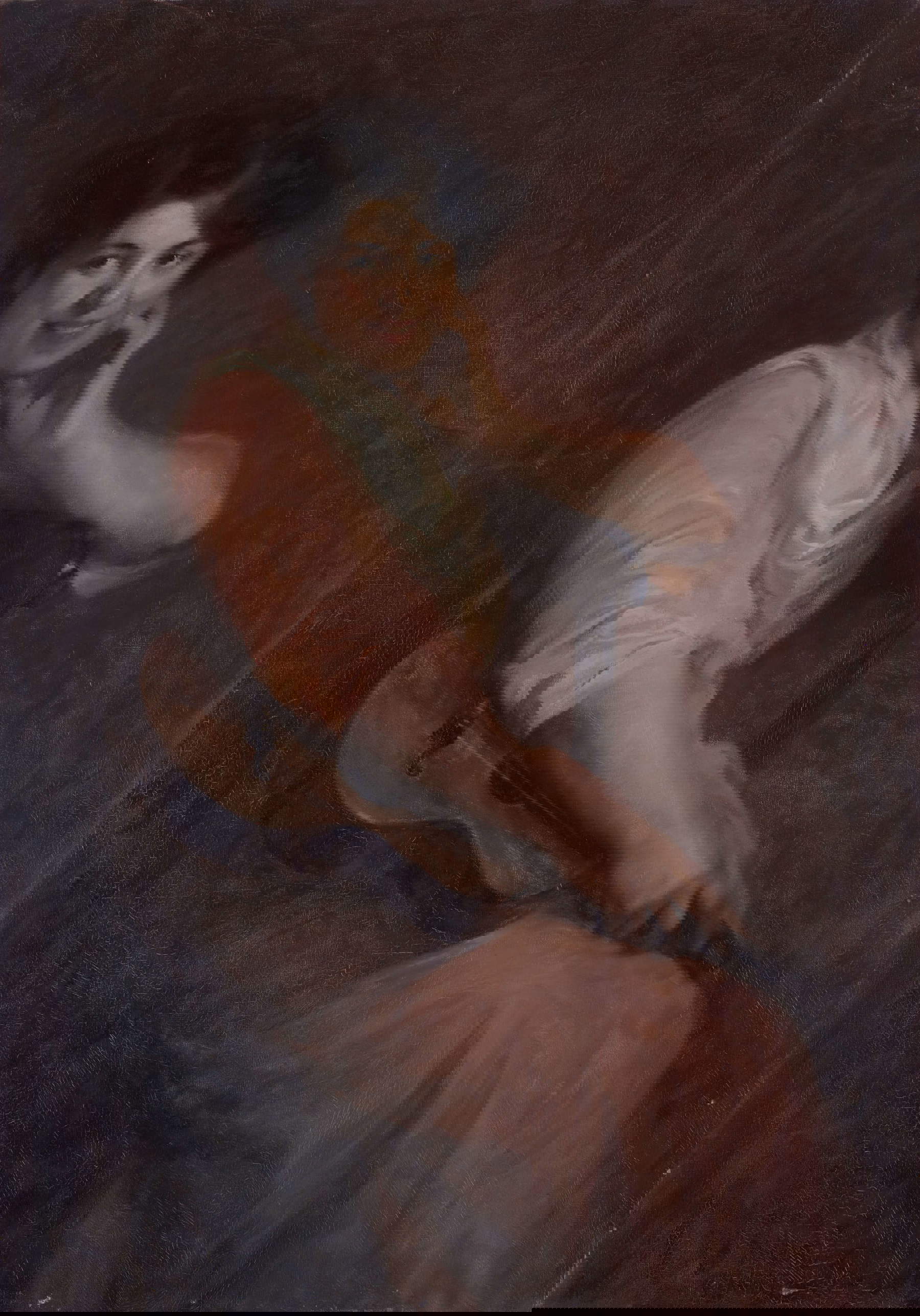
Minimal episode that nevertheless provided the pretext for the composition. Behind this seemingly detached construction one almost seems to sense the throb of early Malerba’s poetics: the attention to the family chronicle that transcends the everyday to become art. The painter, certainly, fixes on the canvas an instant of life. TheIntermezzo of the title thus refers not to a pause between the tempos of a musical composition, but to a temporal suspension in the course of the day. Amalia was probably practicing when an external event (the entrance of a family member, a play by her husband, the voice of a child) prompted her to interrupt her study. That moment of pause is filled with an exchange of glances and a hinted smile, elements that charge the work with a powerful psychological density. Amalia neglects her exercise, turns her gaze outward, perhaps right toward the concerning, her left hand brushing her cheeks almost meant to emphasize the complicity of those eyes, while a trickle of light bathes her bangs, makes her eyes shine, rests on the hollow of her hand.
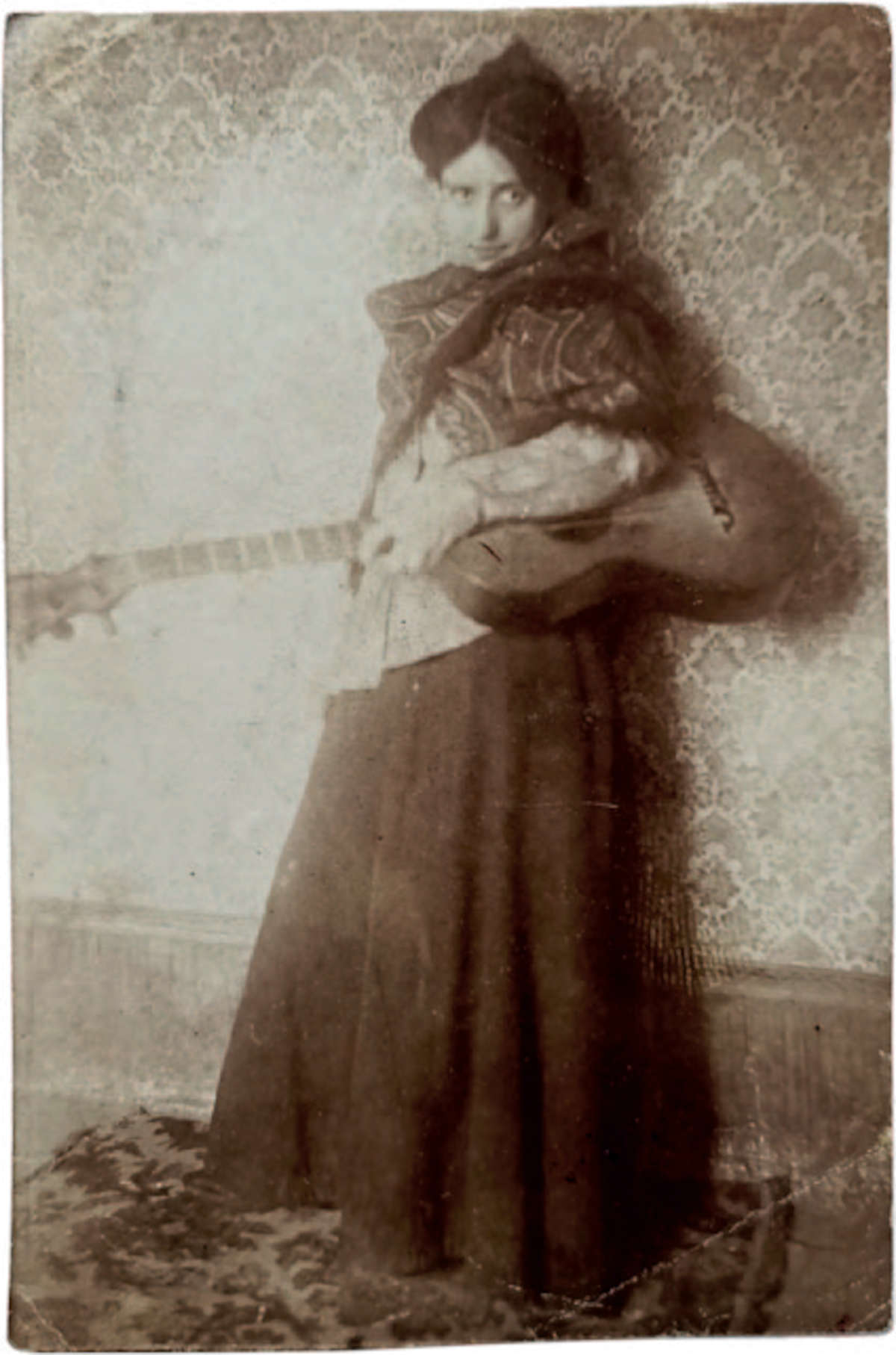
Interestingly, although Malerba often started from a photographic medium for his compositions, he was never a slave to it. There is a photograph of Amalia with a guitar among the artist’s papers, but it was not used as a direct model for the painting. It is a detachment that confirms the tormented and meticulous nature of his research: each work was the fruit of months of work, of continuous rethinking and modification aimed at stripping the image of all narrative excess in order to arrive at theessence of a feeling of which Malerba became the ineffable bearer.
An almost unpublished Malerba, then: Elena Pontiggia makes mention of the work in her recent monograph (2024, the first book to organically reconstruct the Milanese painter’s entire story), but for almost a hundred years no one had been able to see this admirable Intermezzo, which was exhibited only once after the 1911 Rome exhibition, namely at the posthumous exhibition held in 1931, five years after Malerba’s death, at the Galleria del Milione in Milan, from April 22 to May 7 of that year. The work thus makes it possible to reread Malerba’s career fits into the light of a crucial transitional context. Trained at the Brera Academy under Giuseppe Mentessi and initially close to the atmospheres of the late Scapigliatura, the artist would later change his ways in the direction of a synthesis capable of anticipating the demands of the “Novecento” group, of which he was a founder in 1922. Unlike his contemporaries, such as Ambrogio Alciati, Malerba chose to take the path of the unspoken. If Alciati tended to place his subjects in an explicit narrative, often linked to bourgeois or anecdotal events, Malerba progressively eliminated the narrative. Nothing striking happens in his canvases; there are no captive lovers or mother scenes. Everything is entrusted to the mobility of a face, the shyness of a gesture or the restrained pride of a teenager wearing a new hat. “Her works,” writes Elena Pontiggia, “never go so far as to narrate a story, but suggest the feelings and, as it were, the heartbeats of her figures through a few strokes of a face, a momentary gesture, a glance.” This “naturalness,” understood as a rejection at once of emphasis and patheticism, was to become a sort of trademark of his production: an attitude far from the obscurities of symbolism, from emotional kindling, but even from a certain gloominess that was characteristic of Scapigliatura. Malerba had chosen the path of clarity and sobriety, the idea of painting as a field of silent emotions: from little girls studying the piano to friends exchanging confidences, to the mythological nude that loses all divine aura to become flesh and tenderness. Each figure becomes a psychological portrait. The artist, Pontiggia explains, “thus heralds, and then fully embodies, one of the ideals of the ’Twentieth Century,’ ’naturalness,’ understood (in opposition to the emphasis and theatricality of Symbolism) as simplicity of attitude, as a rejection of pathetic mimicry, strained poses, indistinct and obscure allusions. Little remembered among Novecentist instances, naturalness is instead an essential part of it.”
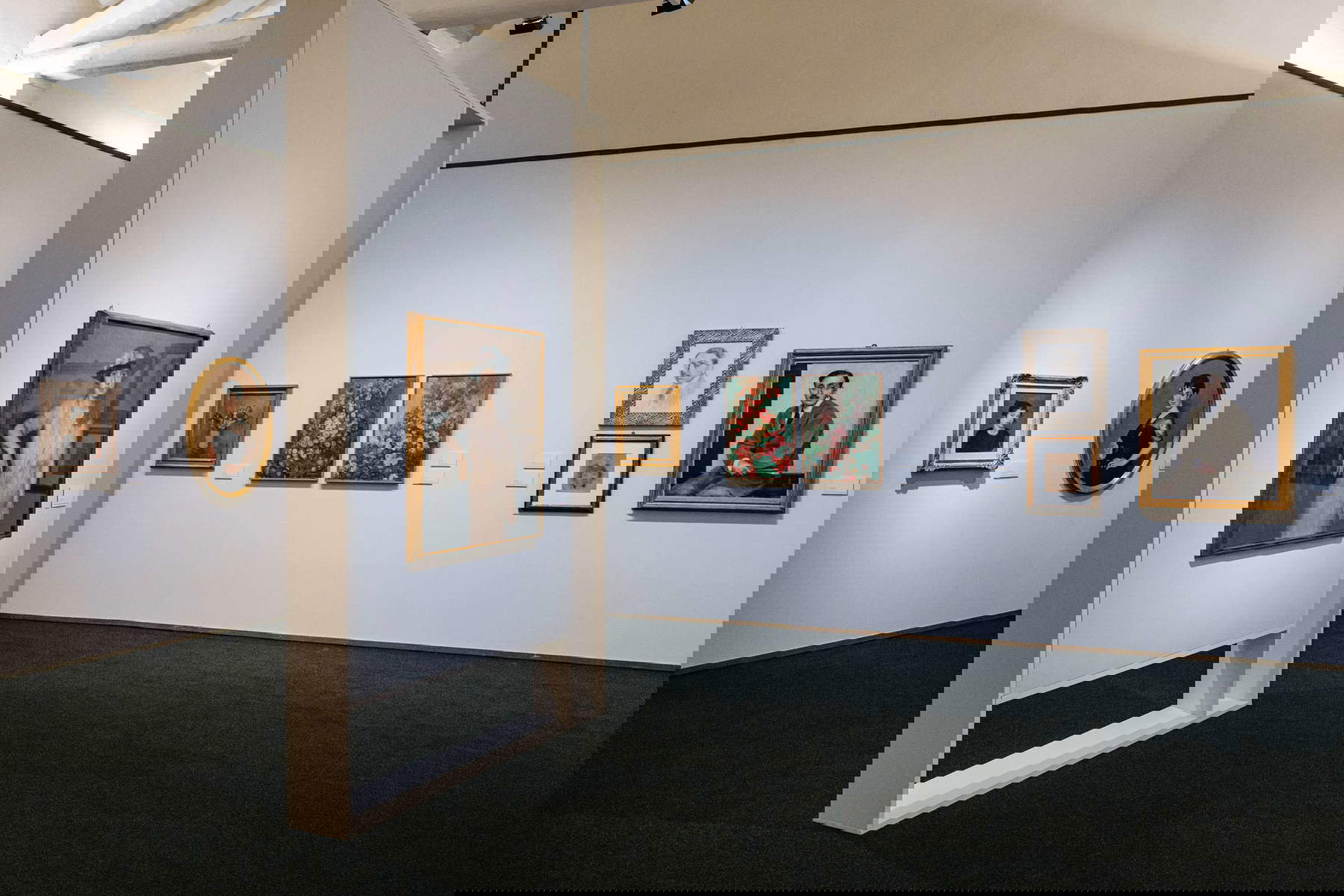
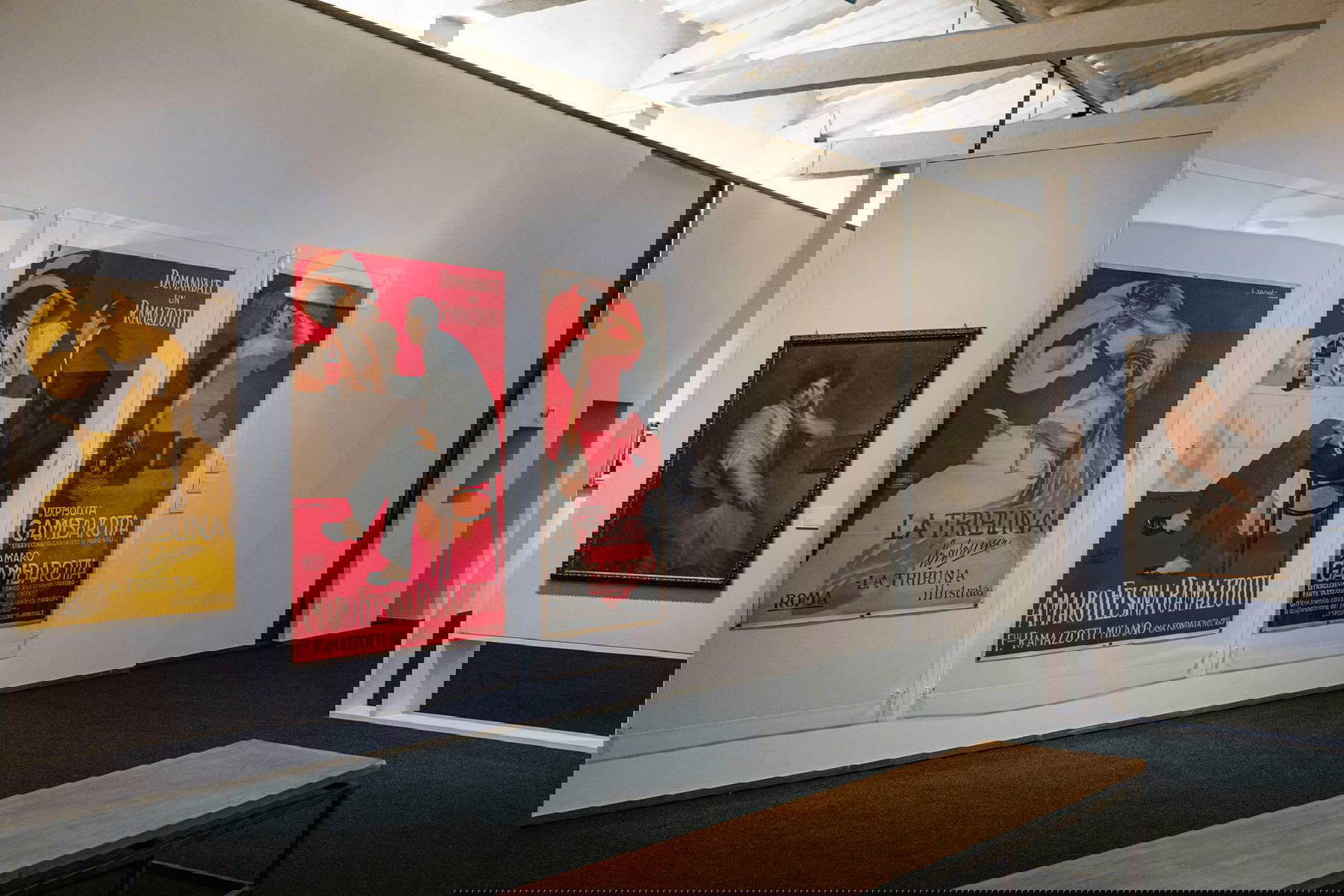
The artist’s untimely death in 1926 at only forty-eight years of age interrupted an evolution that would have led him perhaps to a different consecration, would have elevated him to altars perhaps higher than those that have touched him. For this reason we are left with a limited catalog of his work, yet the result of an unstoppable research and a perfectionism that induced him to constantly rethink almost every single brushstroke. It is from this body of work, however restricted, that a distinctive voice emanates, capable even of crossing decades.
His legacy then remains imprinted in these images of reposed everydayness, where a gesture, a glance, a smile, a movement of the hand, an unexpected instant of light allow the relative to grasp that slightest wince that makes a painted image come alive. That wincing that allows images to speak, to move the observer: this was the quest toward which Malerba, far from being a lagging artist despite the fact that his references were Mentessi, Ranzoni and Cremona when the battles of the Futurists were already raging, oriented his directions. Indeed: Malerba was a forerunner. His ideal of simplicity, clarity and serenity that would be reflected in the critical reflections of Margherita Sarfatti, in the statements of artists such as Mario Sironi and Piero Marussig. Of course, there was nothing intentional about it. The artist did not know what would come next. There is, however, an undeniable consonance, there is almost the recklessness of experimenting with an art of convinced, conscious rearguard when the tremors of European painting were all about the pursuits of subversive, revolutionary artists. The return to order would later reward the insistence of Emilio Malerba, who had already laid the foundations of what, in the postwar period, would later become the new avant-garde, if you can call it that. Above all, it would have rewarded that painting of his that seeks the truth of the moment that escapes, that is embodied in the nuance of an expression, that prefers to inhabit a discreet space, a space of minimal and everyday feelings, a space that renders poetic dignity to any pause in existence.

The author of this article: Federico Giannini e Ilaria Baratta
Federico Giannini. Giornalista, co-fondatore di Finestre sull'Arte, direttore responsabile della testata. Nato a Massa nel 1986, si è laureato nel 2010 in Informatica Umanistica all’Università di Pisa. Nel 2025 ha scritto il libro Vero, Falso, Fake. Credenze, errori e falsità nel mondo dell'arte (Giunti editore). Per la tv è stato autore del documentario Le mani dell’arte (Rai 5) ed è stato tra i presentatori del programma Dorian – L’arte non invecchia (Rai 5).
Ilaria Baratta. Giornalista, co-fondatrice di Finestre sull'Arte, caporedattrice della testata. È nata a Carrara nel 1987 e si è laureata a Pisa in Lingue e Letterature Straniere.
Warning: the translation into English of the original Italian article was created using automatic tools. We undertake to review all articles, but we do not guarantee the total absence of inaccuracies in the translation due to the program. You can find the original by clicking on the ITA button. If you find any mistake,please contact us.

























 IT
IT FR
FR DE
DE ES
ES CN
CN


