





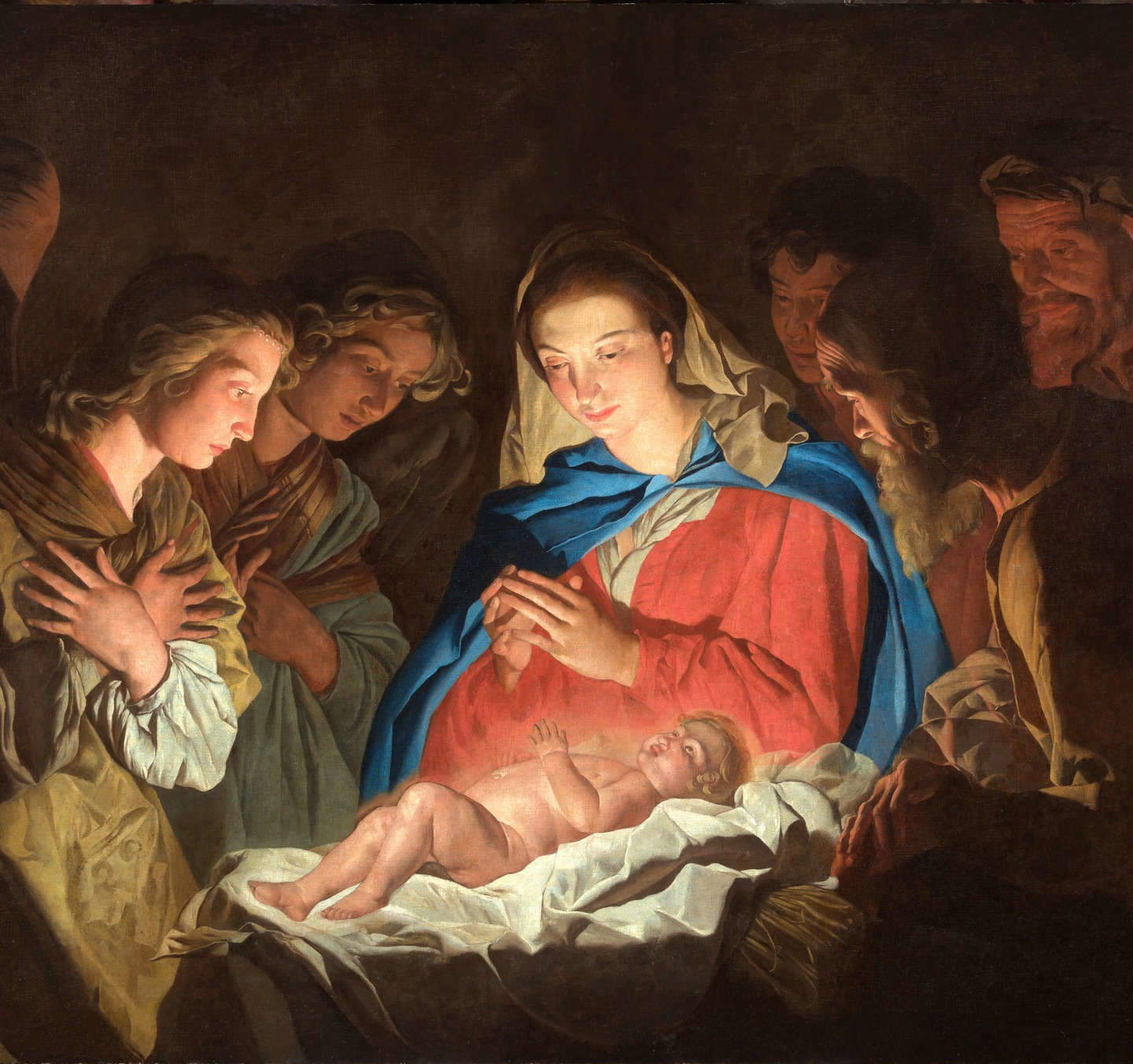
Genoa rediscovers a forgotten part of its artistic heritage through the return to light of the Nativity of Jesus Christ, a splendid painting by the Dutch painter Mathias Stom, or Mathias Stomer (Amersfoort, c. 1600 - Sicily, after 1650), a central figure of the 17th-century school influenced by the naturalism of the Lombard master and the Utrecht Caravaggesque painters. After a year of analysis and conservation work, the work, which was discovered just a year ago, was presented to the public during a visit to the stages of the thematic itineraries “Nativity Scenes of Tradition” and “Nativity Scenes of Art,” in the presence of Mayor Silvia Salis, Cultural Councilor Giacomo Montanari and the curators involved. The event marked the completion of a journey that restored full legibility to a canvas that had remained on the margins of the city’s exhibition history for centuries and resurfaced almost by chance in 2024 in the Convent of the Visitation in Genoa.
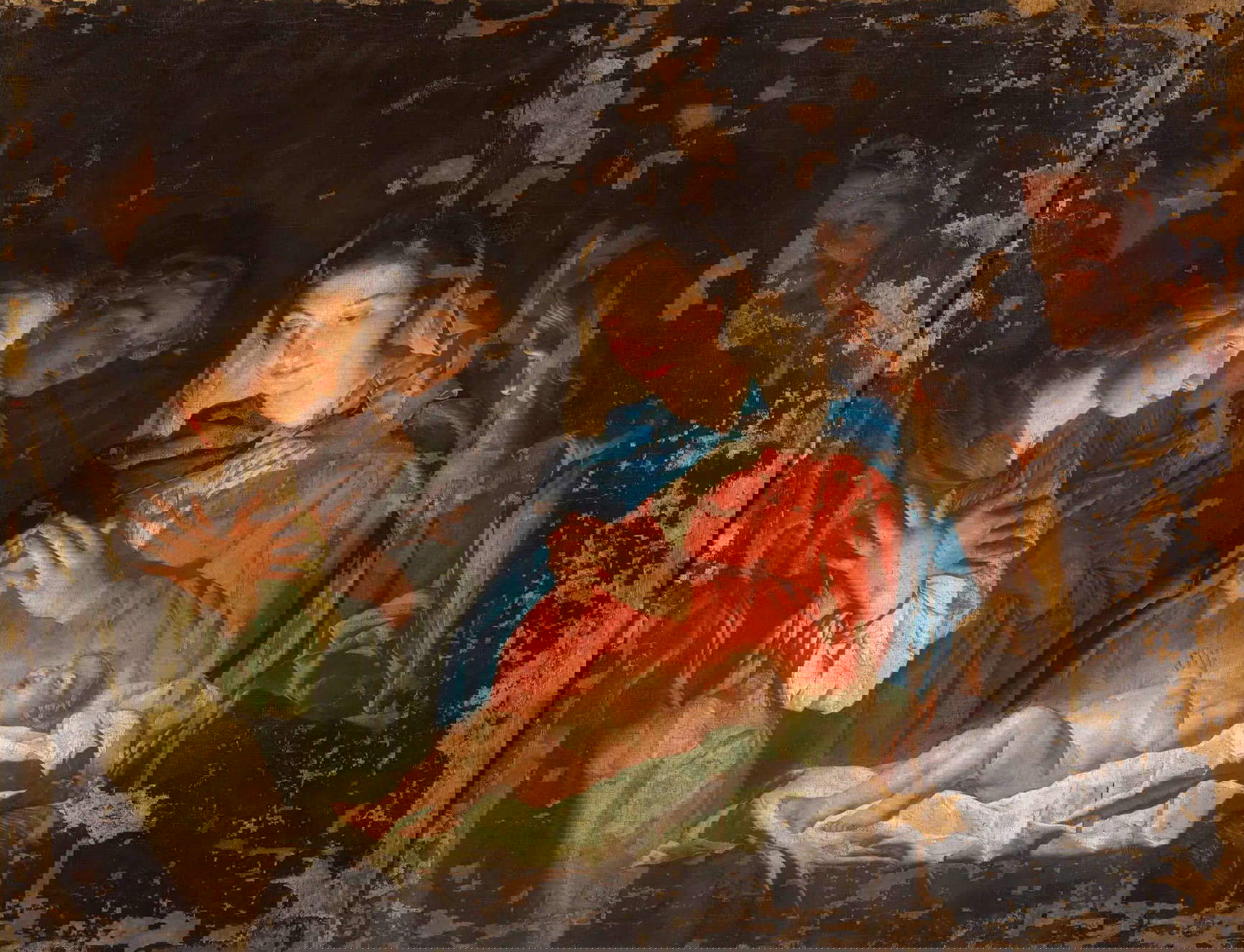
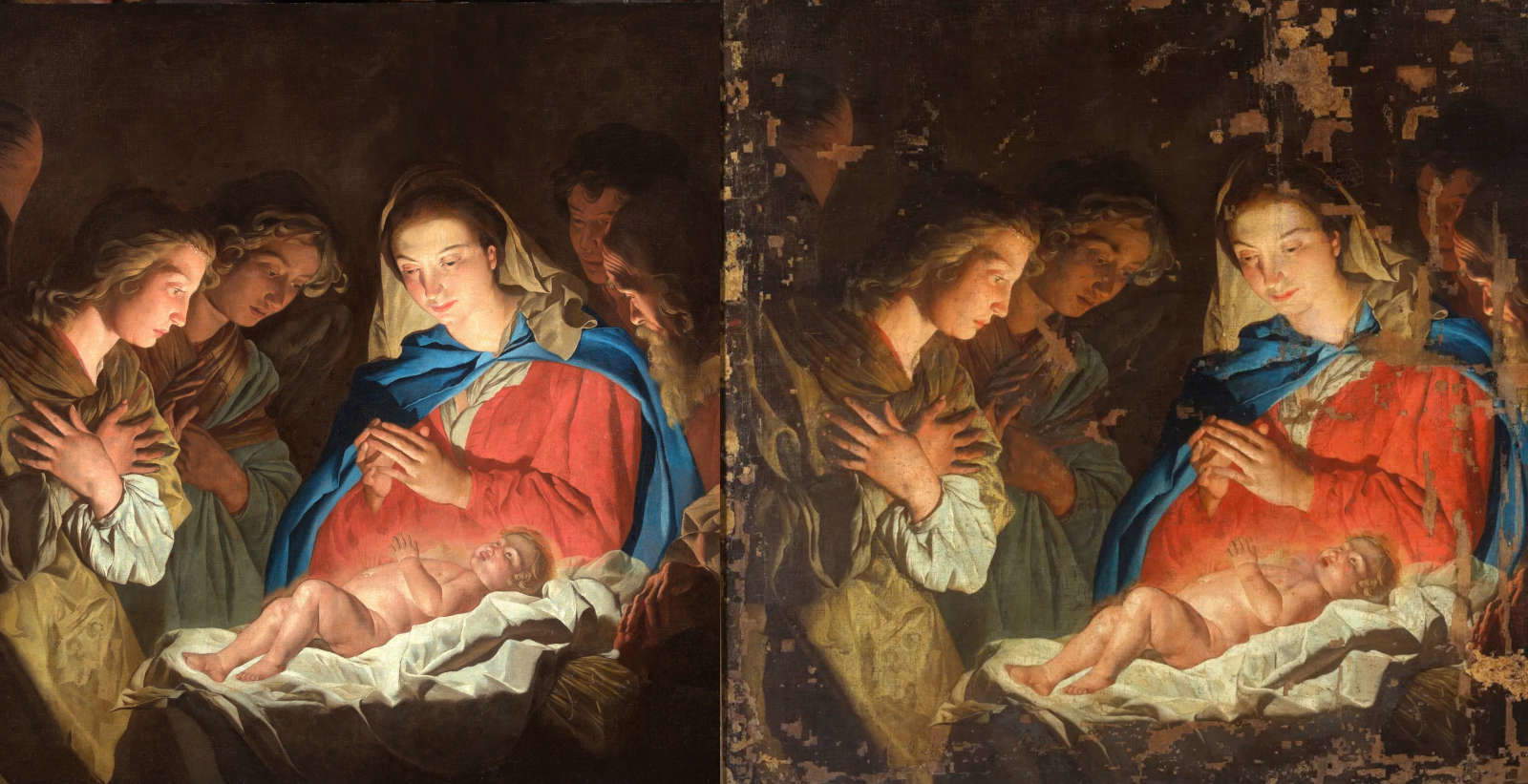
The discovery, which occurred during a study visit by Montanari, an art historian himself, to the archives of the Province of the Franciscan Friars Minor of Genoa, had immediately attracted the attention of scholars because of the evident quality of the painting, despite the fact that its initial condition was marked by widespread abrasions and color gaps. The scene of theAdoration of the Shepherds, bathed in intense and collected chiaroscuro, showed a strong consistency with the mature production of Stom, who was active between Naples and Sicily in the first half of the 17th century. The researcher’s intuition initiated an articulate investigation, conducted over the following months, which involved stylistic comparisons, documentary research and comparisons with similar works held in important Italian museums, and thus allowed the work to be attributed without any doubt to the great Dutch painter.
In fact, the findings made it possible to juxtapose the Genoese canvas with some of Stom’s major works, including theAdoration housed in the Capodimonte Museum in Naples, the one in Palazzo Madama in Turin, and above all theAdoration of the Shepherds in Monreale, with which the similarity is particularly striking. In the latter case, the figure of the Madonna appears almost superimposable, as does that of St. Joseph, and the entire compositional layout shows striking similarities in the way light is treated, drapery is constructed, and faces are shaped through sudden transitions from darkness to light. Elements that helped confirm the attribution to Stom and the probable chronological placement in the 1740s, a period considered among the most significant of his production.
Parallel to the stylistic verification, archival research has allowed us to formulate a hypothesis about the canvas’ provenance, which is linked to the commissioning of Sicilian nobleman Giuseppe Branciforte Barresi, count of Mazzarino and prince of Butera. Branciforte was a well-known collector of the time and owned multiple works by Stom, some of which are documented in inventories drawn up in Sicily and Naples. In at least one case, anAdoration of the Shepherds with dimensions very close to those of the Genoese work is mentioned, recorded in Naples until 1801, only to disappear from later inventories. The possible correspondence between the mentioned painting and the one found cannot be confirmed with absolute certainty, but it represents a significant piece to reconstruct its history and to understand how the work could have reached Genoa after a probable passage through the prince’s collection.
The public presentation of the Nativity was a particularly important moment for the city, which thus returns to host a work that can be traced back to an artist who was much loved in past centuries but is now scarcely represented in Genoese collections. Montanari himself pointed out that the find, which occurred almost by chance during a search devoted to other materials, has made it possible to reestablish a historical link between Genoa and Stom, a relationship documented by the past presence of multiple paintings by the artist in local collections, now largely dispersed.
“In 20 years of working in the area,” Montanari said, “I have learned this simple law: to open your eyes wide with curiosity and take nothing for granted. Looking is not the same as seeing, and learning to see means building an ever-increasing wealth of knowledge, without limits of time or opportunity, without having the presumption of ’having already seen’ something: as Venturi said, you have to ’see and see again’ to be sure you have not just looked. That is why a painting like the one by Mathias Stom that we are presenting today after a year-long restoration is important. Because it represents that training in seeing, in not letting things slide by like a faded background, in going deep into the history of objects, because they also tell us about people. And - I believe - Stom’s Nativity is not just an excellent painting or an important find for the discipline of art history. It is something more, especially because it is a silent painting. It is not a noisy work, where the fabrics make a racket, the faces shout, the lights rape the darkness. Its quiet grandeur, its grounding in simple earthiness embodied in faces, hands and necks, its inner, supernatural light that softly and decisively subtracts the characters from the unfathomable darkness of the background is also a warning: the sacred cannot and should not be a shouted, brutal, trivial claim. The sacred is encounter, pause, silence. It is silencing the inexhaustible noise of the world for a very long moment of looking at the further. This is why one cannot help but love the art of the past: because whatever one believes and however one does it, understanding it invites us to reflect, to put ourselves in the position of the listener instead of that, too thickly closed to dialogue, of the invaded preacher.”
The restoration of the canvas, entrusted to Elena Parenti and supported thanks to the contribution of Villa Montallegro, made it possible to repair the gaps and above all to recover the light balance typical of the Flemish master, restoring depth to the figures and legibility to the scene. The work required a particularly delicate approach, essential to intervene without altering the original material, preserving the traces of Stom’s painting technique and allowing the meditative character of the image to emerge, dominated by the light emanating from the Child’s body, according to a compositional solution recurring in the artist.
The path that led to the public restitution of the work was also possible thanks to the collaboration of numerous scholars and institutional figures. Among them, Riccardo Medicina played a decisive role in opening the archives of the Province of Friars Minor, while Martina Leone coordinated the research carried out in Sicily. Vincenzo Abbate offered a decisive contribution in the critical confrontation phase, Paolo Triolo oversaw the analytical aspects related to the visual investigation, and Paola Martini, together with the direction of the Diocesan Museum led by Enrico Vassallo, ensured hospitality and support for the entire project. The synergy between different skills made it possible to delve into still little-known aspects of the painting’s history and to place it more precisely in Stom’s creative path.
As of today, the work is therefore on display in the rooms of the Diocesan Museum of Genoa, in the heart of the historic center. Thanks to an agreement with the Friars Minor, the painting will remain on view for at least two years, offering the public and scholars the opportunity to take a closer look at its stylistic features and details recovered through restoration. The museum has also announced plans to launch a fundraiser to support further conservation work aimed at completing the work’s recovery and ensuring its best long-term preservation.
The revival of Stom’s Nativity represents, for the city, an opportunity for cultural enhancement and an example of virtuous collaboration between institutions, researchers, restorers and the religious community. The story of the painting, from its fortuitous discovery in the corridors of an archive to its return to the public, testifies to the importance of research into hidden heritage and the central role of archival studies in recovering forgotten works. One year after its discovery, Genoa thus rediscovers a piece of its artistic history through a canvas that combines the power of Caravaggio’s chiaroscuro, the finesse of the Flemish school, and a human and scientific journey that brought to light a long-lost work.
 |
| Genoa, Mathias Stom's Nativity returns to life: painting discovered a year ago restored |

Warning: the translation into English of the original Italian article was created using automatic tools. We undertake to review all articles, but we do not guarantee the total absence of inaccuracies in the translation due to the program. You can find the original by clicking on the ITA button. If you find any mistake,please contact us.

















 IT
IT FR
FR DE
DE ES
ES CN
CN


