







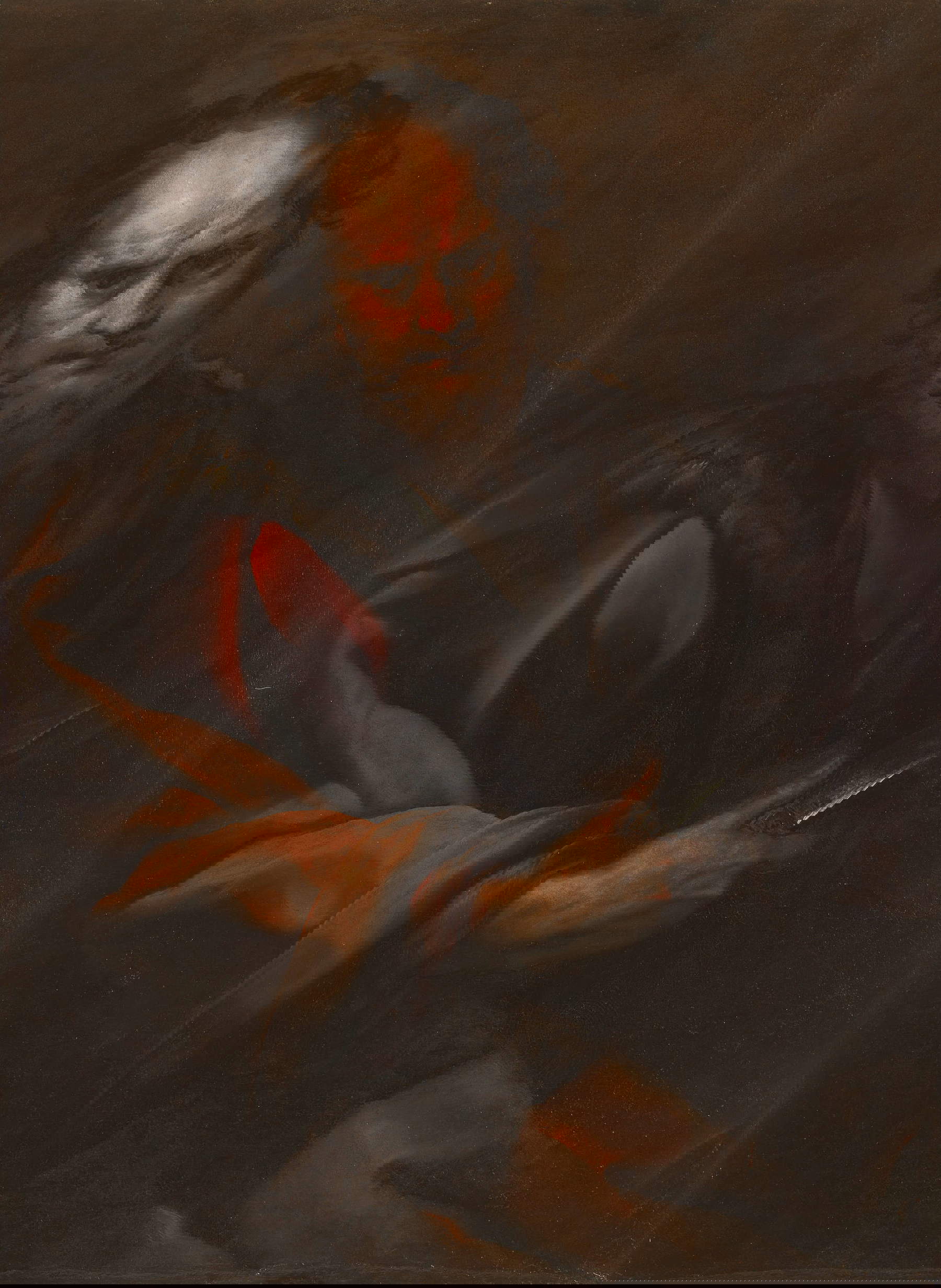
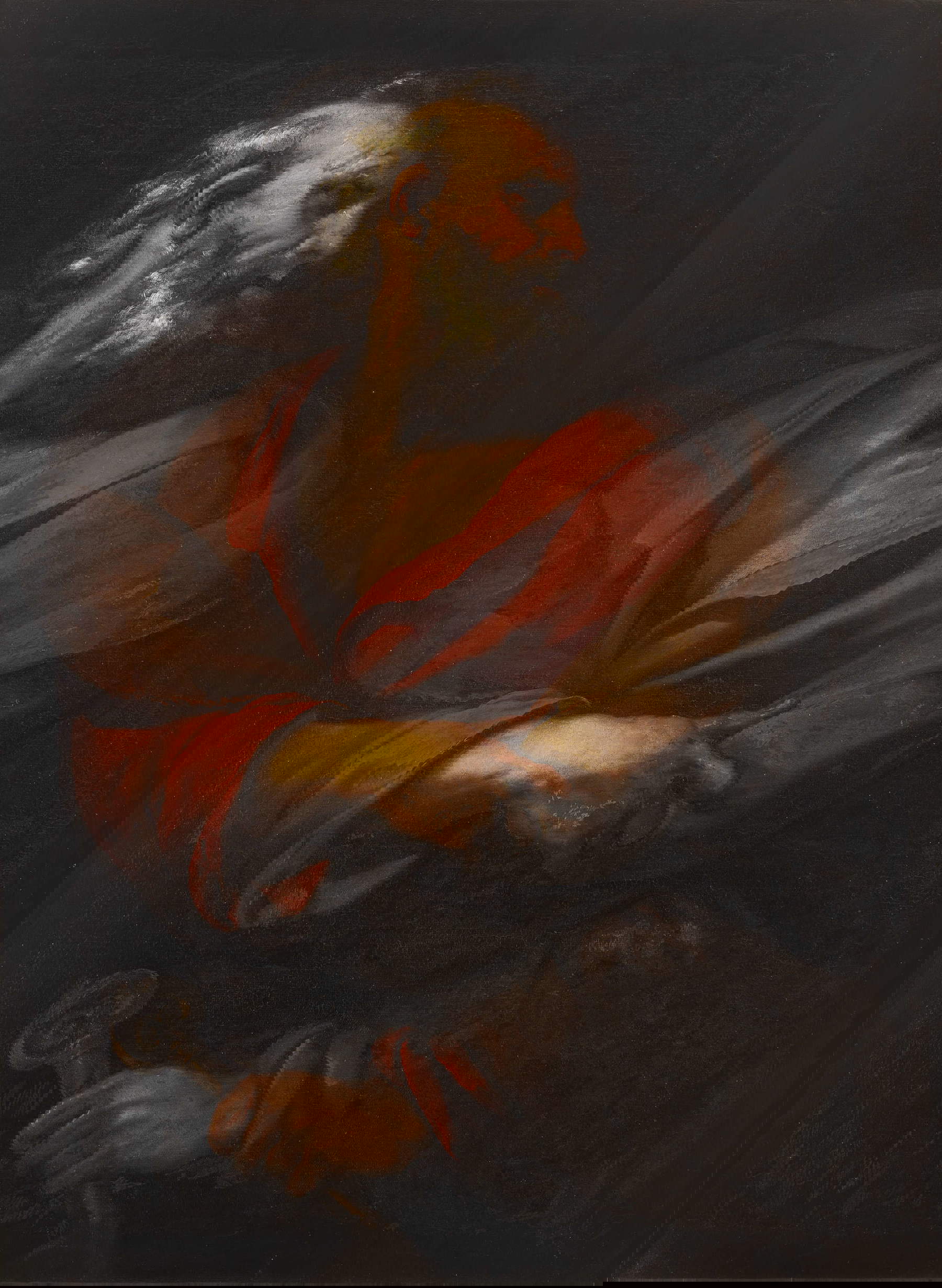
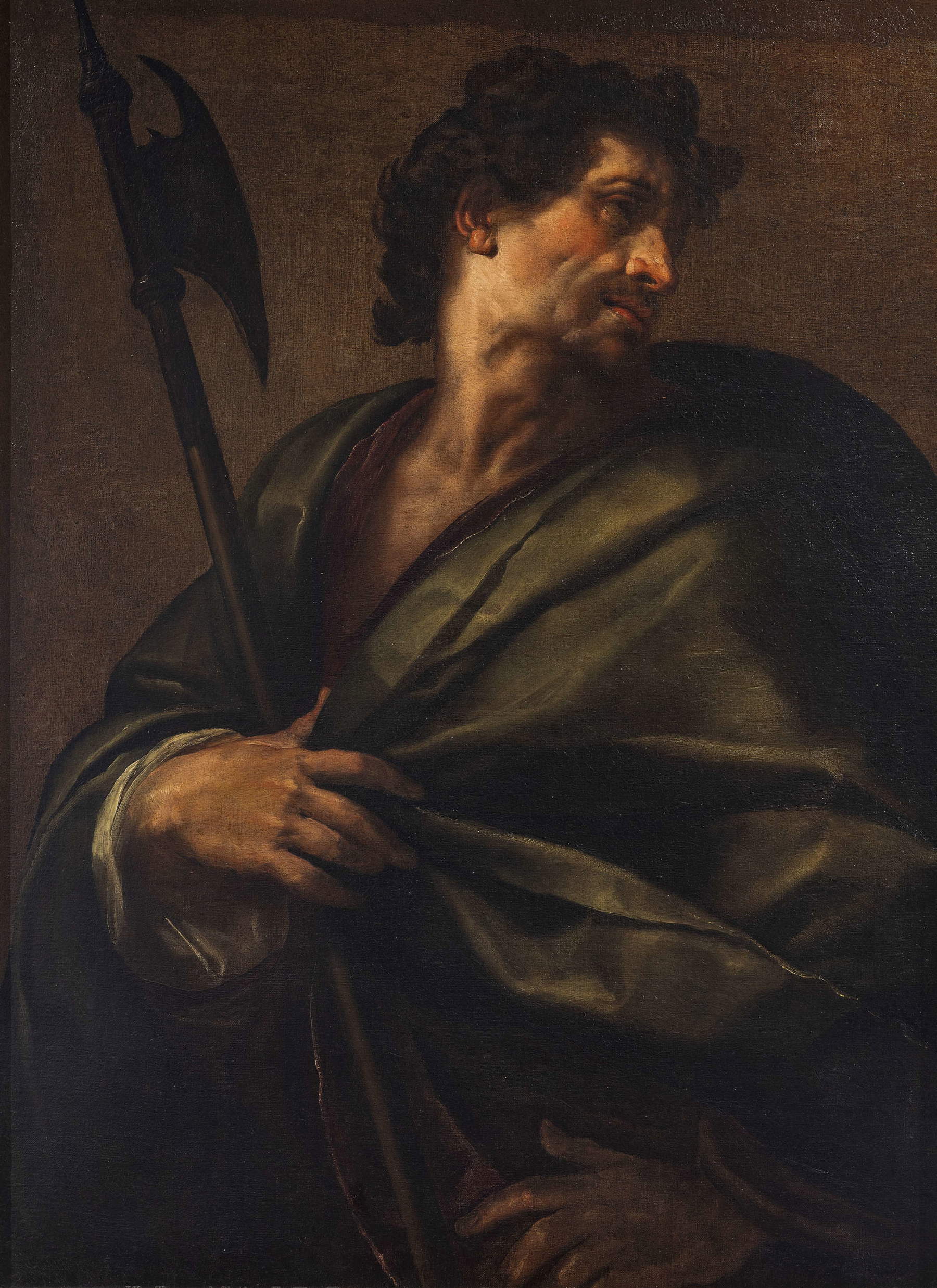
Six canvases reunited after more than 350 years: it happens in Genoa, where from March 7 to July 19, 2026, the Strada Nuova Museums presents the exhibition Giulio Cesare Procaccini. The Apostles Reunited, set up in the rooms of Palazzo Rosso. The exhibition represents a particularly significant opportunity for study and rediscovery because it allows the six surviving canvases of the Apostles series made by painter Giulio Cesare Procaccini (Bologna, 1574 - Milan, 1625) to be reunited at a distance of three and a half centuries, commissioned by Genoese patrician Giovan Carlo Doria. The exhibition is made possible thanks to the support of the Goldfinch Fine Arts gallery and is an exceptional event in the panorama of initiatives dedicated to early 17th-century painting. In fact, the works on display belong to a cycle that originally included images of the twelve Apostles, completed by images of Christ and the Virgin for a total of fourteen canvases, now partly dispersed or untraceable. The six works that have come down to us are brought together for the first time in centuries, offering a chance to reconstruct at least in part the unity of an artistic project conceived in the early 17th century.
The exhibition is curated by Raffaella Besta, head of the Polo Musei d’Arte Antica of the Municipality of Genoa, Odette D’Albo, author together with Hugh Brigstocke of the monograph dedicated to the painter published in 2020, and Marco Franzone, the art historian who identified and recognized the paintings depicting St. Peter and St. Bartholomew now preserved in two different private collections. Precisely these two paintings constitute one of the most relevant elements of the exhibition. The canvases featuring St. Peter and St. Bartholomew, in fact, had never been exhibited to the public before. Their presence makes it possible to broaden our knowledge of the series and to offer scholars and visitors a more complete picture of the work Procaccini produced for his most important Genoese patron. The exhibition also provides an in-depth look at the relationship between Procaccini and Giovan Carlo Doria, one of the most significant artistic relationships in early 17th-century Genoa. Procaccini, a painter from Emilia but Milanese by adoption, was known for his ability to blend different stylistic elements into an original synthesis. Indeed, in his painting we find the grace and elegance of Antonio Allegri known as Correggio and of Parmigianino, combined with an expressive force and chromatic vitality that recall the painterly energy of Peter Paul Rubens. Giovan Carlo Doria, third son of the able merchant and doge Agostino Doria, was one of the finest collectors in early 17th-century Genoa. A man of great wealth and sophisticated taste, the patrician gathered an extraordinarily important collection in his palace in vico del Gelsomino, now vico Monte di Pietà. The building, which no longer exists, housed more than sixty works by Procaccini, evidence of the artist’s centrality in the Genoese nobleman’s collection. This privileged connection contributed decisively to the spread of Procaccini’s style in 17th-century Ligurian painting. Indeed, his works influenced some of the most important painters active in Genoa during the Baroque period, including Bernardo Strozzi and Domenico Piola.
According to sources, Procaccini stayed at Doria’s residence in Genoa in 1618, probably to carry out one of his most prestigious commissions in the city, the large Last Supper intended for the church of the Basilica of Santissima Annunziata del Vastato. This episode testifies to the close collaboration between artist and client and represents an important stage in the painter’s career. In immediately following years, by 1621, Doria commissioned Procaccini to paint the monumental cycle dedicated to the Apostles. The idea seems to have been conceived taking inspiration from a famous similar cycle made by Rubens for the Duke of Lerma between 1610 and 1612, now in the Prado Museum in Madrid.
The Apostles series is first documented in the inventories of the collection of Giovan Carlo Doria, for whom Procaccini worked between 1611 and 1622. The canvases are also mentioned in a letter from the painter Simon Vouet addressed to Doria himself in 1621, in which the artist recounts having seen them in Procaccini’s house-workshop located in the Porta Romana area of Milan. A further epistolary testimony, written by Orazio Fregoso to the patron in December of the same year, reports a serious infirmity that had struck Procaccini. It was precisely this news that had led some critics to speculate that not all the canvases were executed directly by the master and that some of them may have been entrusted to workshop collaborators. According to this interpretation, only the painting depicting St. Thomas would have been done entirely by Procaccini, while the others, believed to be of inferior quality, would have been the work of assistants. However, this hypothesis has been gradually downgraded by more recent studies. The latest restorations have in fact highlighted the homogeneity of the pictorial quality of the canvases, suggesting a direct participation of the artist in the entire cycle. Subsequent events in the collection led, however, to the dispersion of the series. After the death of Giovan Carlo Doria and his only son, the collections were divided among the heirs. The Apostles are documented together for the last time in 1674; later the cycle was dismembered and some works were lost or can no longer be traced.
Four paintings from the series, depicting St. Simon or St. Jude Thaddeus, St. Paul, St. Matthew, and St. Thomas, landed in 1874 in Palazzo Rosso, where they are still preserved. These works constitute the historical core of Procaccini’s presence in Genoa’s civic collections and represent one of the points of reference for the study of the artist’s activity in Liguria. The identification of the saints represented in the works is made possible by the iconographic attributes that accompany each figure. St. Paul is depicted with his hand resting on the hilt of the sword, the symbol of his beheading; St. Thomas holds a spear, the instrument of his martyrdom; St. Simon is represented with the book; St. Matthew with the halberd, the weapon with which according to tradition he was killed; St. Peter with the keys; and St. Bartholomew with the knife.
The figures are distinguished by their monumentality and strong plastic presence. The bodies are characterized by a pronounced twisting motion and a solid structure that gives the figures an obvious sculptural relief. This approach also derives from Procaccini’s training as a sculptor: in fact, between 1591 and 1599 the artist worked on the building site of Milan Cathedral, an experience that profoundly influenced his later pictorial production. Another distinctive feature of the canvases is the marked use of chiaroscuro, a formal choice that brings Procaccini closer to the trends widespread among Lombard painters active in the early seventeenth century in the context of religious patronage linked to the culture of the Counter-Reformation. The main protagonists of this context include artists such as Giovan Battista Crespi known as Cerano and Pier Francesco Mazzucchelli known as Morazzone.
The paintings’ collecting histories testify to the long journey that brought some of these works to Genoa’s civic collections. The four Apostles kept in Palazzo Rosso entered the palace’s collection around 1730 thanks to the purchase made by Giovanni Francesco II Brignole-Sale. Previously the works had passed through several hands within the Genoese aristocracy. After the dismemberment of the Doria collection, one of the Apostles was purchased by Ottavio Centurione, while five others were bought by Cristoforo Centurione Oltremarini. The latter’s son, Pietro Francesco Centurione, later sold four canvases, including one with St. Matthew, to Gio Francesco II Brignole-Sale. The works are mentioned in the 1756 museum catalog, where they appear to have been placed in the Hall of the Life of Man in Palazzo Rosso. They finally reached Genoa’s civic collections in 1874 thanks to the donation of Maria Brignole-Sale, who donated the family’s important artistic heritage to the city.
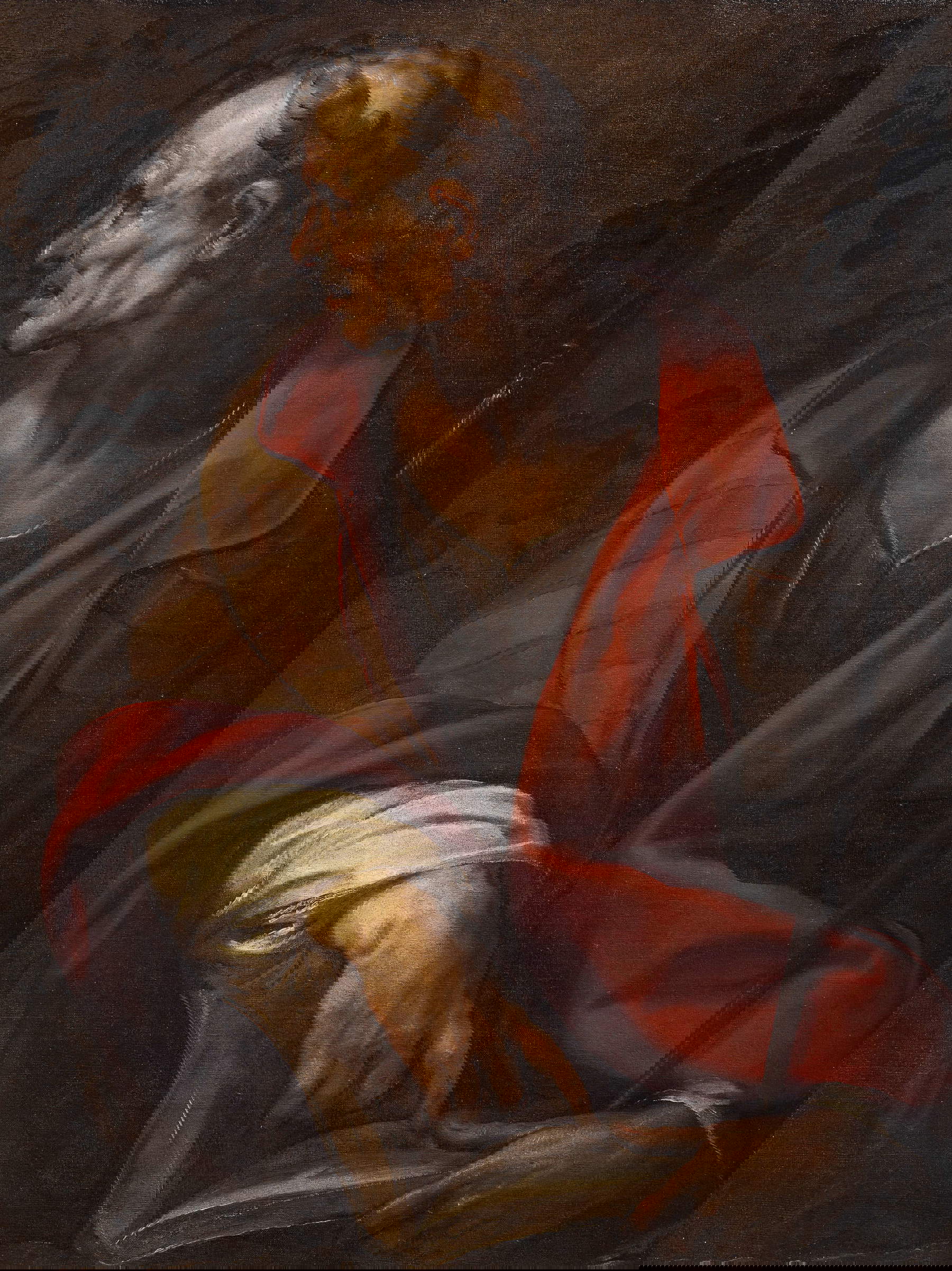
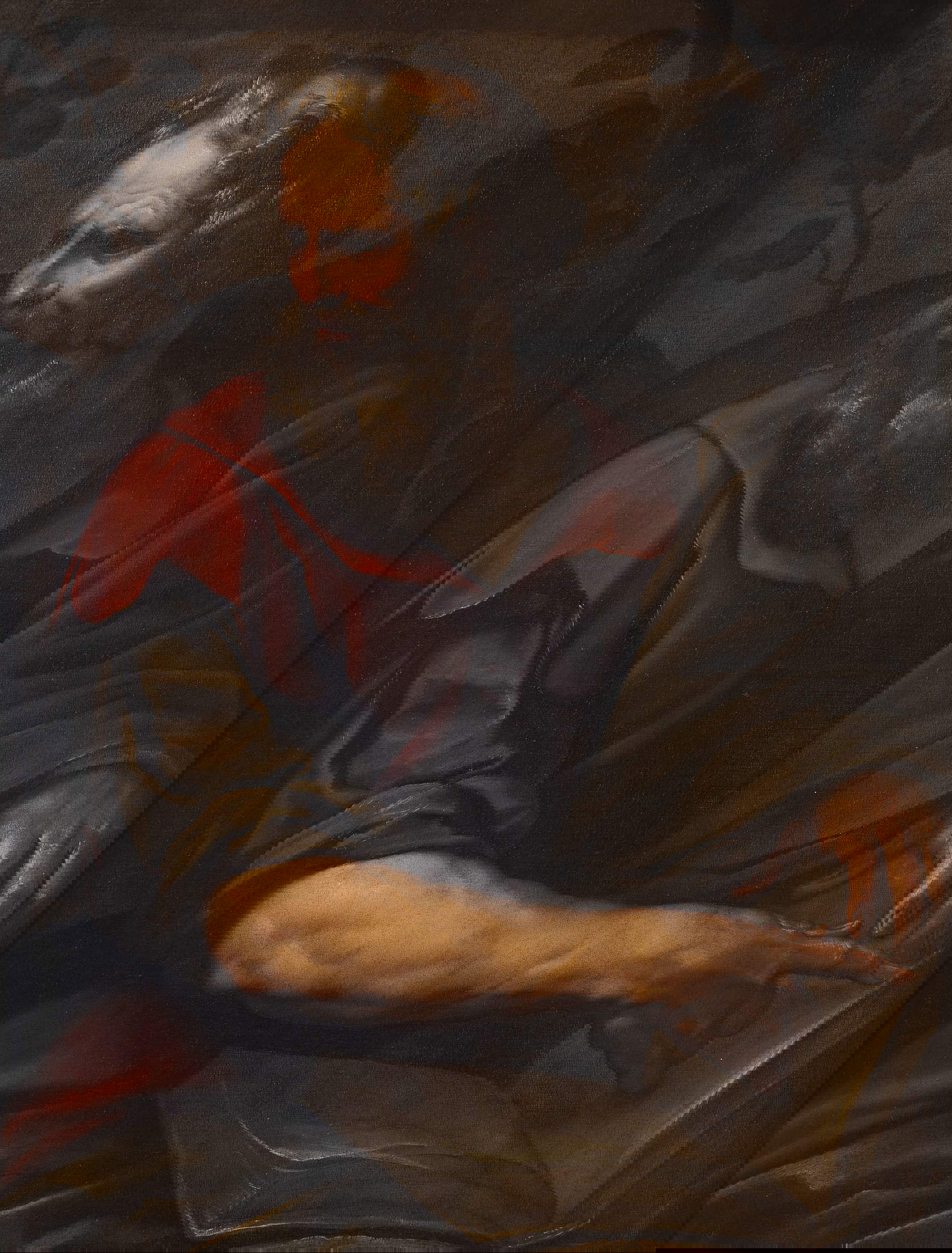
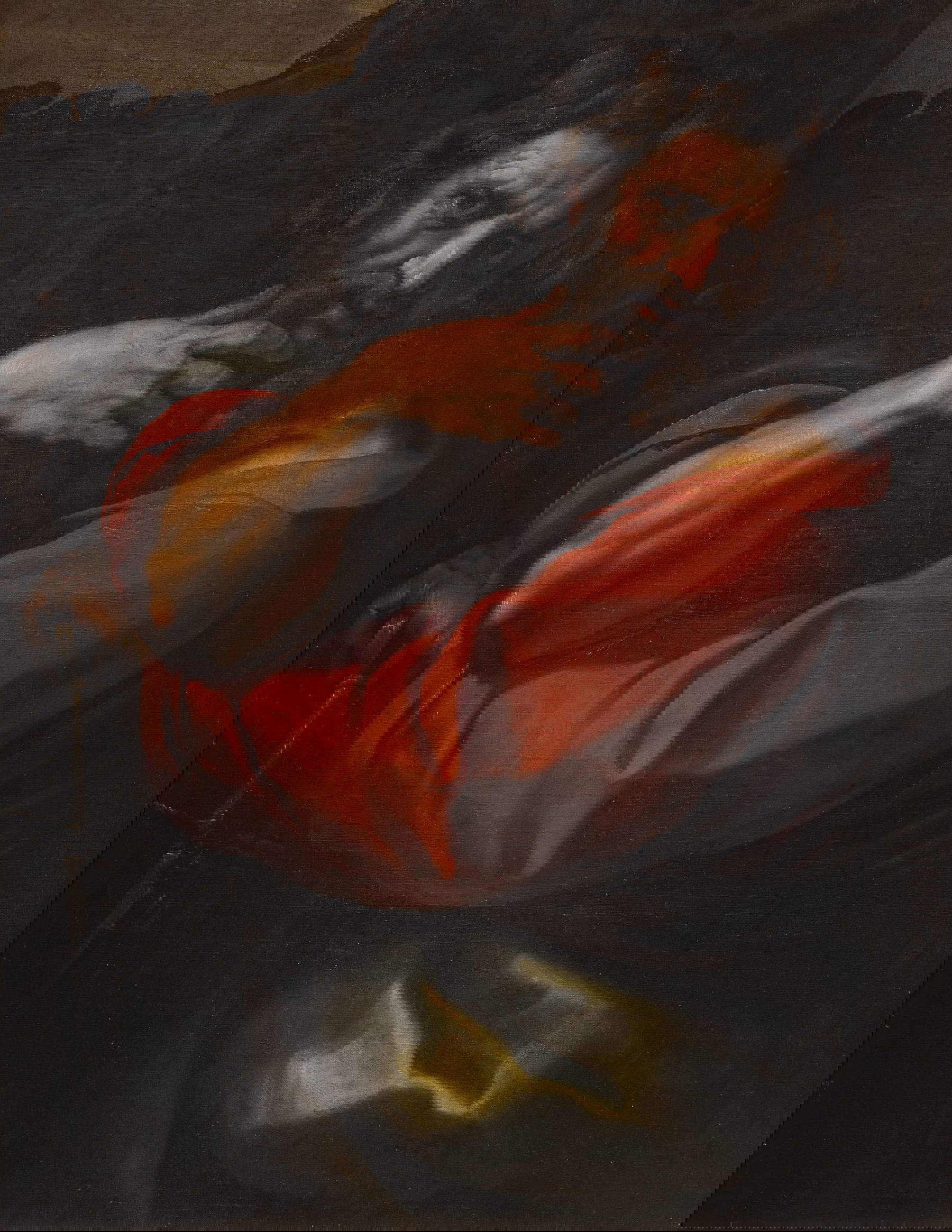
Procaccini, as mentioned, was probably inspired by the series of Apostles made by Rubens and now in the Prado in Madrid. Compared to the Flemish painter, however, Procaccini’s version appears less Baroque and closer to Mannerist sensibilities. Indeed, the human figure, sculptural and monumental, tends to occupy the entire space of the canvas, creating an effect of strong physical presence but at the same time formal concentration.
Over time, the paintings have undergone several restorations. In particular, the St. Matthew was restored in the 1990s, when elements emerged that allowed for a better understanding of the work’s conservation condition. The restoration revealed that an earlier intervention, carried out in 1959, had compensated for some unraveling and abrasions of the paint film, however, causing a certain flattening of the chromatic quality.
The exhibition set up at Palazzo Rosso is therefore a moment of particular importance for the reconstruction of the history of this pictorial cycle. By reuniting the surviving canvases and bringing to light works never before exhibited to the public, the exhibition offers the possibility of rediscovering a significant chapter in early 17th-century Genoese Baroque painting and collecting. At the same time, the initiative represents an invitation to research and study, in the hope that other canvases belonging to the same series may emerge in the future, so that further completeness may be restored to the project conceived more than four centuries ago.
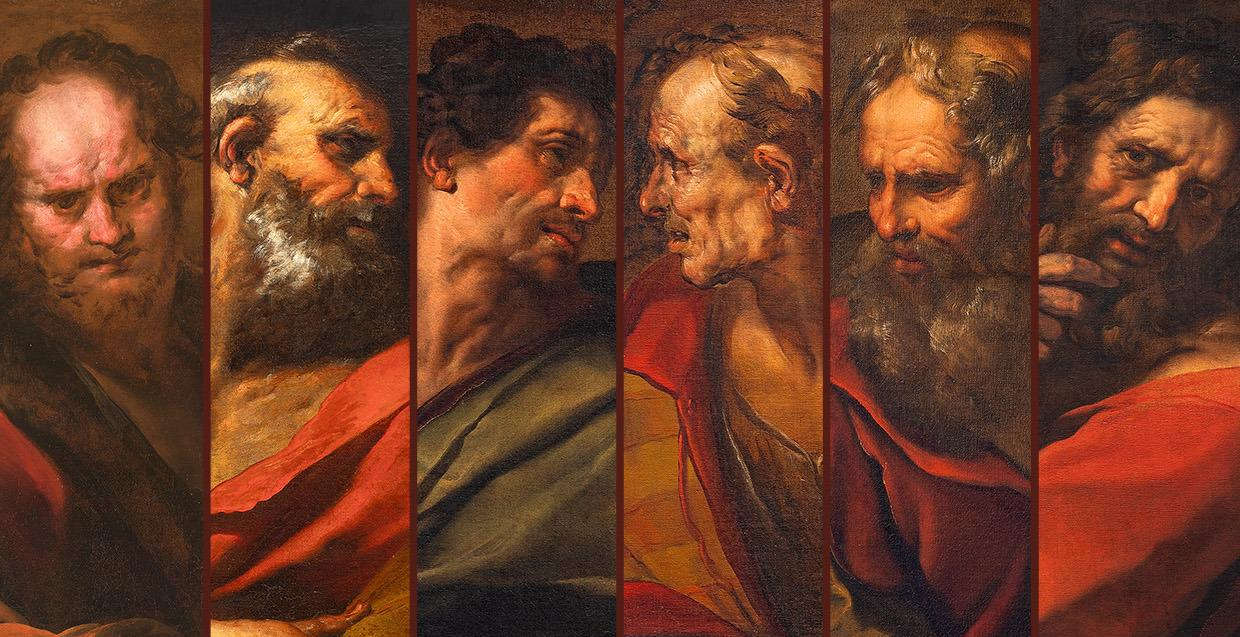 |
| Genoa, six apostles from a precious Procaccini cycle reunited after 350 years |

Warning: the translation into English of the original Italian article was created using automatic tools. We undertake to review all articles, but we do not guarantee the total absence of inaccuracies in the translation due to the program. You can find the original by clicking on the ITA button. If you find any mistake,please contact us.













 IT
IT FR
FR DE
DE ES
ES CN
CN