





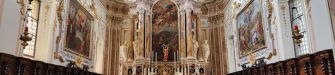
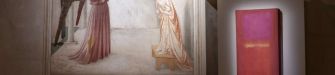
The fresco Madonna del Latte with Child between Saints John the Baptist and Bartholomew is back on view in the Florentine church of Sant’Ambrogio after a restoration supported by Friends of Florence and carried out by Cristina Napolitano under the High Supervision of the ABAP Superintendency of Florence. The work, which was presented on December 11, 2025, had won the Friends of Florence Salone dell’Arte del Restauro di Firenze award in 2024, a recognition that had enabled the start of a project aimed at recovering one of the most important artifacts preserved in the religious building.
“We are really pleased,” stresses Friends of Florence President Simonetta Brandolini d’Adda, “to present today the fresco of the Madonna del Latte in Sant’Ambrogio, a restoration that allows us to return to the community a fundamental piece of the Florentine Trecento, confirming once again the commitment of our Foundation in the protection of the city’s historical and artistic heritage. We thank the parish priest of S. Ambrogio and S. Giuseppe for his willingness to accommodate our project, the ABAP Superintendence of Florence for the High Supervision and the restorer Cristina Napolitano who carried out the intervention. We are also pleased to thank Dr. Claudio Paolini a great friend of our Foundation and a member of the Prize jury who accompanied us with his expertise in this project as well.”
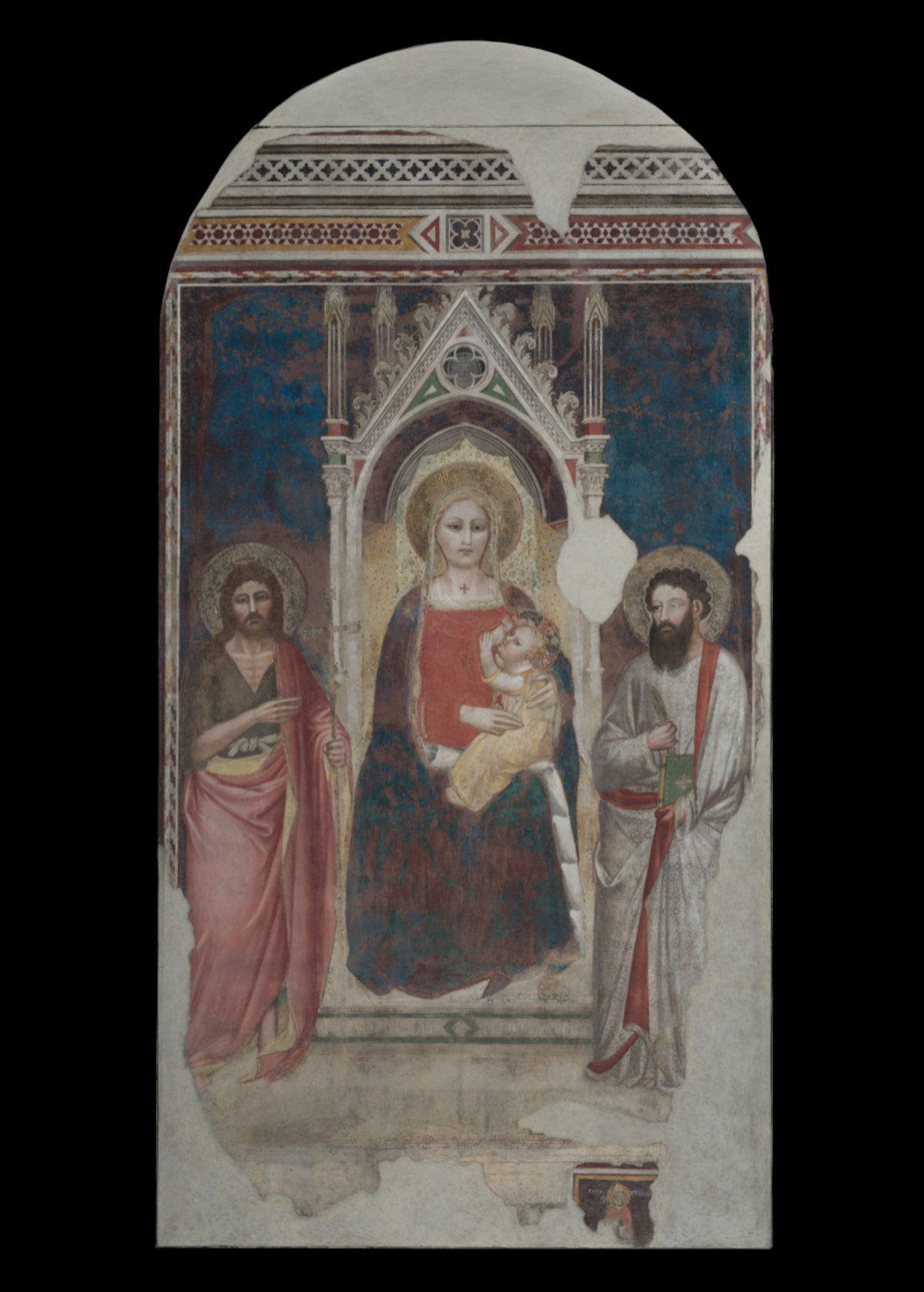
“Although the reference to the conventional name of ’Master of the Rinuccini Chapel’ has been retained for the Sant’Ambrogio fresco,” declares Claudio Paolini, art historian and member of the Friends of Florence Jury, “in his more in-depth art historical fact sheet coupled with this press release, which thus continues (due to the titling of the award-winning project), the current restoration, leading to the greater legibility of the figures and highlighting some peculiarities in the master’s execution technique, has allowed for a more timely comparison with other works traced back to Matteo di Pacino. With the restoration of the fresco, the Friends of Florence, have not only chosen to contribute to the preservation of a distinguished work of art, but once again, have made it possible to recompose a further piece of the history of the city of Florence.”
“The Madonna del Latte,” stresses Don Daniele Rossi, pastor of S. Ambrogio and S. Giuseppe, “is not just a simple late Gothic devotional image, but a true visual synthesis of medieval Scripture and exegesis: from the Lucan verse attesting to Jesus’ breastfeeding to Isaiah’s prophecy about Mother Jerusalem, from the spiritual interpretation of the Song of Songs to the ecclesial and Eucharistic reading of ’spiritual milk. A reflection that restores to the work all the depth of its message: the Incarnation made visible in the concreteness of maternal nourishment.”
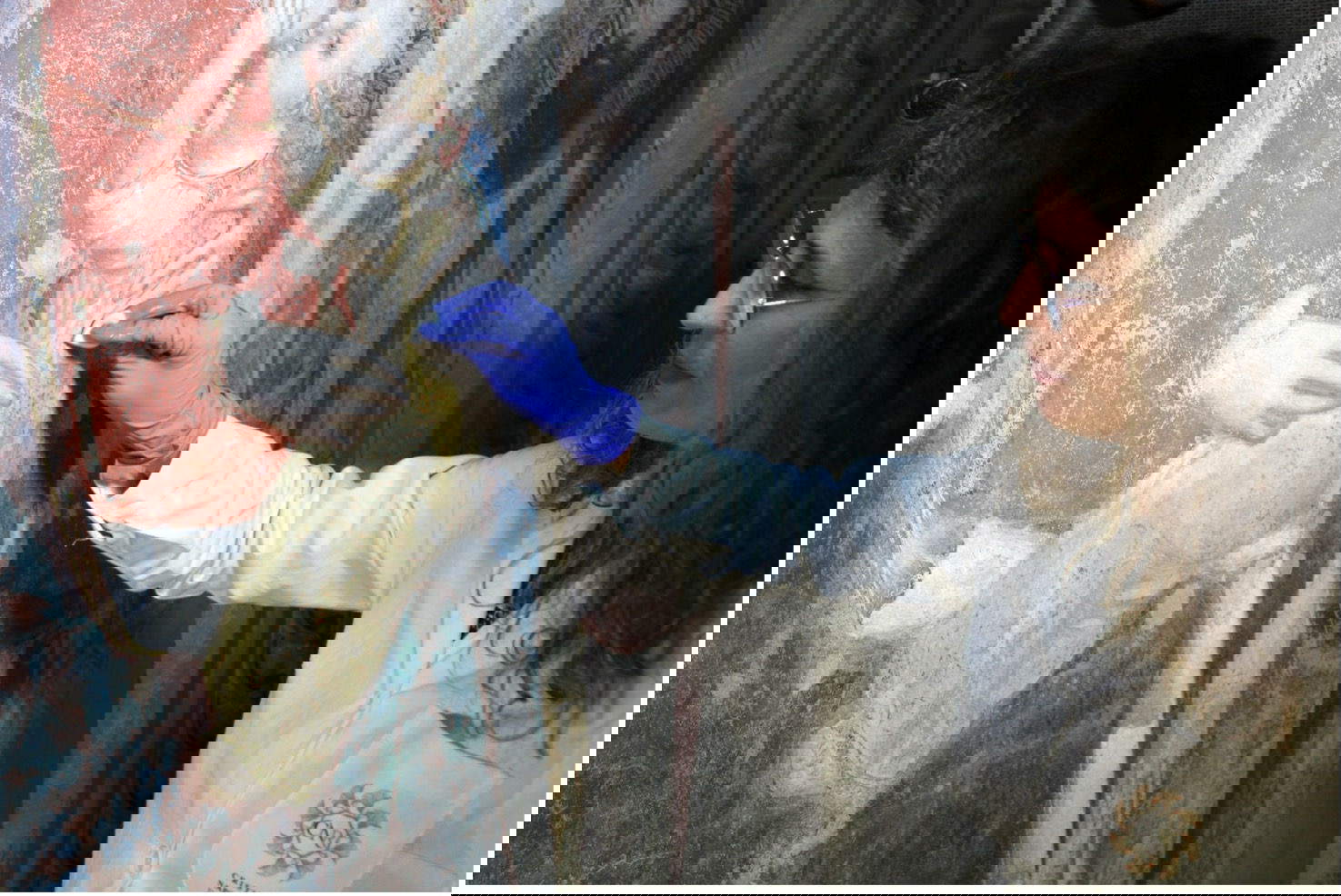
“It was a privilege to work on this extraordinary painting,” says Cristina Napolitano, “I hope that with my work, the work will be appreciated by all visitors to the church who love art and respect it. It has been a privilege to work on this extraordinary painting. I hope that with my work, the work will be appreciated by all visitors in the church who love art and respect it.”
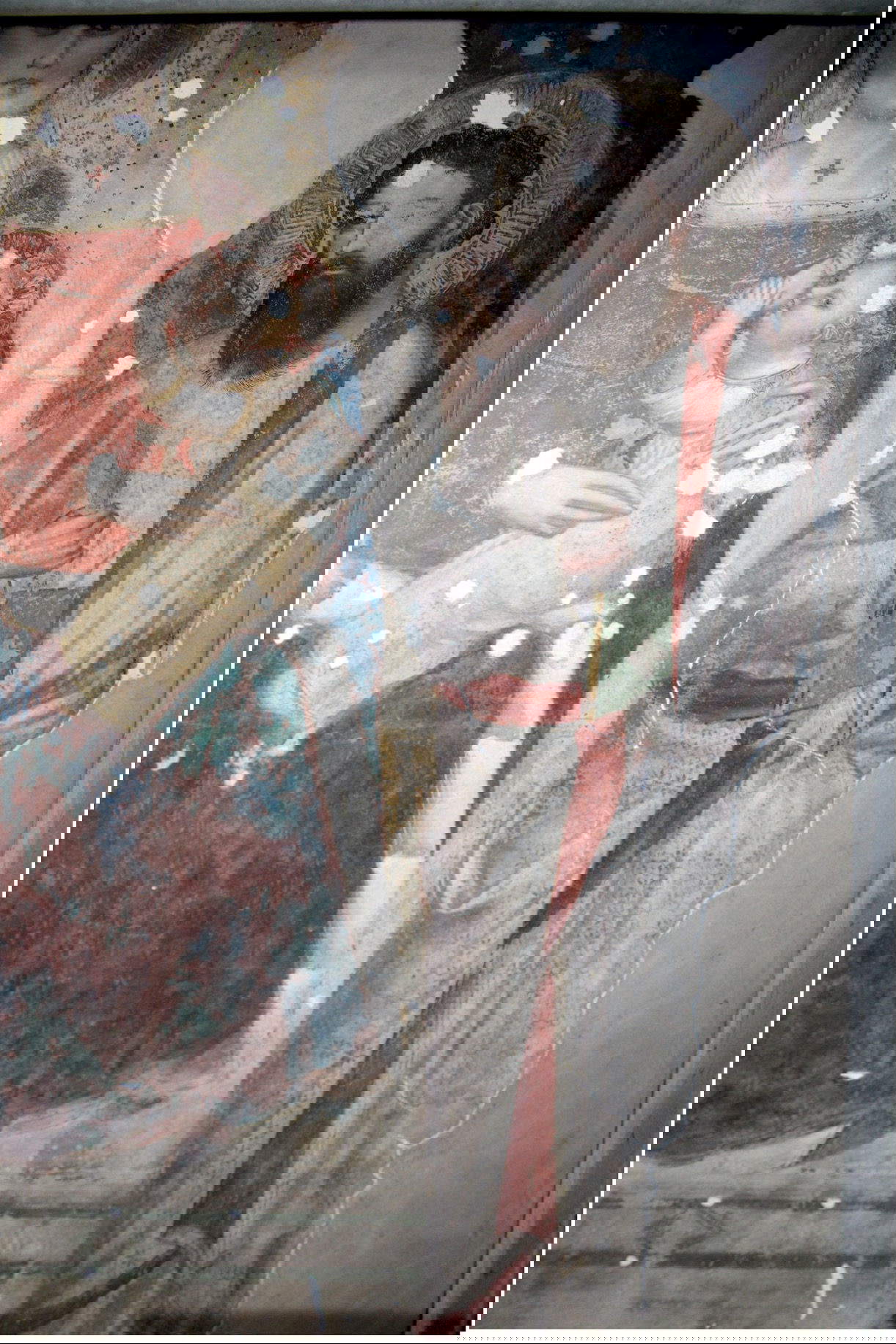
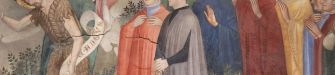
The fresco depicts the Virgin nursing the Child, flanked by Saints John the Baptist and Bartholomew. In the lower part appears the figure of St. Ambrose within a distinct panel. The painting represents one of the oldest testimonies dedicated to the saint in the building connected to the ancient Benedictine monastery, an institution that from the 14th century contributed to the urban transformation of the area, fueling the growth of an active and expanding neighborhood. The attribution of the work has gone through several critical phases. In the past the work was approached to the school of Giotto, then to personalities such as Orcagna, Spinello Aretino and Agnolo Gaddi. More recent research has instead directed the study toward the so-called Master of the Rinuccini Chapel, with whom in 1973 Luciano Bellosi associated the name of Matteo di Pacino, a painter of Orcagna training active between 1359 and 1374. The painting retains a stratification of conservation events that has clearly marked its appearance: it was hidden under successive whitewashes, rediscovered in 1839 and restored several times. Around 1960 it was also subjected to tearing and transferred to a movable support, a decision that further altered its subject matter.
The conservation conditions prior to the restoration showed widespread criticalities. As indicated by studies conducted during the intervention, some areas revealed the effects of past cleaning with aggressive or corrosive products. The surface also retained non-original materials of a different nature: solid particles mixed with smoky black, synthetic filmogenic residues particularly in the azurite background of the Virgin’s mantle, and inorganic-type substances traceable to oxalates. In several places the color was thinned or completely lost, compromising a coherent reading of the composition. The site planned a gradual cleaning methodology, set to remove foreign elements without affecting the surviving material. Overly intrusive plasterwork, applied in previous restorations and protruding from the level of the painted plaster, was partially removed and replaced by new plaster at the gaps. Pictorial integration focused on calibrated undertones and chromatic selection aimed at avoiding interpretive overlaps, so as to keep the distinction between original and reinstatement recognizable.
The main objective of the work was to recover the legibility of the image, compromised by the long history of the fresco and its modifications. The intervention made it possible to restore visual unity to the scene, highlighting the formal details that characterize the language of the Master of the Rinuccini Chapel. The re-emergence of the original drafts, where still present, also clarifies the technical quality of the painter and the work’s role in the Florentine artistic panorama of the second half of the 14th century. With the conclusion of the restoration, the Madonna del Latte once again returns to the center of the liturgical space of the church of Sant’Ambrogio, offering a historical testimony relevant both to the study of the neighborhood and to the knowledge of fourteenth-century pictorial production.
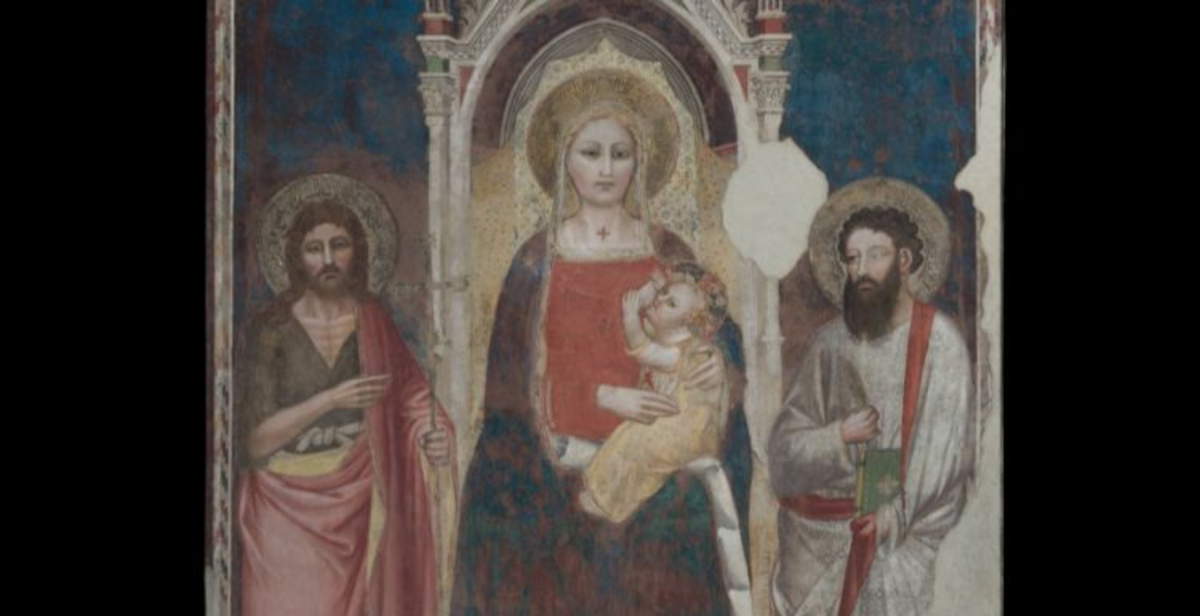 |
| Madonna del Latte by the Master of the Rinuccini Chapel restored |

Warning: the translation into English of the original Italian article was created using automatic tools. We undertake to review all articles, but we do not guarantee the total absence of inaccuracies in the translation due to the program. You can find the original by clicking on the ITA button. If you find any mistake,please contact us.















 IT
IT FR
FR DE
DE ES
ES CN
CN