




by Bruno Zanardi 03/01/2026



Categories: Opinions / Disclaimer
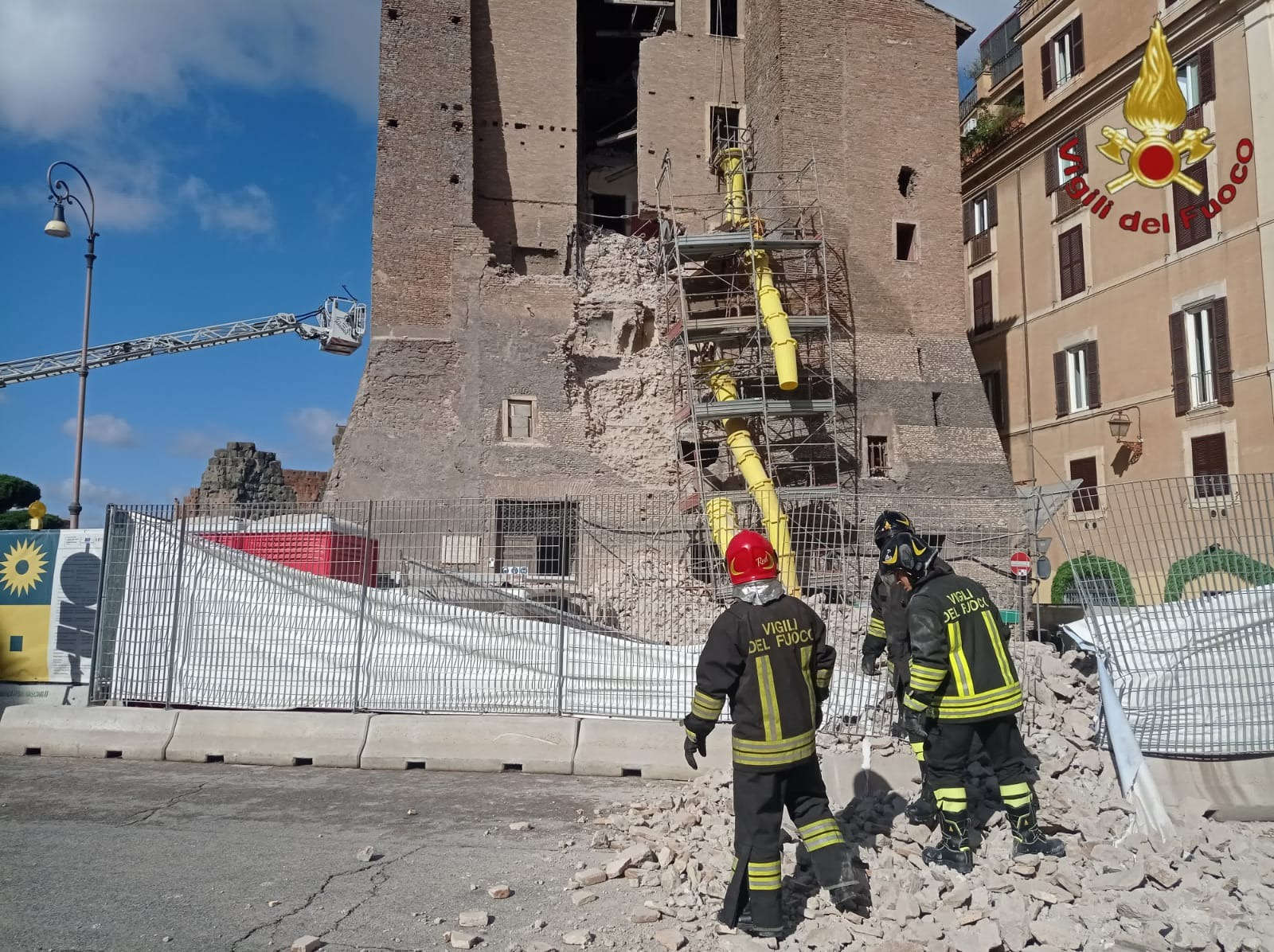
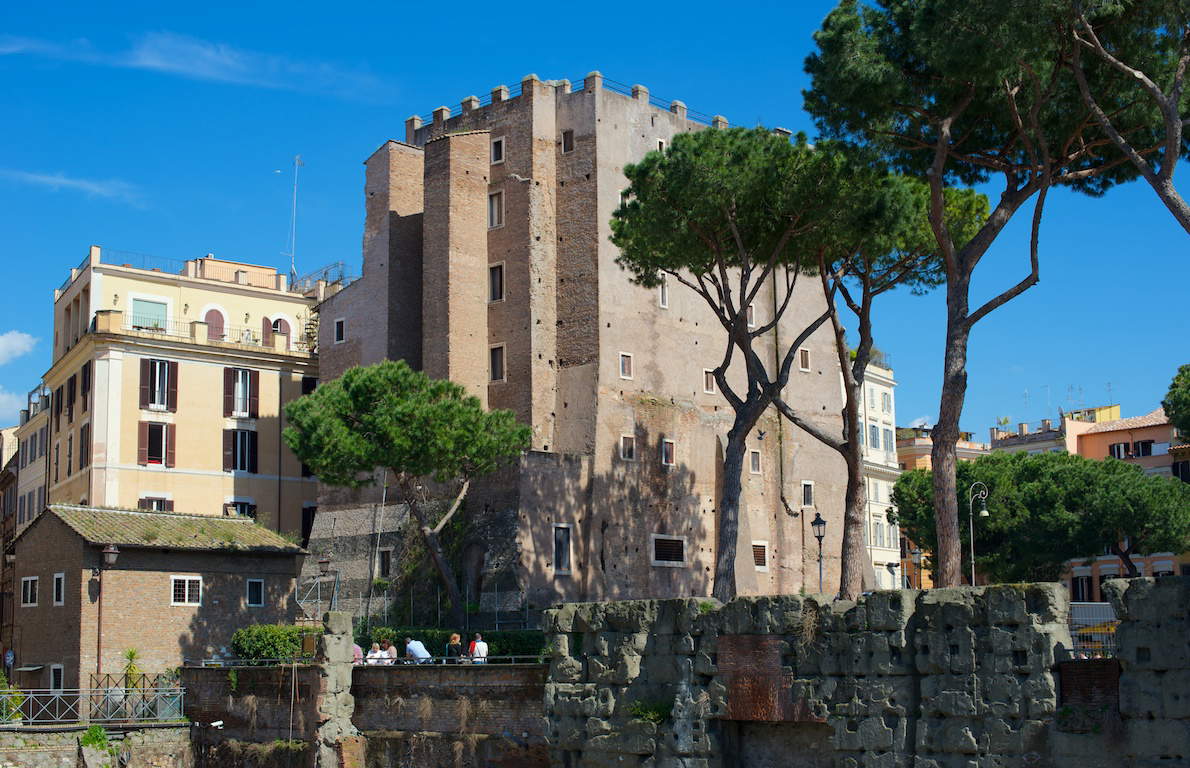
The collapse of Tor de' Conti is not a fatality, but the outcome of decades of political and cultural choices that neglected planned conservation. From the Florence flood to Urbani's projects, a history of knowledge gained and systematically removed. Bruno Zanardi's opinion.
It was two months ago that the “Tor de’ Conti,” a noble building erected in the Middle Ages in the Imperial Forum area, collapsed. And it is unbelievable, but unfortunately true, that in 2025 one of Rome’s most significant historical buildings could suddenly fall to the ground, causing one death and some injuries. A story, I repeat, unbelievable, albeit true, that compels a reflection on how the preservation of our artistic heritage has been defined over the last half century, namely, in the words of Roberto Longhi, the “highest poetic testimony that the West has given since the days of ancient Greece and also the principal wealth that remains to us.”
A reflection made all the more bitter by the fact that, thanks to the research work conducted by the Central Institute for Restoration (Icr) during the directorships of Pasquale Rotondi (1961-1973) and Giovanni Urbani (1973-1983), Italy has known for half a century in detail what the’methodological organization, i.e., “the technique” (Heidegger), which, when its principles had become current texts of study in universities and habitual tools of work of the supervisory bodies, would in all probability have avoided the tragedy of Tor de’ Conti. A technique that has an eminently preventive character “to which - in the words of Urbani himself in 1976, half a century ago - we give the name of ’programmed conservation,’ which is of necessity directed, before that towards individual assets, towards the environment that contains them and from which all the possible causes of their deterioration come. Its goal is the control of these causes, to slow down the speed of deterioration processes as much as possible, intervening, at the same time and if necessary, with maintenance treatments appropriate to the various types of materials.”


Planned preservation being used for the first (and only) time by Icr in the intervention on one of the major damages caused by the November 4, 1966 Florence flood: having flooded the waters of the Arno River the most important Florentine churches thus submerging for several days in waters rendered putrid by the bursting of sewers and tanks for the naphtha of domestic heaters an enormous number of paintings, among them 230 works on panel executed by some of the most important masters of our art history: from Cimabue to Beato Angelico to Bronzino. What had resulted was severe expansion of the support wood and a loss of cohesion of the gesso and glue preparation of the color. A series of problems that also had to be solved as a matter of great urgency, that is, before the support wood of the paintings began “to dry” and, by contracting, caused its paint film to fall off.
They thus arranged, Rotondi and Urbani, for the 230 flooded panels to be sheltered inside the huge “Limonaia” of the Boboli Gardens where, in the meantime, an air conditioning system with an air flow rate of about 60.000m3/h designed ad hoc by two technical physicists from the University of Rome, Gino Parolini and Marcello Paribeni: the former a longtime member of Icr’s technical council, the latter who after that affair would become (with Giorgio Torraca) one of Urbani’s most listened-to scientific experts. After that, the flooded paintings undergo a slow and programmed dehumidification and sterilization with gamma rays and a sprinkling of antibiotics. So that in about two months the water content in the wood of the boards returns to normal 10% by weight while simultaneously preventing microbiological attacks and color fall-off from the boards. But above all, any form of artisanal restoration understood as a restorative intervention exercised directly on the material of the works is averted. In particular, it avoids practicing the transfer of the pictorial film from the boards onto a new inert support, that is, intervening with the barbaric technique called “Transport” as some wanted to do.
An intervention, the dehumidification of the whole of the flooded boards carried out by the Icr with the Institute of Technical Physics of the University of Rome, whose impeccable scientific rationale, such because it is both preventive and in relation to the environment, will not, however, be followed in the practice of the new Ministry that the Florentine journalist turned politician Giovanni Spadolini founded in1974. And indeed, in art. 11 of his founding law (Mar. 1, 1975, no. 44) he doubles the central function of the Icr by extending it to the Florentine Opificio delle Pietre Dure (Opd), a glorious Medici workshop founded in 1588 to produce semi-precious stone commissions, but not restorations. This was a decision that Spadolini made without agreeing with the Icr on its reasons and purposes, and which will sanction, in fact, the depowering of the role of an Icr that was then an undisputed point of reference in the world. What will allow general directors, superintendents, university professors and political professionals to take no account whatsoever of the innovative research works and work projects carried out by the Icr, whose direction in 1973 had passed from Rotondi, who had retired, to Urbani. Works and projects all dropped into thin air, which I list below and which account for the very harsh judgment given by Sabino Cassese on the Spadolinian ministry in the same 1975 of its founding: “The Ministry is an empty box. The measure [of its constitution] does not indicate a new policy and does not contain a reform of the legislation of protection; it consists of a mere transfer of offices from one structure [the General Directorate of Antiquities and Fine Arts, which until then had performed the function of Ministry] to another [the newly founded Spadolinian Ministry].”
1967. “The Historian’s Responsibilities in the Conservation and Restoration of Monuments and Works of Art.”
In June 1967, the International Committee on the History of Art(CIHA) organized a Conference in Venice on “The Historian’s Responsibilities in the Conservation and Restoration of Monuments and Works of Art.” A conference whose challenging title is in complete adherence to the fundamentals of planned conservation that Urbani was working on at the time with Icr, so much so that it may have been Urbani himself who suggested its title and theme. The Venetian meeting is in fact in direct line with the dehumidification of the 230 flooded Florentine panels with which in 1966, thus a year before the Venetian meeting, the Icr had averted the “transport” of their pictorial film onto a new support, thus avoiding an intervention that, if carried out, would have caused a massacre of those paintings. Moreover, an intervention, that of the Icr on the Florentine panels, perfectly in line with “the increasingly stringent need to subject to equal review all restoration procedures in use today indiscriminately”, as again in that 1966 Urbani had written in an article he published in the “Bollettino dell’Icr” on the intervention done by Icr to remedy the serious damage done to Caravaggio’s canvases in the Contarelli Chapel with crude artisanal interventions of lining made some 20 years earlier. And Urbani’s and Icr’s relations during these years with Vishwa Raj Mehra, the brilliant Indian restorer at the Central Research Laboratory of Art, Object and Science in Amsterdam who had invented the techniques of “cold” and low-pressure table lining of paintings on canvas, are well known.
Above all, however, Urbani writes his talk at the Venice conference having in the background the perfect technical result obtained by dehumidifying the set of 230 flooded Florentine panels. Hence the closing to his talk in which he warns that “it is only on the plane of the whole and the totality that science can come to us: for that is the plane on which it already moves on its own account. Unless we believe that science serves to make retouching better, and not to put paintings in the condition whereby they need retouching less and less.”
1969. Icr-Unesco project for a “Citadel of Restoration and Conservation”
In June 1969, a little less than sixty years ago, Pasquale Rotondi and Giovanni Urbani succeeded in having the Italian state purchase the immense seventeenth-century real estate complex of San Michele alla Lungara, then abandoned. Their idea is to make it a center for study and research and training on the model of the “Massachusetts Institute of Technology” (MIT), which at that time was working on the Report on “The Limits of Development” that had been commissioned by the “Club of Rome.” A project shared with the Scottish archaeologist Harold Plenderleith, the first and historical director of Iccrom, aimed at founding a Research Institute for Restoration that recognized as solved forever by Brandi’s Icr the critical problems between history and aesthetics posed by restorations and, hence, the futility of formulating other and useless duplications, to instead move on to define the foundations of a technological and organizational know-how with which to provide for the material preservation of historical and artistic heritages whose survival is increasingly threatened by the environmental issue, the one whose dramatic endpoint the Florence flood had told the world about.
And this is what Urbani writes in a text of his from those years where he also makes a prophetic mention of the issue of tourism today that has become another serious reason for the degradation of the artistic heritage: “I do not think, of course, that it is culturally decent to expect that the accounts of our interests come back with tourist income. However, if our country had a minimally educated view of the current state of the world, it would have to realize that it shares with some of the largest third countries the fate of having an environment in which the cultural-historical component has an exceptional prominence [So] it does not seem unrealistic to think that, among all Western nations, ours would or should be the best equipped to indicate how the preservation of the past can ensure, according to Plato’s saying, the salvation of all that exists [...]. Yet even the material testimonies of these traditions, not unlike our own, face a ruin that can only be countered by well-targeted technological innovations.”
A great project of international caliber, this Icr-Iccrom, which was, however, left to die by the Ministry, which instead made St. Michael’s a place to place other offices of its bureaucracy.
1971. “Public intervention against pollution.”
Five years after the Florence flood, the Institute for Studies on Economic Development and Technical Progress (Isvet) carries out a study on “cost-benefit” of action against pollution. The part concerning the artistic heritage is entrusted to Urbani, who produces a report in which he points out, among other things, that to the costs of the damage caused by pollution to the artistic heritage should be added “the expenses for preventive defense interventions even though of the same, quite incredibly, is never mentioned in any of the ministerial budgets from their origins to the present.”
Thus, Urbani also reiterates in this speech the centrality of prevention seen as one of the cornerstones of planned conservation, but also opens it up to the economy produced by a land defense action exercised on the basis of a precise knowledge of the environmental reasons for its degradation.
1973. First National Report on the Environmental Situation of the Country.
On June 29, 1973, the “First National Report on the Environmental Situation of the Country” is presented in Urbino. This was a major and entirely innovative research effort promoted and coordinated by an Eni, which in many ways was still that of one of the great Italians of the twentieth century, Enrico Mattei, and was sponsored by political organizations, government agencies, industrial and economic groups of international standing such as the UN, the OECD, Nasa up to, of course, Eni.
The main objective was to provide the relevant Italian bodies, “and in particular the planning authorities,” with “a cognitive support for environmental policy choices and for a suitable verification of their validity, also on the basis of the experiences of the most advanced foreign countries and of the programs and indications coming from international forums.” A great research work of which Urbani is in charge, with the Icr, of the part concerning the protection of the artistic heritage. But a research work that finds ideological and violent opposition from a policy then entangled in an ideal conservation of the artistic heritage, that of “cultural goods,” and which therefore remains without follow-up. The first report on the environment, and it was a crime of politics. Cultural goods, and it was proof that they could only be part of a cheerful country fair anthropology.
1973. “Problems of Conservation.”
In that same 1973 “First Report on the Environment” the Icr published “Problems of Conservation.” A volume in which Urbani, with the open support of the then director of Icr, Pasquale Rotondi (and here I like to recall the esteem, affection and respect that bound them together), promoted a vast research work for the first time devoted to a branch of materials science open to possible applications to the artistic heritage. A series of explorations outside the world of restoration aimed at making Icr a place open to a wide range of collaborations with industry research laboratories. The same ones that Eni had demonstrated by founding “Tecneco” in 1971, a company that dealt with ecological issues and had collaborated with Icr and Urbani on the conservation of the artistic heritage part of the “First Report on the Environment.”
But a project that was immediately rejected by the Ministry of Education, which, through the Directorate General of Antiquities and Fine Arts, which at the time was also acting as the “Ministry” of Cultural Heritage, refused to give its patronage to that volume. So that “Problems of Conservation” comes out under the auspices of the Ministry of Scientific Research. And it is obvious that, on these premises, the volume was immediately put on a shelf in the libraries of the Superintendencies and Universities and there it still lies, untouched.
1975. “Pilot Plan for the Planned Conservation of Umbria’s Cultural Heritage.”
Between 1974 and 1975 Urbani drafted the “Pilot Plan for the programmed conservation of cultural heritage in Umbria.” An executive research project that deferred to a field verification of both the extent and territorial distribution of Umbria’s heritage and the various factors of deterioration to which it was exposed. A new way of looking at restoration and conservation based on “the need-as Urbani had already written in the introduction to ”Problems of Conservation,“ then in 1973-to found a methodology for the detection of data that report on the current state of the thing to be conserved as a measurable entity, from which the appropriate techniques to slow down its continuous evolution as much as possible can be objectively deduced.”
But “Umbria’s Pilot Plan,” which for these organizational and technical-scientific revivals is recused by all. By the newly founded Ministry of Cultural Heritage then by the Superintendents, by the University. By the associations for the preservation of cultural heritage and the environment. Finally by the politics that will produce criticism whose level is attested by what an archaeologist from the University of Perugia wrote in a then important newspaper saying it was “of very low cultural level and largely uninformed, in fact a precise attack on the proposals put forward by the forces of the left, and in particular by our Italian Communist Party, for a more democratic management of cultural heritage.”
1978. "Course on the Maintenance of Wall Paintings - Mosaics - Stuccoes" (DIMOS).
Given the cultural (and human) level of the controversy against the Umbrian Plan, Urbani decides that Icr should intervene on training in the field of conservation and restoration. He did so by producing the didactic tools to train, not restorers, but figures who would primarily carry out maintenance interventions, that is, the technical action that because of its preventive character is of fundamental importance in planned conservation. So that between 1978 and 1979 a number of scientific experts who normally collaborated with Icr and restorers from within Icr wrote the texts of a “Course on the Maintenance of Wall Paintings - Mosaics - Stuccoes” (DIMOS). The result is a work rendered in small volumes that are easy to consult but which, lingering in the absence of conservation action geared toward planned conservation, have a very modest circulation.
Little or none are read in universities, nor are they read in the restoration schools that Regions, Provinces. Professional Institutes and Trade Unions were in those years opening all over Italy following the “restoration fashion” that was then attracting many young people. The only exception was Dimos concerning original execution techniques. A text in some ways ancillary to the conservation theme, but cited by many because it was functional to the restoration between criticism and aesthetics of Cesare Brandi’s Theory, which even today is in fact a kind of restoration bible. While for the normalization of vocabulary this entered the Uni standards as a descriptive tool and at that merely formal stage it has substantially remained.
1983. “The Protection of Monumental Heritage from Seismic Risk.”
In 1983 Urbani promoted and coordinated a research work on the protection of the monumental heritage from seismic risk. A work that he carries out in close collaboration with CNR, Cresme, Enea, Enel, Ismes and some universities, opening it also to disciplines, such as seismology and building science. far more developed than historical criticism and aesthetics. And it is a research work that appears (still today) impressive for its intelligence, completeness of what is studied and respect for its institutional role. Suffice it in this sense to quote a passage from one of the “Notebooks” that accompanied the exhibition: “Not a few of the modern techniques of consolidation are to be considered ’irreversible,’ that is, no longer separable from the structural organism without the destruction of the latter. Moreover, for some of them, there are no methods for monitoring their state of efficiency over time, while it is certain that they can have negative effects on the preservation of the original materials. What is not, or is much less so, for ’historical’ techniques, whose major drawback is to present themselves ’on sight,’ that is, as additions or prostheses alien to the original architectural values. But when an inconvenience is such only for aesthetic judgment, it is within man’s creativity to be able to transform it into its opposite: the example of the consolidation of the Colosseum by Stern applies to all.”
That said, Icr’s work on “the protection of the monumental heritage from seismic risk” is rendered by Urbani in the form of an exhibition that can be set up easily and at a very low cost to thus be an opportunity for a theoretical and technical update on the issues of structural risks of historic buildings not only of superintendents and engineers, architects and surveyors active in the technical offices of the Superintendencies as well as of Regions, Provinces, Municipalities, but also of professionals simply registered with the Orders and students of Universities. So an exhibition with which the Icr once again honored its original function under the law (1240/39, Art. 1) as a place of research, control and coordination of the action of protection of the historical and artistic heritage on the national territory. But only two - Umbria and Puglie - of the then eighty or so Italian superintendencies, and no university or seat of professional order, requested the exhibition, which was therefore a failure: not, however, of Icr’s and Urbani’s work, but of those who let it pass before their eyes without understanding its importance. So as to make it legitimate to ask whether by following up then on the Icr’s work on earthquakes the Tor de’ Conti tragedy would have happened the same today. Collapse whose cause has not been understood, at least according to what we read in the newspapers, whether due to tampering with a static situation made fragile by improvised masonry work that produced the collapse of a buttress, or to the demolition of the building’s internal staircase, or to work to carve out on its top floor an “architecturally creative” bar for tourists with a view of the Imperial Fora, and so on.
2026. In conclusion?
In conclusion, I think great caution should be exercised in hoping that what was solemnly announced at the recent conference held by the Ministry of Cultural Heritage between Perugia and Rome five months before the collapse of Tor de’ Conti will soon get underway. A conference at which the ministerial will was announced to give way to planned conservation in relation to the environment of the historic and artistic heritage in the direction given by Urbani. Indeed, from the speeches, many of which were delivered by former Icr directors and officials, there was no awareness of how, after a sixty-year vacancy of concrete planned conservation actions both by the Ministry and by a University in which today one graduates by correspondence, that is, as seems to have really happened, one becomes a full professor of restoration by a judgment of the Tar, in that solemn assembly no one posed the problem of how, by whom, with whom and when the still perfect project conceived by Urbani in the work conducted from 1973’s “Problems of Conservation” to 1983’s exhibition on “The Protection of the Monumental Heritage from Seismic Risk” could be put into operation.
Obviously passing in primis through the “Pilot Plan for the programmed conservation of cultural heritage in Umbria” of 1975. Plan never implemented, but of which a brief description of the ways for its implementation remained made by Urbani himself in 1989, clarifying that: “The operational conclusions of that Plan, which not surprisingly was presented as an Executive Research Project, were postponed to the field verification of our project hypotheses. These consisted mainly of a series of indications about the extent and distribution of both the Umbrian heritage and the various factors of deterioration to which it was presumably subjected. Indications in some cases very detailed, but all resulting from known data, because they were published or otherwise inferable from normally accessible information, censuses or statistics. It was therefore a matter of identifying the most correct and least expensive method of assessing the relevance of such data to the state of affairs. What we did was to indicate the tools, methods, objects and places of what I then called ’field verification.’ On the outcome of this would then depend the choices to be made, within a certain number of variables that we had in any case defined, regarding the size, organization and working methods of a structure assigned to the conservation of Umbria’s artistic heritage. The final intent was obviously, once the Umbrian plan was realized, to derive from it the guidelines for a national plan.”
Warning: the translation into English of the original Italian article was created using automatic tools. We undertake to review all articles, but we do not guarantee the total absence of inaccuracies in the translation due to the program. You can find the original by clicking on the ITA button. If you find any mistake,please contact us.