





For the first time in its history, the Prado Museum in Madrid welcomes into its collections a sculpture by Luisa Roldán (Seville, 1652 - Madrid, 1706), one of the most extraordinary and long underrated figures of the Spanish Baroque. The entry of the work marks a moment of special significance not only for the Madrid institution, but also for the reinterpretation of the role of women artists in European art history. The name of Luisa Roldán, known as “La Roldana,” was already engraved on the museum’s façade among those of the great masters, but until now was not represented by any work in the permanent collections.
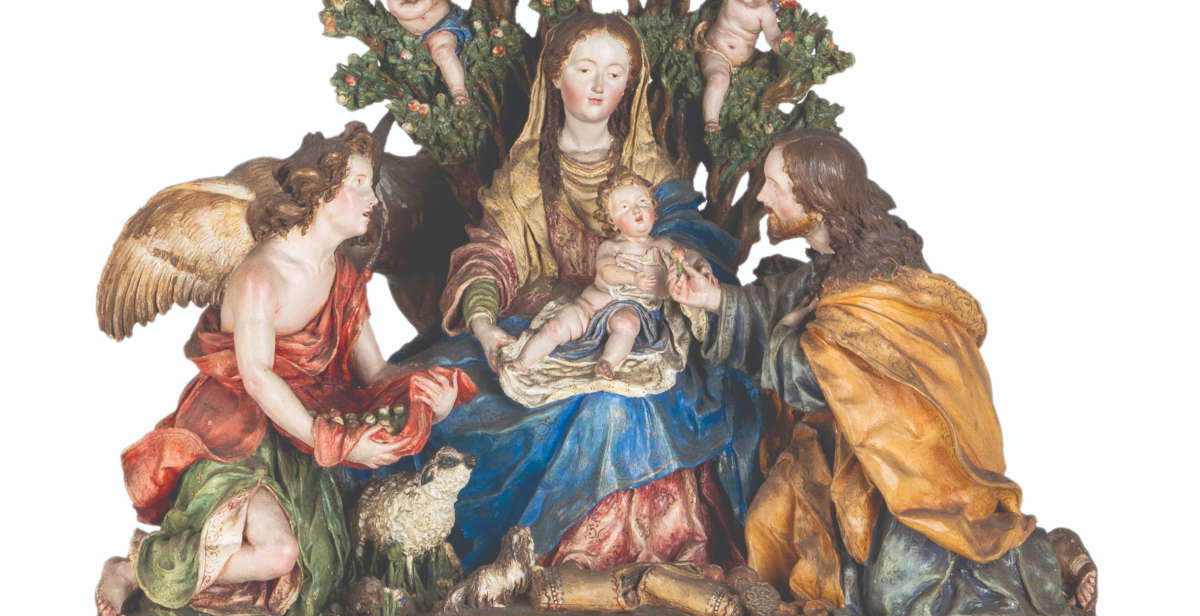
The work purchased, for the sum of 275,000 euros, is the Rest during the Flight into Egypt, a sculpture signed and dated 1691, made of polychrome terracotta. It is a sculptural group of extraordinary quality, fully testifying to the artist’s technical talent, expressive refinement and narrative originality. The work’s official entry was announced last December 18 and represents a fundamental step in the process of expanding and updating the Prado’s collections.
Luisa Roldán, who was born in Seville in 1652 and died in Madrid in 1706, was the first woman to obtain the title of “chamber sculptor” under the reigns of Charles II and Philip V. An exceptional career in a historically male-dominated context makes her a central figure for understanding not only the evolution of Baroque sculpture, but also the social and cultural dynamics of Spain between the seventeenth and eighteenth centuries. Despite the prestige he achieved during his lifetime, his museum recognition has long been incomplete, making this acquisition particularly significant.
The Rest during the Flight into Egypt depicts the Holy Family during a pause on the journey to Egypt. The scene is constructed with great attention to detail and reveals an extraordinary narrative sensibility. The Virgin, St. Joseph and the Child are included in a balanced and harmonious composition, enriched by naturalistic elements such as the tree that frames the group, contributing to a sense of intimacy and temporal suspension. The quality of the modeling, combined with the richness of color, demonstrates a full mastery of materials and techniques.
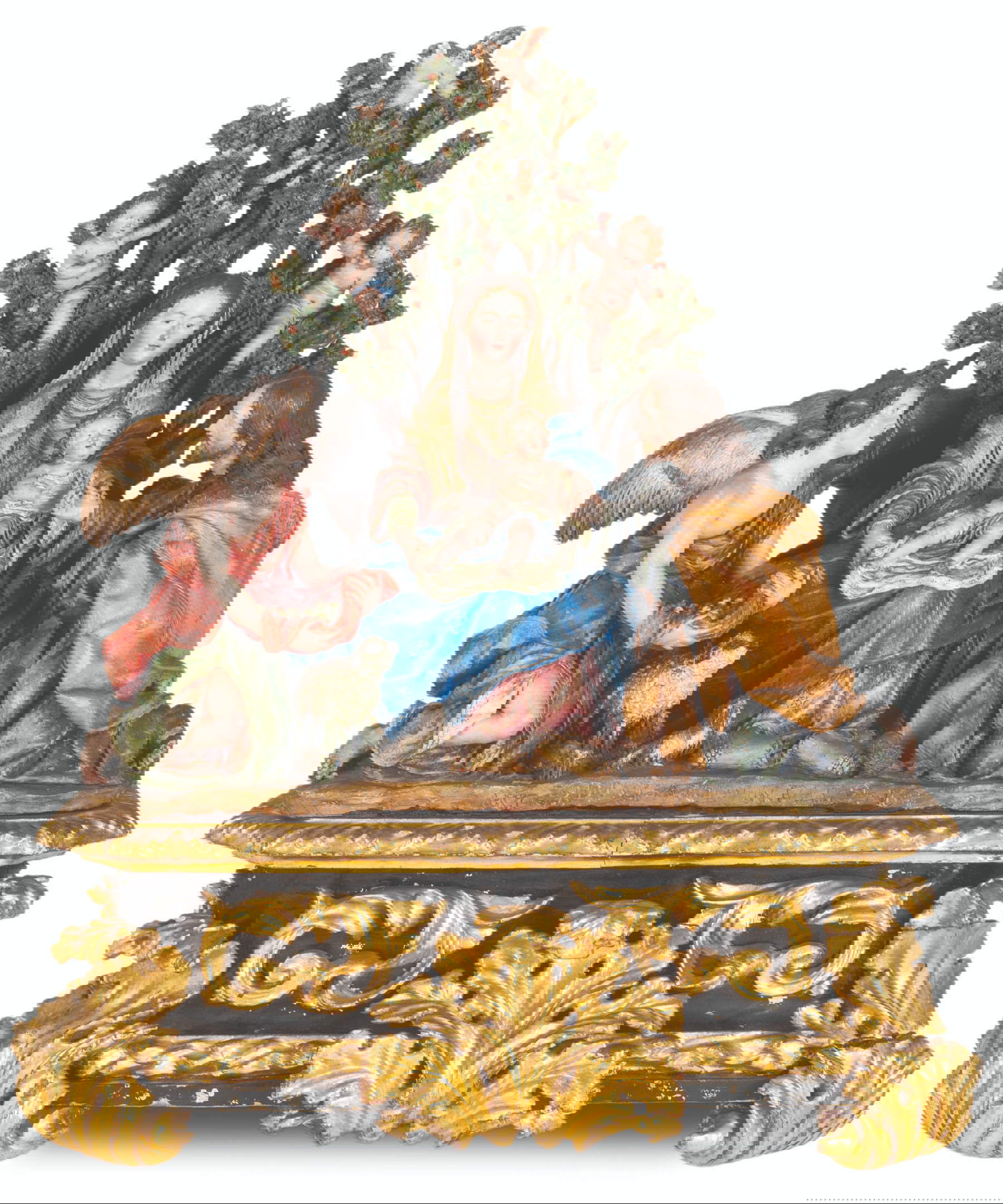
The work is made of terracotta and polychrome wood and is striking for the exceptional state of polychromy, a fundamental element in Spanish Baroque sculpture. The colors retain a rare vividness, allowing one to fully appreciate the original effect intended by the artist. This aspect makes the sculpture not only a leading artistic document, but also a valuable source of study for understanding the decorative techniques of the time.
The sculptural group comes from the historic Güell collection, considered a benchmark for Spanish sculpture. The work was acquired by the Ministry of Culture during a recent auction by the Abalarte house for, as anticipated, 275,000 euros and was subsequently assigned to the Prado Museum. The operation is part of a broader strategy to strengthen national collections through the recovery of works of high historical and artistic value.
The entry of the Rest during the Flight into Egypt also allows the Prado to explore the dialogue between sculpture and painting in Baroque Spain, one of the central themes of its collection. Indeed, Roldán’s work allows significant relationships to be established with contemporary artists active in painting, such as Luca Giordano, who is already present in the museum’s collections. This comparison contributes to a more articulate reading of the artistic landscape of the period and the mutual influences between the different disciplines.
At the same time, the new acquisition substantially enriches the Prado’s core of devotional sculpture, which already includes key works by masters such as Gregorio Fernández, Pedro de Mena, Luis Salvador Carmona, and Juan de Mesa. The inclusion of Luisa Roldán in this context allows for a more complete and multifaceted view of the sacred and courtly art of Baroque Spain, highlighting the variety of languages and sensibilities present in the period.
From an institutional point of view, the arrival of the sculpture also represents a symbolic gesture of great value. With this acquisition, the Prado Museum reaffirms its commitment to the enhancement of women’s artistic heritage and the critical revision of traditional canons of art history. The presence of Luisa Roldán in the permanent collections contributes to restoring the artist to her rightful place within the museum and academic narrative. The fact that this is the first Roldán sculpture to enter the Prado takes on even greater significance when one considers that the museum, for centuries, has been the main point of reference for the narrative of Spanish art. The artist’s absence from the collections was a glaring gap, now finally filled thanks to a work that emblematically sums up his artistic qualities.
The acquisition of Rest during the Flight into Egypt is thus not only a patrimonial enrichment, but also an act of historical restitution. Through this sculpture, the public will be able to directly confront the work of a woman who was able to establish herself at the highest level of the artistic production of her time, leaving a profound mark on European Baroque sculpture. This is an important step that confirms the museum’s role not only as a custodian of the past, but also as a place for critical reinterpretation and continuous updating of shared cultural memory.
 |
| Madrid, Prado acquires work by Luisa Roldán: historic recognition for Baroque sculptor |

Warning: the translation into English of the original Italian article was created using automatic tools. We undertake to review all articles, but we do not guarantee the total absence of inaccuracies in the translation due to the program. You can find the original by clicking on the ITA button. If you find any mistake,please contact us.

















 IT
IT FR
FR DE
DE ES
ES CN
CN