



by Redazione 17/10/2025



Categories: Ancient art / Disclaimer
From Oct. 18, 2025 to Jan. 11, 2026, Parma's Complesso Monumentale della Pilotta presents a dossier exhibition that brings to light two 16th-century works: the famous Man in the Red Beret attributed to Parmigianino and Michelangelo Anselmi's St. John the Baptist, in a never-before-seen comparison that renews the debate on Parma's vibrant art school.
From Oct. 18, 2025 to Jan. 11, 2026, the Complesso monumentale della Pilotta in Parma opens to the public, in Room 14 of the National Gallery, a dossier exhibition that invites a direct comparison between two rarely seen works kept in the museum’s storerooms. In fact, the exhibition proposes a close dialogue between the Portrait of a Man with Red Cap and Saint John the Baptist, two paintings that return to be presented to the public in a critical itinerary that investigates the affinities and divergences of two protagonists of 16th-century Parma painting, Francesco Mazzola known as Parmigianino (Parma, 1503 - Casalmaggiore, 1540) and Michelangelo Anselmi (Lucca, 1491 - Parma, 1556).

The initiative stems from the Pilotta’s desire to return to the public not only works of art usually kept in storage, but also the complexity of the attributive events that accompany many masterpieces of the Emilian Renaissance. The two chosen paintings, united by an intertwining of histories, critical doubts and biographical relationships between their authors, are placed side by side for the first time in a display that highlights the subtle stylistic affinities and expressive divergences that characterize the artistic production of one of the most fertile seasons of the Parma school.


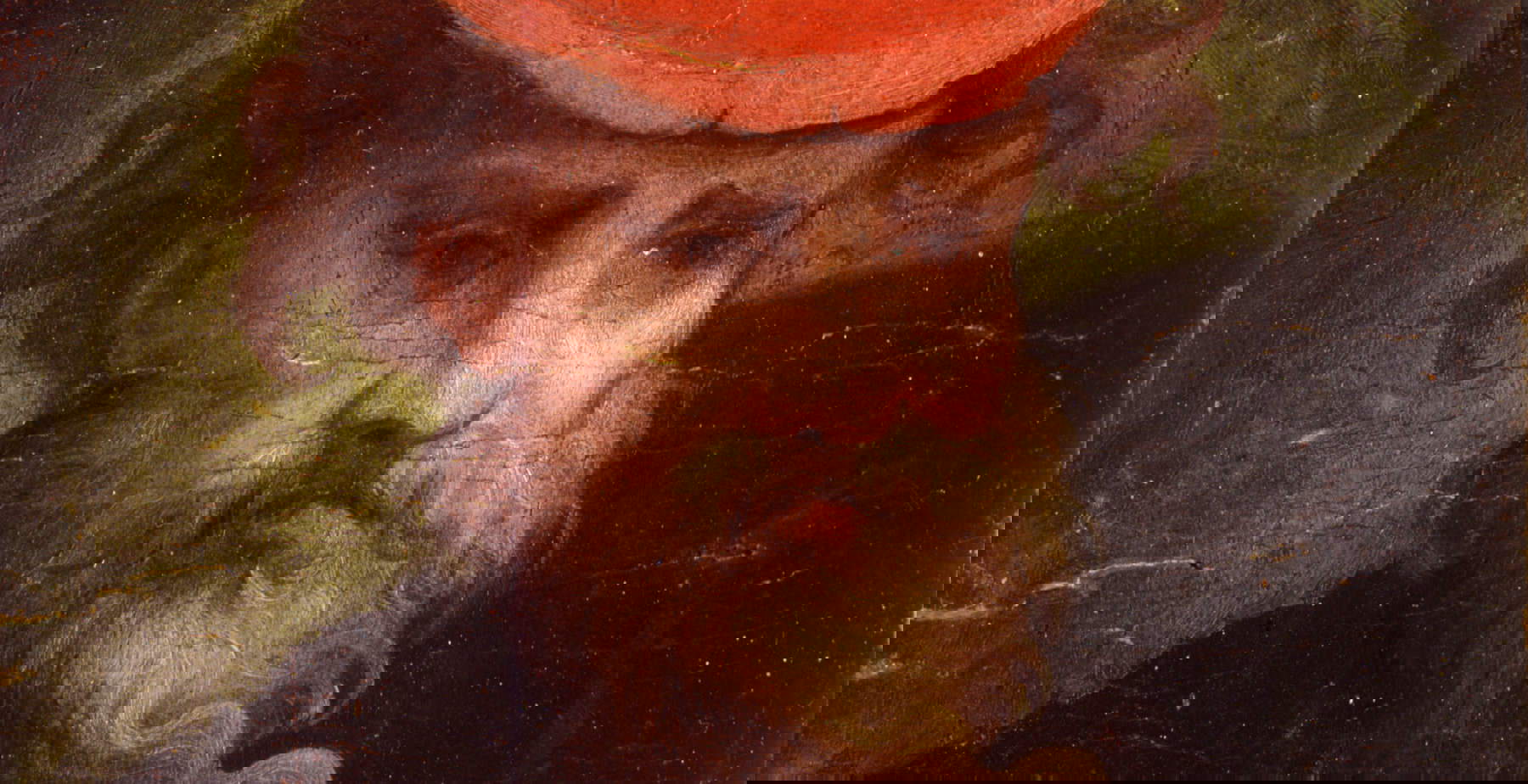
“With this small but valuable exhibition,” says Stefano L’Occaso, director of the museum complex, "the Pilotta tackles a complex issue: the authorship of the famous Ritratto (or self-portrait) con il berretto rosso. Critics are divided in assigning it to Parmigianino or to the Sienese Michelangelo Anselmi; for us it is a priority to offer the public two works that have not been visible for many years and are of unquestionable quality. A museum’s task is to create opportunities for reflection, discussion and research, and in this case we can do so by enhancing works usually housed in storage. The dialogue betweenMan with Red Cap and Saint John the Baptist becomes an opportunity to reflect on the extraordinary vitality of the 16th-century Parma school, in which Parmigianino’s lesson is intertwined with Anselmi’s refined personality. The two works are exhibited, with the necessary critical apparatus, in Room 14, complementing the tour. An opportunity to return to the Pilotta and admire the vastness of its collections."


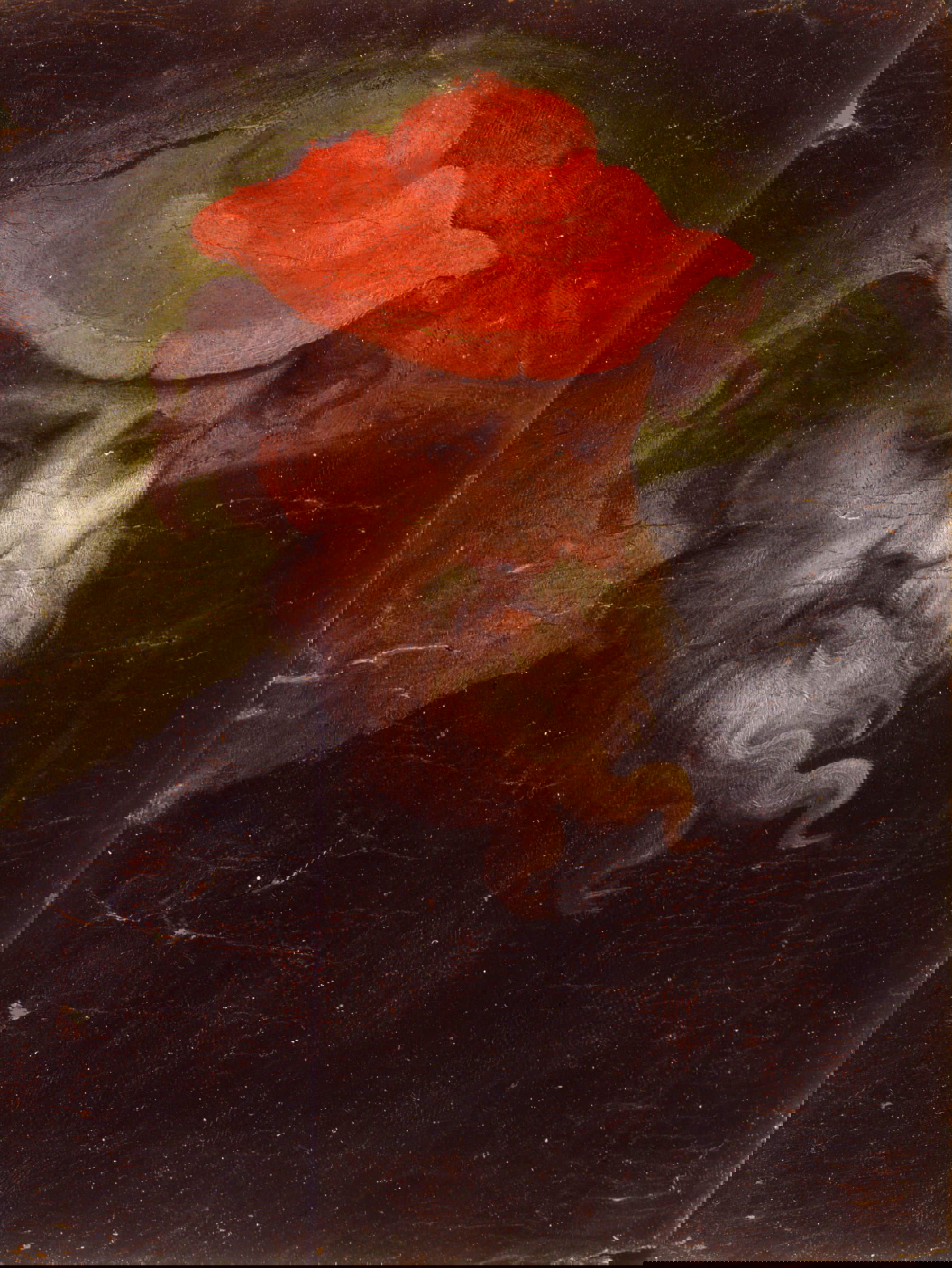
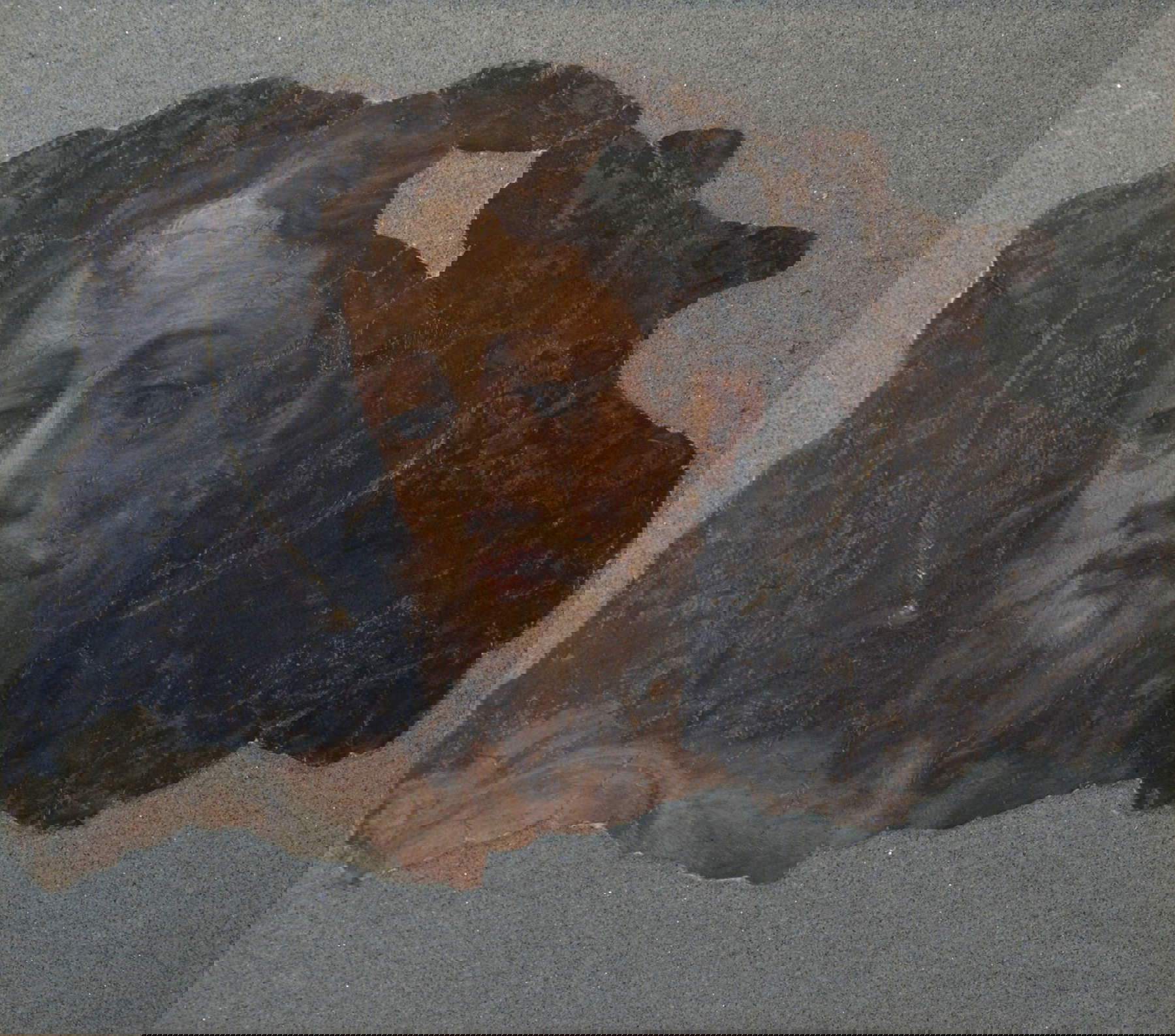
The Portrait of a Man with a Red Cap is a work of enigmatic charm. Kept in the Gallery since 1851, it comes from the Dalla Rosa Prati collection, in whose inventory it was attributed to Francesco Mazzola, known as Parmigianino. This attribution, widely accepted by 20th-century critics, found further suggestion in the hypothesis that the subject was a self-portrait of the painter himself. Scholars who supported this thesis recalled Giorgio Vasari’s account that Parmigianino, in the last years of his life, indulged in alchemy with obsessive dedication, neglecting his own appearance to the point of assuming an almost wild air: “di continuo alla alchimia attendendo... he had taken on the air of half a fool, and already his beard et his hair grew, he had more the face of a man of salvation, than of a gentle person as he was.”
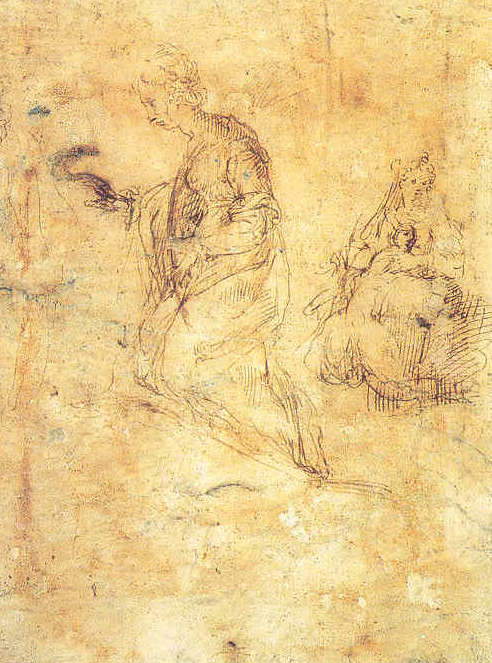
In recent decades, however, critics have reopened the debate on the attribution of the work. More and more scholars now tend to recognize in the Portrait of a Man with Red Cap the hand of Michelangelo Anselmi, on the basis of a deeper analysis of the drawing visible on the verso of the painting, the reproduction of which is displayed in the exhibition accompanying the two works. This hypothesis, also supported by the affinity of stroke and compositional layout with other known works by Anselmi, opens new perspectives on the complex network of mutual influences that linked the artists active in Parma in the first half of the 16th century.
Also attributed with greater consensus to Michelangelo Anselmi is St. John the Baptist, a fragment of wall painting of uncertain provenance, first documented in 1928 in the Capuchin monastery in Parma. The work, of intense spirituality and refined painterly quality, testifies to the assimilation of Correggio models and the evolution of the Parma manner toward softer, brighter forms. However, there is no shortage of alternative hypotheses: some scholars have proposed assigning the painting to the catalog of Francesco Maria Rondani, Correggio’s collaborator, while others continue to support the attribution to Parmigianino.
The comparison between the two paintings, and between the different critical readings that accompany them, thus becomes the focus of the exhibition. The Pilotta does not intend to offer a definitive solution to the complex web of attributions, but rather to highlight the artistic vitality of 16th-century Parma, in which masters such as Parmigianino, Anselmi, Rondani and Correggio operated in a continuous exchange of suggestions and influences, giving rise to one of the richest seasons of the Italian Renaissance. The exhibition invites visitors to question the fluidity of artistic identities and the impossibility, at times, of clearly separating individual styles in a context of intense sharing of languages and techniques.
The dialogue between Parmigianino and Anselmi is not limited to a visual comparison, but extends to their respective biographies, which share artistic ties and intertwined events in 16th-century Parma. Francesco Mazzola, known as Parmigianino, was born in Parma in 1503 and proved to be a precocious talent. As early as the early 1520s he received major commissions for the church of San Giovanni Evangelista and the Rocca di Fontanellato. In 1524 he moved to Rome, where he became one of the most refined interpreters of the figurative culture of Clement VII’s court. After the sack of Rome in 1527 he returned to Emilia and also established himself in the field of portraiture. Settling in Parma in 1531, he obtained a commission for the decoration of the church of Santa Maria della Steccata, an undertaking that would mark the final part of his career. The project, however, was not completed: in 1539, following disputes with the commissioner, he was imprisoned and removed from the work. He finally moved to Casalmaggiore, where he died in 1540, aged only thirty-seven.
Michelangelo Anselmi, on the other hand, was born in Lucca in 1491 and settled in Parma in the early 1520s. Here he spent his entire life, until his death in 1555, contributing decisively to the formation of the local school. His painting, influenced by Correggio but enriched by a personal search for balance and harmony, was expressed in highly committed cycles such as the frescoes of San Giovanni Evangelista and the decoration of the Oratorio della Concezione, done together with Francesco Maria Rondani. In 1522 he was called to work on the cathedral in Parma, a commission that testifies to the prestige he enjoyed. In the 1530s and 40s he worked in several churches in Emilia, including San Prospero in Reggio, San Bartolomeo in Busseto, and the lost Chapel of the Cross in San Pietro Martire in Parma. When, in the 1940s, he was entrusted with the task of taking up the work left unfinished by Parmigianino at the Steccata, the circle between the two artists closed symbolically: Anselmi took up his legacy, continuing a path that combined formal research and spirituality.
 |
| Parmigianino's self-portrait on display at Parma's Pilotta (or maybe not) |
Warning: the translation into English of the original Italian article was created using automatic tools. We undertake to review all articles, but we do not guarantee the total absence of inaccuracies in the translation due to the program. You can find the original by clicking on the ITA button. If you find any mistake,please contact us.