





Pompeii Archaeological Park is engaged in the restoration of a Saudi Arabian city abandoned in the 1980s. The intervention is part of the cooperation agreement between Pompeii and the Royal Commission for AlUla.
In fact, a team of archaeologists, restorers, architects and engineers from the Archaeological Park is in al-Dirah, or Old Town, a settlement that is part of the AlUla Cultural Reserve inhabited until the early 1980s. The team, coordinated by Pompeii Archaeological Park director Gabriel Zuchtriegel, is contributing to the exploration, survey, restoration and enhancement activities of several areas of the town that preserve evidence of traditional ways of life that have almost disappeared due to the rapid process of modernization.
Old Town lies on the edge of the AlUla oasis: it was founded in medieval times, although the buildings currently visible are no more than three hundred years old. Largely devoid of essential services such as water and electricity, the town began to gradually empty out by the 1950s, when many residents decided to move to more modern housing. Today, about a thousand houses remain, often still furnished and with everyday objects left in place, representing an important testimony to a traditional way of life in an environment such as that of an oasis in the desert of Western Arabia, but also to the connections that linked this place to a globalizing world.
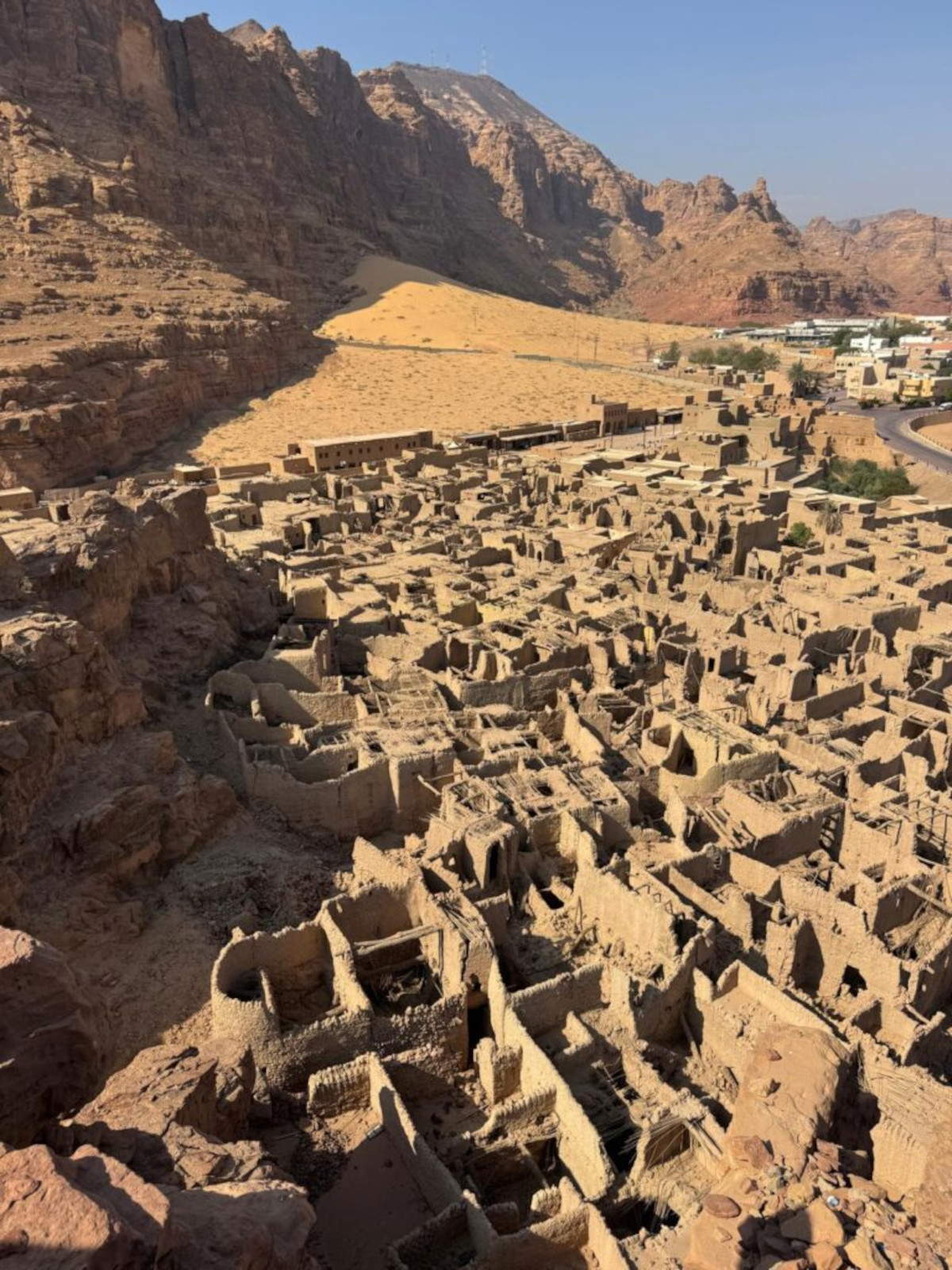
The Pompeii team is working together with specialists from the Royal Commission for AlUla, the government agency responsible for protecting and enhancing the cultural heritage of the oasis and the surrounding area. Following the visit of a Saudi delegation to Pompeii and an exchange of expertise held in AlUla in October 2025, the current phase of the collaboration is taking on a more concrete and operational shape. The Pompeii team’s interventions involve some 30 traditional dwellings, many of which have wall paintings often compromised by the absence of roofing and maintenance, as well as a hammam located on the outskirts of the settlement and a mosque that was the subject of recent archaeological excavations.
“We have seen stones with inscriptions from the Iron Age site of Dedan, located nearby, dating back to the first millennium B.C., but also tins containing clarified butter, with labels in English and Arabic, imported from the Netherlands around the mid-20th century,” Director Zuchtriegel explained. “The characteristic wall paintings, which were usually made at the time a married couple moved into their new shared home, at some point begin to show cars alongside traditional symbols such as the tree of life, and the cars can be dated to different periods based on their design.” Zuchtriegel also said that “Old Town is an extraordinarily rich cultural site, a place of memory. It is a kind of Pompeii of the Arabian desert. At the same time, it is an extensive, articulated and very fragile site. That’s why we think Pompeii can contribute to its protection and enhancement, because we have a long experience in dealing with similar challenges. We are very honored that under a mutual agreement signed in January 2025, Pompeii has been assigned a strategic role in the operational development of Old Town. The fact that some of the people who grew up and lived here are still alive and can tell their stories adds further value to this very special site.”
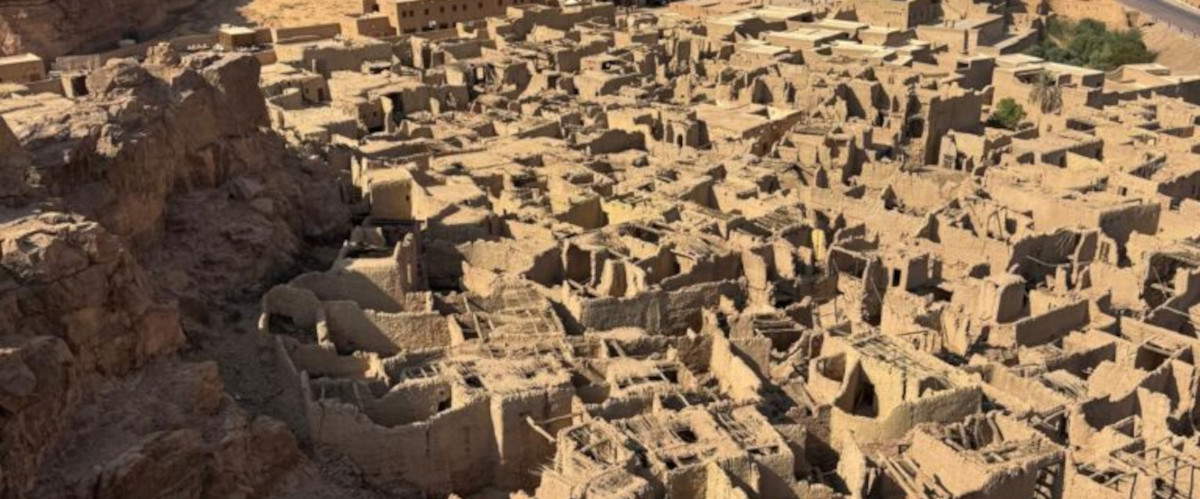 |
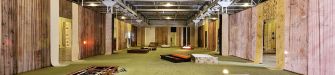
| A team of archaeologists from Pompeii is restoring a Saudi Arabian city abandoned in the 1980s |

Warning: the translation into English of the original Italian article was created using automatic tools. We undertake to review all articles, but we do not guarantee the total absence of inaccuracies in the translation due to the program. You can find the original by clicking on the ITA button. If you find any mistake,please contact us.



















 IT
IT FR
FR DE
DE ES
ES CN
CN