





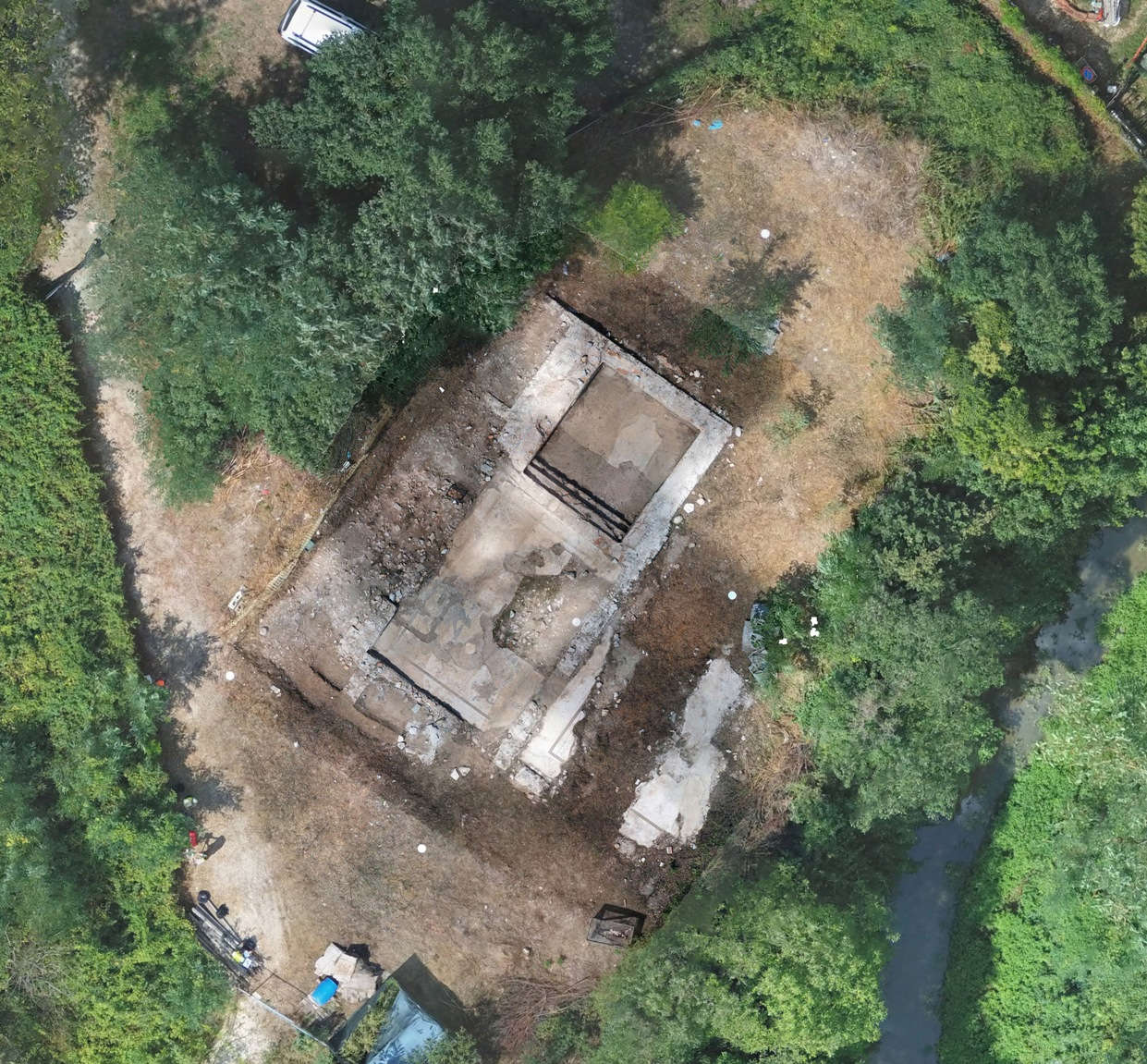
A major redevelopment and enhancement of the city’s archaeological heritage is taking shape in Frosinone. In fact, it is planned to redevelop the excavation of the Roman baths located along the bank of the Cosa River, a complex of extraordinary historical value brought to light as of 2021 thanks to the investigations of the Soprintendenza Archeologia, Belle Arti e Paesaggio of the Provinces of Frosinone and Latina. The intervention, supported by funding from the National Recovery and Resilience Plan, Mission 1, Component 3, Investment 4.3 - “Caput Mundi Next Generation EU” - represents one of the most significant projects for the protection and promotion of the territory’s cultural heritage.
The project drawn up by the Superintendency envisions the expansion of the excavation areas to continue the archaeological investigations and deepen the knowledge of the thermal complex. Preliminary analyses, conducted in recent years, have in fact indicated the presence of additional structures yet to be brought to the surface. The main objective is to ensure the full preservation and enhancement of all the archaeological evidence that has come to light, which constitutes an essential part of the complex historical and urban stratification of the Frosinan territory.
According to Frosinone Mayor Riccardo Mastrangeli, the project aims to combine scientific research, protection and accessibility, so as to return a site of great historical significance to the city and the public. “The enhancement project prepared by the Superintendence,” the mayor explained, “includes the expansion of the excavation, as preliminary investigations have revealed the presence of additional archaeological structures. The goal is to ensure the preservation of all resurfaced structures, evidence of the complex historical-archaeological stratification that characterizes the area. The finds unearthed will be subject to conservation restoration: among them, the precious mosaics of the frigidarium environment stand out. The site, in its entirety, will be the focus of a major intervention, with the construction of a cover to protect the mosaics, a walkway to allow accessibility and enjoyment, the installation of educational panels and the arrangement of the access path to the archaeological area.”
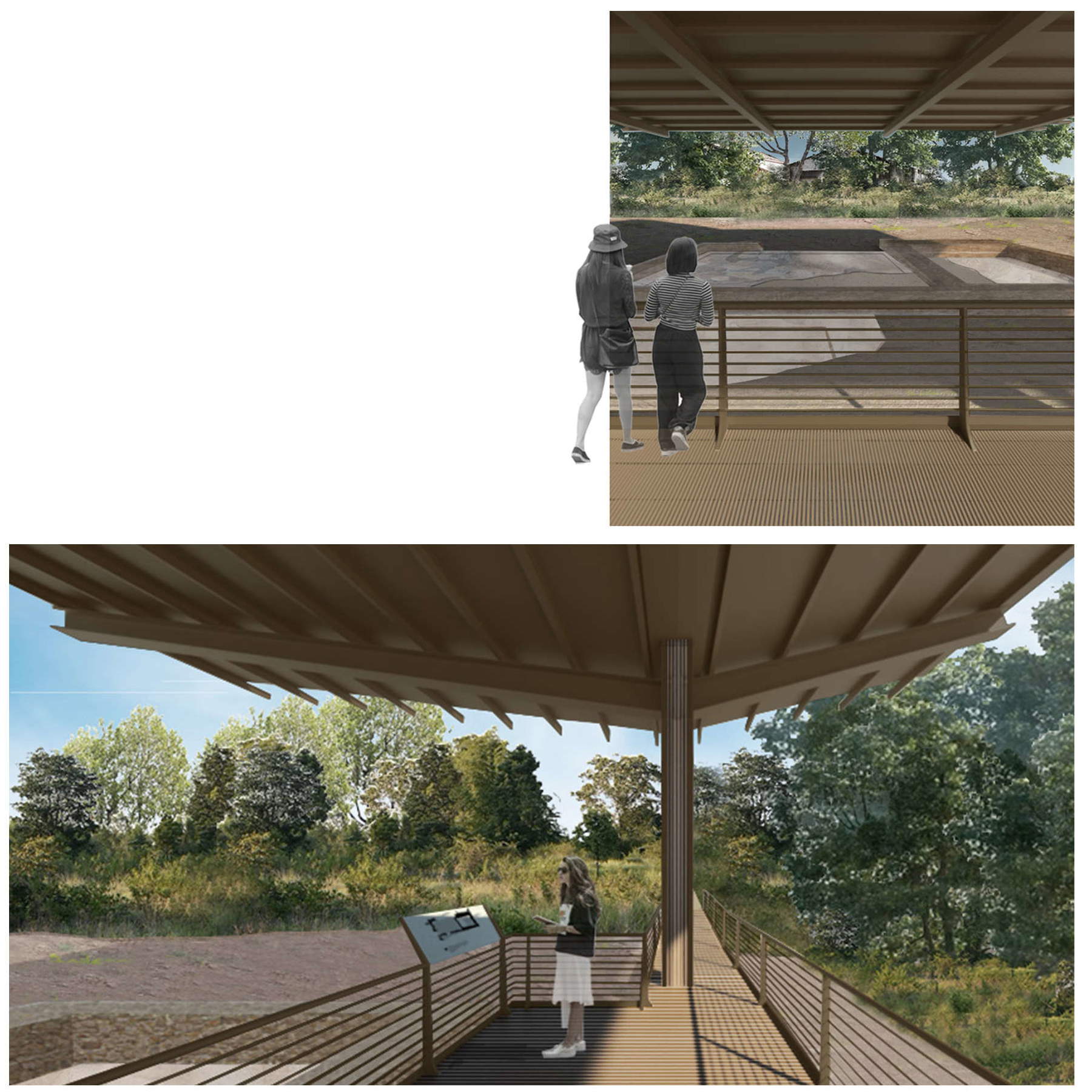
The intervention, which aims to make the area usable and accessible to the public, will be conducted in synergy between the Superintendence and the City of Frosinone. In fact, the project includes not only the protection of the site, but also its enhancement through light infrastructure that will allow visitors to take a closer look at the finds without compromising their preservation. The installation of didactic panels and the creation of an equipped tour route will help transform the area into a true center of knowledge and dissemination of the city’s archaeological heritage.
Mayor Mastrangeli wished to publicly thank the Superintendent of Fine Arts and Landscape of the Provinces of Frosinone and Latina, Alessandro Betori, along with the staff of the Superintendency and the municipal offices involved, for their commitment and professionalism that made it possible to carry out a project of such magnitude.
In parallel with the PNRR project, the Frosinone municipal administration has placed the Cosa River axis at the center of its Territorial Strategy, identifying it as a guiding principle for urban development and cultural enhancement. As part of this strategy, the municipality is the recipient of a grant of 16,180,000 euros, obtained through the Regional Program co-financed by the European Regional Development Fund. Among the planned interventions are the securing of the archaeological area of the Rio Bridge, near the Brunella traffic circle, and the enhancement of the Roman baths discovered along the river course.
The origins of the project date back to March 2021, when the remains of a thermal building from the Imperial Roman period unexpectedly emerged during work on the rehabilitation of the sewer system in the Ponte della Fontana area. Initial archaeological investigations uncovered portions of mosaic flooring and marble wall coverings that decorated the rooms of the complex. The discovery, because of its importance and state of preservation, prompted the Superintendency to order the immediate continuation of the research for cognitive purposes, in collaboration with the then Ottaviani administration, in order to initiate ministerial protection procedures and set up a future project of public enhancement of the area.
Subsequent investigations made it possible to define an initial map of the site and establish the chronology of the complex, which can be dated to the second century AD. Archaeologists found remains of rooms built in opus reticulatum and brickwork, as well as a quadrangular basin probably belonging to the frigidarium sector. Prominent among the floor surfaces is a bichromatic mosaic with a marine subject, decorated with figures inspired by the aquatic world, depictions typical of Roman baths and symbolic of the building’s original function.
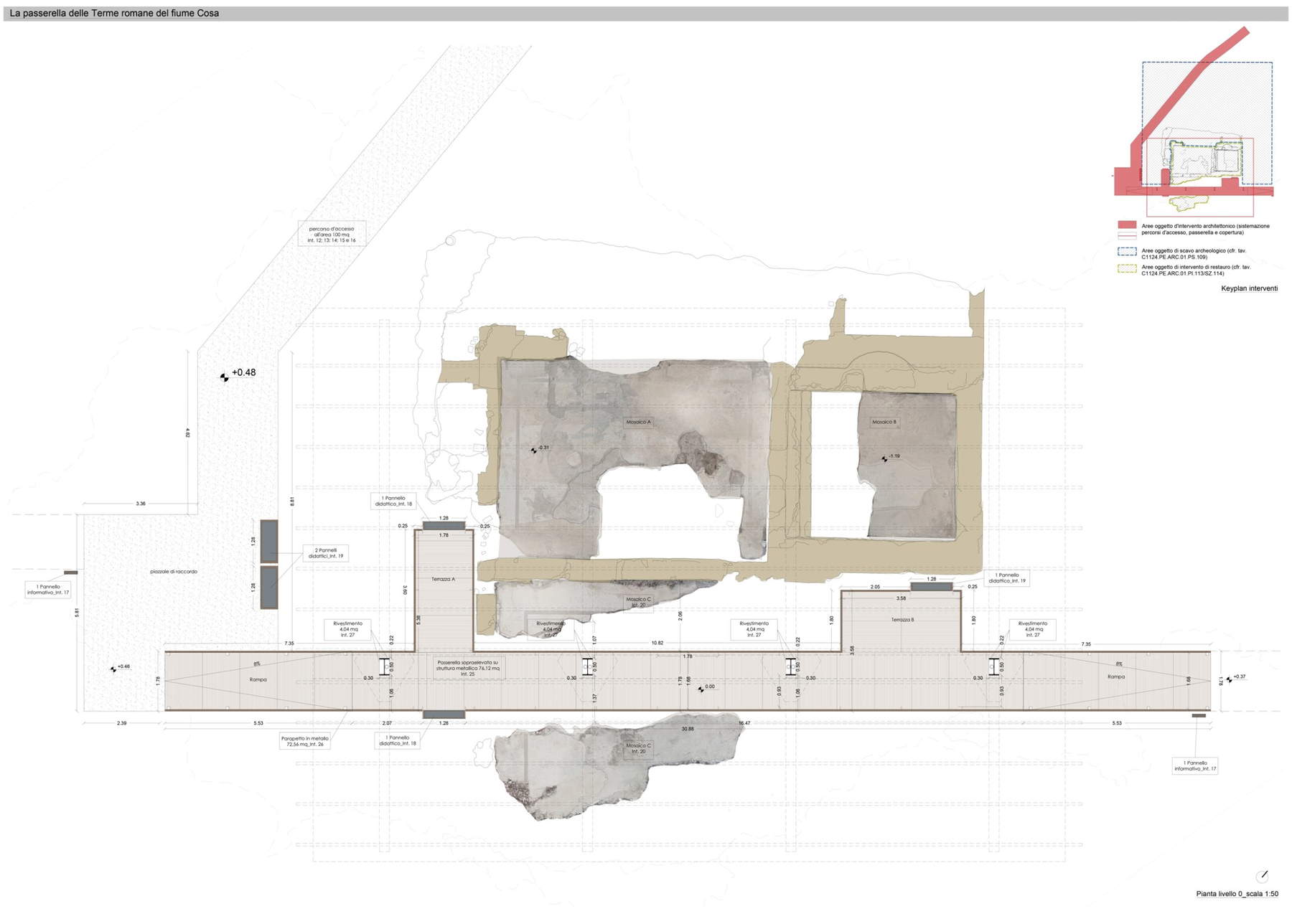
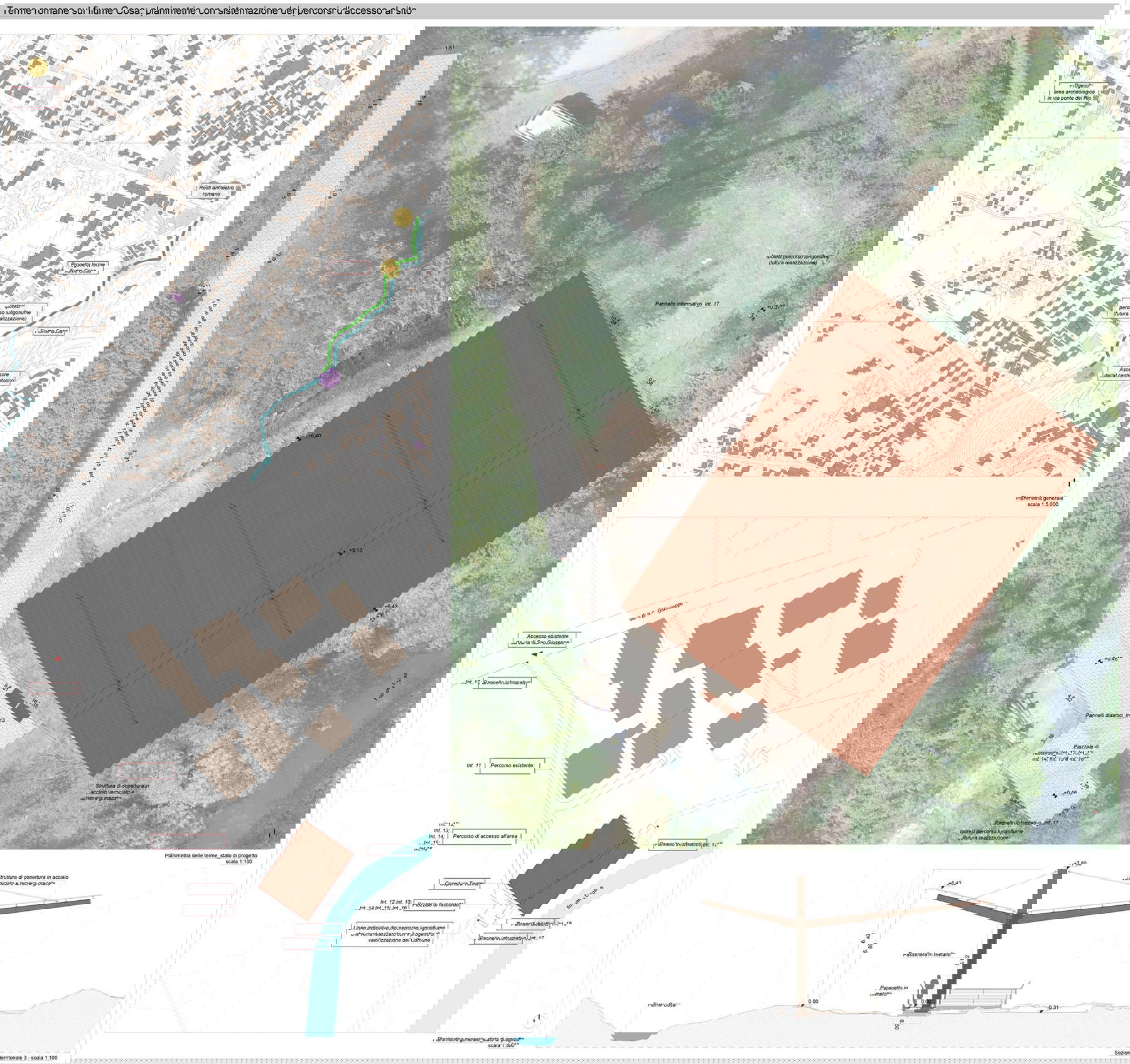
The location of the area, accessible from Via San Giuseppe, seems to trace an ancient road route that connected the Roman city with the river. This confirms that the left bank of the Cosa was already frequented and urbanized in imperial times, probably as part of a broader process of renewal of the city at that time. The bath complex thus represents direct evidence of the economic and social vitality of Roman Frosinone, an urban center that, although small in size, participated fully in the cultural and architectural dynamics of the Empire.
The project to enhance the Roman baths on the Cosa River is thus part of a broader strategy of cultural regeneration of the territory, which aims to integrate heritage protection, tourism promotion and sustainable urban development. An intervention that confirms the role of the Superintendence and the City of Frosinone as protagonists of a shared path of rediscovery and preservation of historical memory, returning to the community a place of great archaeological and symbolic value.
 |
| Frosinone, new discoveries and enhancement work for Roman baths on the Cosa River |

Warning: the translation into English of the original Italian article was created using automatic tools. We undertake to review all articles, but we do not guarantee the total absence of inaccuracies in the translation due to the program. You can find the original by clicking on the ITA button. If you find any mistake,please contact us.


























 IT
IT FR
FR DE
DE ES
ES CN
CN


