





Marche-based artist Patrizio Di Massimo, born in Jesi in 1983 but a longtime resident of London, has been invited to create a new intervention within the galleries of the permanent collection of theEstorick Collection of Modern Italian Art in the London capital. The project, titled Between Us, is co-organized with the Consulate General of Italy in London and will be on view from February 25 to April 12, 2026, fitting into the museum itinerary as a direct dialogue between contemporary and modern Italian art.
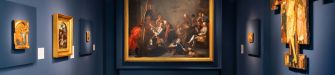
Between Us brings together a selection of paintings made by Di Massimo between 2020 and 2026, presented in relation to works belonging to the Estorick’s collection signed by some of the main protagonists of modern Italian art, including Umberto Boccioni, Carlo Carrà and Giorgio de Chirico. The exhibition does not propose a reading based on linear influences or on an idea of stylistic descent, but rather juxtaposes works from different eras to stimulate a gaze capable of capturing unexpected connections, formal contrasts and moments of visual and conceptual tension.
The intervention thus fits into the museum’s permanent spaces, creating a close comparison between the research of the masters of the Italian twentieth century and the painting practice of a contemporary artist who, while working in London, maintains cultural ties with Italy. The curatorial operation aims to highlight not so much declared continuities as subtle resonances and significant divergences, leaving it up to the visitor to construct his or her own interpretive path.
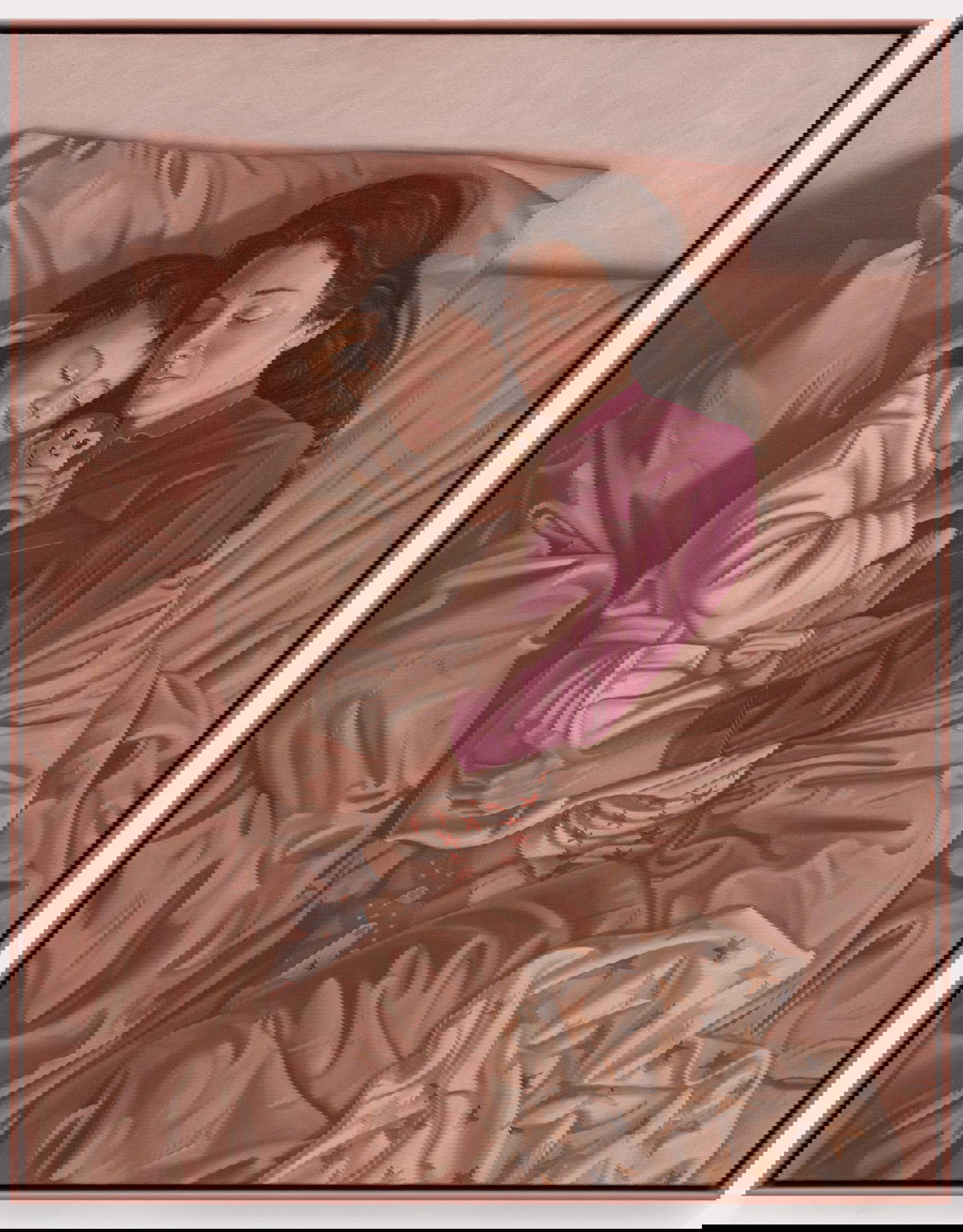
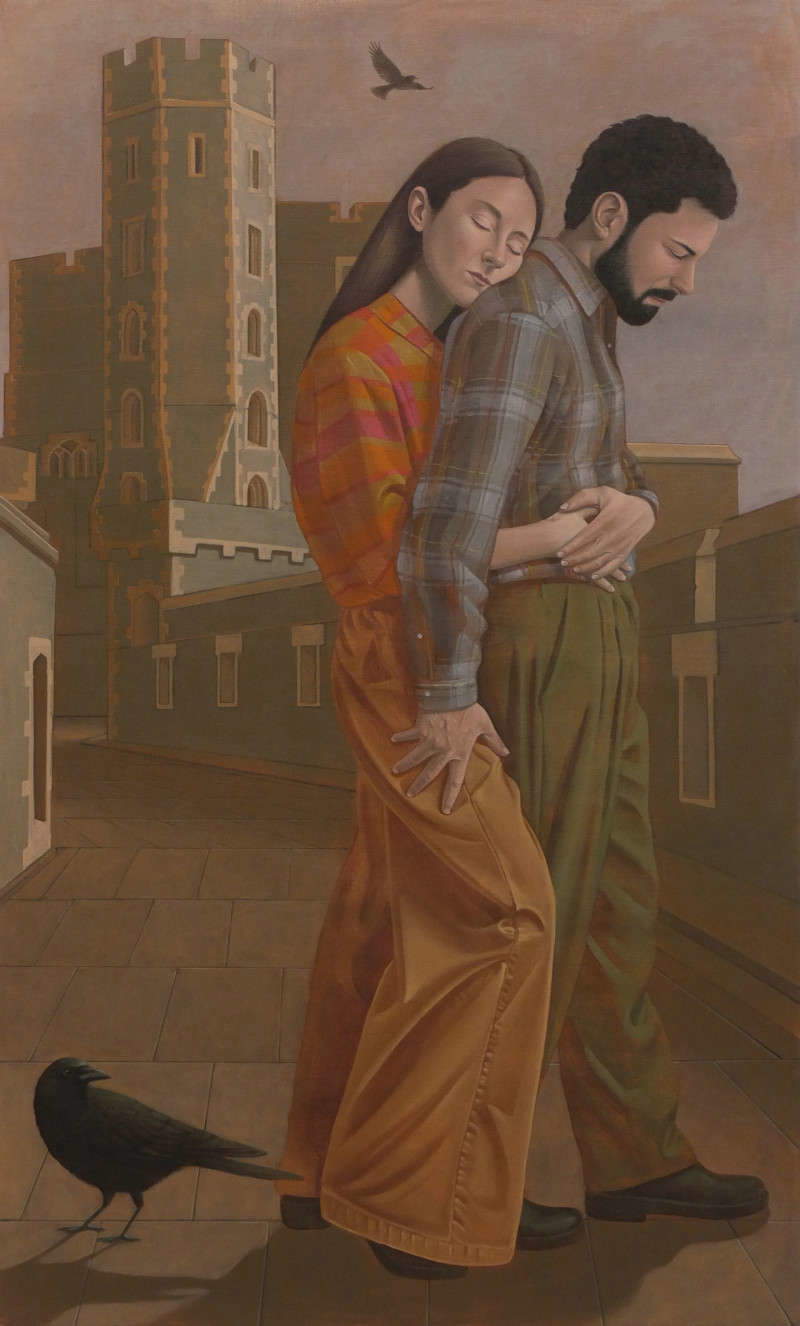
Patrizio Di Massimo’s painting is characterized by a constant return to the same characters and situations through a conscious use of repetition. In his paintings recurring figures, including the artist himself and his wife, appear several times, in different contexts, allowing the artist to explore themes such as intimacy, desire, power and artistic identity over time. This reiteration is not a formal exercise, but a method of inquiry: each new canvas adds a piece, modifies a relationship, reinterprets a gesture or a gaze, helping to build a layered meaning.
Between Us aims to highlight precisely this processual dimension of Di Massimo’s work. The artist conceives painting as a field in which ideas develop progressively, through the return and reworking of iconographic and narrative motifs. The images, often modeled on his life and personal experiences, become tools for investigating the vulnerability and complexity of human relationships. The autobiographical dimension does not translate into direct narrative, but into a symbolic construction that uses figurative language to interrogate emotions and relational dynamics.
Family members and fellow artists, including Gray Wielebinski and Tai Shani, appear in the paintings on display, figures that become part of a shared and continually renewed visual repertoire. The presence of these people is not episodic, but helps define a network of relationships that runs through the works and forms their narrative framework. All the works presented in Between Us are exhibited for the first time on this occasion.
Works included include 28b Erlanger Road (Nicoletta and Diana), made in 2024 in oil on linen, and Between Us, from 2025, also oil on linen, granted by the artist and the Rodolphe Janssen Gallery in Brussels. These paintings testify to the continuity of the research pursued by di Massimo in recent years and offer concrete examples of his focus on the staging of relationships and identities.
From Feb. 25 to April 12, 2026, the public will be able to traverse this dialogue between past and present, discovering how Patrizio Di Massimo’s painting fits, through affinities and rejections, into the groove of a tradition that continues to generate new questions. In this shared space, between the works of the masters of the twentieth century and contemporary canvases, an open narrative takes shape that invites reflection on what happens between images, but also between people: a space, precisely, between us.
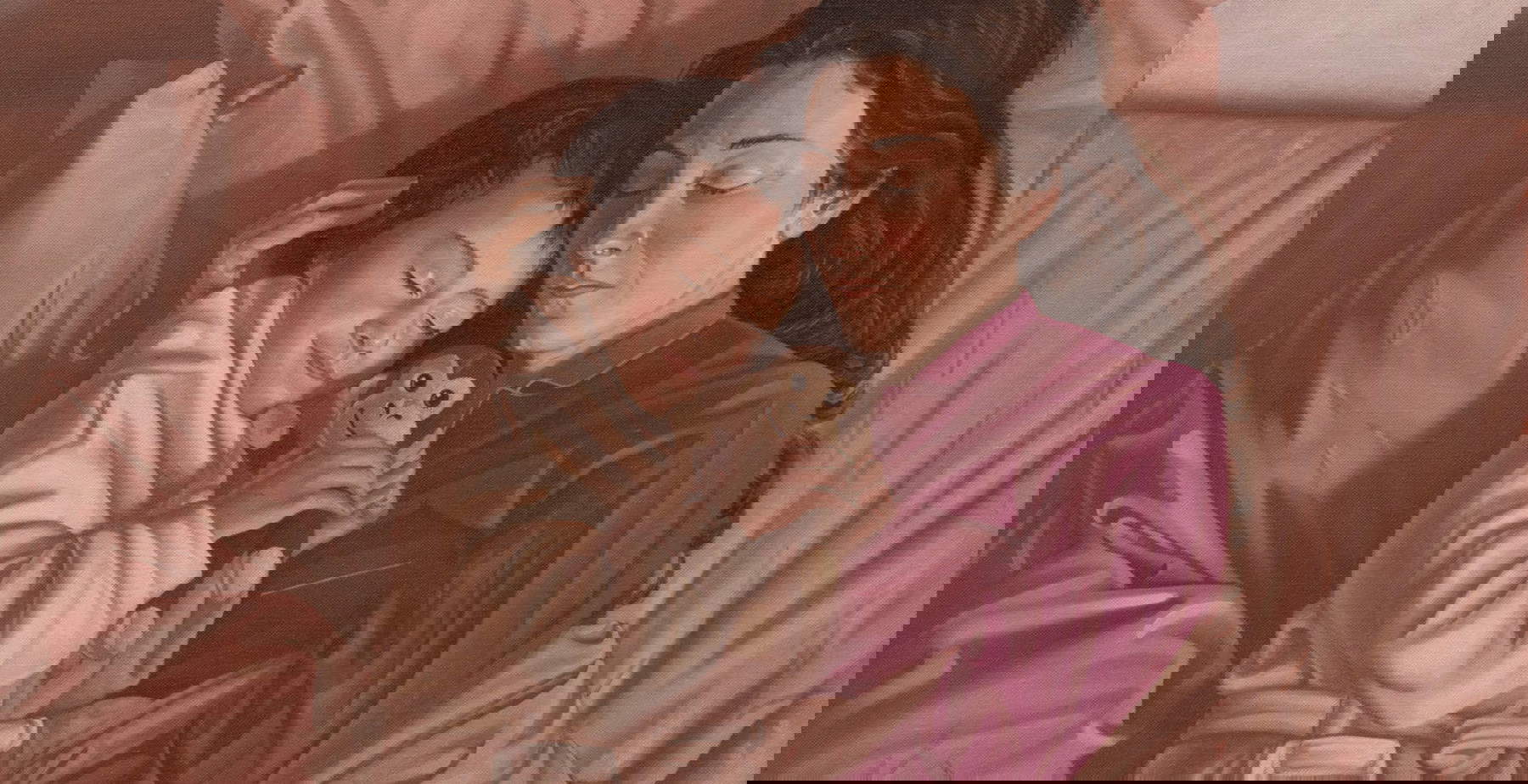 |
| Patrizio Di Massimo talks with Italian masters of the 20th century at the Estorick in London |

Warning: the translation into English of the original Italian article was created using automatic tools. We undertake to review all articles, but we do not guarantee the total absence of inaccuracies in the translation due to the program. You can find the original by clicking on the ITA button. If you find any mistake,please contact us.



















 IT
IT FR
FR DE
DE ES
ES CN
CN


