




by Redazione 18/01/2026



Categories: Events / Disclaimer
Celebrations for the 450th anniversary of the artist's death are kicking off in Pieve di Cadore, Titian Vecellio's hometown. The initiatory will focus on the dialogue between human figure and landscape, one of the distinctive elements of Titian's poetics.

Beginning in late January, Pieve di Cadore, birthplace of Titian Vecellio (Pieve di Cadore, 1488/1490 - Venice, 1576), kicks off celebrations for the 450th anniversary of the artist’s death. The occasion is marked by a wide-ranging and renewed reflection on the role of landscape in his painting, the unpublished comparison of two masterpieces from his production of the 1620s, and the arrival in Cadore, for the first time, of theonly work signed with the artist’s toponym, “Titianus Cadorinus.” The celebrations also offer the opportunity to admire the first modern pictorial view of the Marcian area of Venice.
The Magnificent Community of Cadore and the Titian and Cadore Study Center Foundation, with the collaboration of the Municipality of Pieve di Cadore and the organization of Villaggio Globale International, have promoted a comprehensive program of studies and events for this important anniversary, which coincides with the XXV Winter Olympic Games in Milan-Cortina. The project, entitled Titian and the Landscape, includes two closely related exhibitions (one in January and one in July) conceived by Bernard Aikema and curated by Thomas Dalla Costa, as well as an international conference planned for early 2027. The aim is to investigate new aspects of a well-known but still rich theme, encouraging interdisciplinary comparisons and new research perspectives.


The dialogue between human figure and landscape represents one of the distinctive elements of Titian’s poetics. Although Titian did not create autonomous landscapes, he elaborates an innovative conception of nature as an integral part of the pictorial narrative. In his paintings, landscape does not perform a simple ornamental function, but becomes a vehicle for meanings, emotions and symbolic tensions, now the subject of renewed critical analysis.


The celebrations, united under the logo Titianus Cadorinus 1576-2026, also include the reopening of Titian’s Birthplace after a long restoration, the publication of exhibition catalogs by the Fondazione Centro Studi and thanks to the contribution of Save Venice, and a significant cultural collaboration with Ancona and the Diocese of Treviso, based on important exchanges of works.
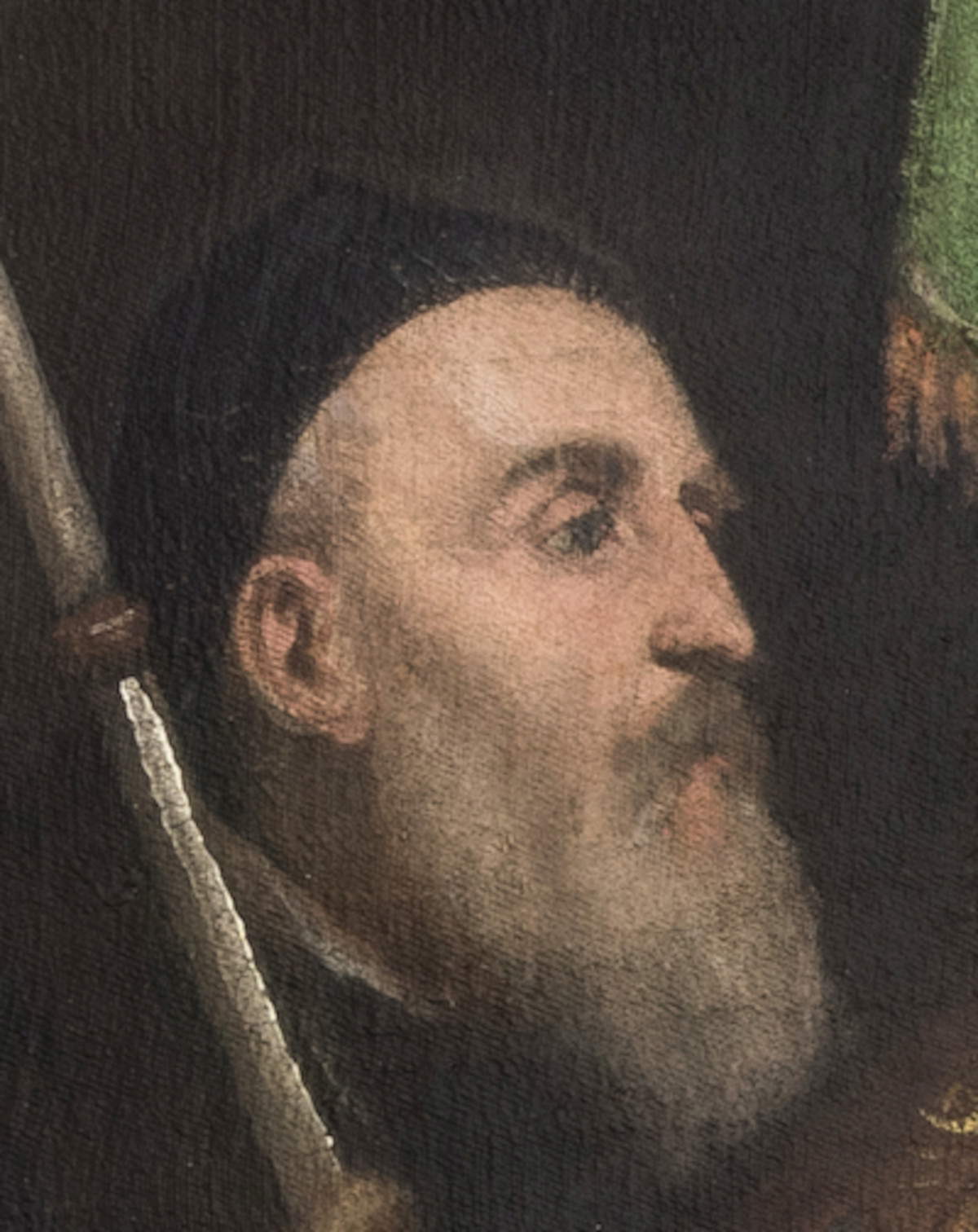
The first exhibition, Titian and the Landscape. From Cadore to the Lagoon: The Gozzi Altarpiece and the Submersion of the Pharaoh, hostedat the Palazzo della Magnifica Comunità of Cadore from January 23 to March 29, 2026, with the patronage of the Ministry of Cultural Heritage and the Province of Belluno, the fundamental support of the Fondazione Cariverona, the contribution of the Veneto Region and the Consortium of Municipalities Bim Piave of Belluno, partners the Rete Museale Cadore Dolomiti and the monthly magazine Il Cadore, and the mediapartnership of the NEM Group and the Corriere delle Alpi, compares for the first time two monumental works central to Titian’s production. The dialogue between the two works highlights the “revolutionary” role attributed by the master to landscape and living nature. On one side is presented the famous Pala Gozzi (1520), an imposing altarpiece executed in 1520 for the church of San Francesco ad Alto in Ancona, never before exhibited in the artist’s birthplace. In this work Titian exceptionally signs himself “Titianus Cadorinus,” reaffirming his connection with his homeland. On the other side is exhibited the monumental woodcut of the Submersion of Pharaoh’s Army in the Red Sea, engraved by an anonymous engraver from a drawing by Titian and preserved in the Civic Museums of Bassano del Grappa, considered one of the most spectacular woodcuts ever.
Although different in technique and purpose, the two works share important similarities: the presence of a city emerging from the water, the triangular compositional structure, the symbolic value entrusted to the landscape, and the underlying political references.
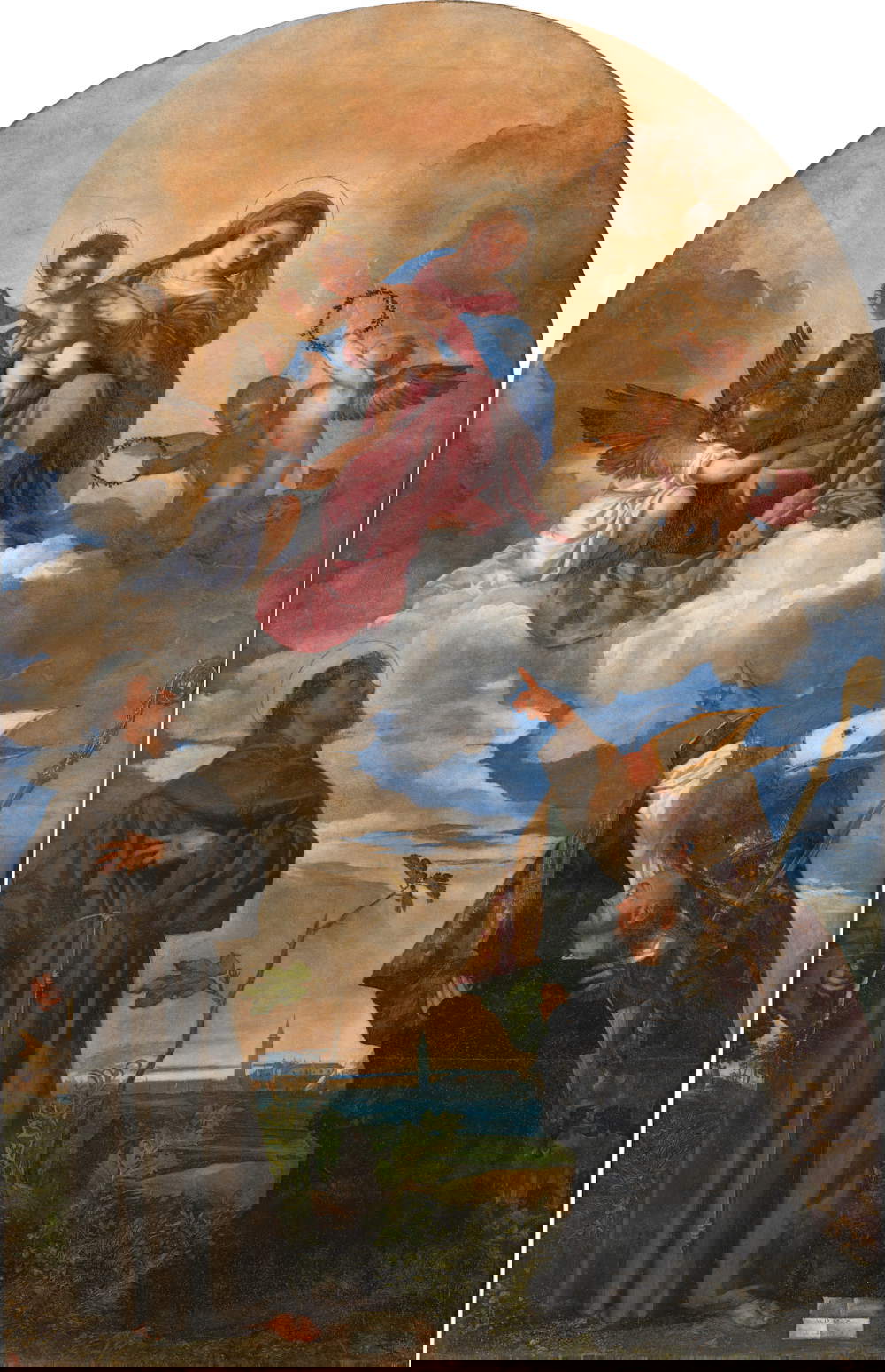
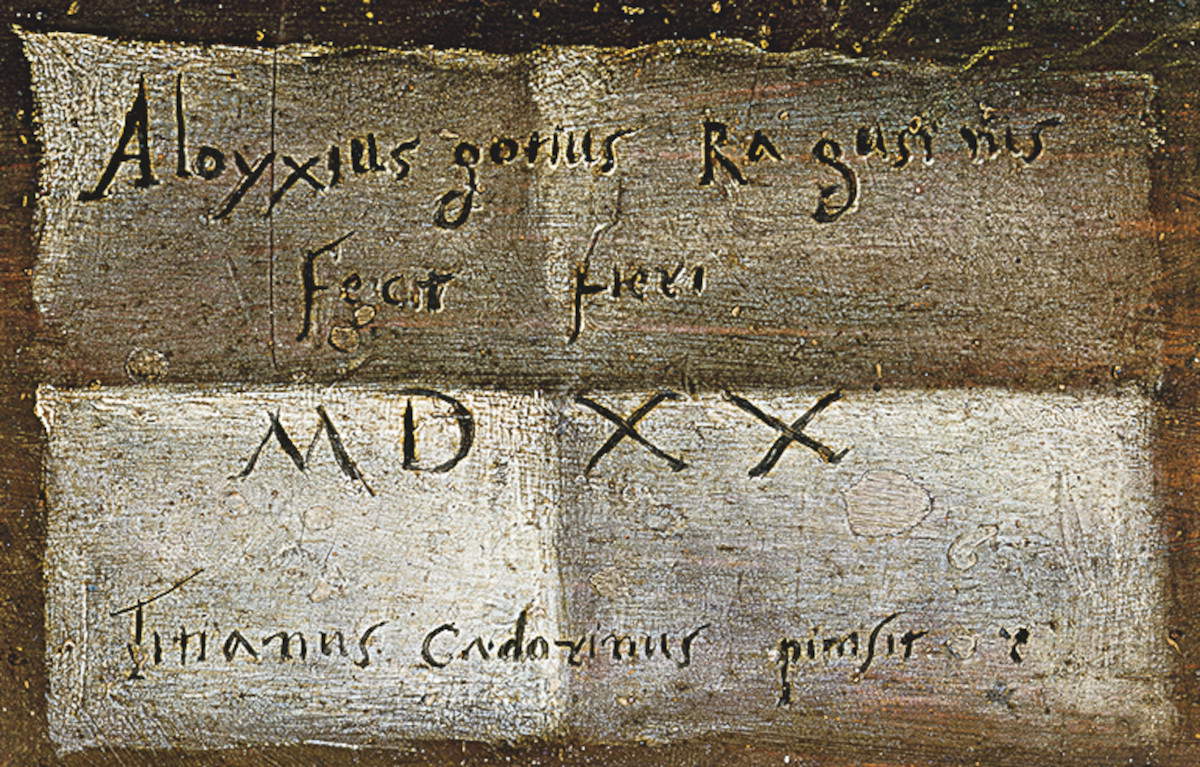
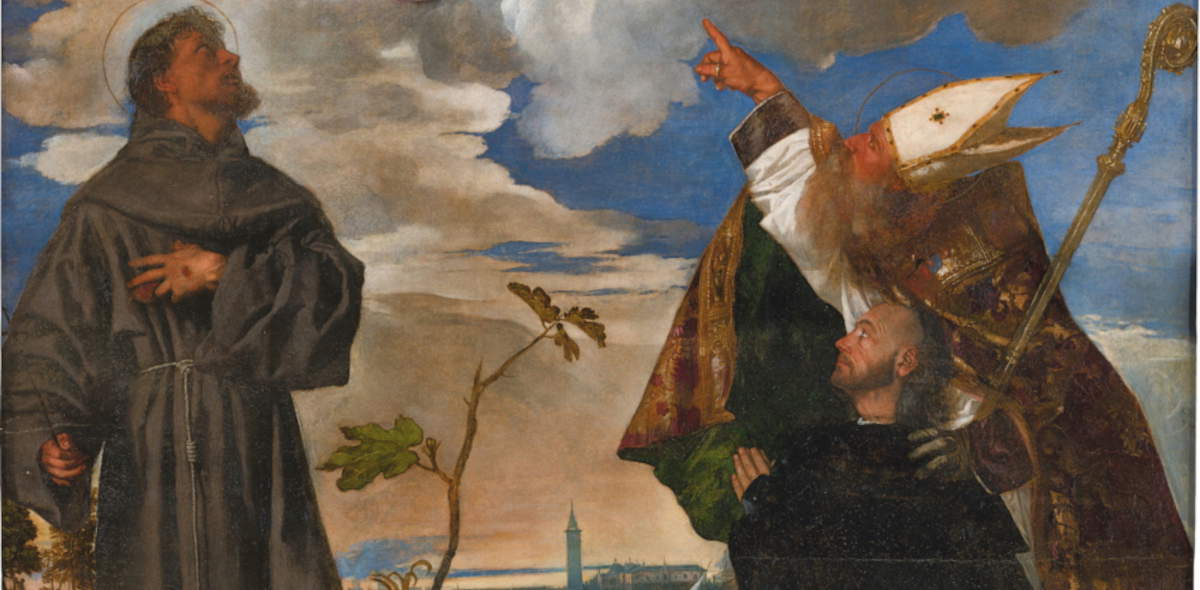
Also recently subjected to diagnostic investigations published and presented for the first time on this occasion, in the Gozzi Altarpiece, commissioned by Ragusa merchant Alvise Gozzi, the landscape takes on a dual form: on the one hand the vegetation of the Venetian hinterland, on the other a seascape with the outline of a city emerging from the water, a clear reference to Venice and the first modern representation of the Venetian lagoon in painting. The integration of sacred scene and natural environment is dynamic and emotionally engaging. Light, color and atmospheric perspective create spatial depth and three-dimensionality, exerting a decisive influence on European painting in later centuries. The work also possesses a strong political significance: it exalts Venice, celebrating in 1520 the resumption of its rule over the Adriatic, with the lifting of the restrictive measures imposed ten years earlier by Pope Julius II, and thus the return of duties to Ancona in exchange for its security.
The “figural triangle” Ancona/Venice/Ragusa, as Augusto Gentili defines it in his essay in the catalog, represented by the figures of St. Francis, saint of the Ancona church for which the work was intended, the Madonna symbol of the Serenissima (placed at the apex of the triangle in correspondence with the “view” of St. Mark’s basin) and St. Blaise, patron saint of Ragusa, would testify to this event and to the subsidiary position of the two Adriatic cities vis-à-vis Venice. On the other hand, as the exhibition curators Aikema and Dalla Costa suggest with an innovative interpretation, the light and the yellow-orange hues that flood the view of Venice, so central to the composition, would not stand for a sunset as hitherto suggested by critics perhaps on the basis of a nineteenth-century topos, but for morning twilight: dawn as a sign of rebirth (also represented by the fig branch symbolizing new life), of opening to a new day, of redemption from the harsh consequences from the defeat at Cambrai.
In contrast, the threat looming over Venice in the early sixteenth century is referred to in the woodcut of the Pharaoh’s Submergence. Here the vast seascape occupies much of the scene and becomes the protagonist, with a gloomy and stormy atmosphere heralding difficult times for the city depicted, in contrast to the bright image of the Gozzi Altarpiece. Again, the landscape is charged with symbolic and political value: not a simple setting, but a landscape with strong emotional and political significance, with the city view interpreted by critics now as an ideal reminder of Jerusalem as the “new Venice,” thus under direct divine protection, and now as an image of Egypt as the “city of the devil” given the “northern” features with which it is depicted and its placement on the left side of the woodcut (the symbolically negative side) in contrast to Moses and his people.

The exhibition is part of a larger project of institutional collaboration. Coinciding with the loan of the Gozzi Altarpiece to Pieve di Cadore, the Pinacoteca Civica di Ancona will host Titian’sMalchiostro Annunciation from Treviso Cathedral.
The Titian and the Landscape project will continue with a second summer exhibition (July-September 2026), which will analyze not only the master’s work, but also his influence on later artists, instrumental in establishing landscape as an autonomous genre in the 17th century and beyond. It will conclude with an international conference in 2027, also devoted to the evolution of landscape perception from the 16th century to the present and contemporary conservation issues.
 |
| Celebrations kick off for 450th anniversary of Titian's passing in Pieve di Cadore, his hometown |
Warning: the translation into English of the original Italian article was created using automatic tools. We undertake to review all articles, but we do not guarantee the total absence of inaccuracies in the translation due to the program. You can find the original by clicking on the ITA button. If you find any mistake,please contact us.